ZAC BROWN BAND (LOVE & WAR) - SPHERE
A HERO’S JOURNEY THROUGH THE SPHERE
THE STORY ARC
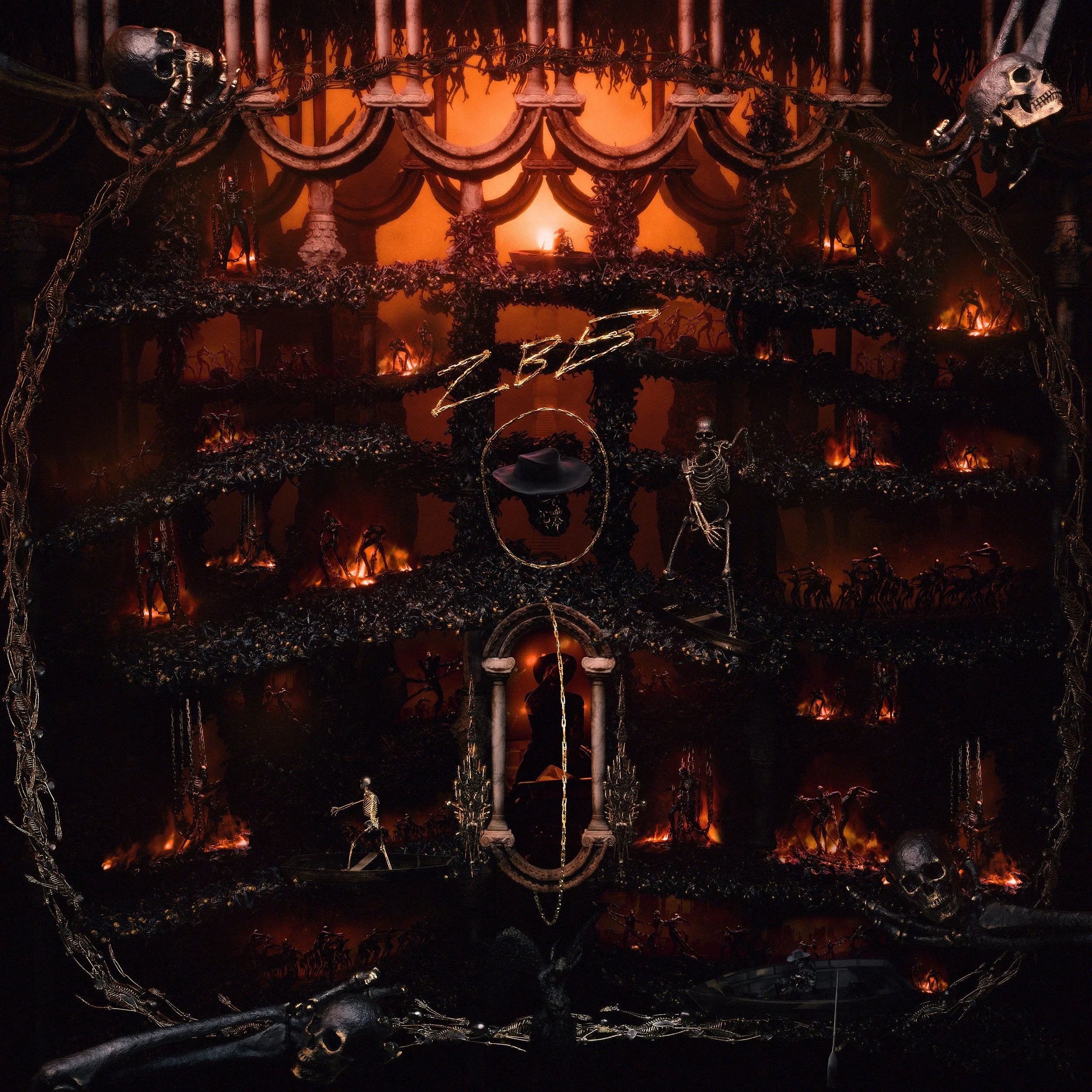
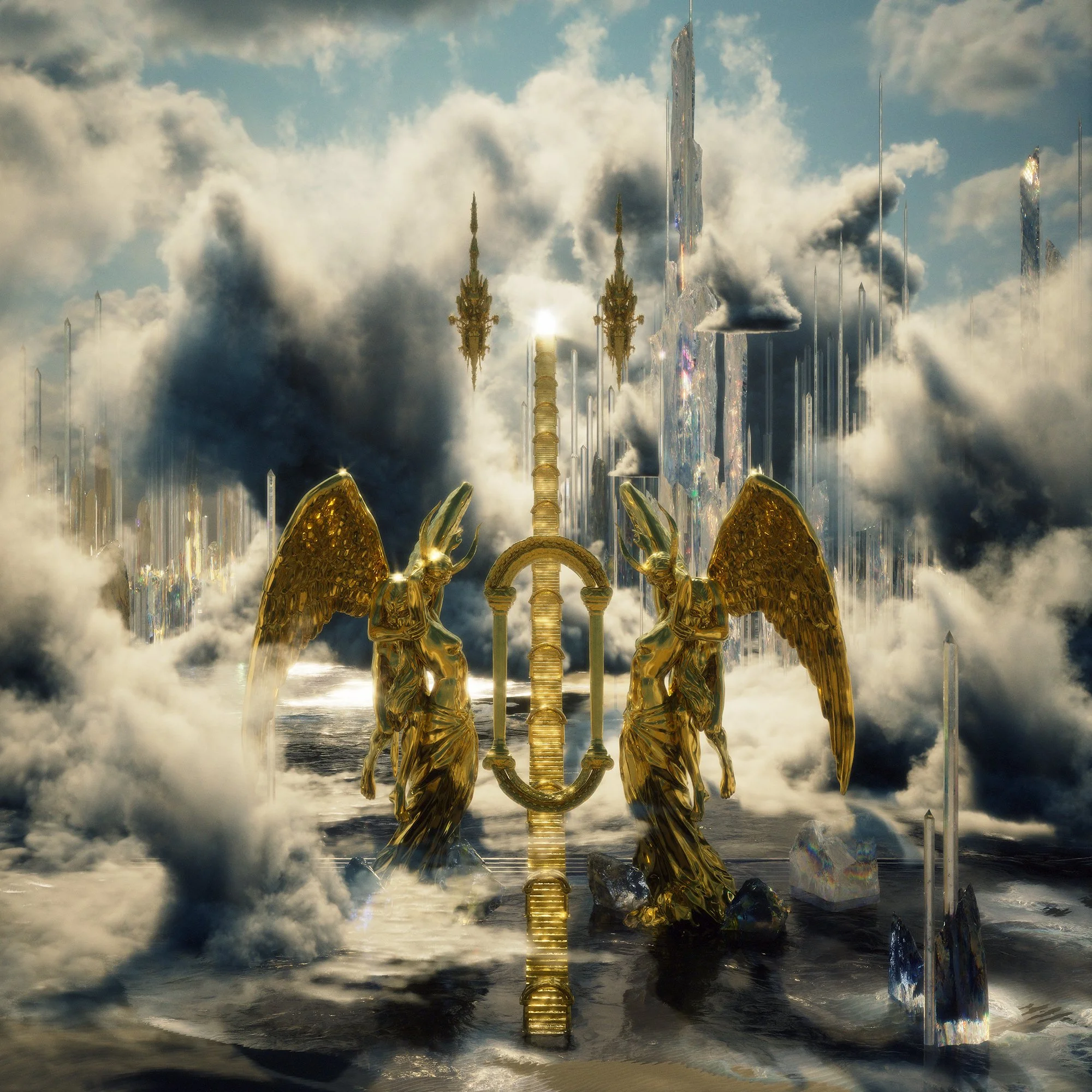
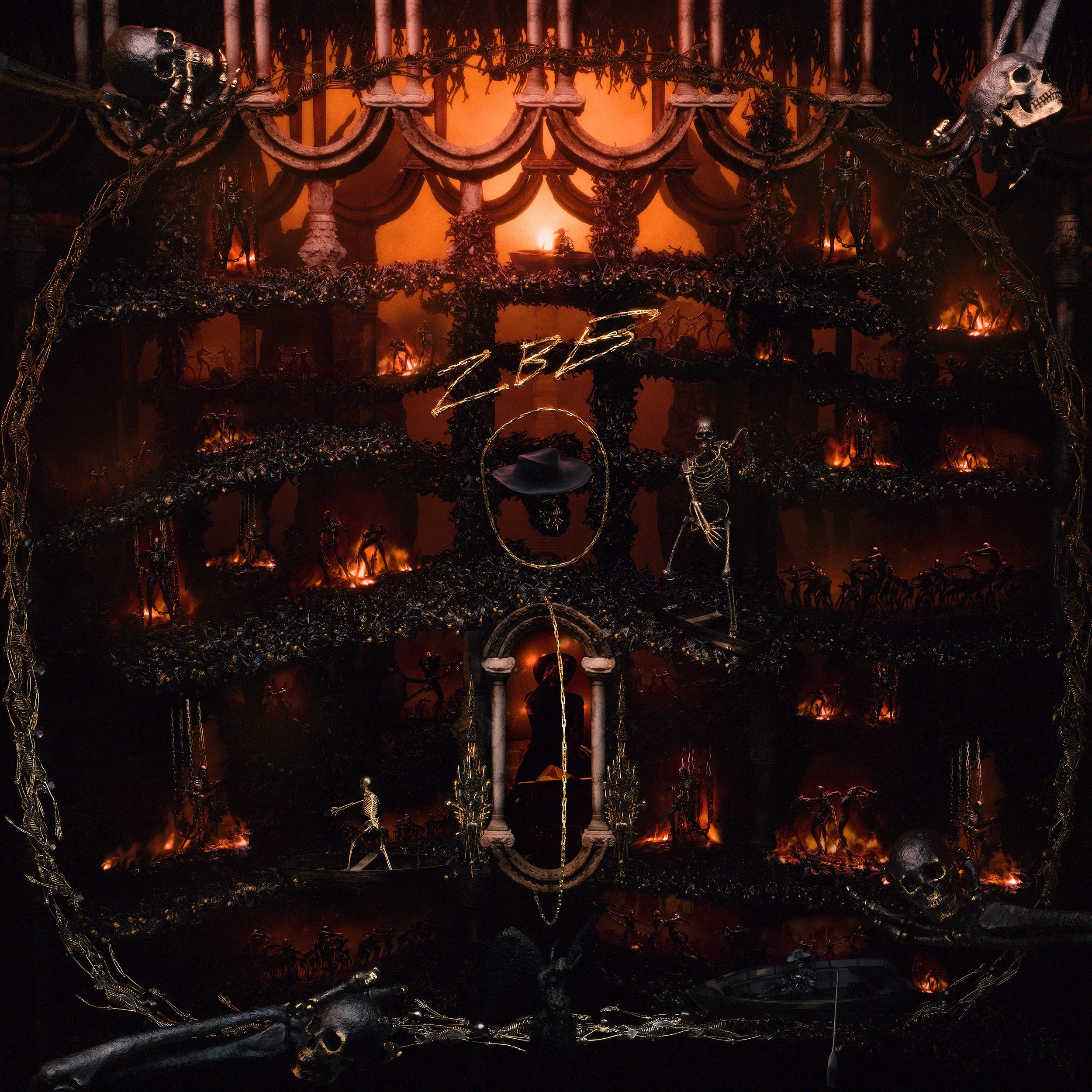
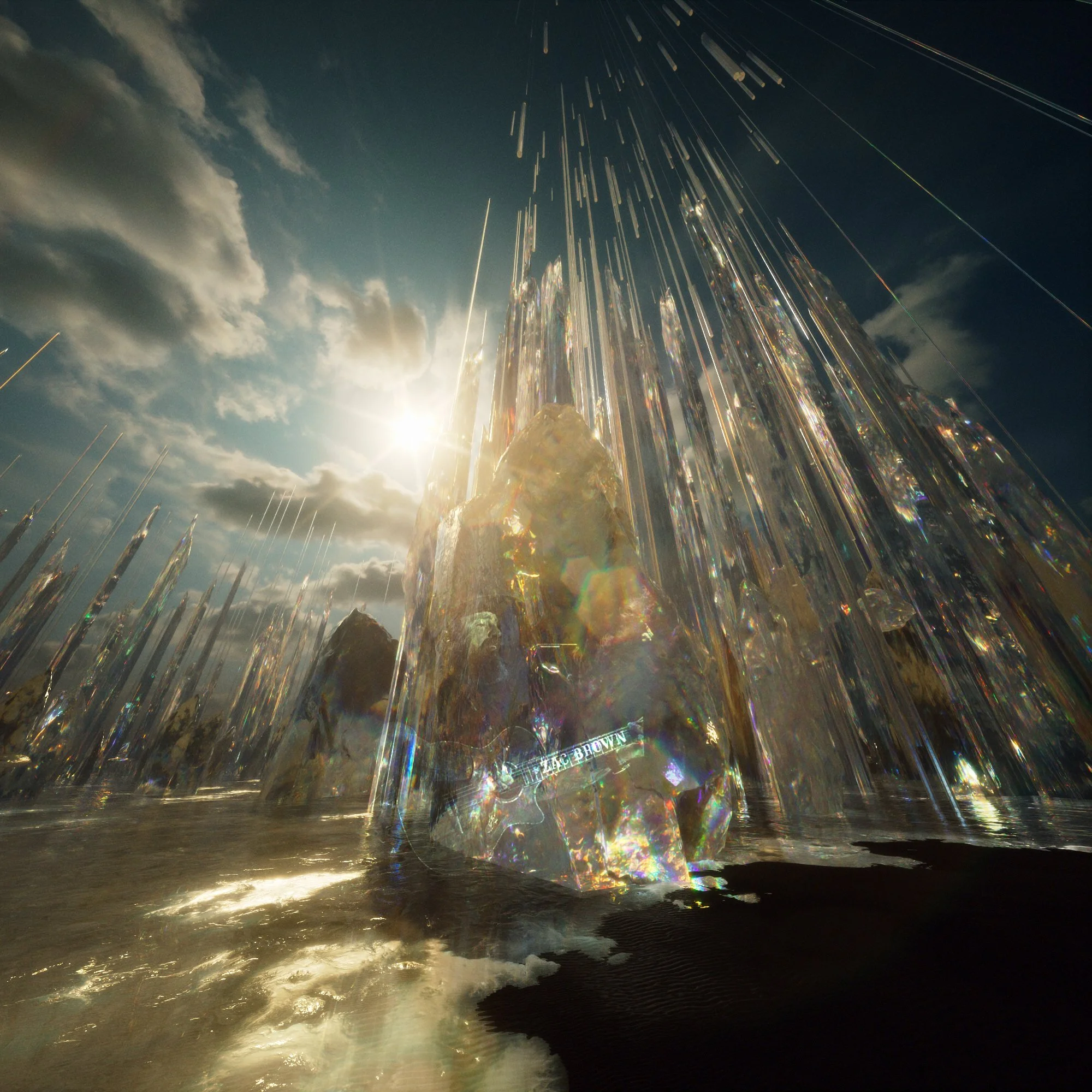
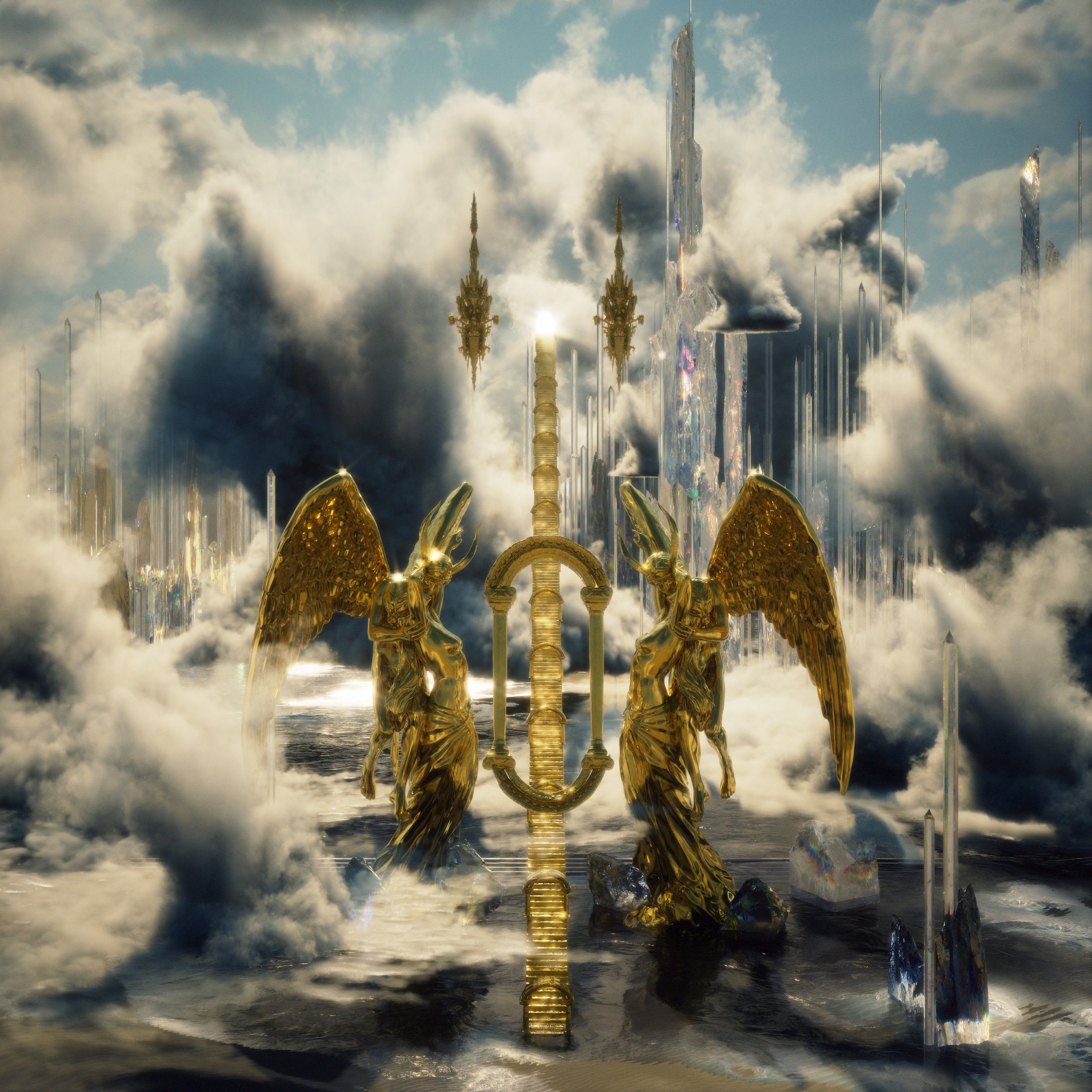
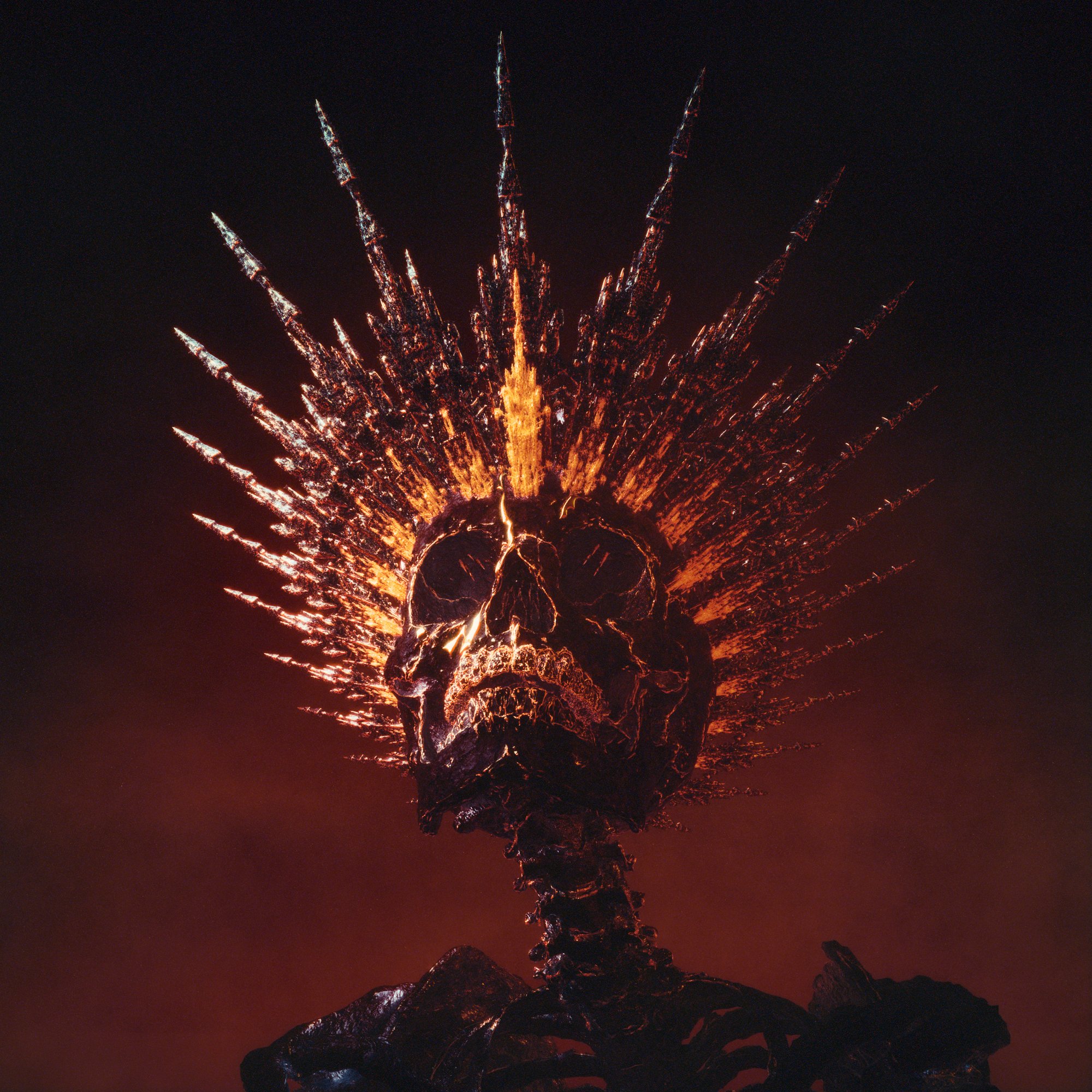
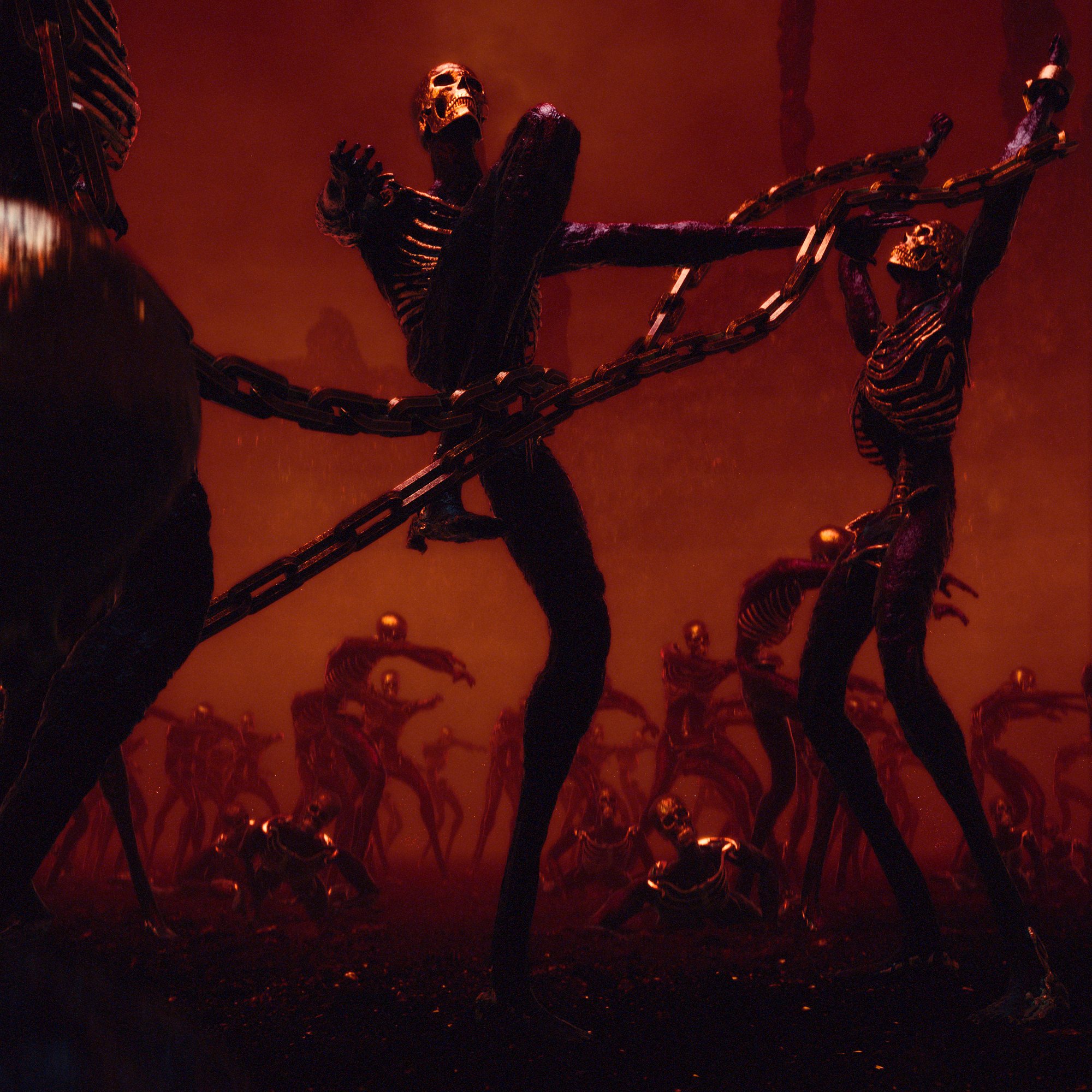
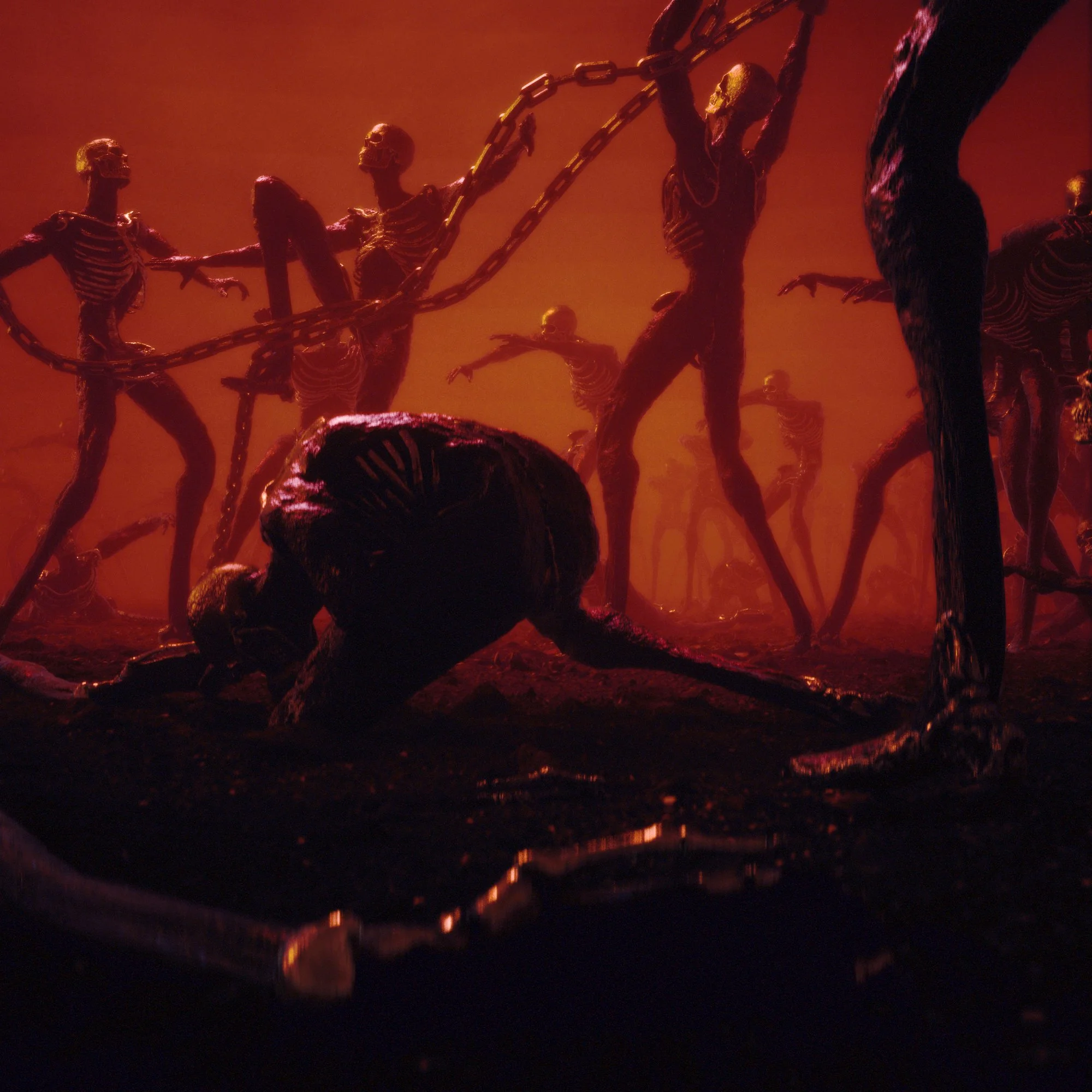
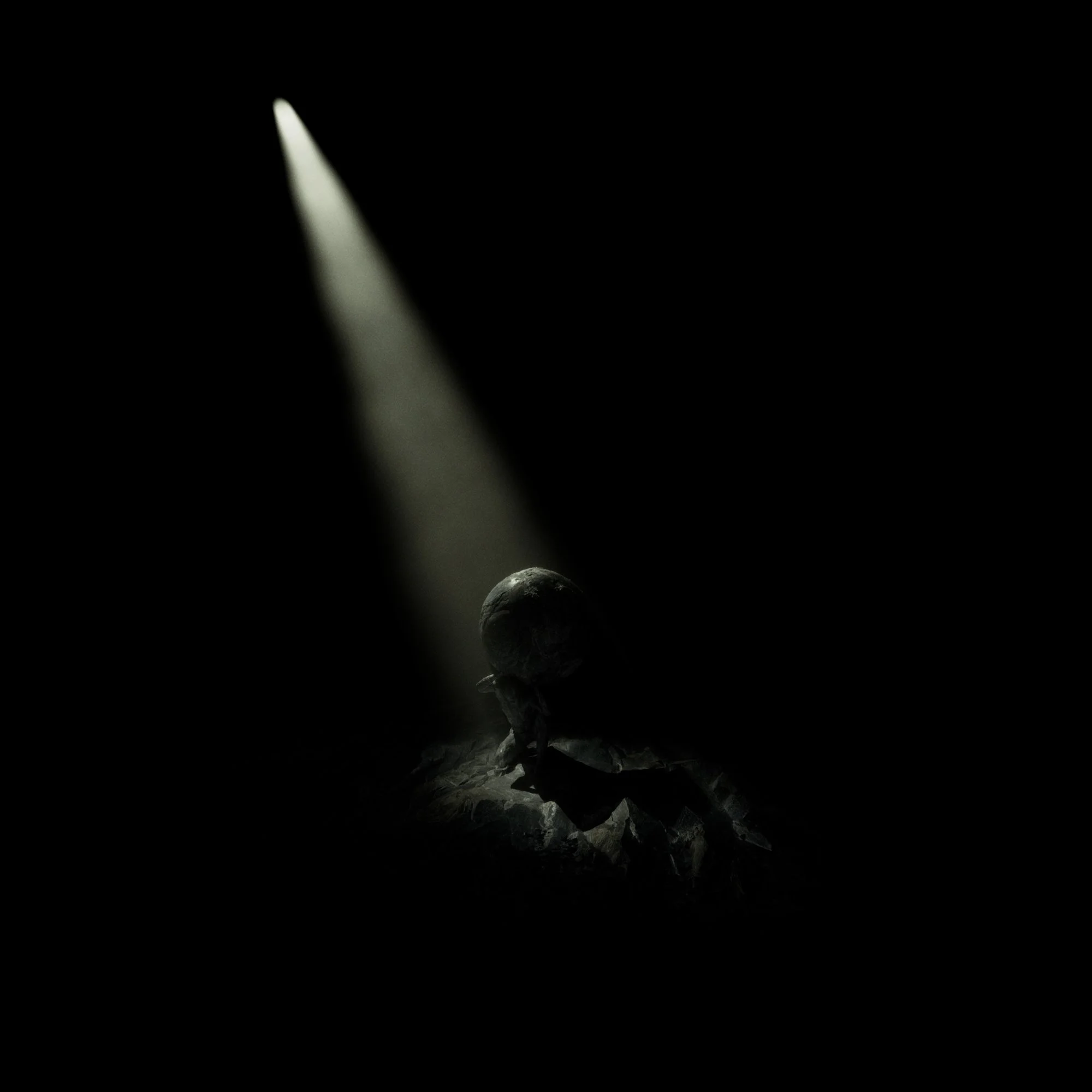
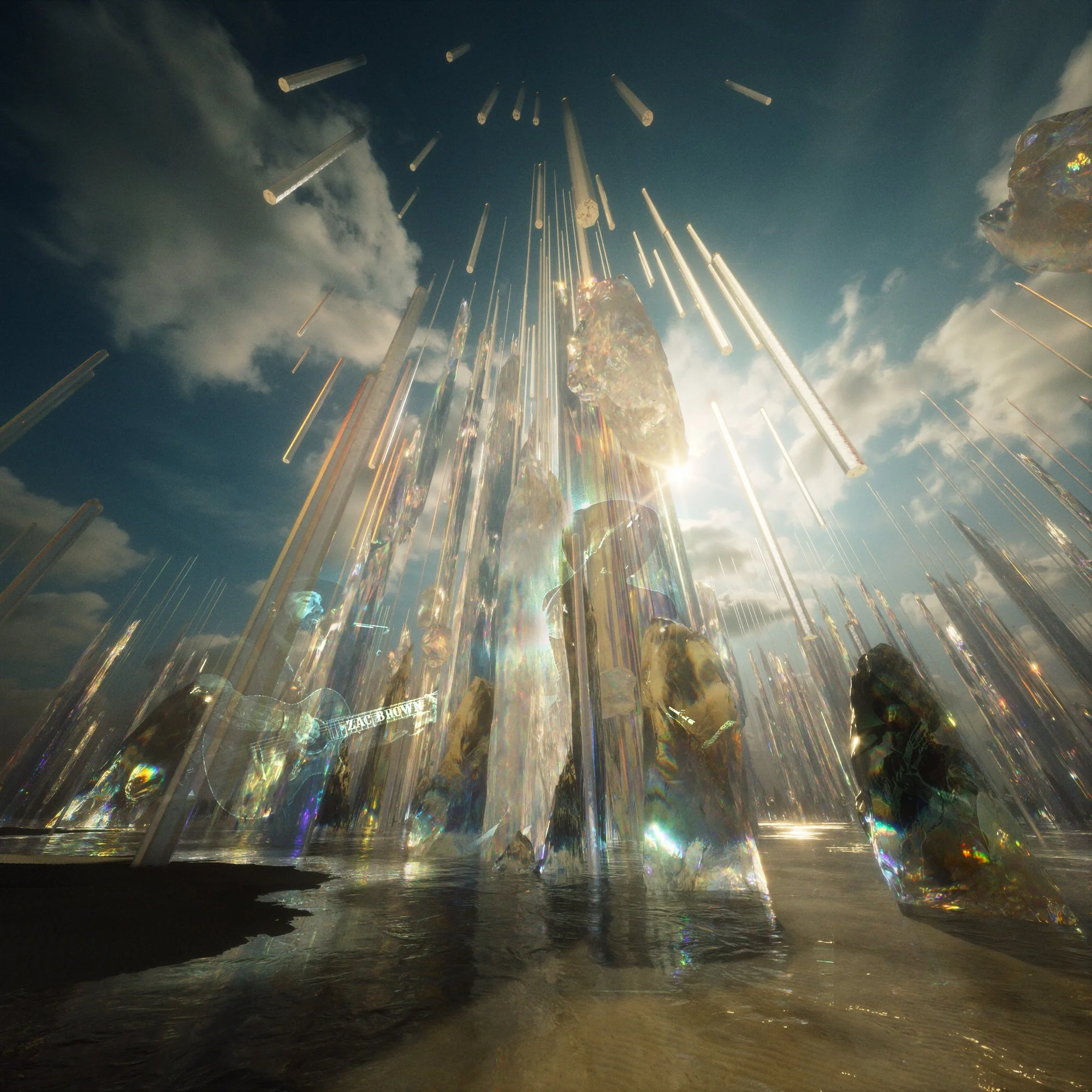
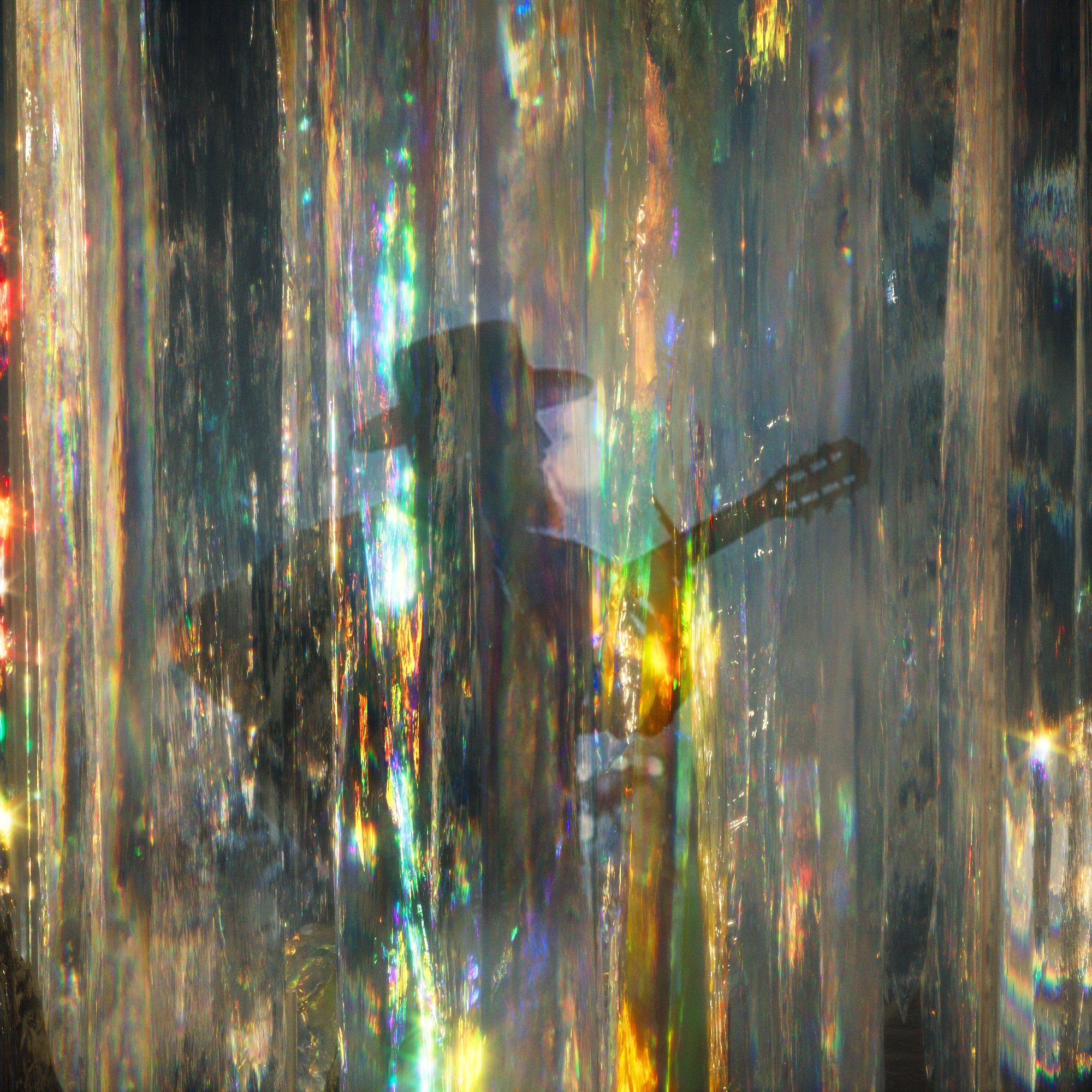
Zac Brown Band’s “Love and War” transforms the Las Vegas Sphere into a fantastical cinematic autobiography, visually mapping the artist’s journey from childhood trauma to spiritual transcendence through Joseph Campbell’s Hero’s Journey framework. The original 33-song setlist is naturally divided into three acts: Act I opens by diving into Zac’s mind, establishing his “Ordinary World” of Southern poverty and abuse with “Heavy is the Head,” where a massive skull wearing a corrupted crown reveals an industrial hellscape of depression and addiction, golden skeletons climbing endlessly toward unattainable power. This darkness continues through songs examining burden, escape, and primal rage, each visual concept designed to externalize internal demons. Act II follows Zac’s Alaskan adolescence, exploring father-son relationships, first love, and the trials that forge character, while Act III depicts his return home as a transformed sage, embracing simple pleasures like “Chicken Fried” and “Homegrown” before culminating in “Remedy,” where a crystalline city of sapphires and rubies refracts divine light across the audience, symbolizing love as universal medicine.
HOW WE WROTE IT
The visual development process began with deep lyrical analysis, identifying metaphors and emotional arcs within each song that could support the overarching transformation narrative. Each song was treated as an independent scene within a larger film, possessing its own distinct visual identity and aesthetic language while contributing to Zac’s character arc. This created a unique challenge: how could we expect lyrics, which tell their own stories, to fit neatly into the beat structure of the Hero’s Journey? We solved this by dislocating the lyrics from literal interpretation, using symbols and metaphors that could serve both the song’s meaning and its position within the narrative arc, giving us creative control over each song while respecting the character’s transformation from darkness to light. Then we designed the visual sequences around those symbolic frameworks. Using a nested three-act scene structure borrowed from screenplay format, each song’s visual sequence was broken into Setup-Climax-Resolution beats, with each beat further subdivided into its own mini-arc, allowing individual songs to stand as complete visual experiences while their carefully designed transitions maintained narrative momentum throughout the show. Recurring visual motifs, golden skeletons, sweeping landscapes, silhouetted figures, and natural transformations thread through multiple songs, creating a cohesive visual language that unifies diverse aesthetics ranging from Beksiński-inspired industrial nightmares to ethereal cloud journeys. Strategic use of backlighting and negative space established visual continuity while solving technical challenges across the Sphere’s unique 18K resolution wraparound canvas, which demanded that every visual work as both intimate detail and epic scale, requiring careful consideration of how imagery would surround the audience and tell his story rather than simply play in front of them.
DESIGNING AROUND LIMITATIONS
Technical and logistical constraints shaped creative decisions throughout development. The Sphere’s processing capabilities enabled balancing CG-rendered landscapes with pre-shot practical footage and live IMAG (live streaming) elements, creating a hybrid approach that integrated band performances into fantastical environments. The venue’s immersive nature lent itself to wide landscapes as backdrops to fly through, so I started by visualizing worlds for each song that would support the scene and story before focusing on characters and symbols. Rendering limitations necessitated strategic choices about when to use complex animations (skeletal figures, embers, flowing fabric) versus simpler geometric animations (rotating waterlines, morphing landscapes), and also influenced pacing, allowing contemplative moments like time-lapse flower blooms in “Butterfly” to provide visual rest between intense sequences like the burning propaganda walls of “Fuck That Noise.” Ultimately, every visual choice served the central narrative: an unhealed man thrust into celebrity’s spotlight discovers that fame’s crown weighs heaviest on unprepared shoulders, igniting a transformative journey from isolated burden to spiritual connection, from childhood wounds to protective love, from heavy head to remedy found in universal compassion.
WHAT I DID
These visual concepts were developed at Prodigal Pictures under Creative Director Ben Hurand, who maintained the show’s creative vision throughout production. When Ben first contacted me he had already pitched and won the job and the concept for Heavy is the head was already locked in. and our job woul dbe to concept for each song My primary contribution extended beyond overall design and art direction to include narrative development, writing, and structuring each song I designed with detailed three-act scripts that ensured every visual element served the larger story and assisted downstream directors and production teams in maintaining narrative consistency. My design frames were built to be production-ready, and handed off so animators had much of the heavy lifting sorted out. Once designs were approved, we could jump straight into previs that could be rendered immediately. The way I design frames is to do everything in the IPR, like a cinematographer working in-camera. This technique ensured that anything we designed looked great without imposing a heavy downstream compositing load. Art Director Marria Menshikova, Ben, and I worked closely with Zac Brown and Tyler Lord to develop the visual direction for each song. This case study represents the original setlist design, though not all songs were ultimately produced, and the setlist changed dramatically over the year-long project. Several concepts were passed on to other production companies, many of which maintained the narrative foundations established in initial development. This ambitious vision was realized through collaboration with a talented team of artists. Detailed credits outlining individual contributions per song are provided.
BIBLICAL AND LITERARY INFLUENCES
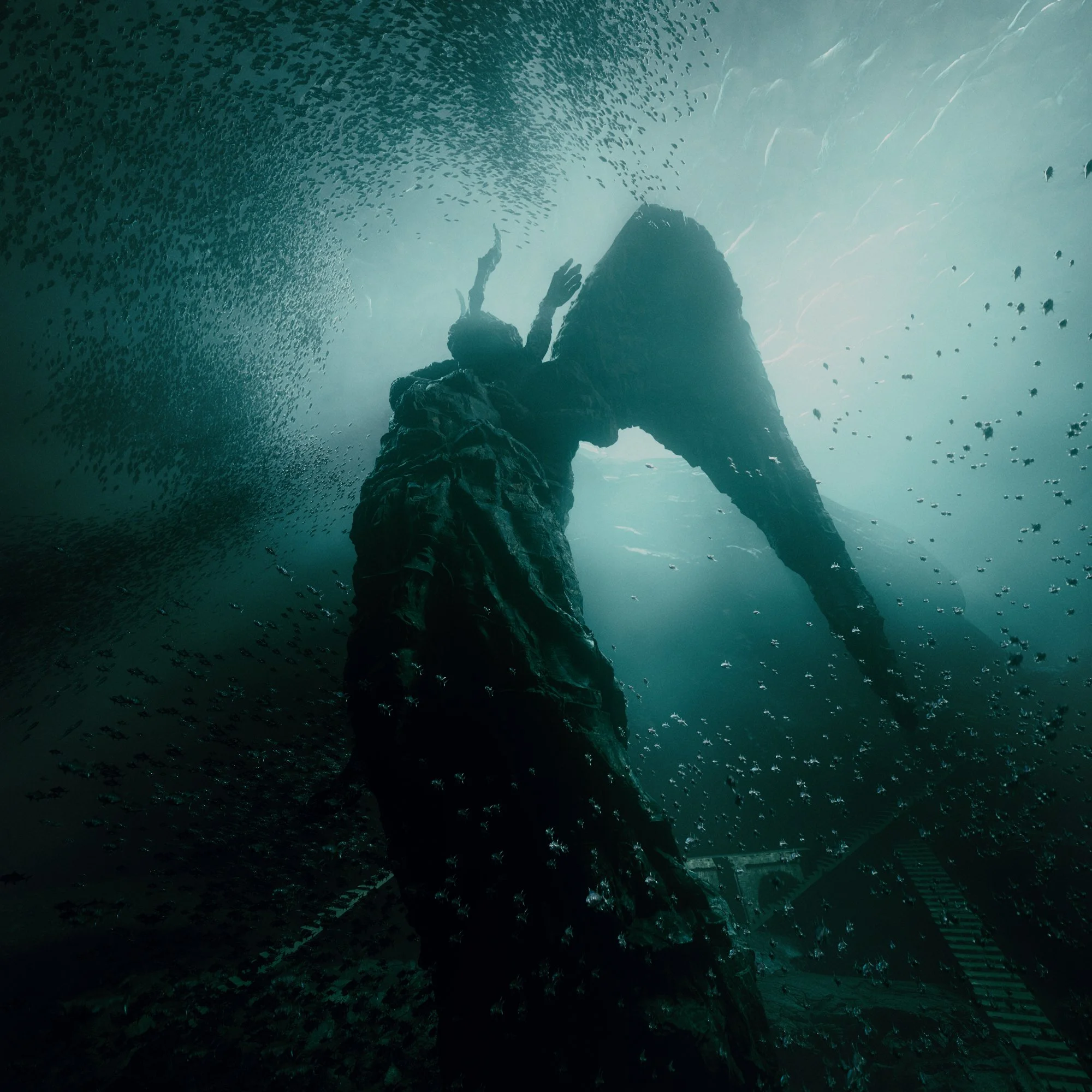
Spiritual transformation formed the narrative backbone of “Love and War,” drawing from biblical imagery, classical literature, and dark Renaissance art. The show’s opening, “Heavy is the Head,” reimagines Dante’s Inferno through the visual language of Hieronymus Bosch’s hellscape paintings, with industrial wastelands and tormented figures climbing over one another, contrasted against a Garden of Eden rendered in painterly Baroque darkness. The crystalline city in “Remedy” references Isaiah 54:11-17, where sapphires and rubies represent God’s blessing and restoration, manifesting as a prismatic metropolis radiating divine light. The cherub transformation echoes protective angels, embodying sacrificial love, while the journey through clouds evokes Genesis creation imagery. The demon cowboy antagonist draws directly from Judge Holden in Cormac McCarthy’s “Blood Meridian,” representing seductive evil and the darkness that justifies our worst impulses. Fire becomes biblical purification, burning away false values and refining through trial, while water imagery symbolizes spiritual rebirth. The show traces a path from Dante’s inferno to its exact inversion, heaven’s golden gates, embodying the promise that love leads us all to the promised land.


CHARACTER DESIGN
THE INNER CHILD
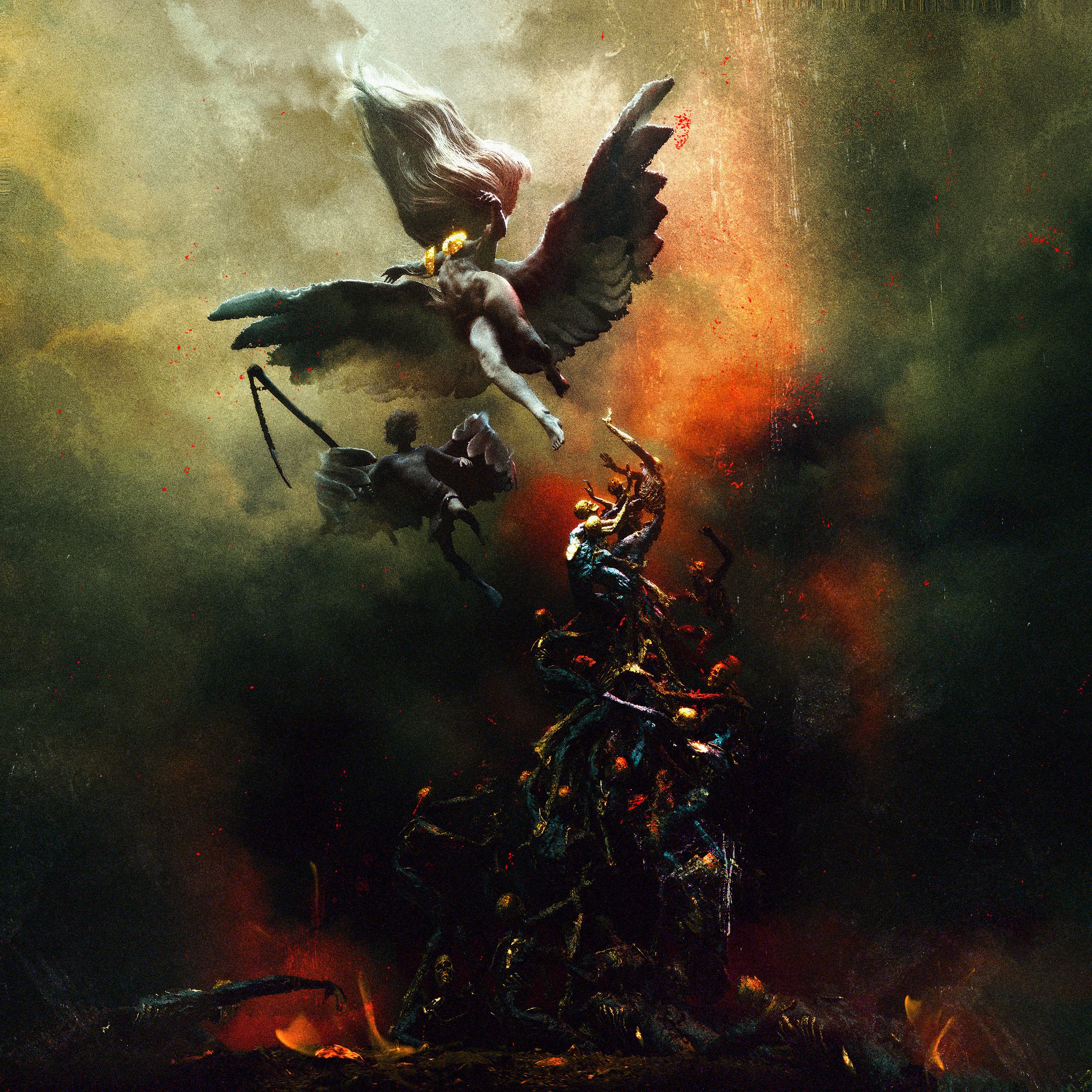
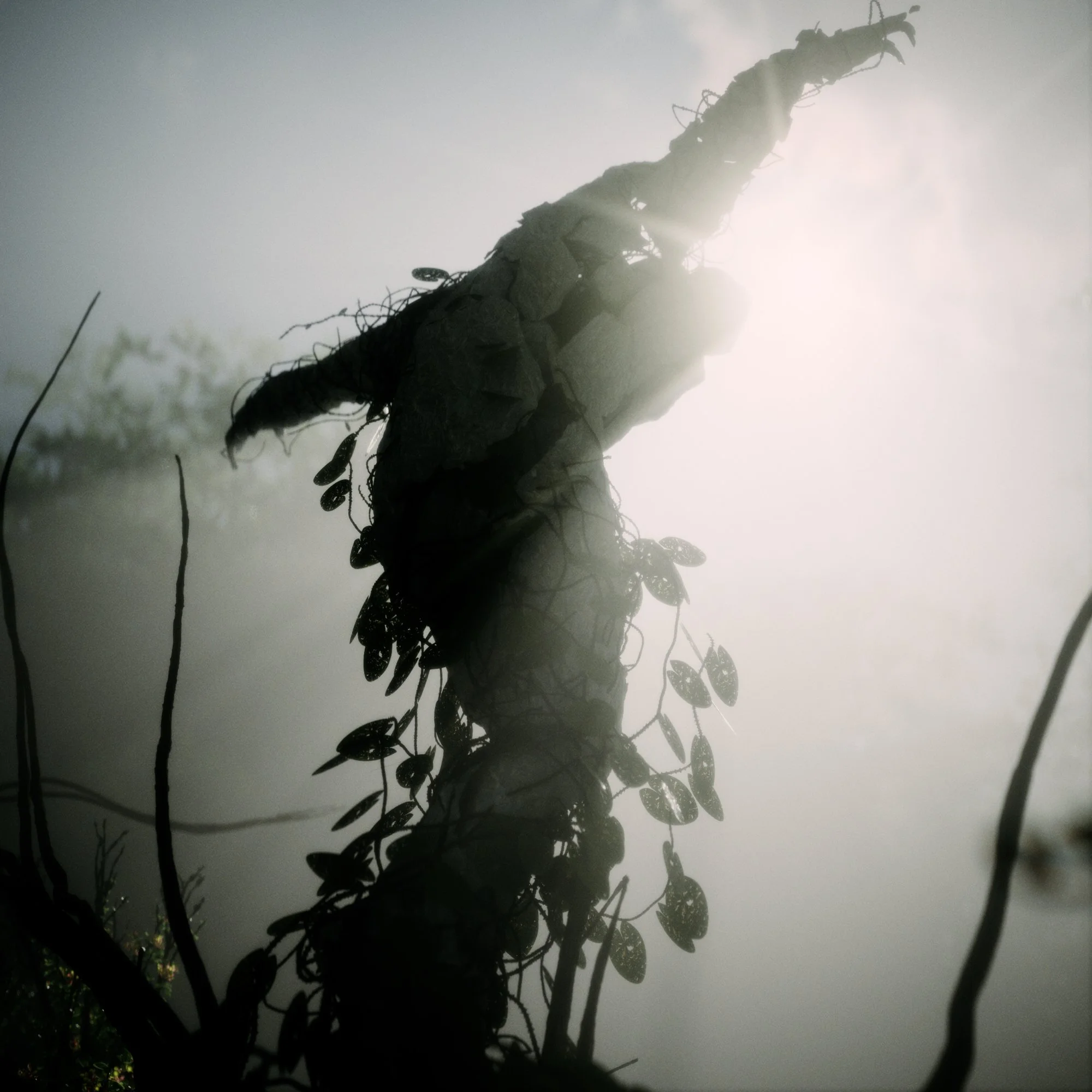
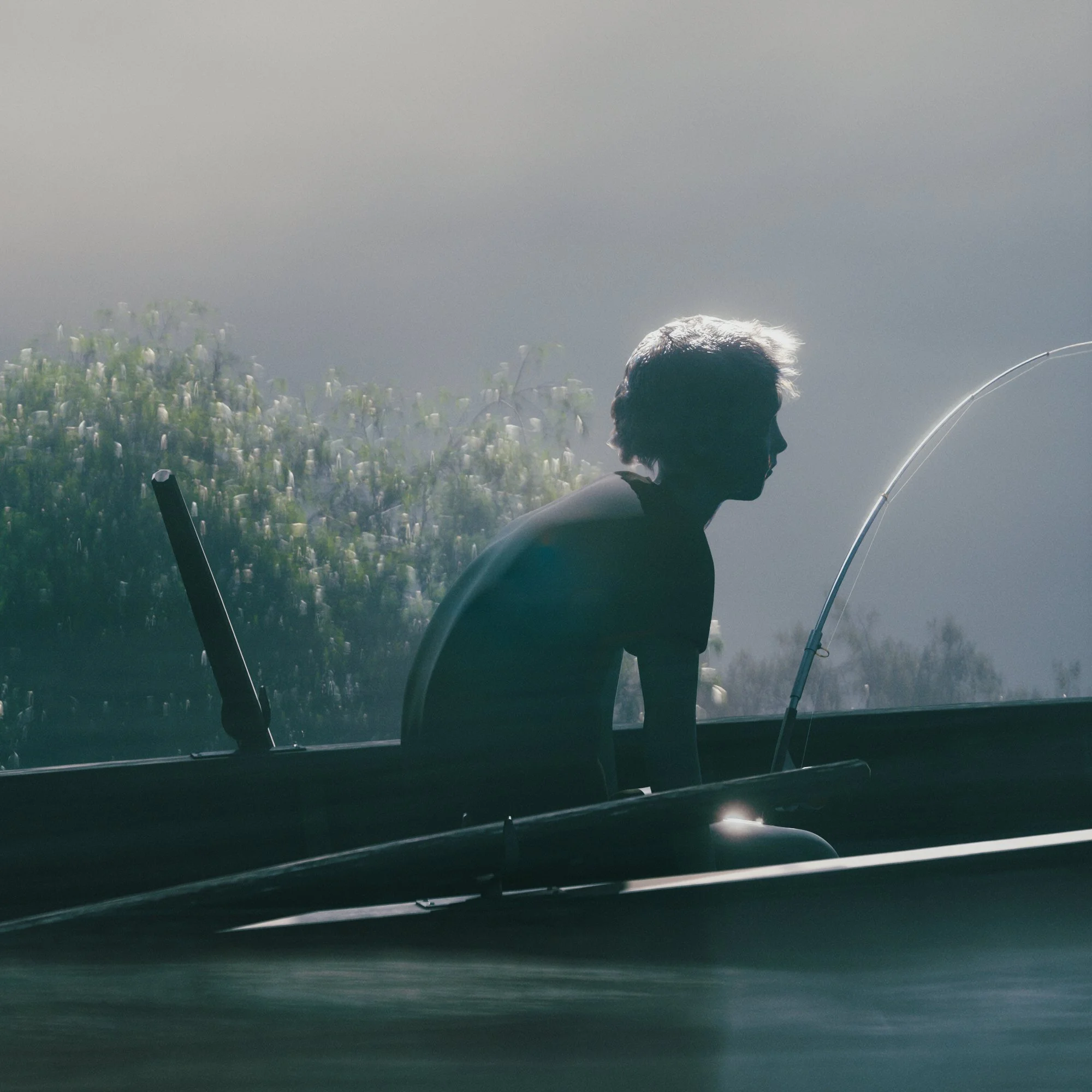
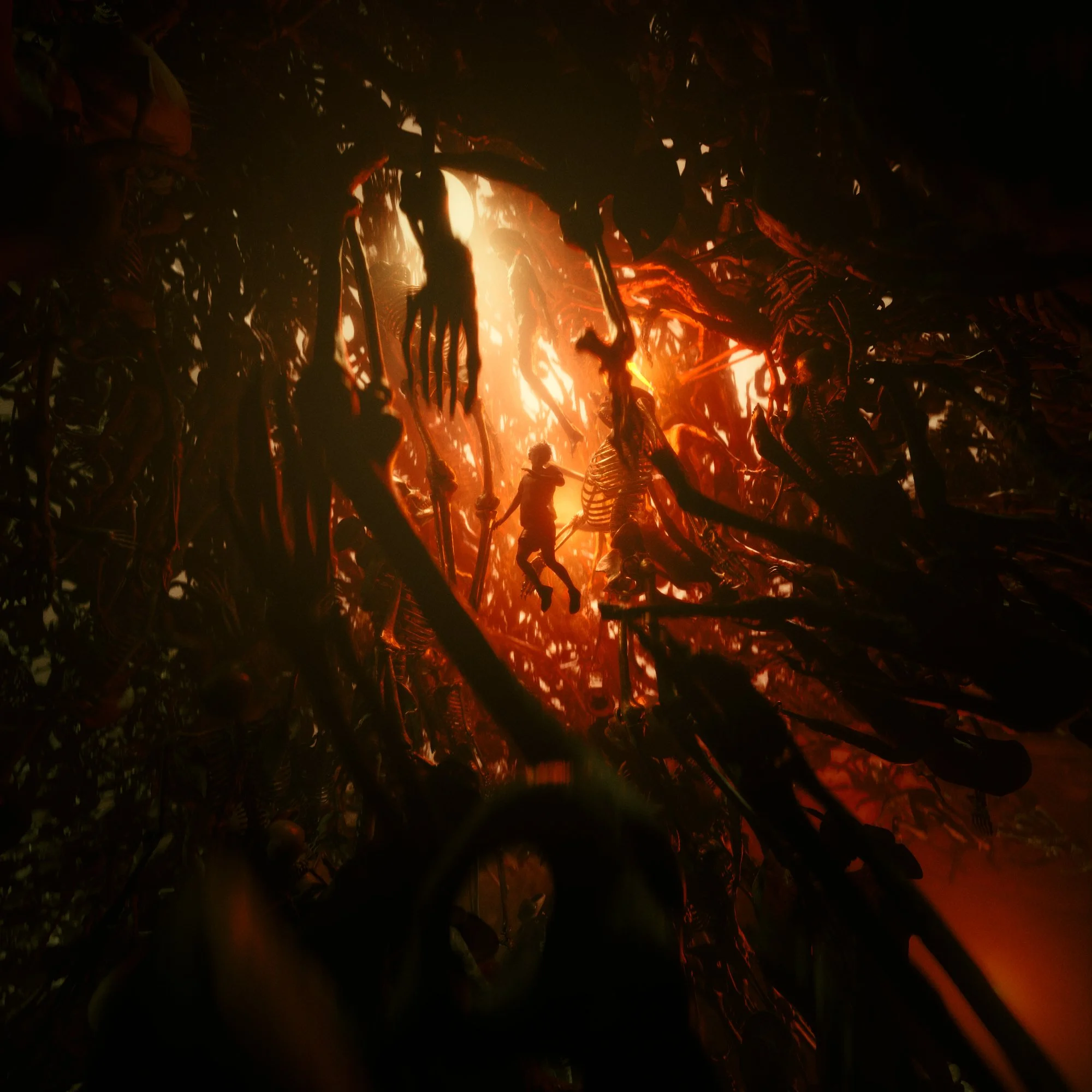
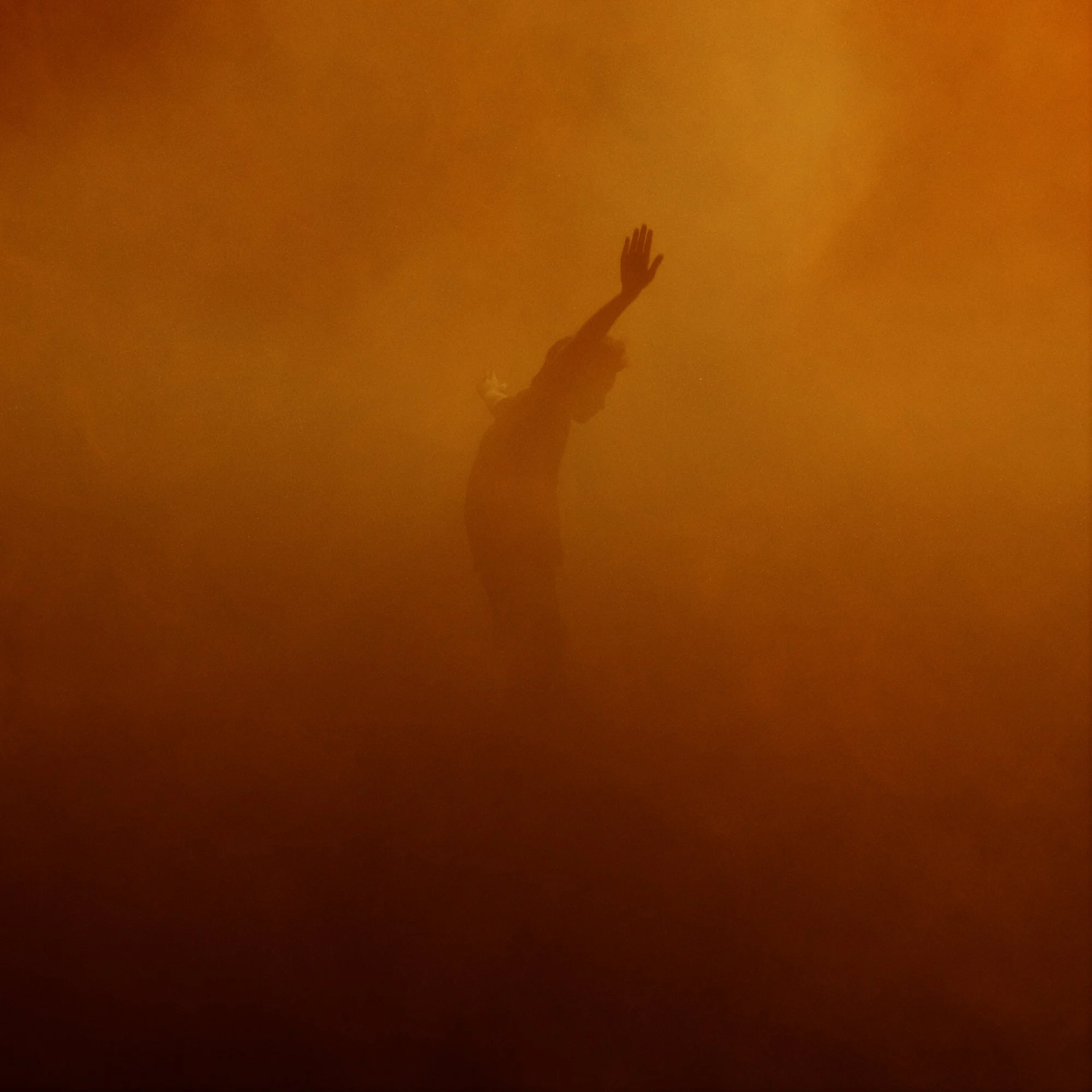
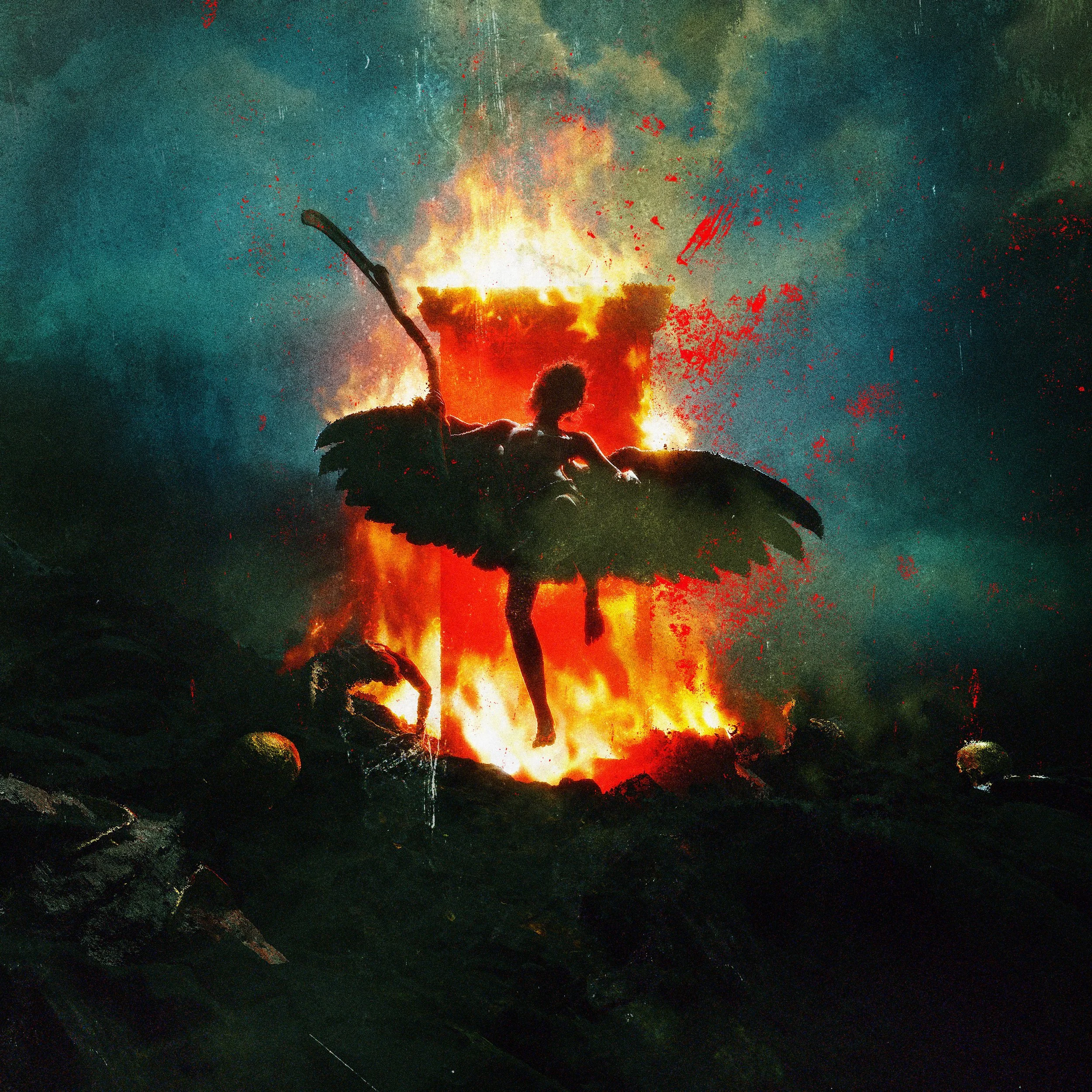
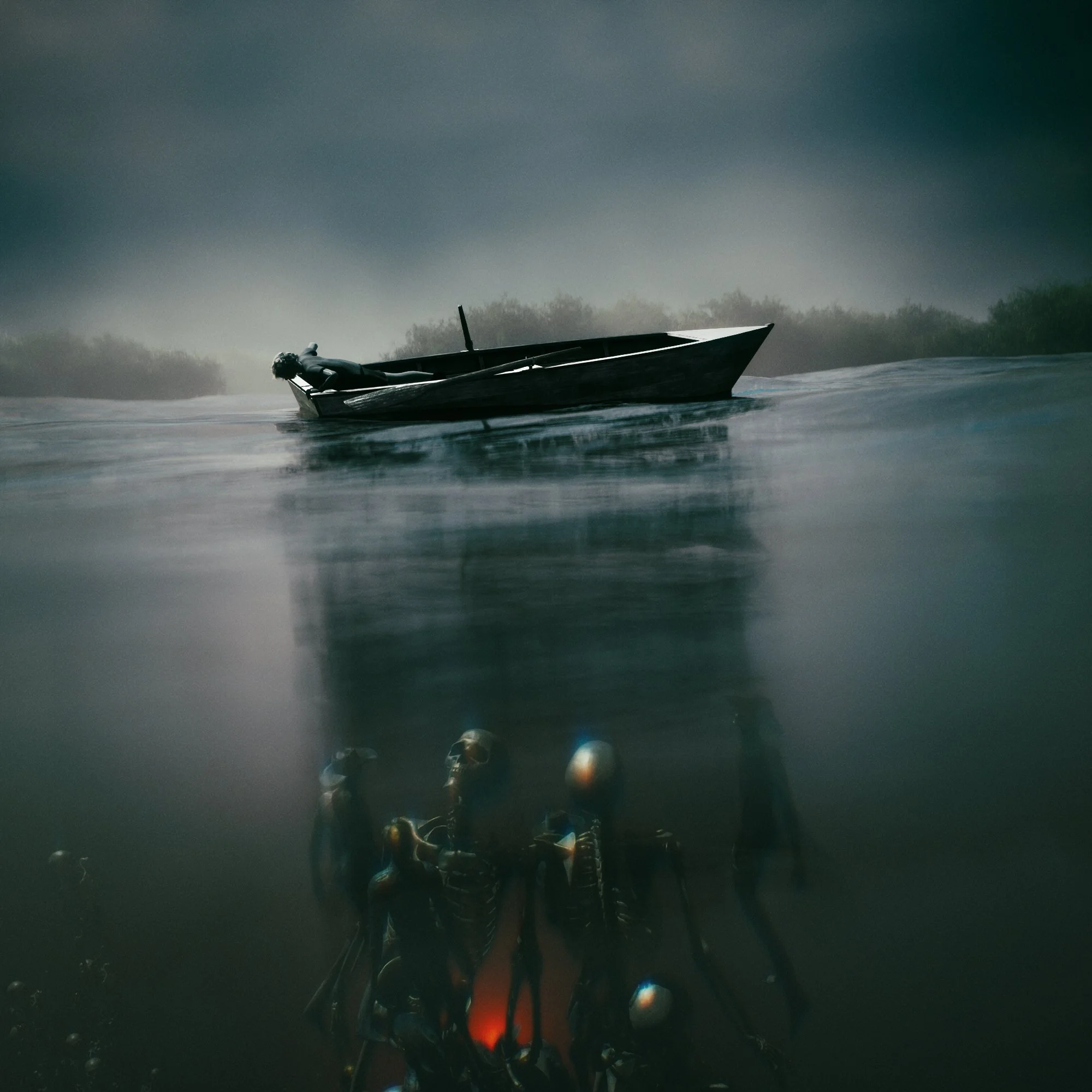
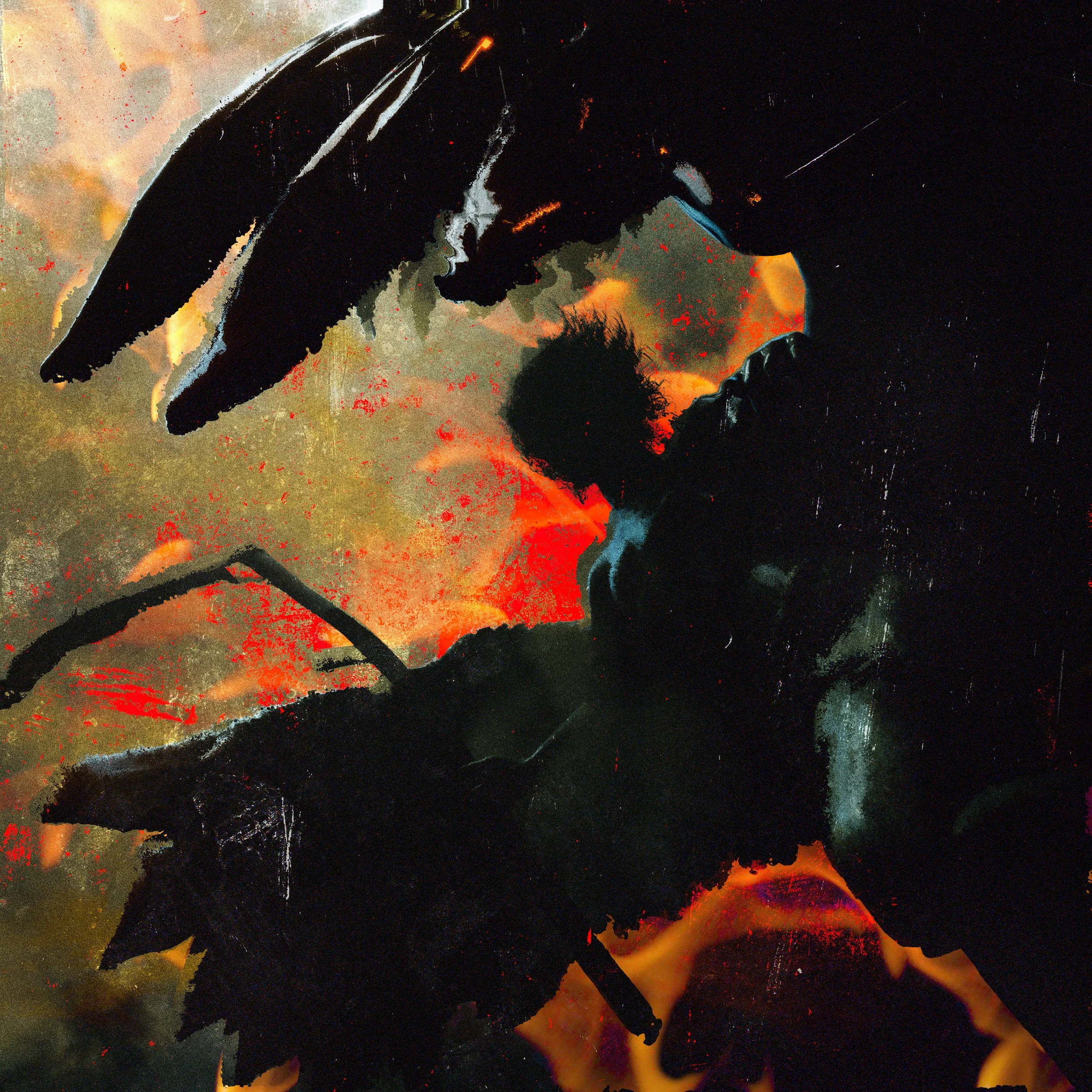
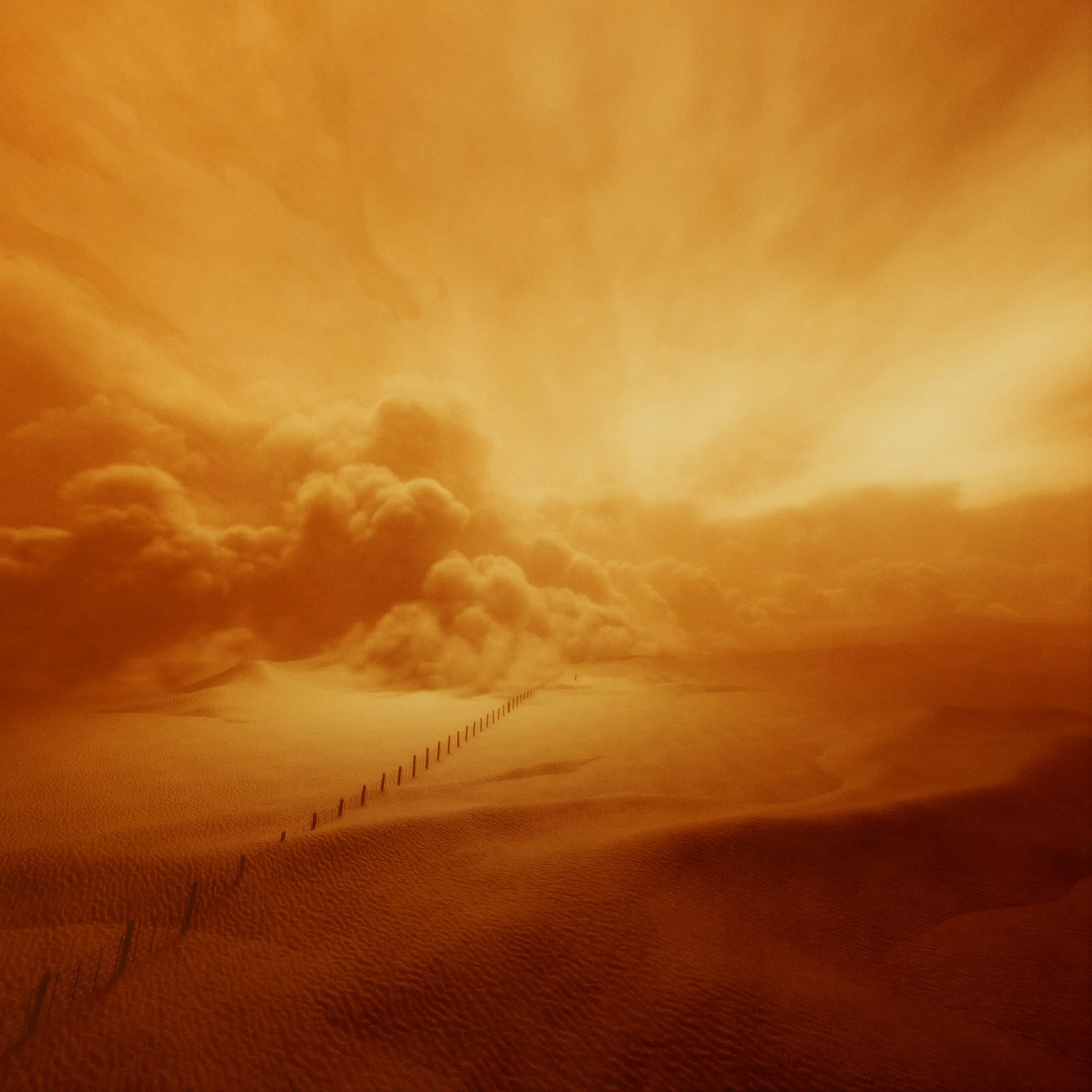
The visual protagonist manifests as Zac’s childhood self, rooted in Jungian psychology’s concept of the inner child carrying unhealed trauma into adulthood. Throughout Act I, the boy appears vulnerable, clinging to fence posts during dust storms, fishing above demonic depths, and existing in contrast to the surrounding darkness. As the Hero’s Journey progresses, he transforms through trials, learning from his father, experiencing first love, and forging resilience through harsh lessons. The metamorphosis culminates in “Remedy,” where live-action footage shows adult Zac standing alongside his younger self before the crystalline city, symbolizing the reconciliation between the wounded child and the healed man. This evolution embodies the show’s central thesis: confronting childhood demons through fire and trial transforms the inner child into our greatest strength, integrating past and present into wholeness, spiritually awakened and capable of protecting others.
CHARACTER DESIGN: THE INNER DEMONS
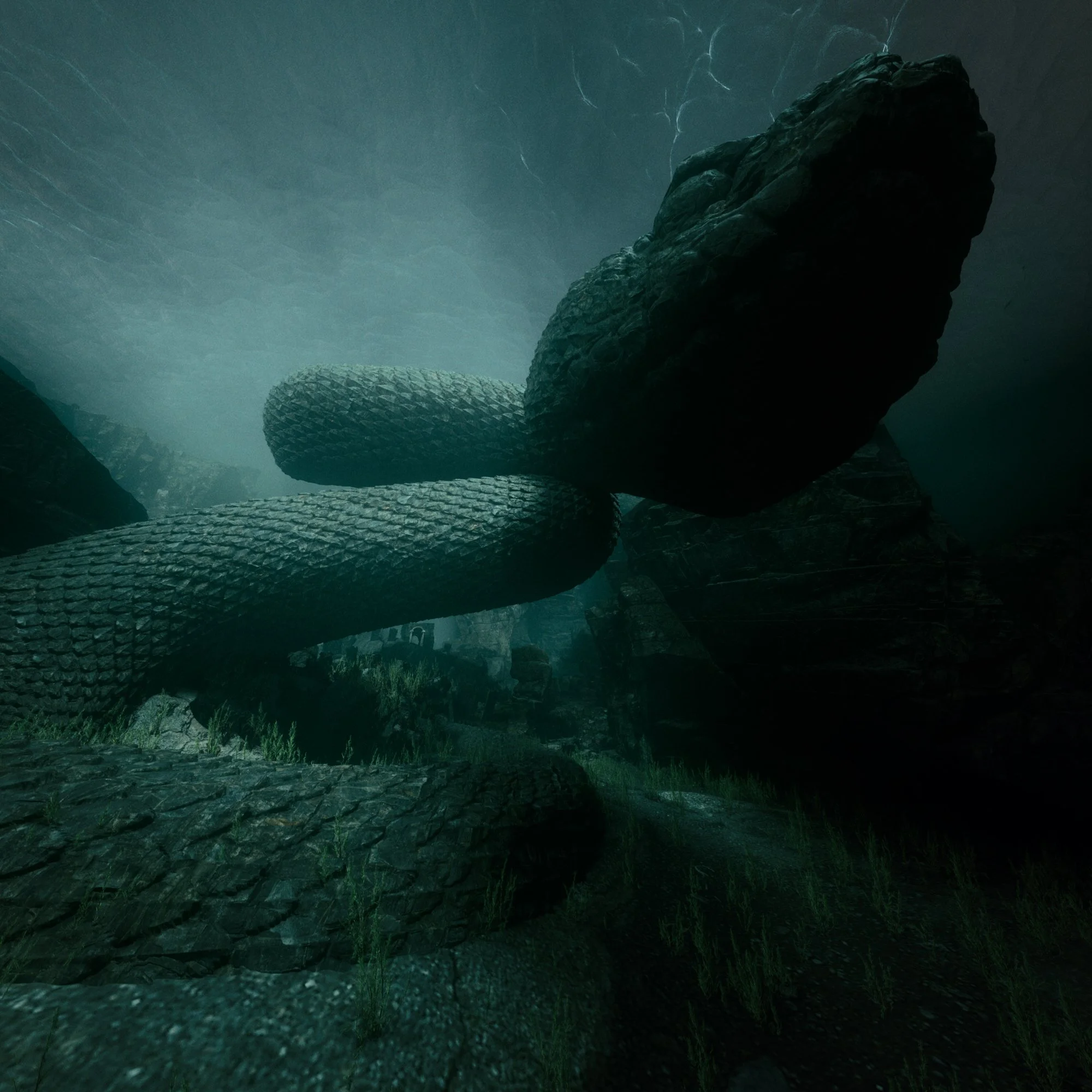
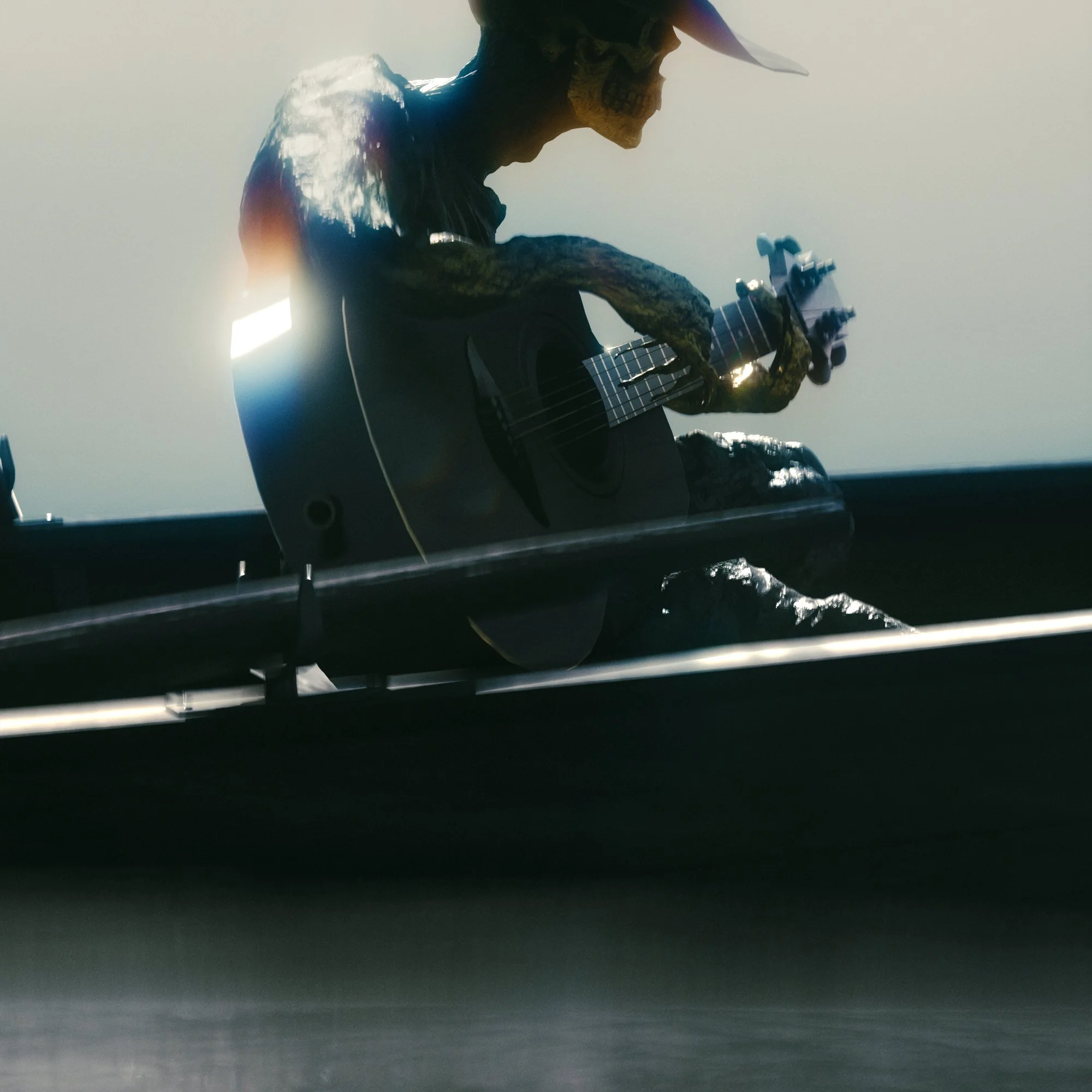
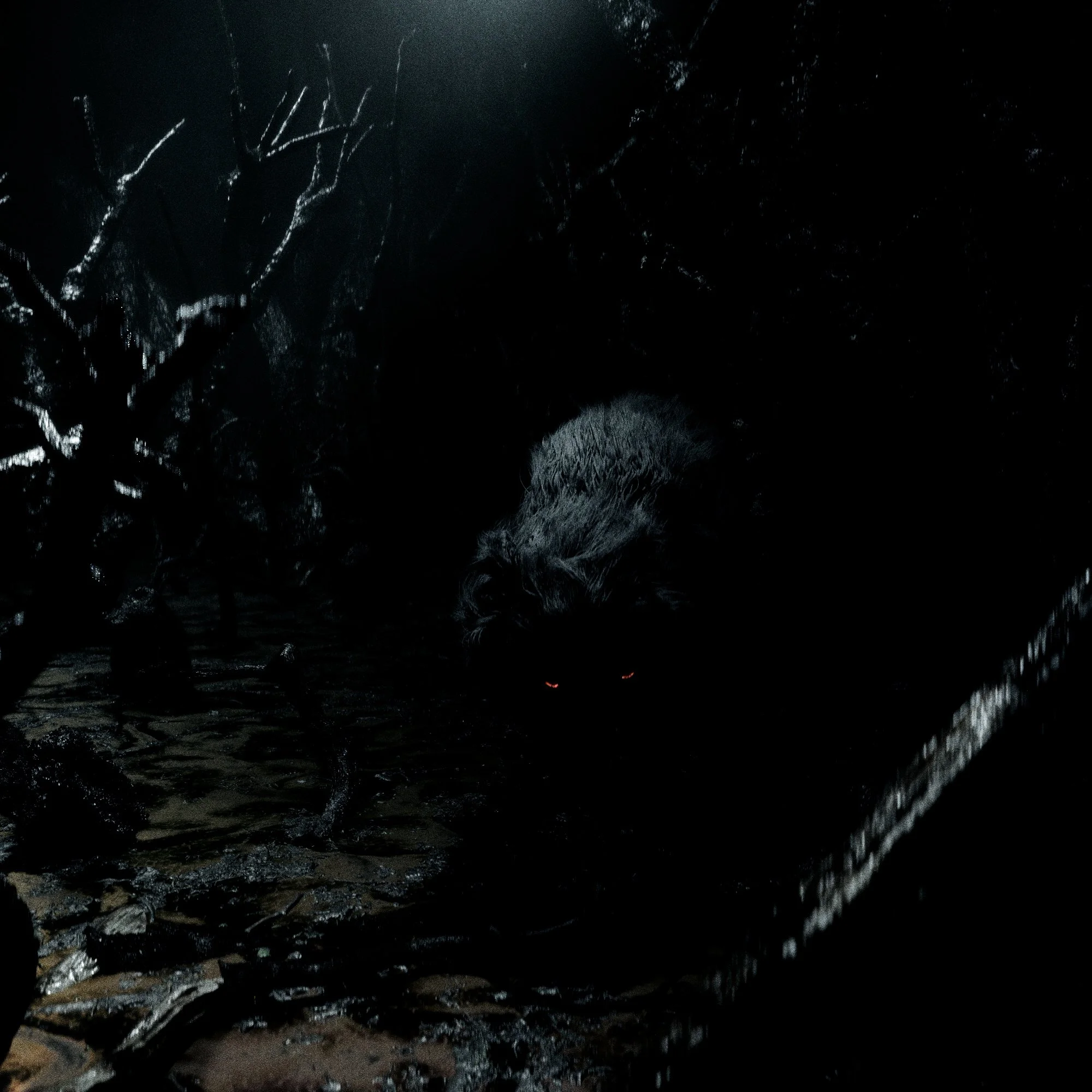
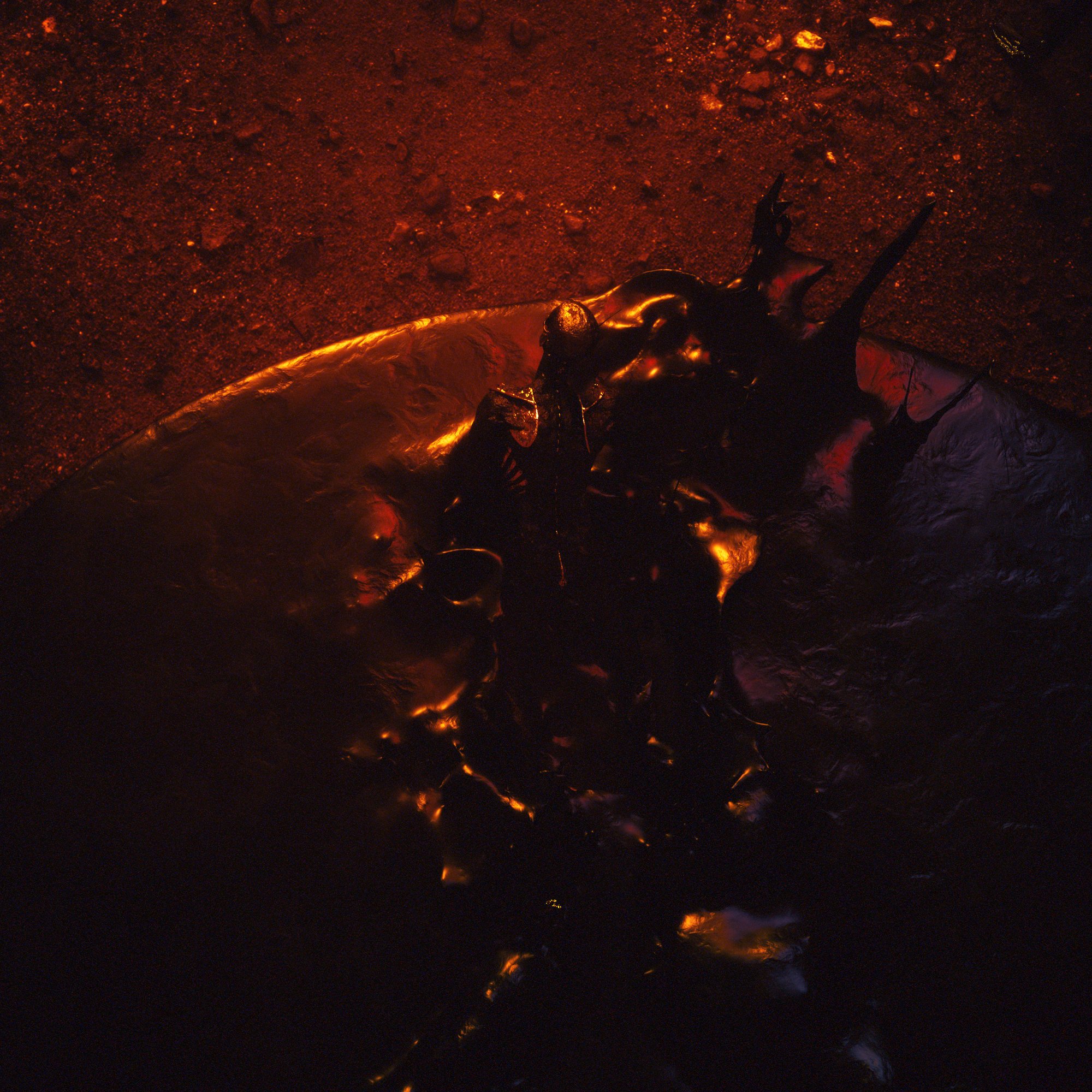
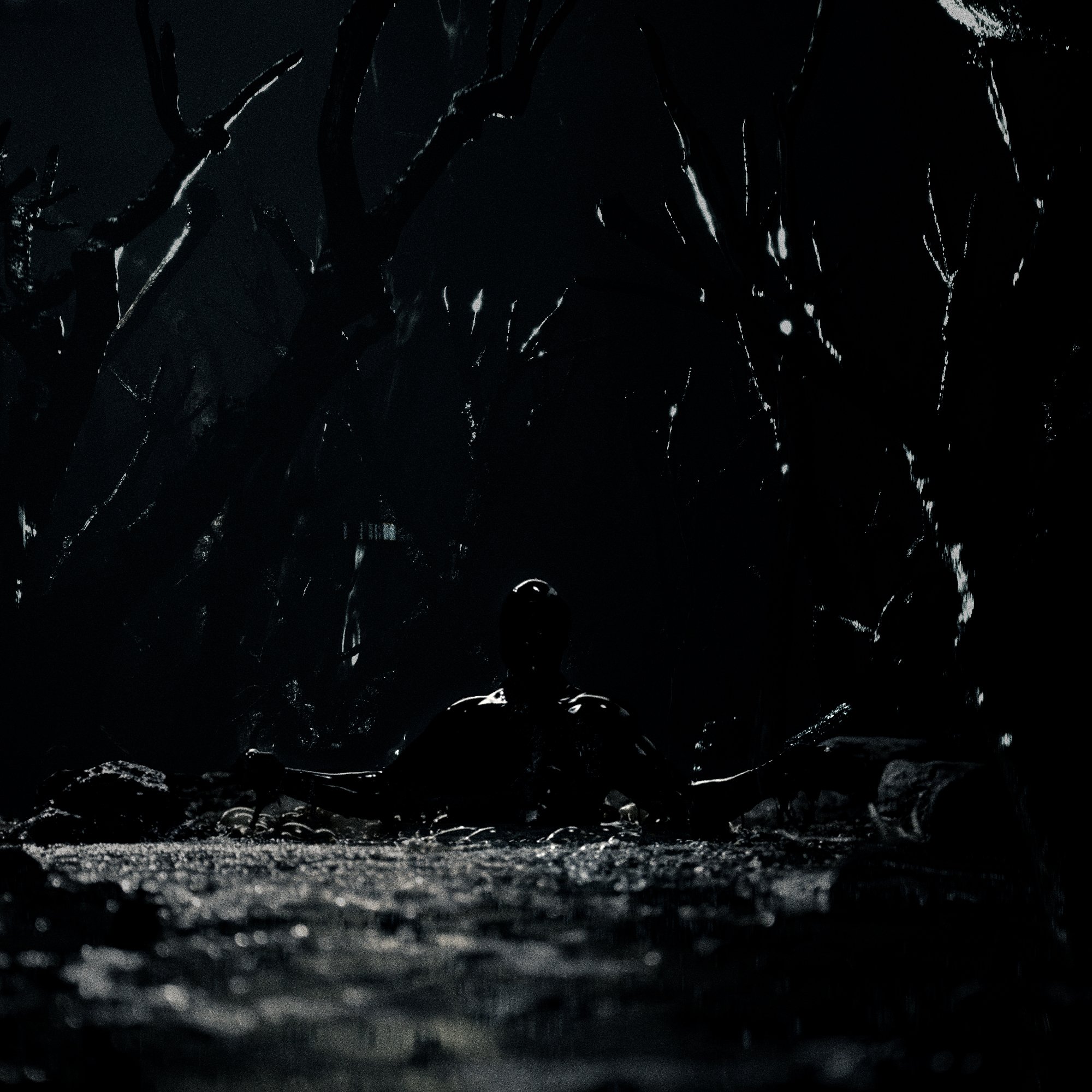
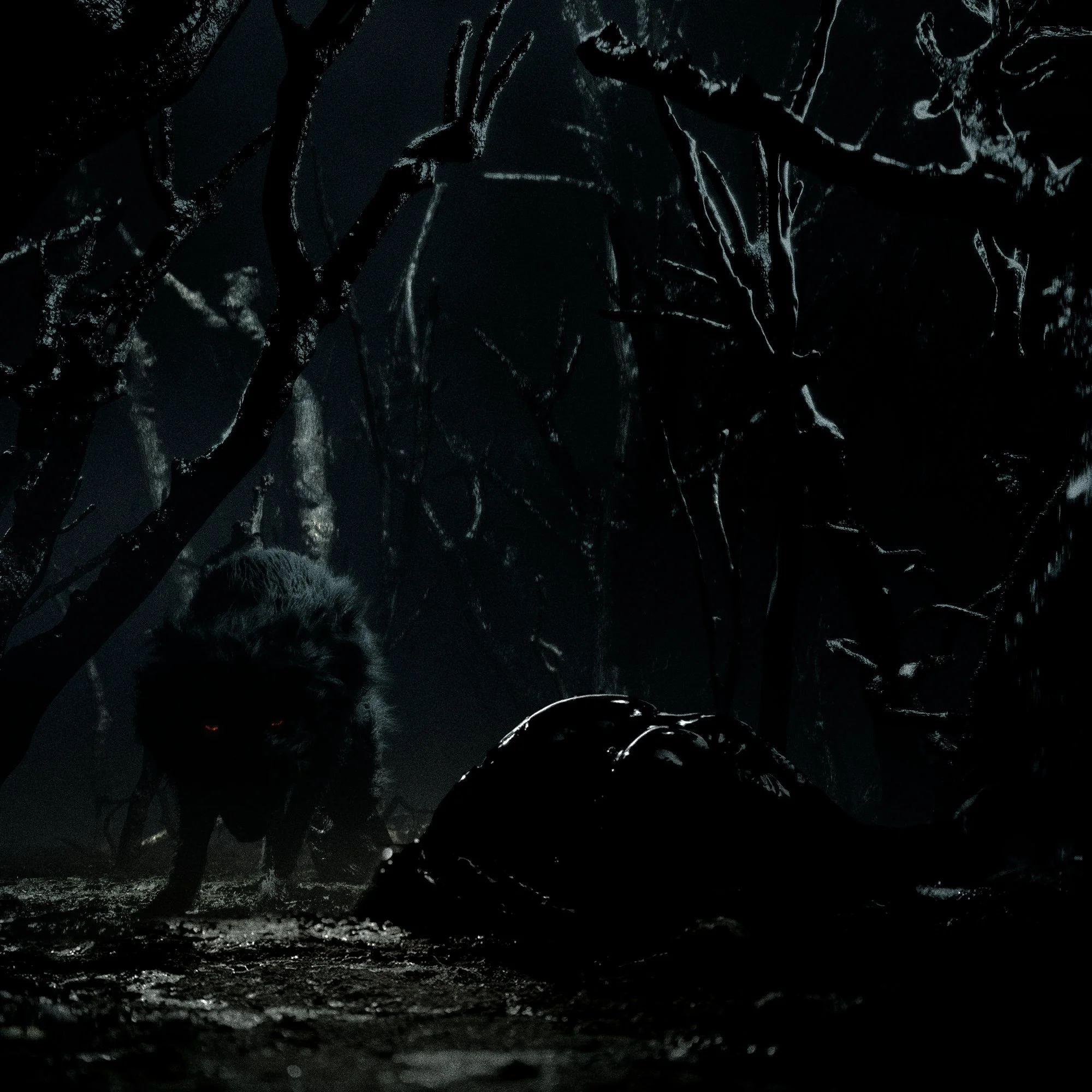
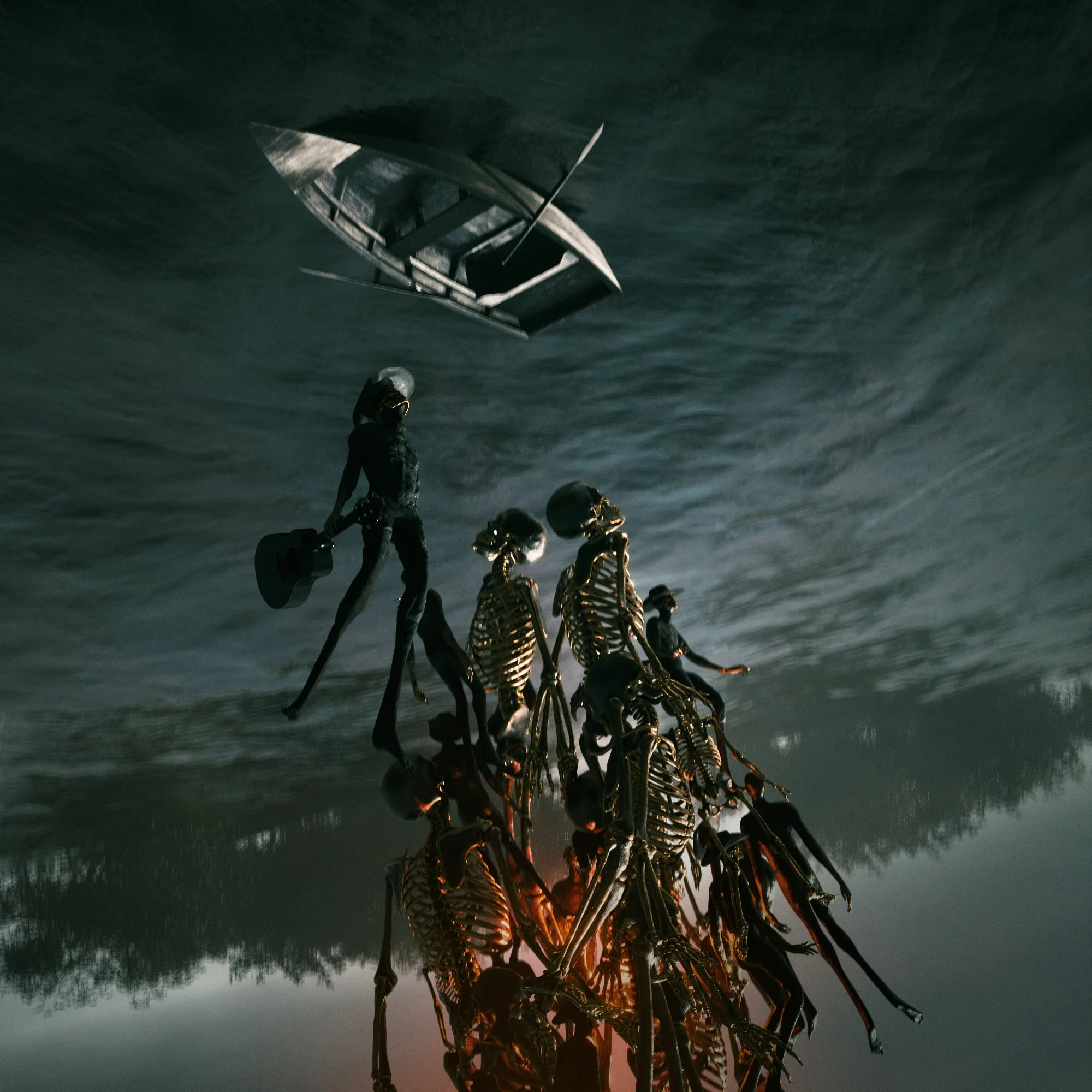
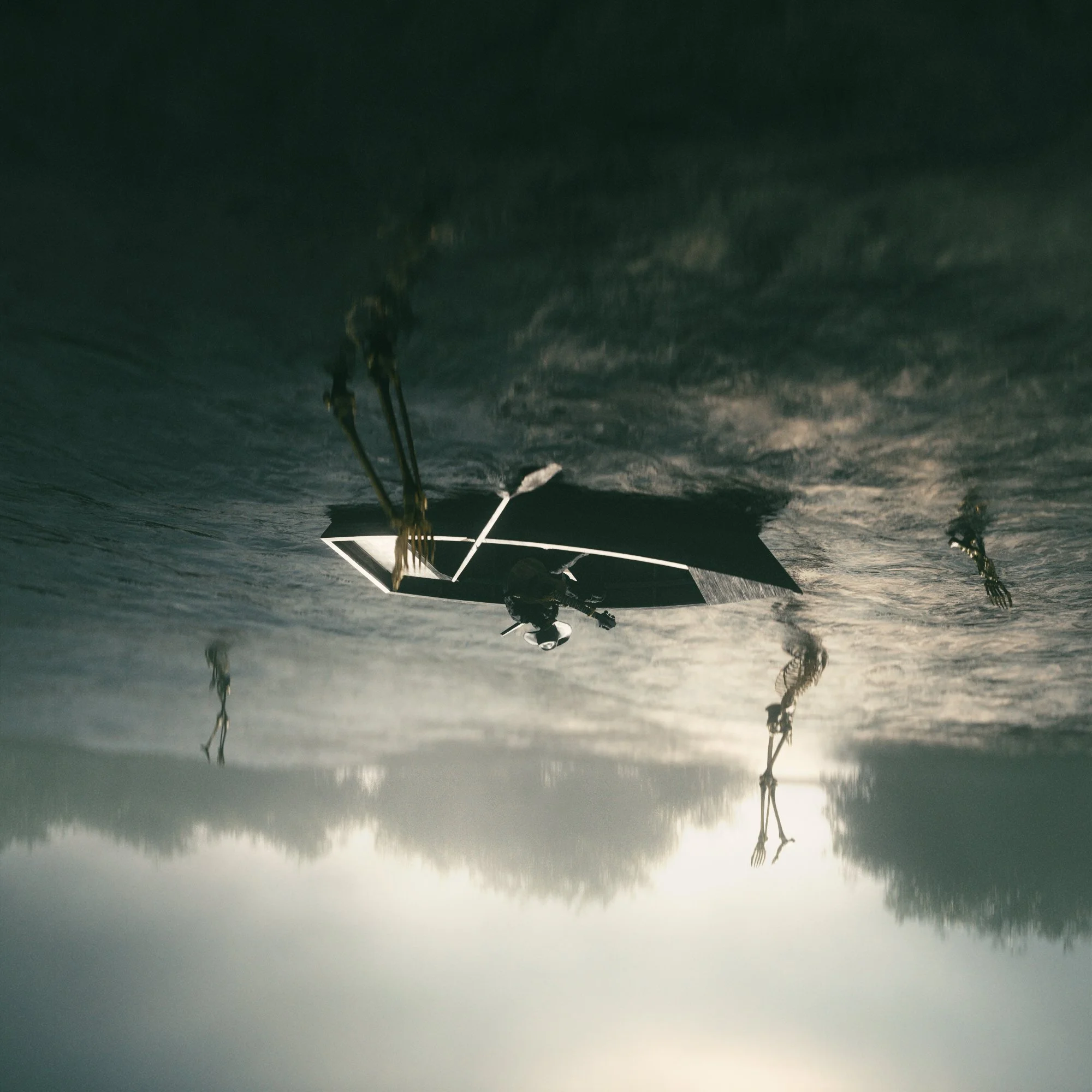
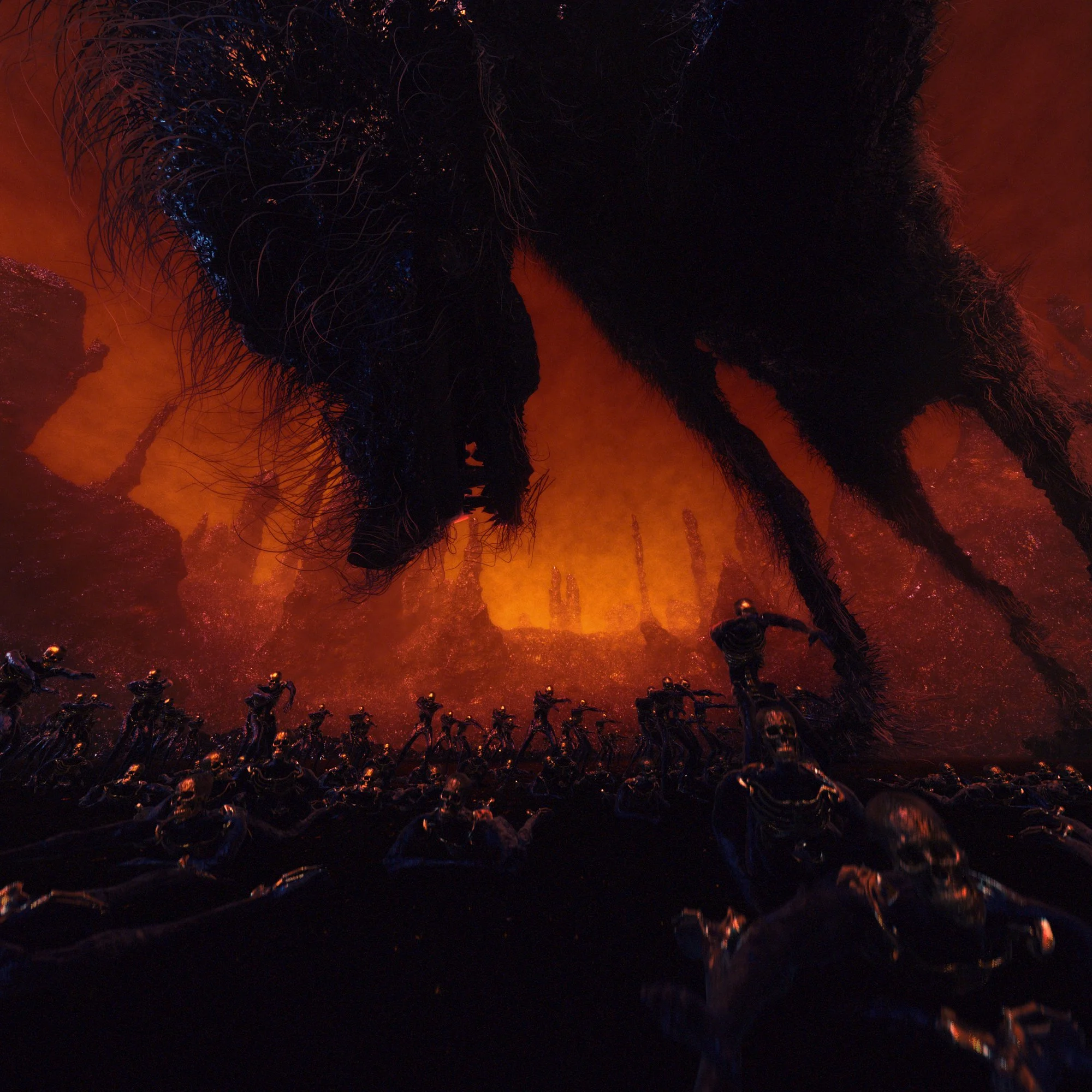
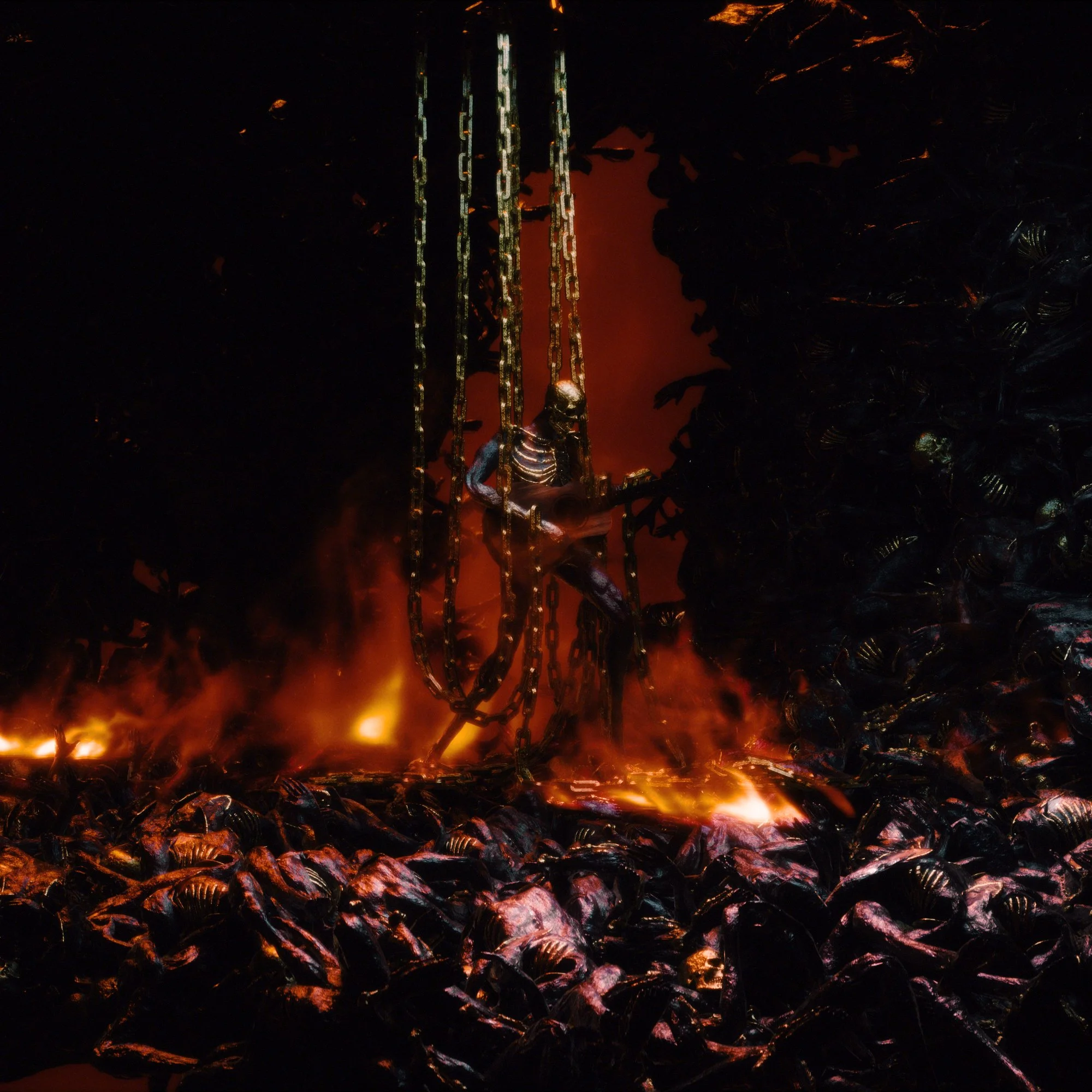
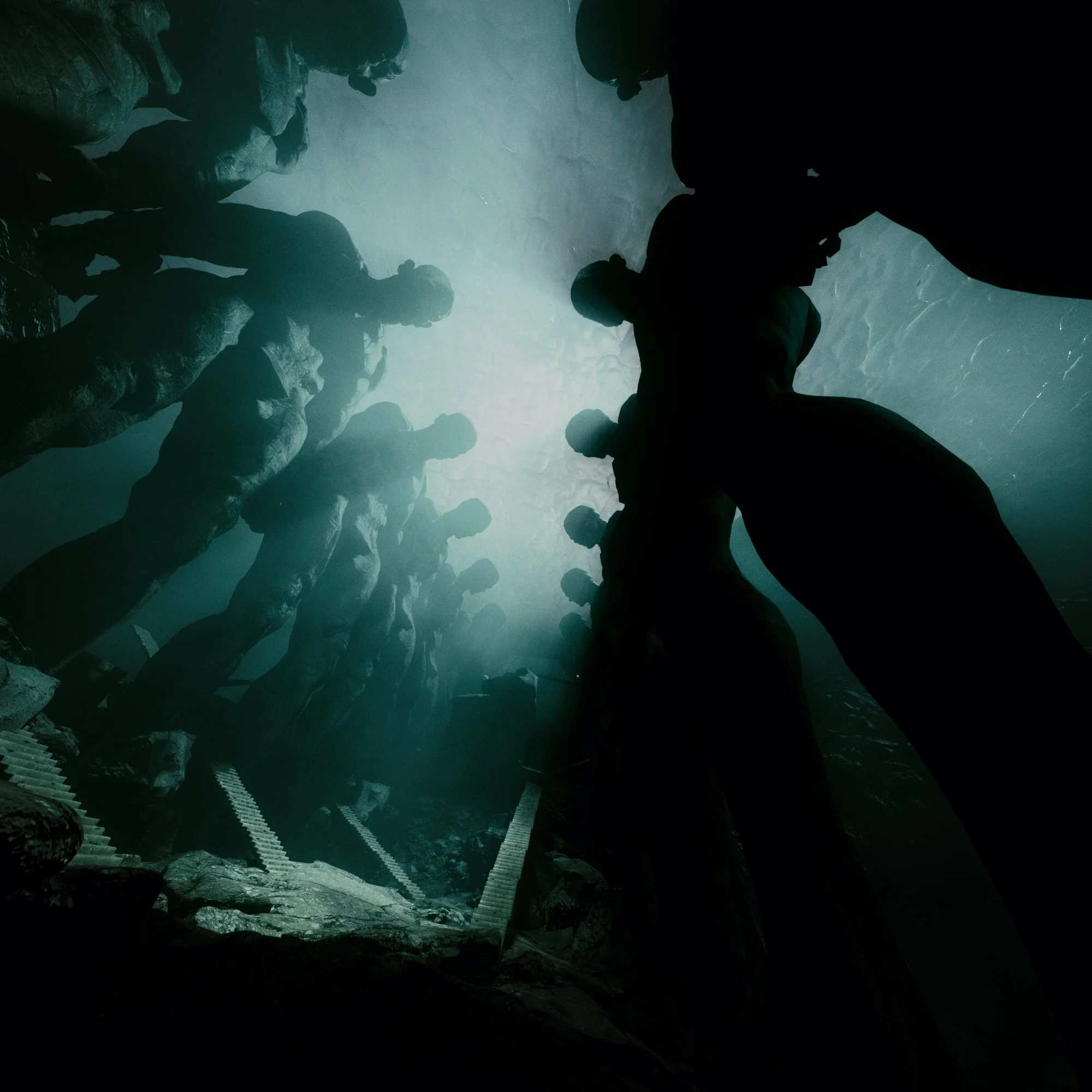
The antagonistic forces throughout “Love and War” manifest as shape-shifting embodiments of trauma and temptation, taking multiple forms across the narrative. Golden skeletons climb endlessly toward corrupted power in “Heavy is the Head,” representing ambition’s hollow pursuit. The colossal black dog embodies depression, drinking from pools of addiction. Oil-covered figures claw desperately from sludge, symbolizing souls trapped by materialism. In “Animal,” wolves lurk in shadows, representing the primal beast within during Zac’s most confrontational moment with his untamed nature. Yet among these varied threats, one figure emerges as the primary antagonist: the demon cowboy, a golden skeletal figure wearing a cowboy hat, directly inspired by Judge Holden from Cormac McCarthy’s “Blood Meridian.” Like McCarthy’s immortal embodiment of violence and control, this character represents the seductive nature of power and the darkness that whispers justifications for our worst impulses. The demon cowboy appears throughout the show’s darker moments, a recurring specter reminding us that our most dangerous enemy often wears a familiar face, speaking in a voice we recognize as our own.
MOTIFS
SWEEPING LANDSCAPES & EMOTIONAL WORLDS
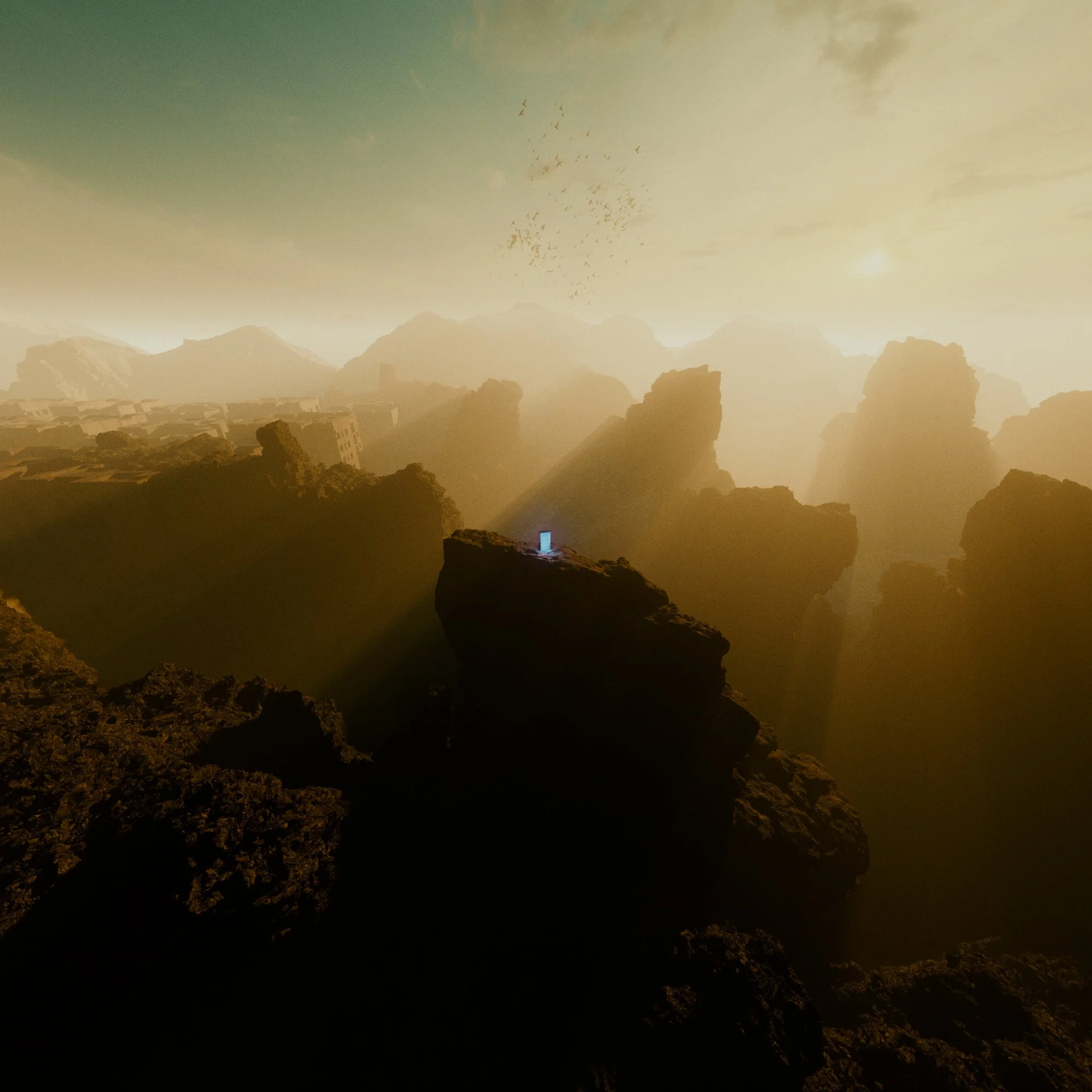
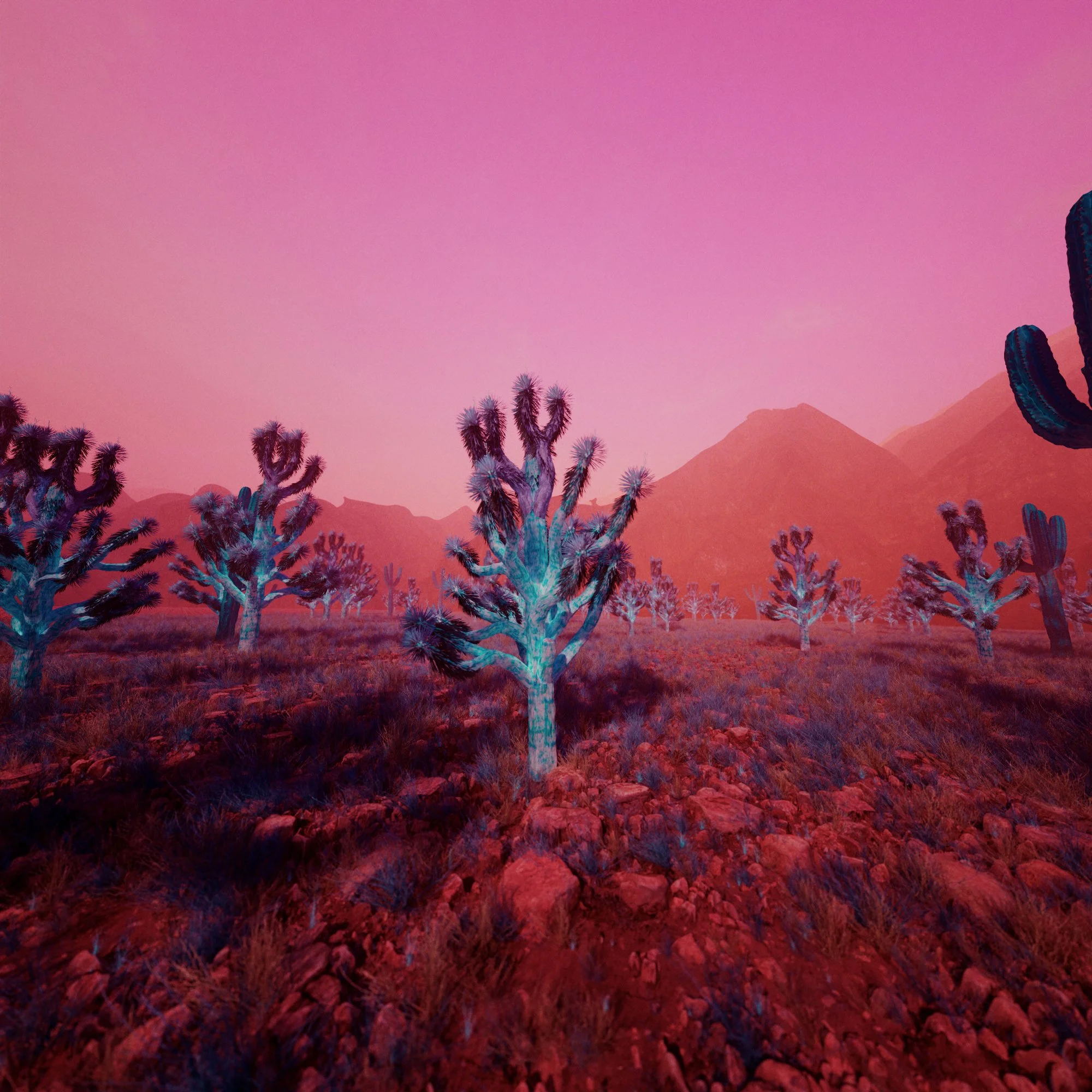
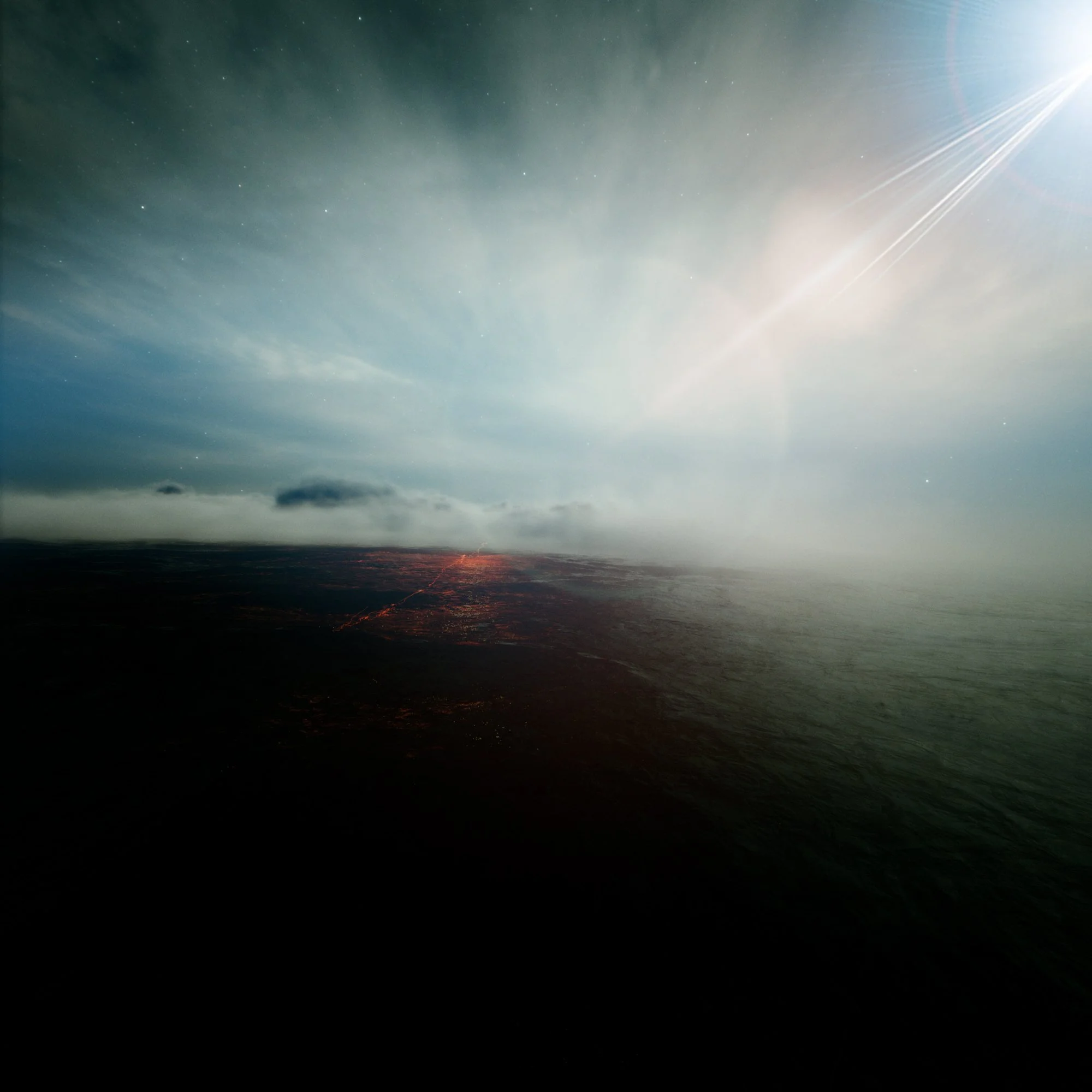
From the outset, we envisioned a more cinematic concert experience than traditional music visuals, prioritizing narrative-driven environmental storytelling over performance-centric content. The Sphere’s 360-degree canvas proved ideal for this approach, favoring expansive worlds over traditional close-ups. I began each song by establishing complete environments, crimson badlands, industrial wastelands, and crystalline lakes, that audiences could fly through as if experiencing a film, reducing the technical burden of maintaining detailed foreground elements while maximizing immersive impact.
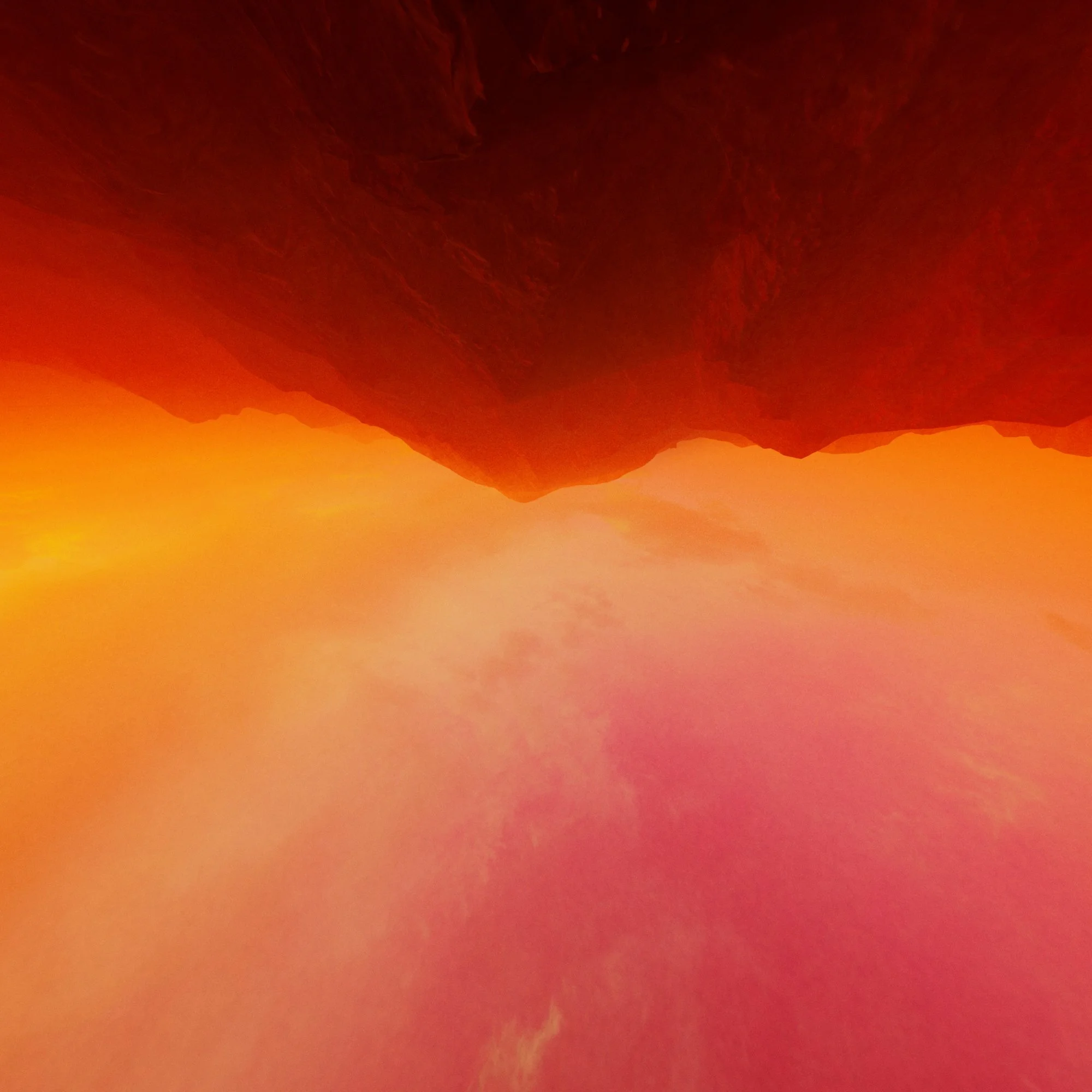
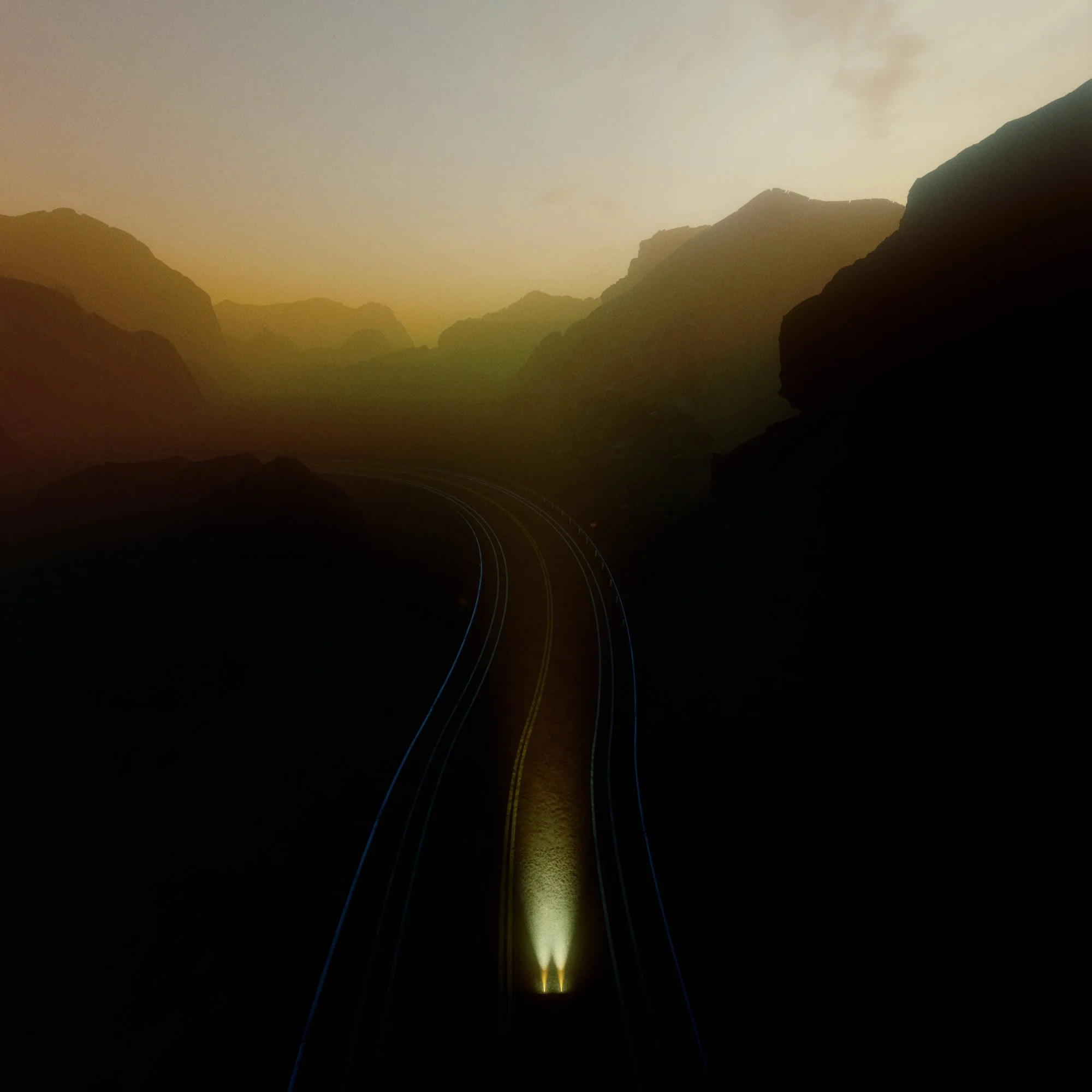
A key efficiency strategy involved building a reusable asset library that could be repurposed across multiple songs. I created a core pack of a few VDBs, a couple mountain terrains, somef tree models, and a single water alembic/shader to use across every scene in the design frames, significantly reducing labor costs for the entire production. By adjusting the sun’s position and utilizing different 24K HDR skies, these same static elements could evoke entirely different emotional tones, desert terrain transformed from oppressive heat to golden-hour nostalgia simply through lighting and atmospheric changes. Prioritizing atmospheric landscapes as foundational backdrops enabled strategic layering of characters and symbols, allowing the environment to carry narrative weight. The result: sweeping camera movements through fully realized emotional terrain that surrounded the audience, transforming the concert into a cinematic journey.












MOTIFS: LIGHTING & SILHOUETTE STRATEGY
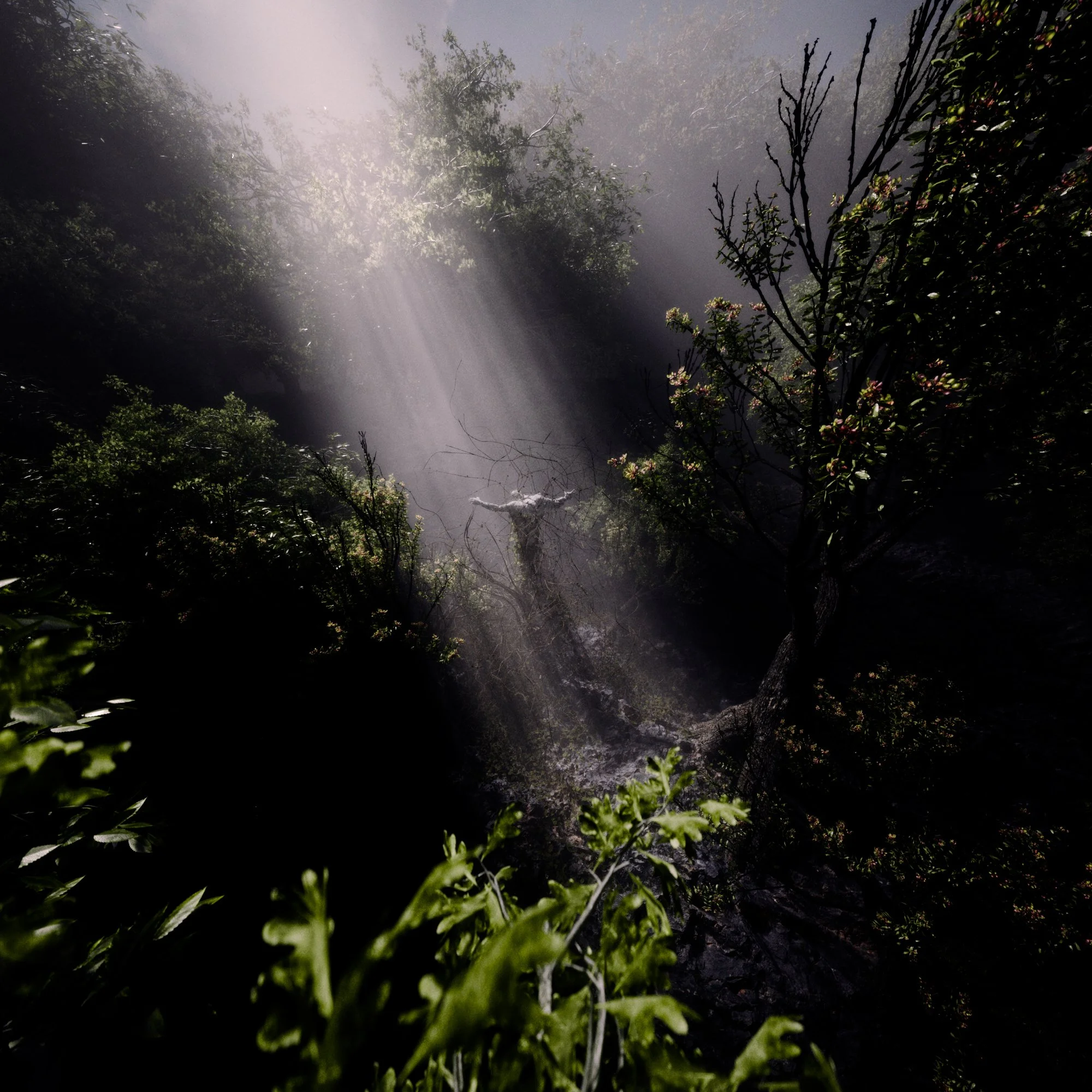
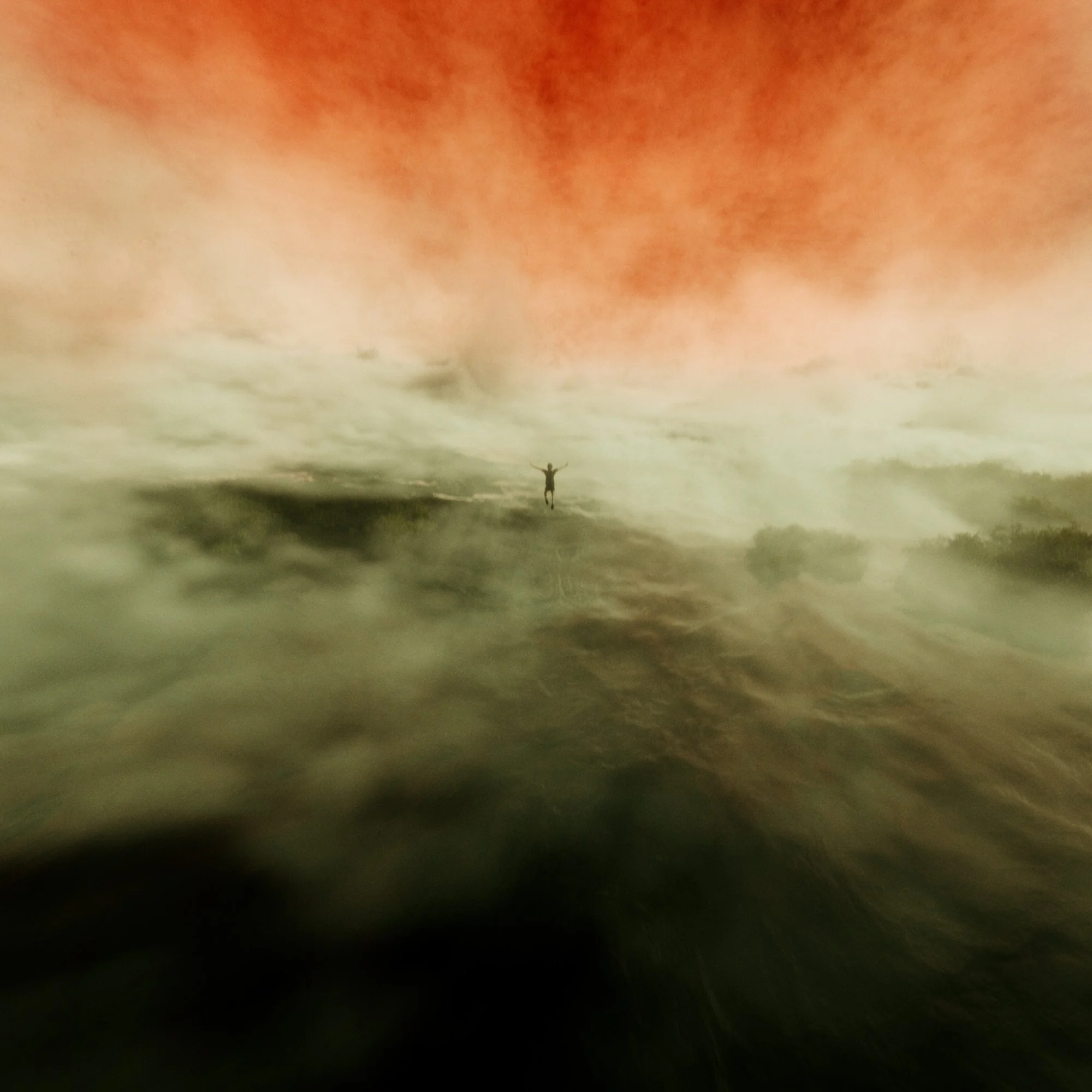
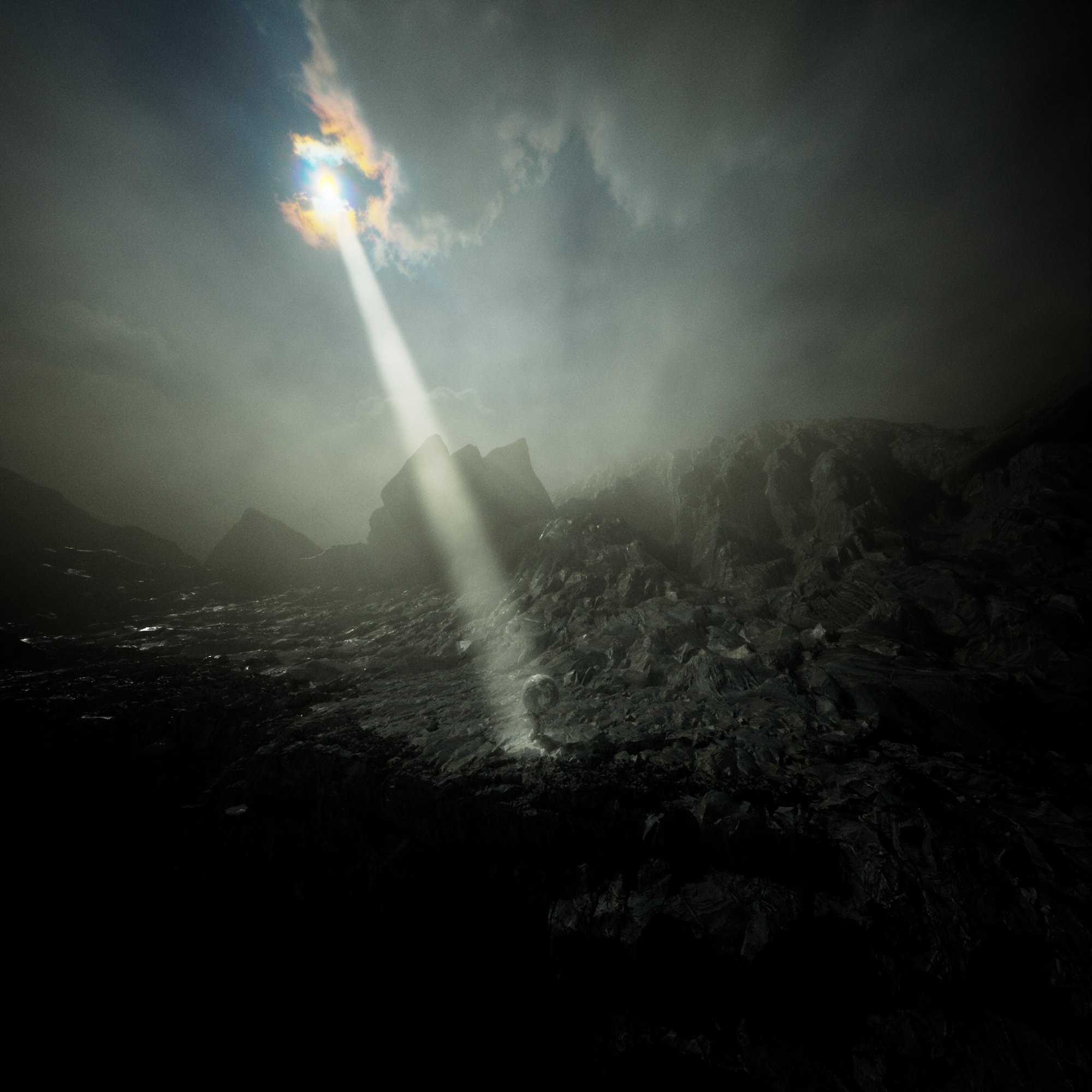
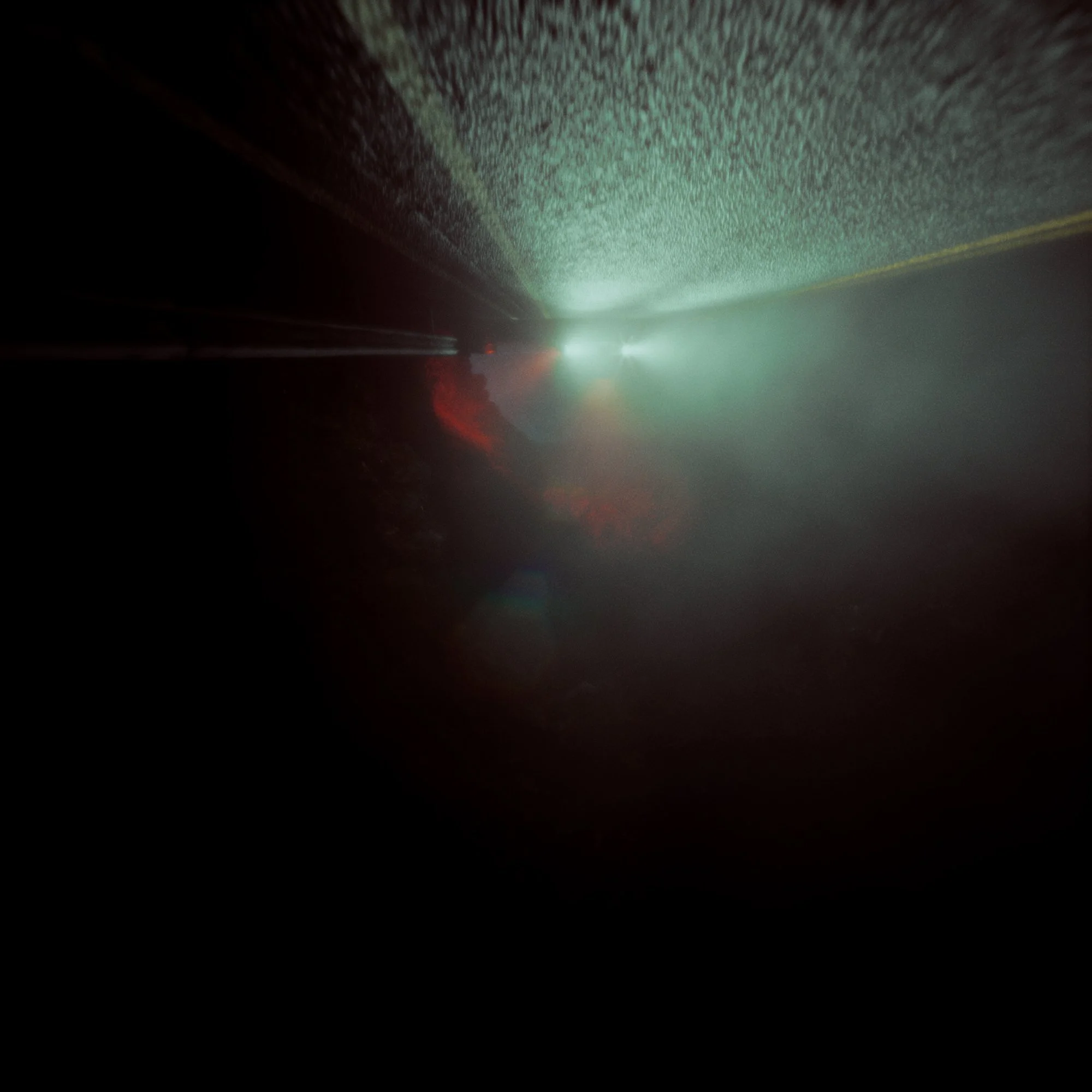
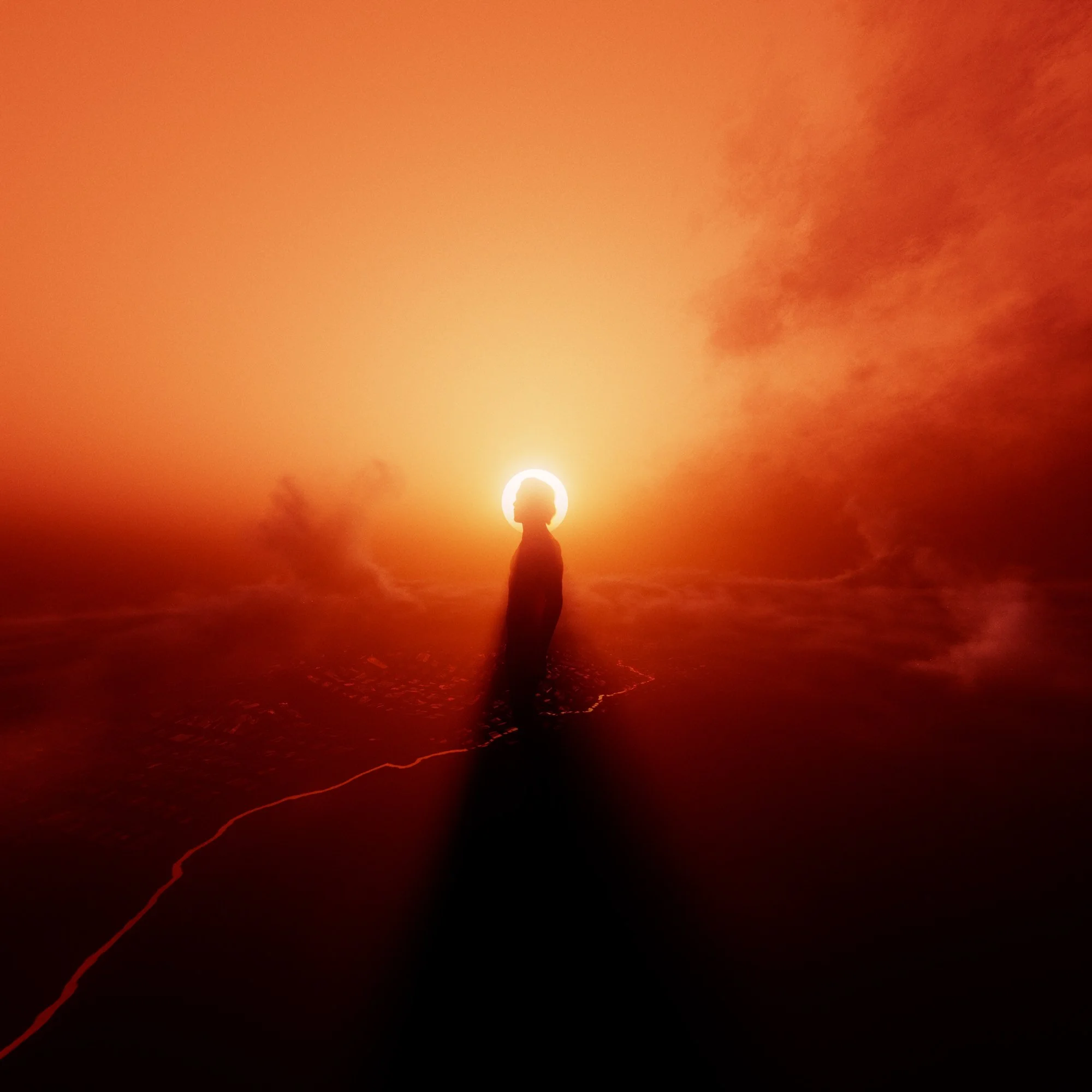
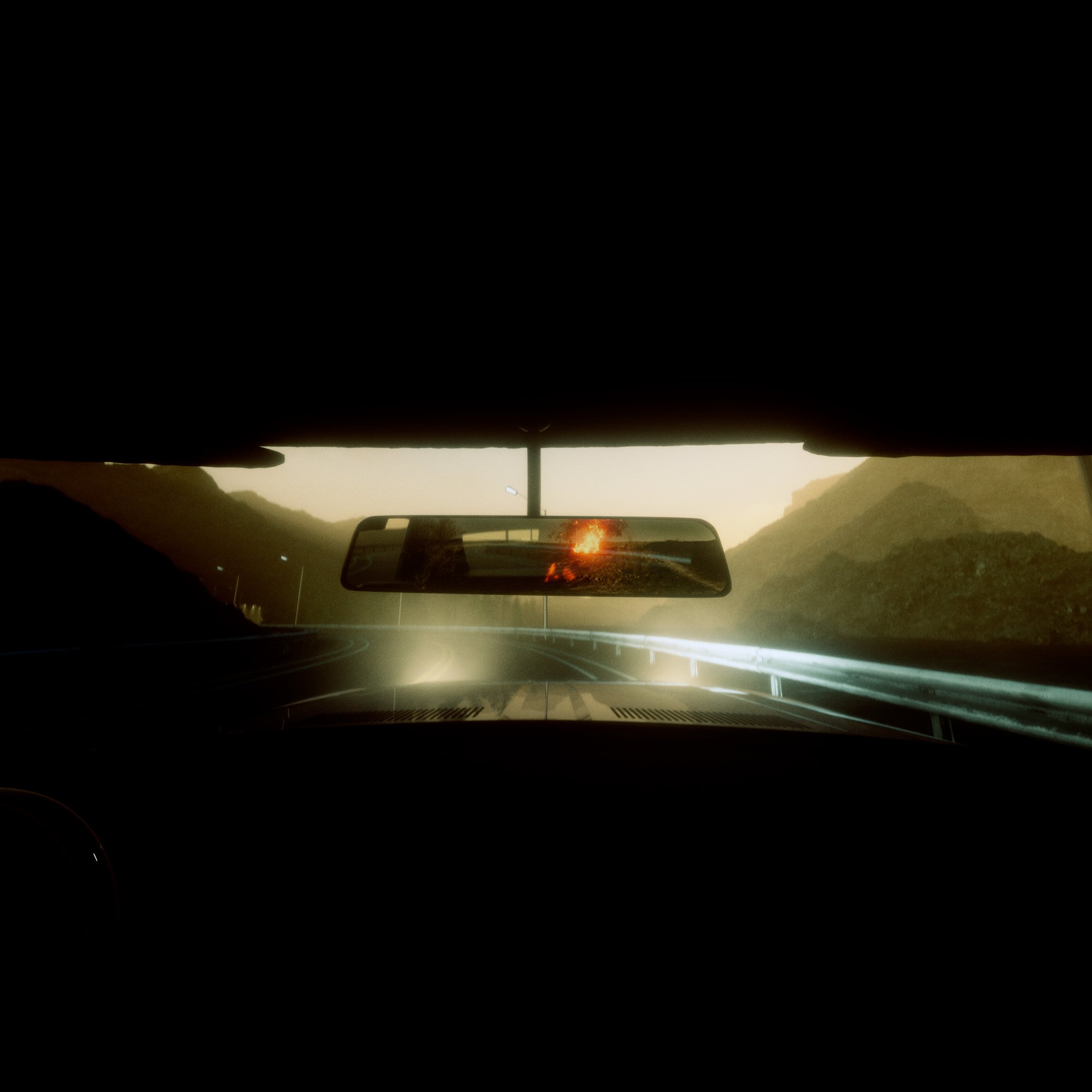
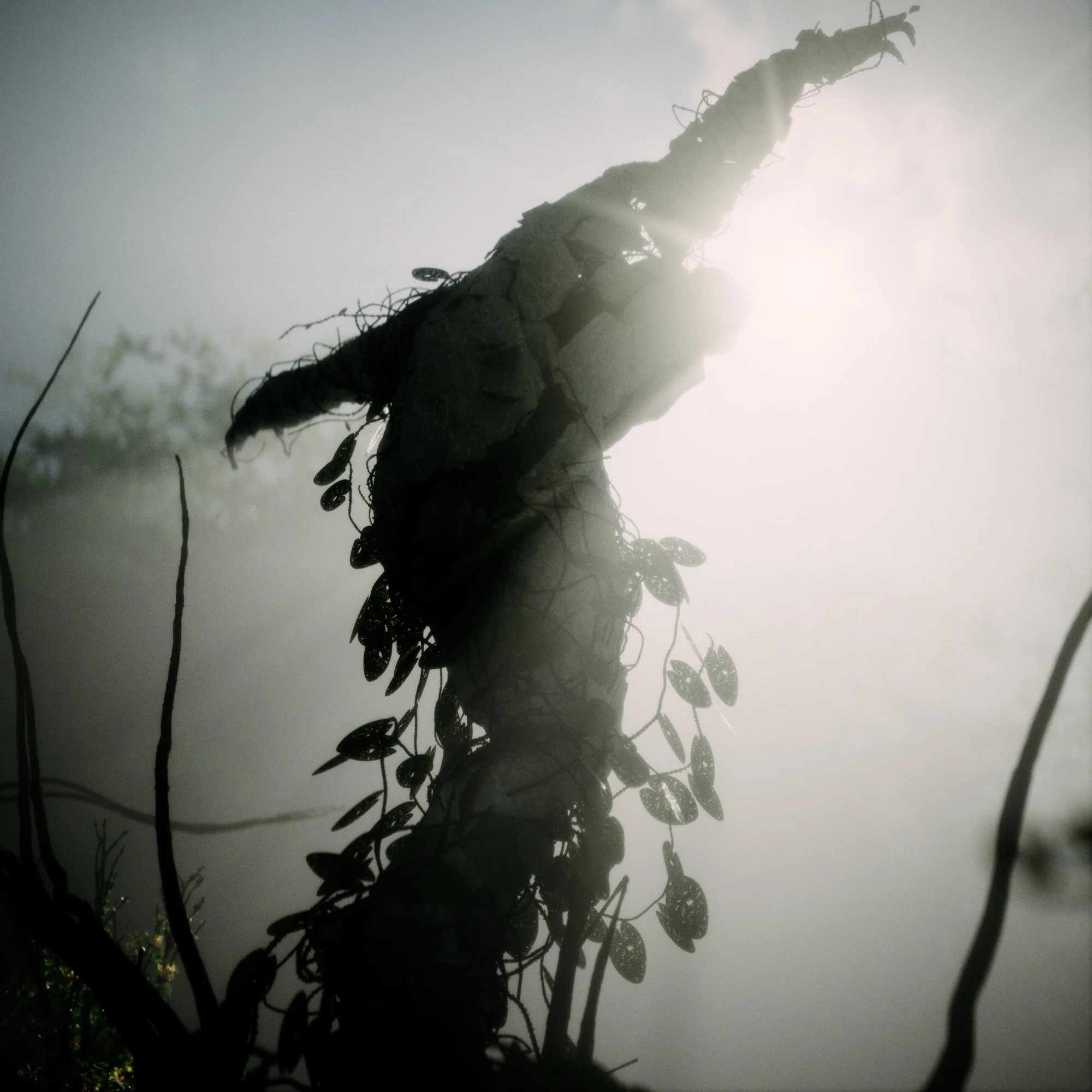
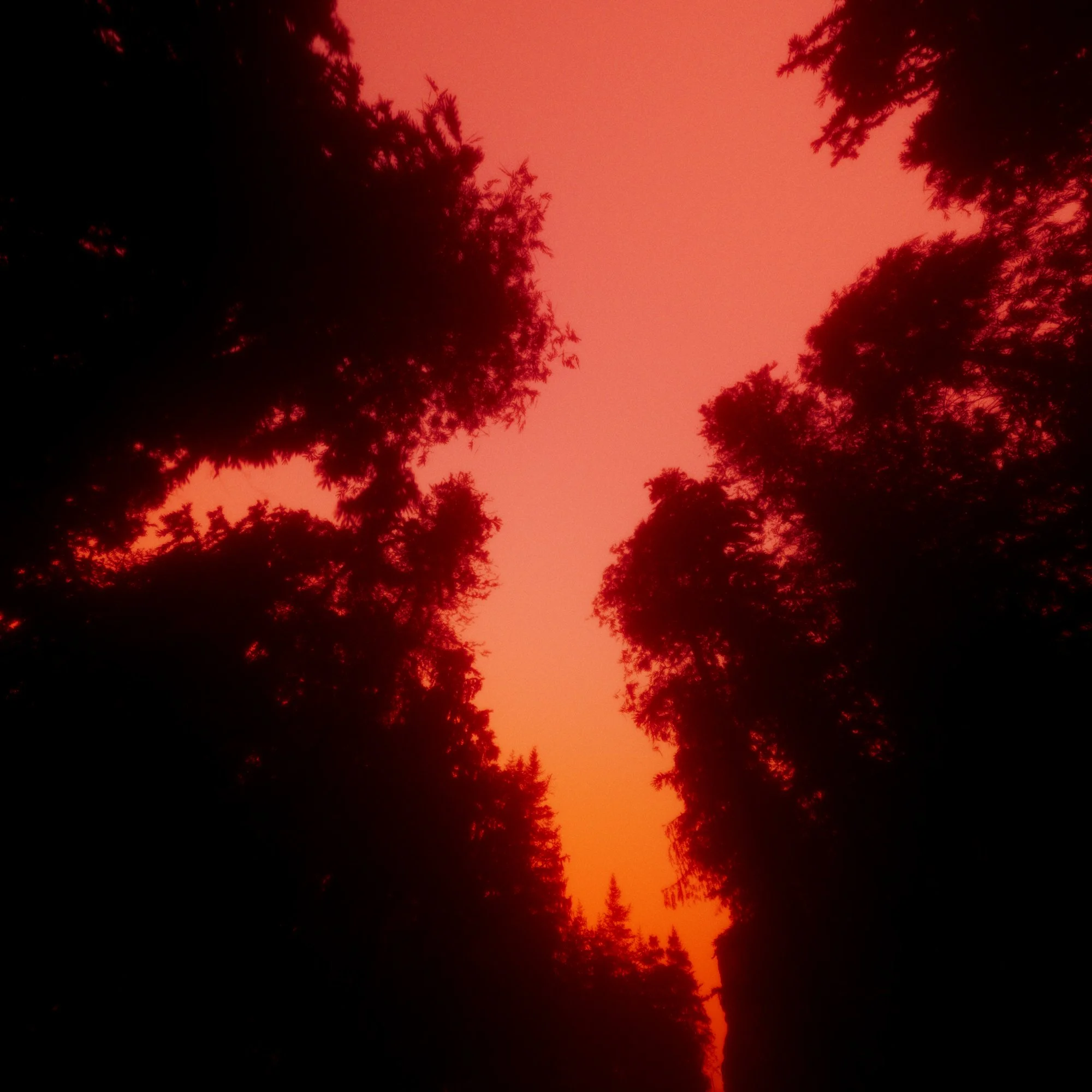
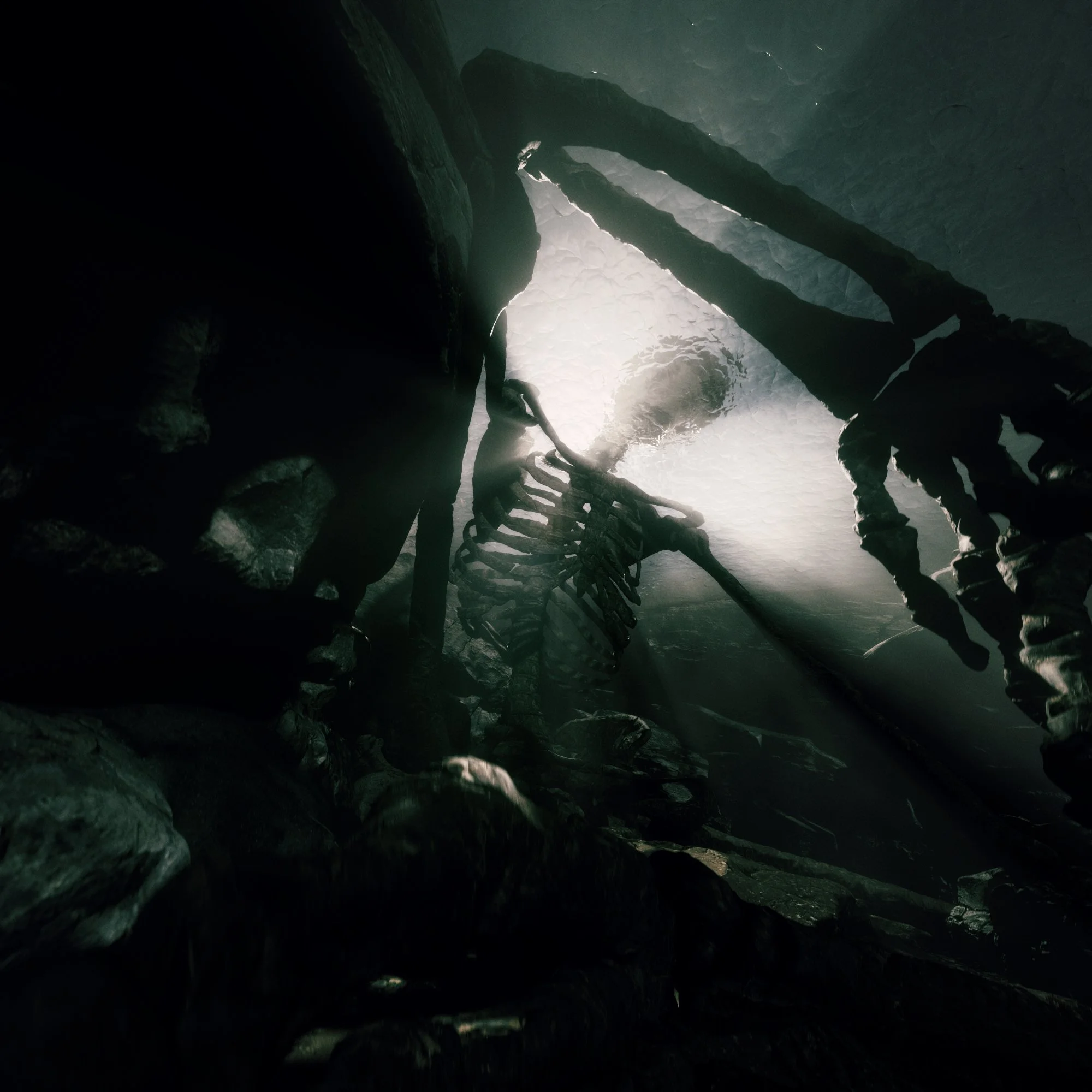
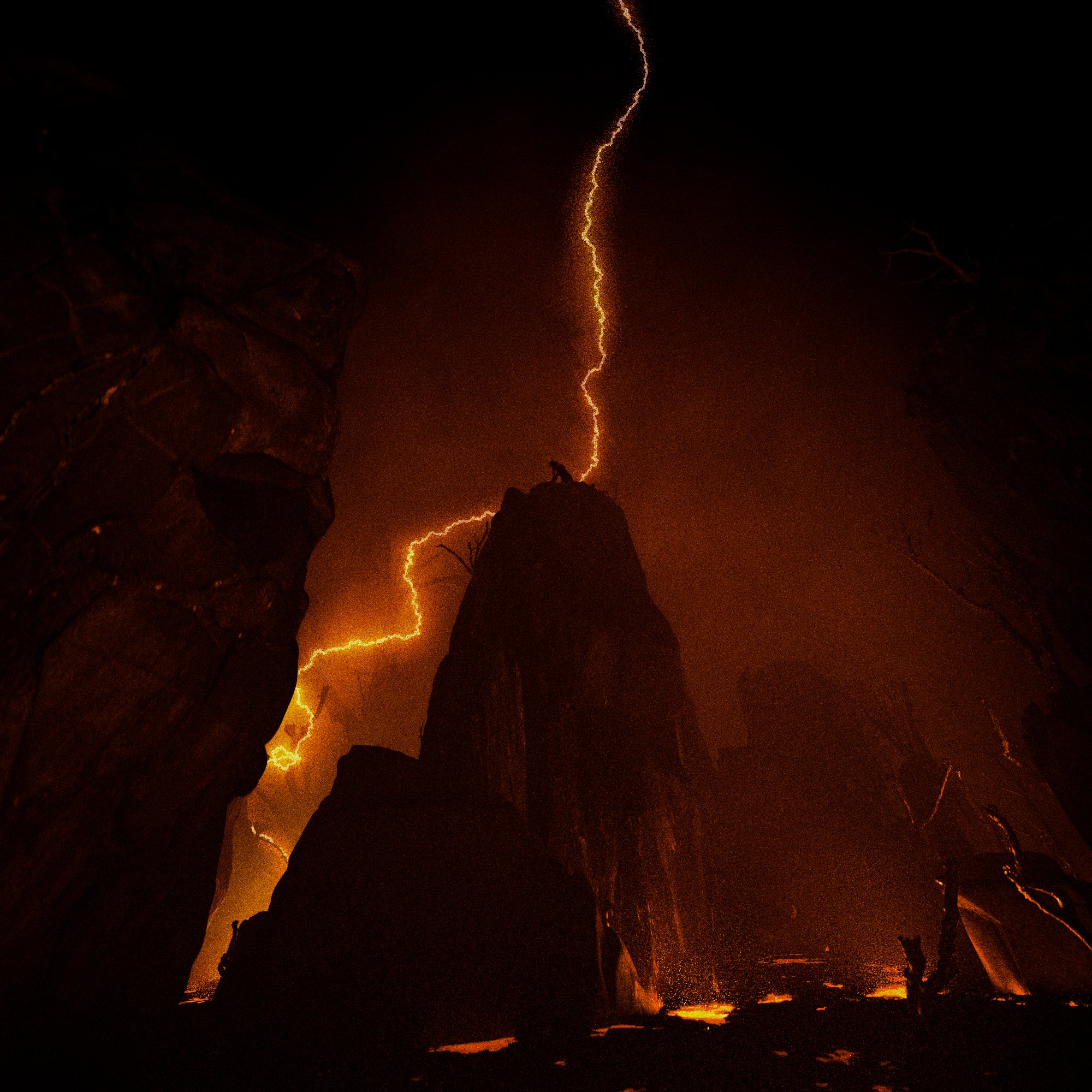
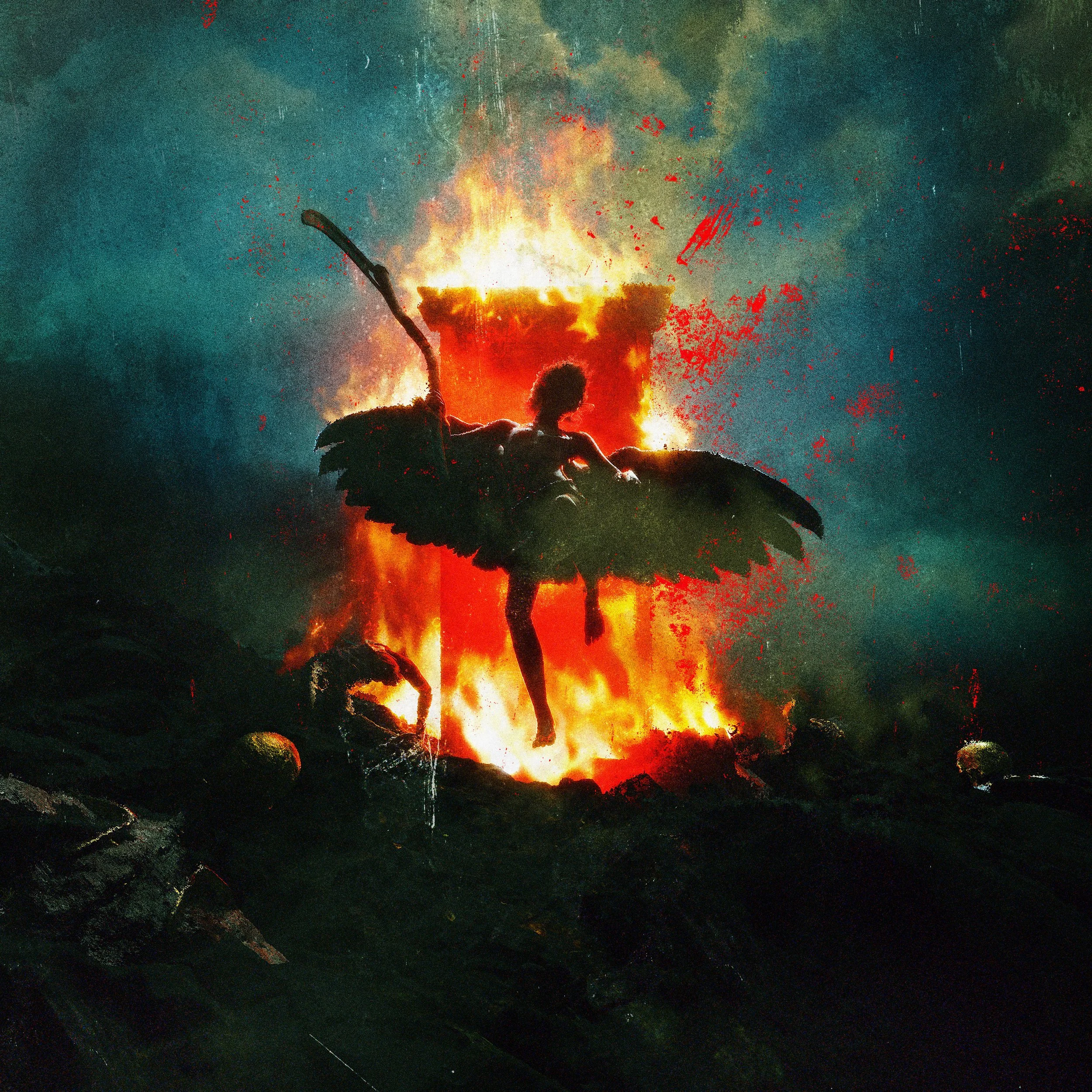
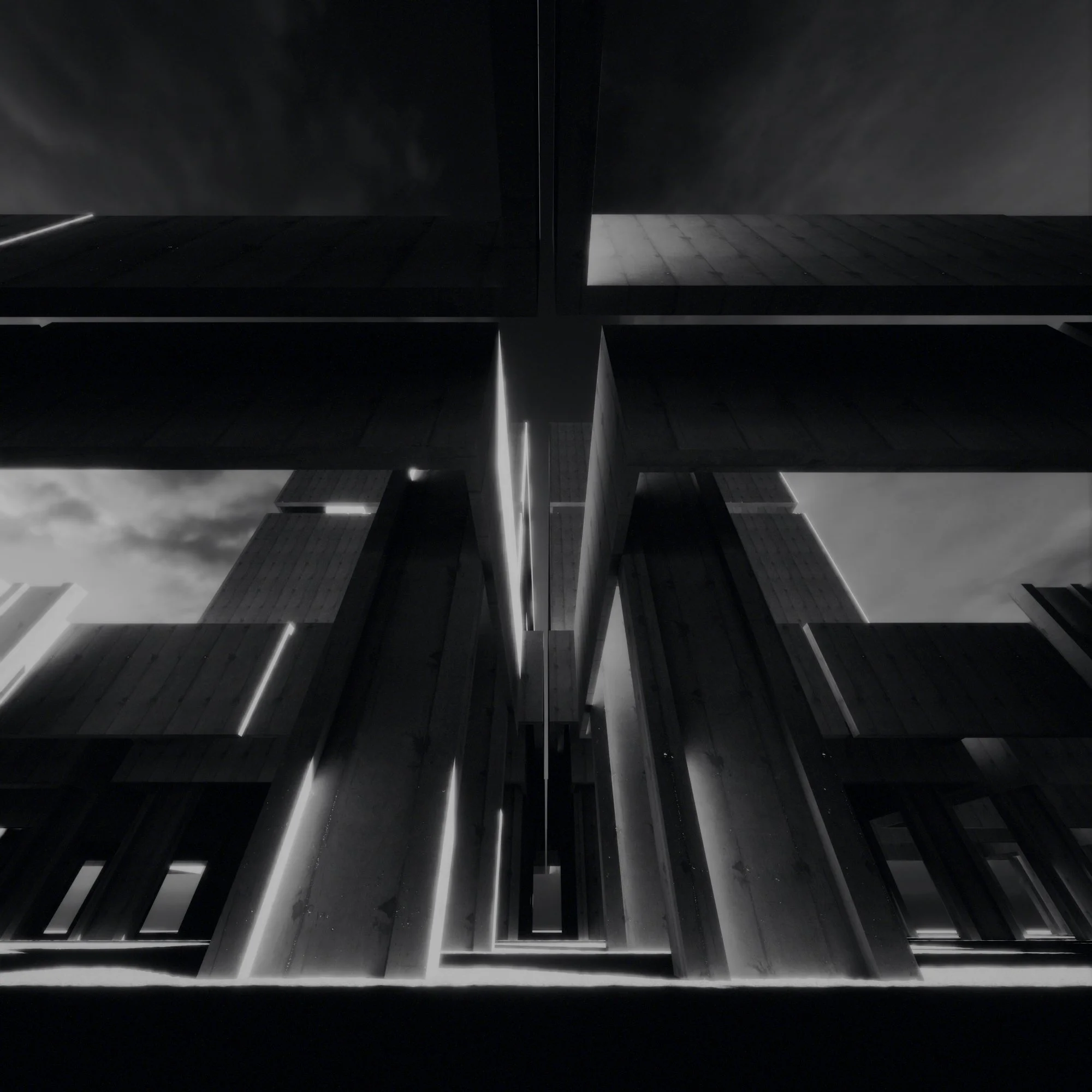
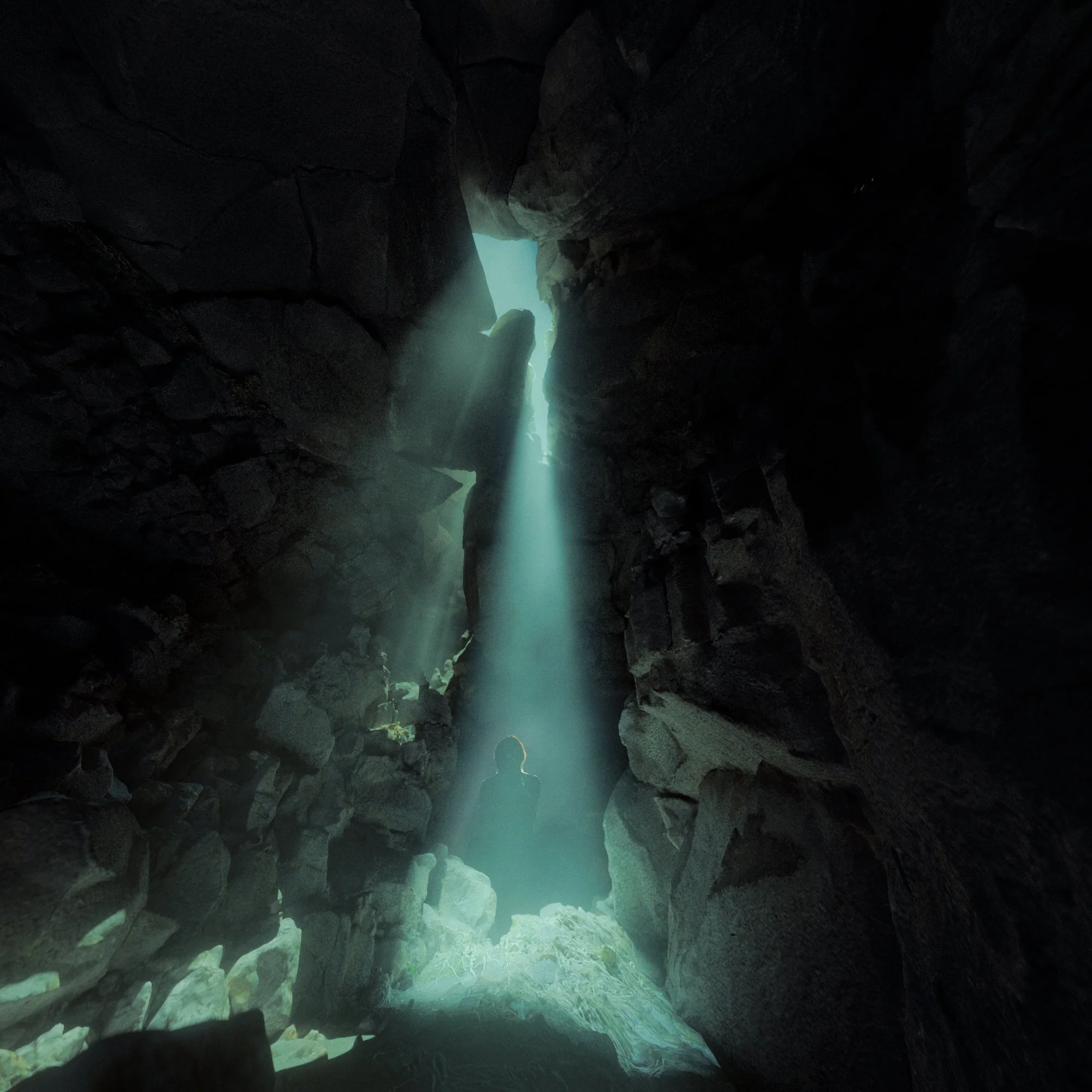
Silhouettes and negative space solved both artistic and technical challenges. Large areas of darkness created focal points while reducing 360-degree detail demands across the Sphere's 18K resolution. Backlighting figures against fire and atmospheric effects established visual continuity, golden skeletons rimlit against crimson skies, the boy's transformation silhouetted by flame. This approach dramatically simplified complex forms into iconic compositions while reducing render times. Strategic black shapes functioned as negative space, hiding technical limitations in shadows while maintaining coherence. God rays, create dimension, spotlights cutting through the atmosphere, and silhouettes against light became signature techniques that unified diverse scenes while addressing production challenges.


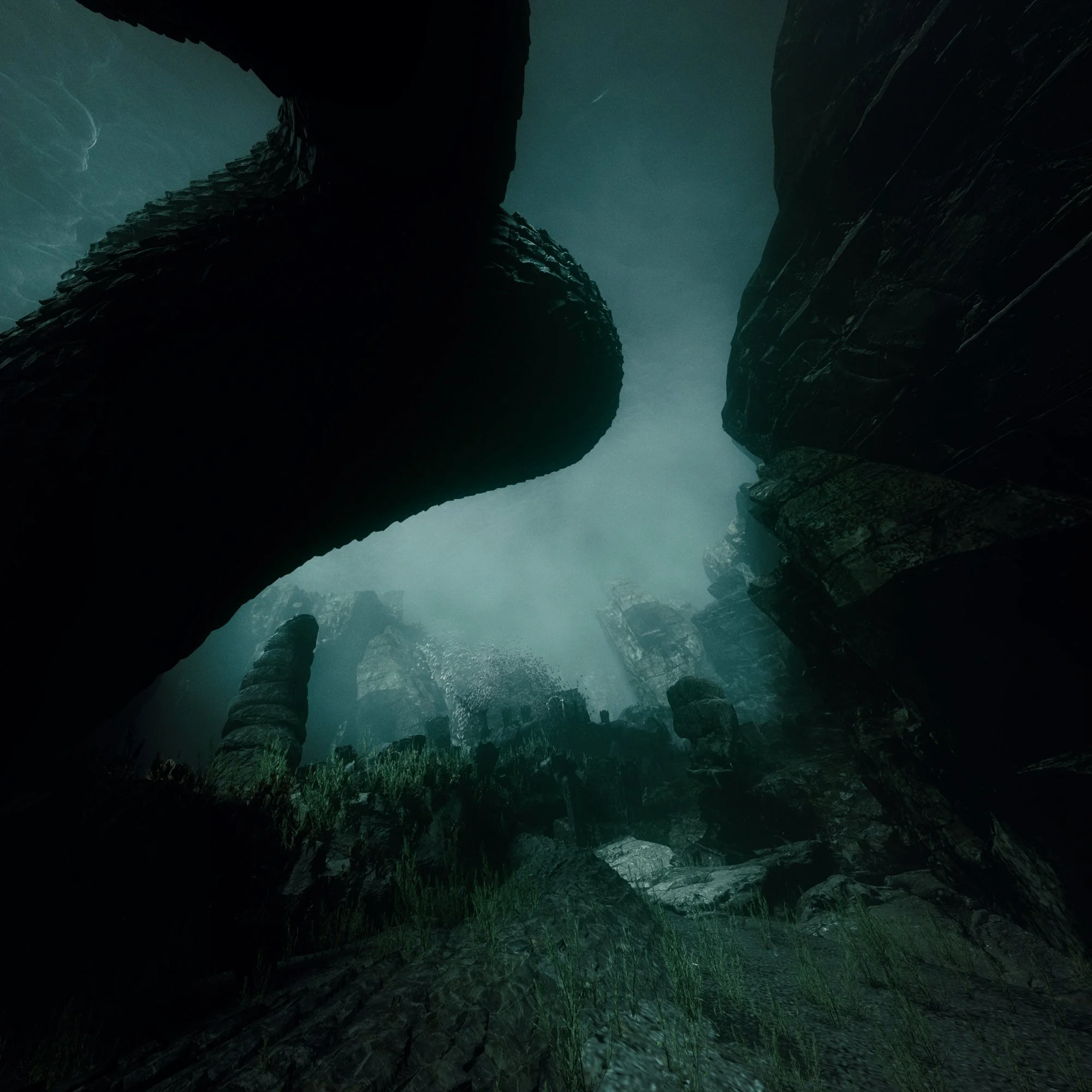
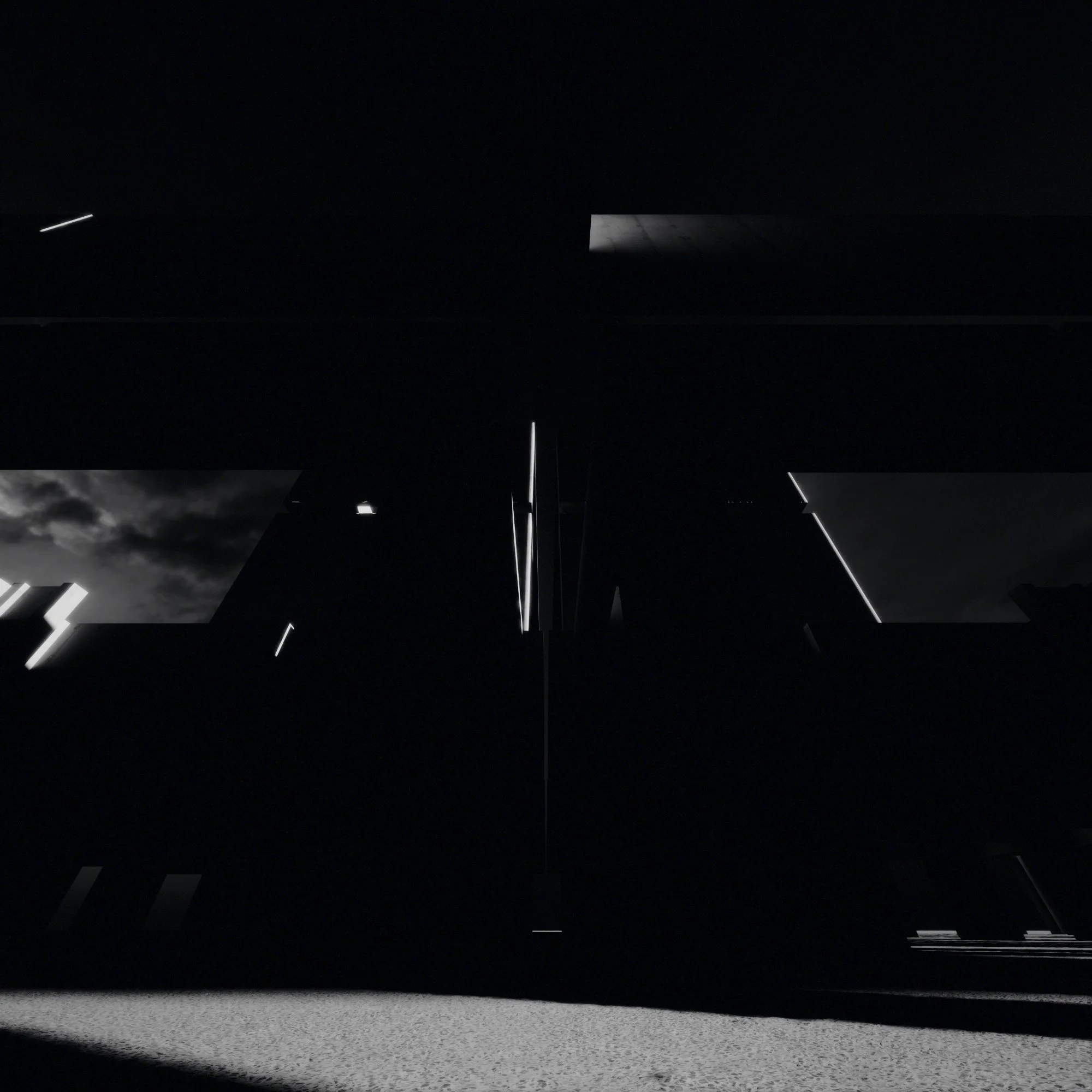

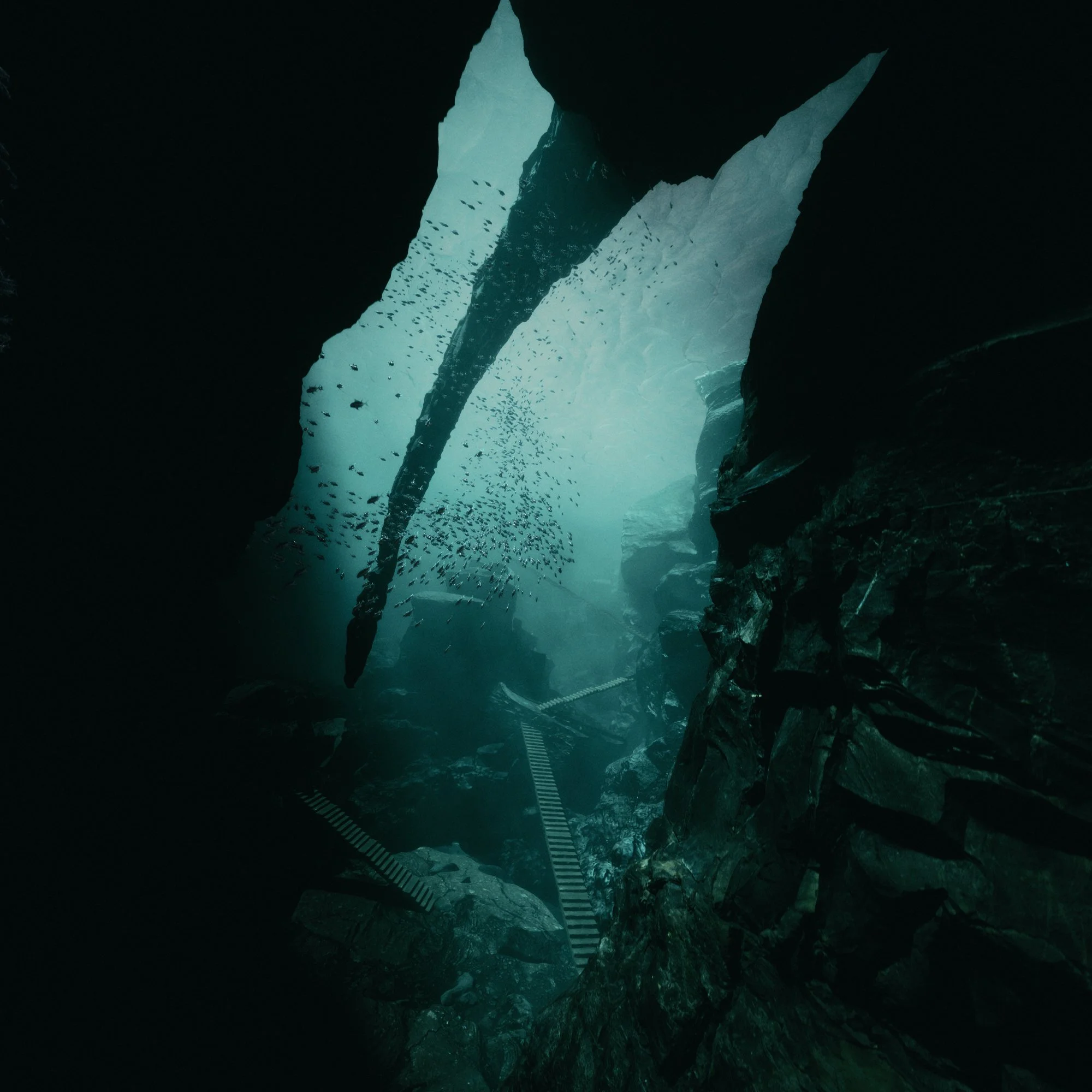
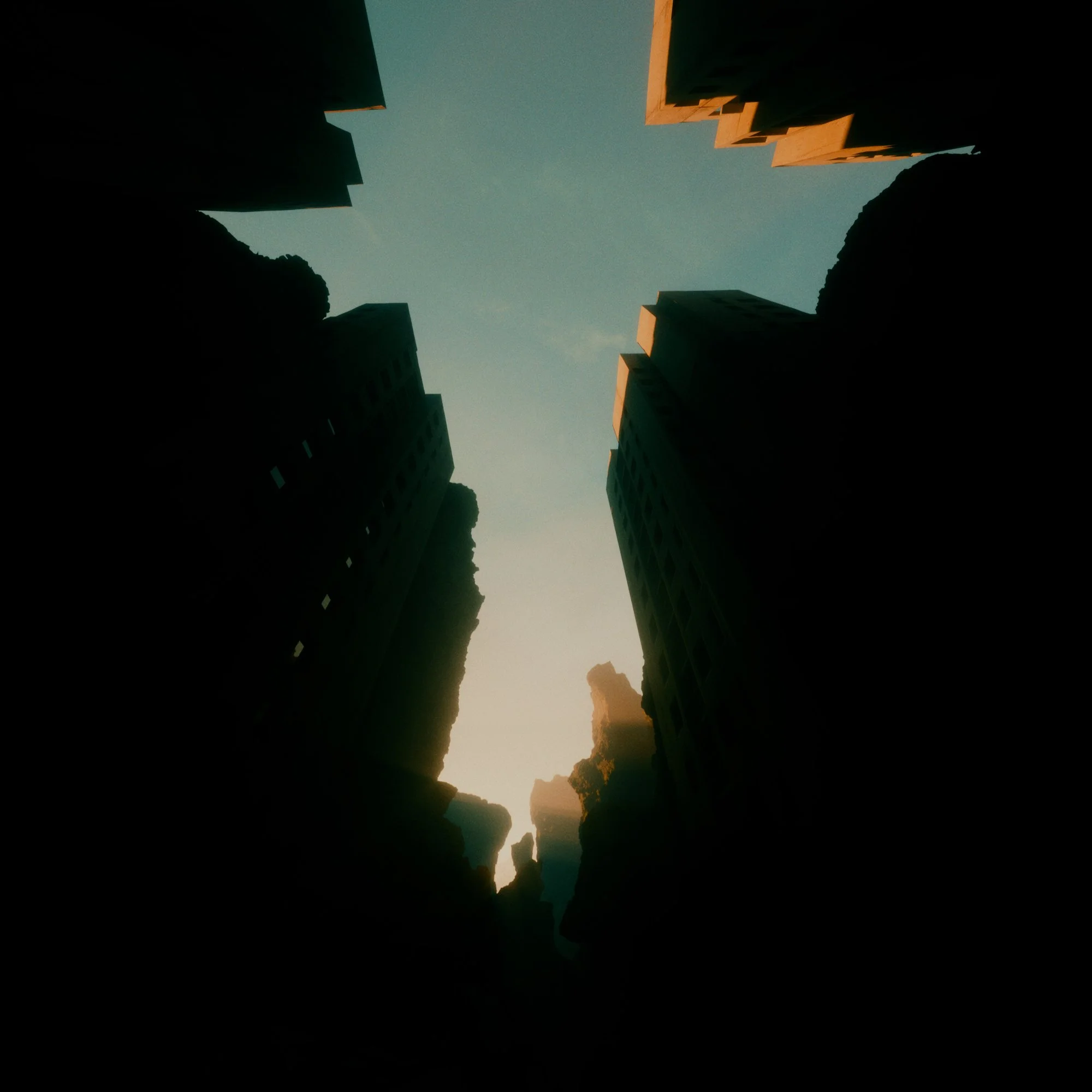
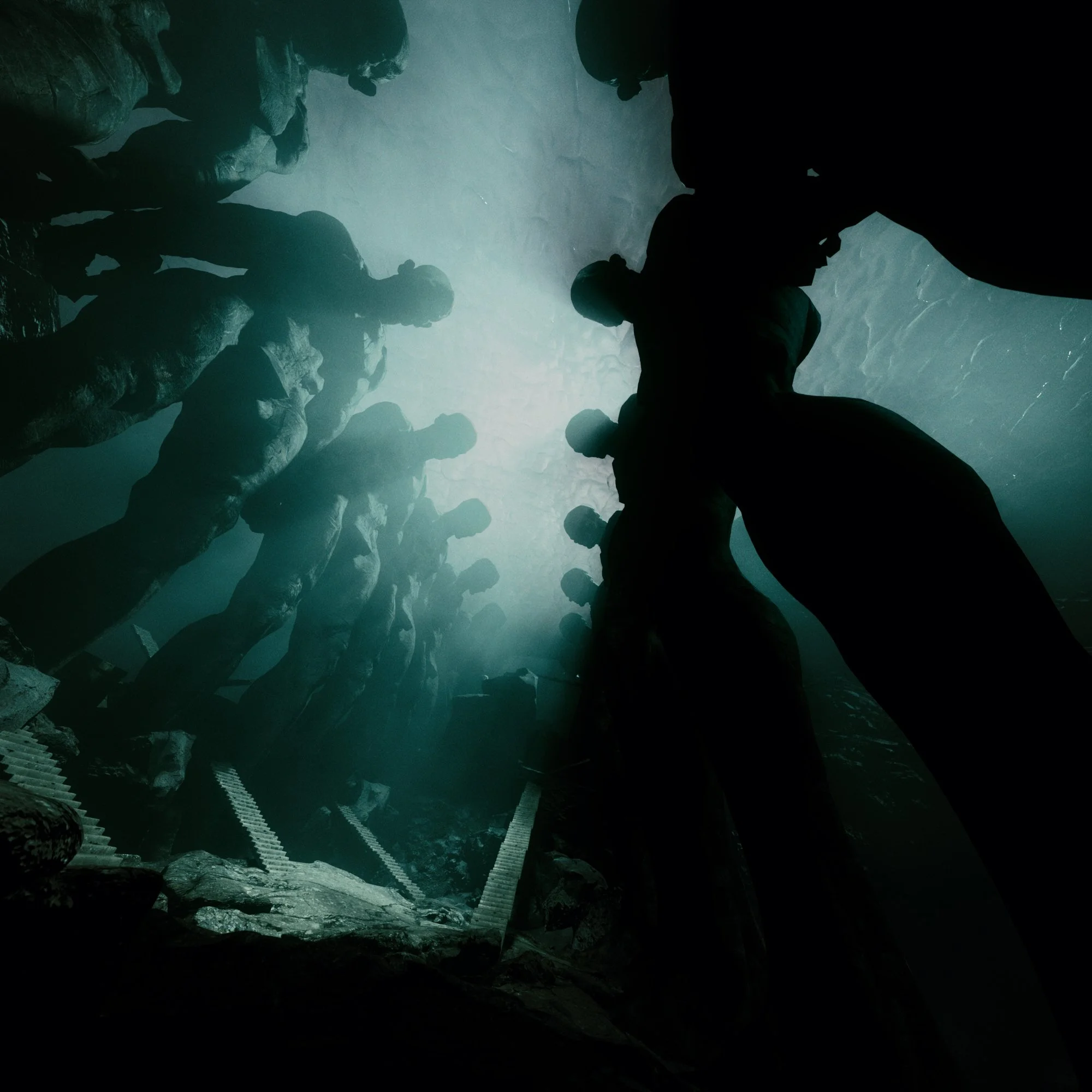
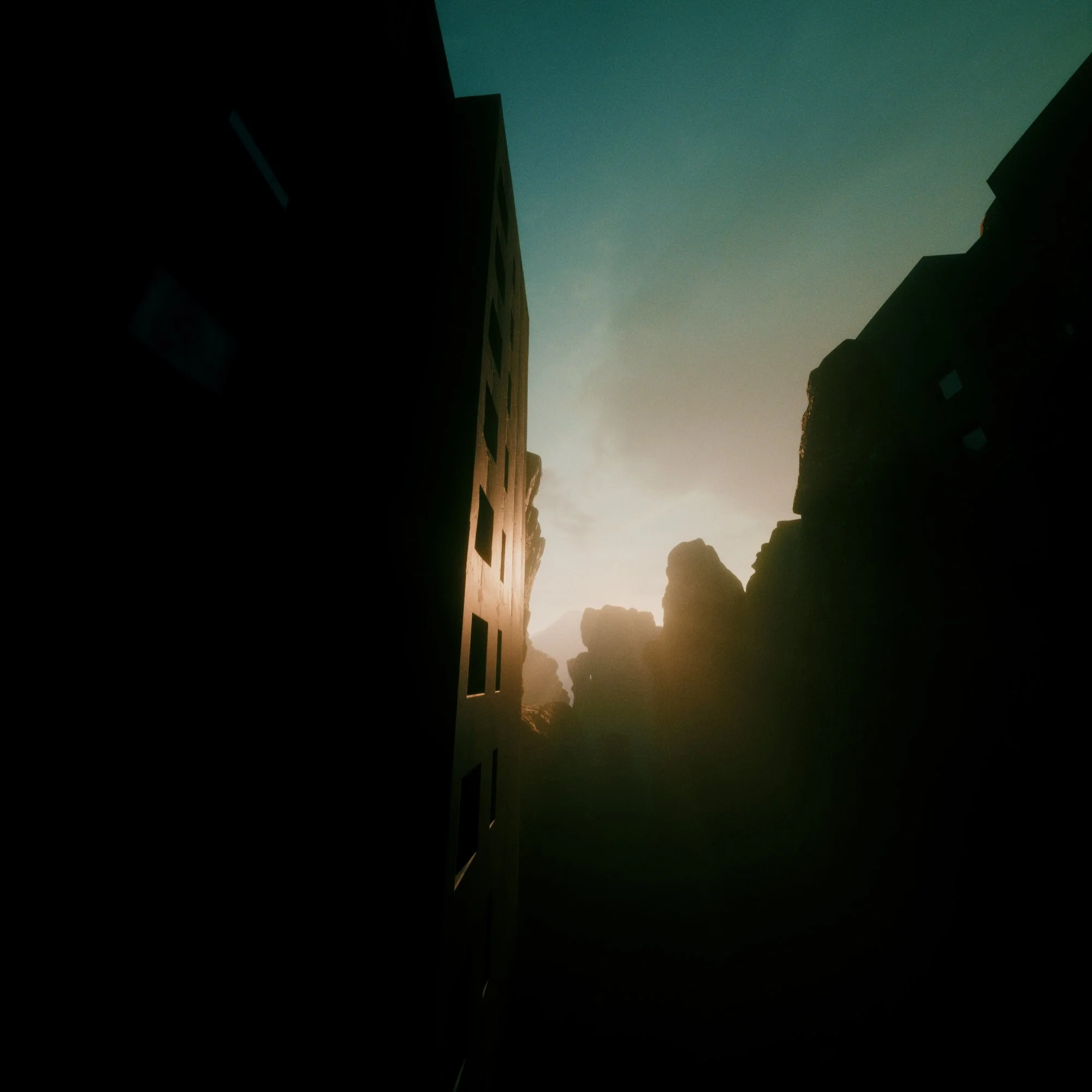
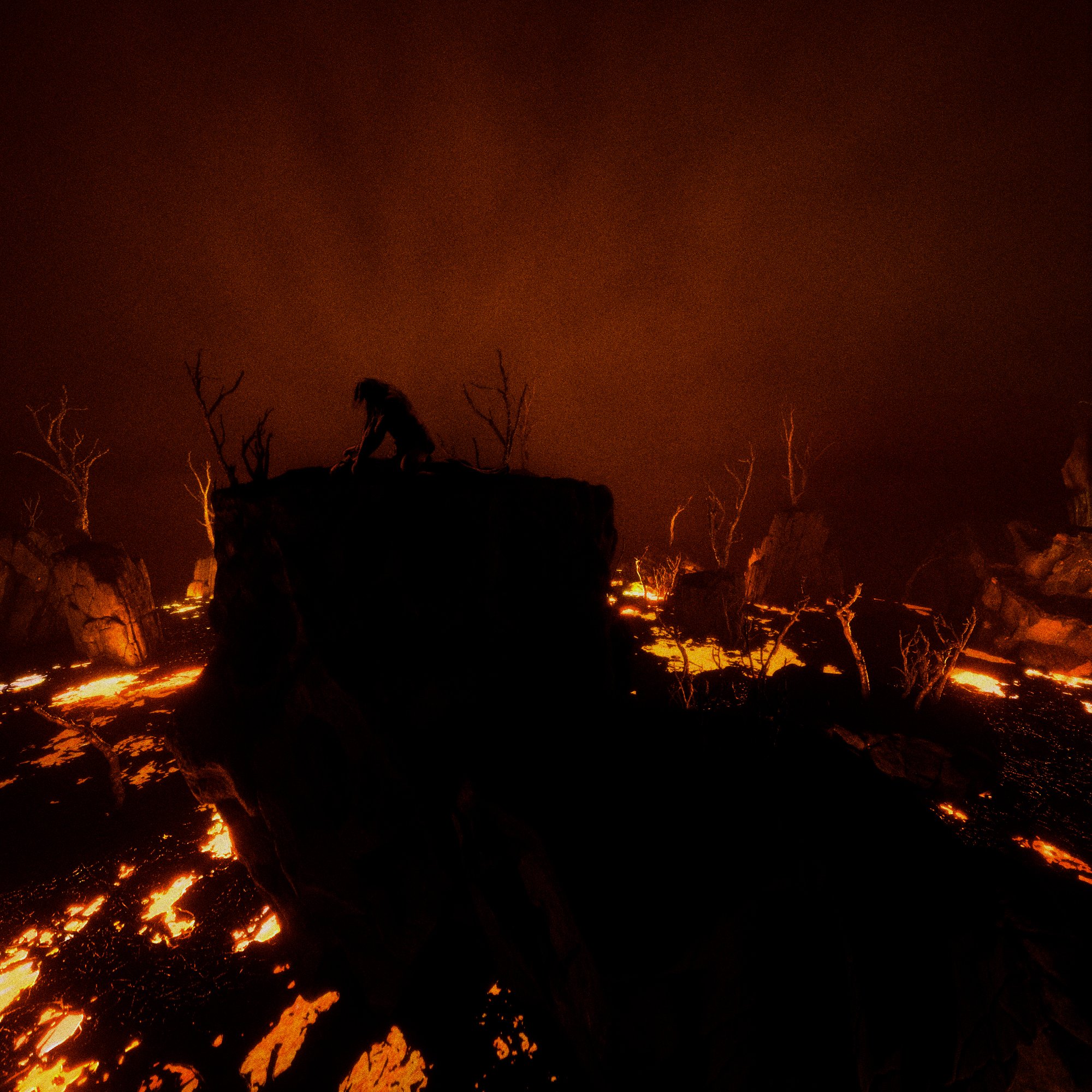
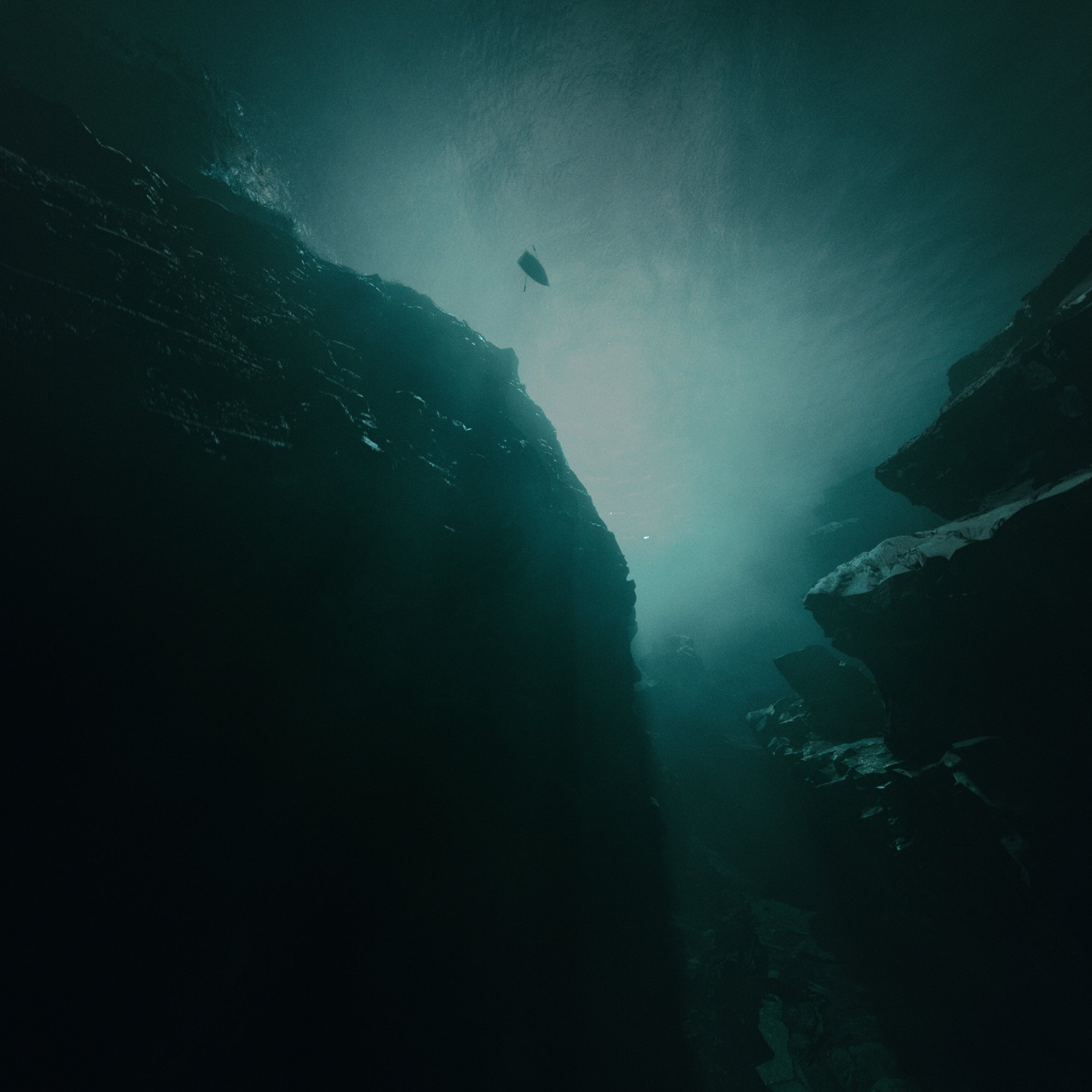
MOTIFS: DOORS, HALLS, AND WINDOWS AS PORTALS
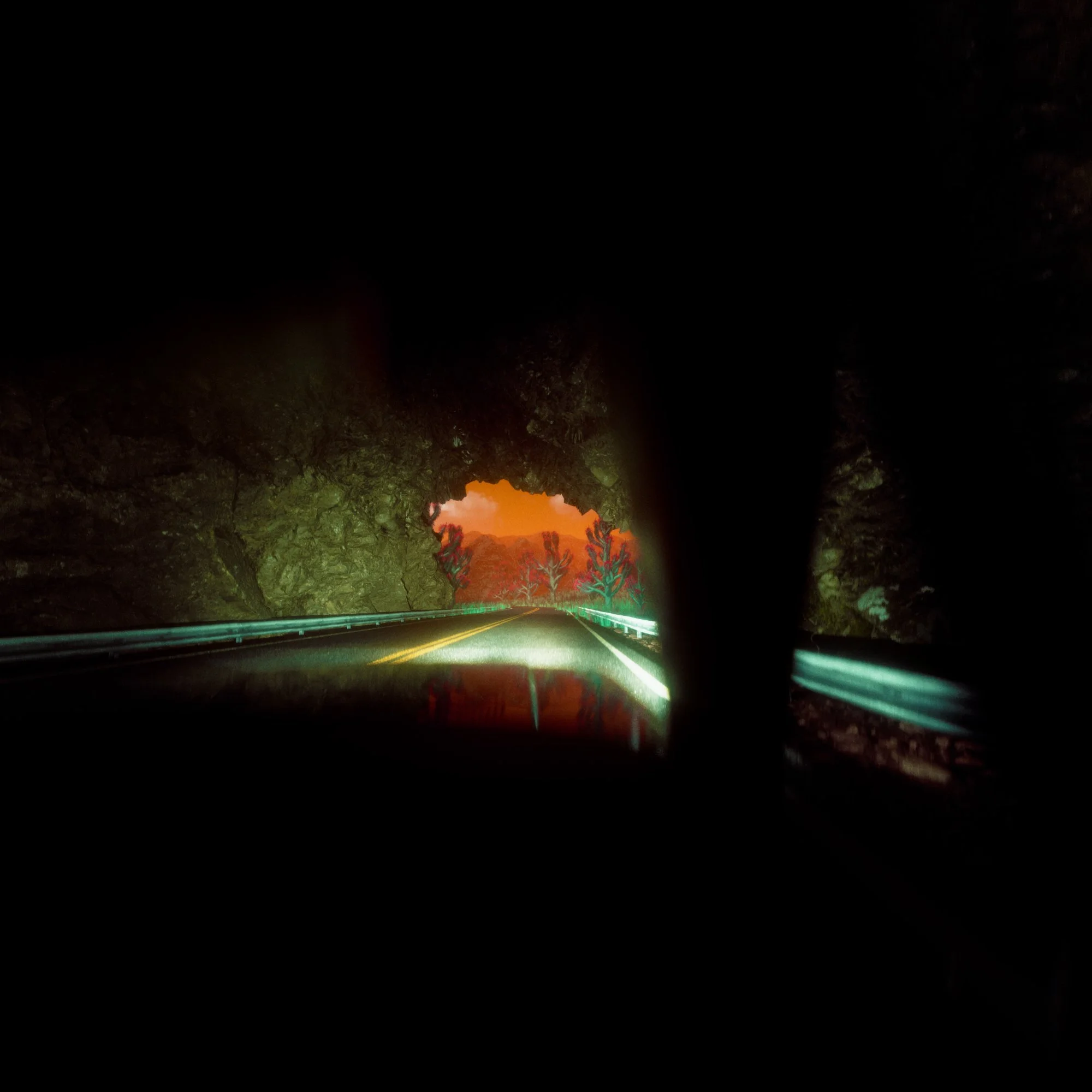
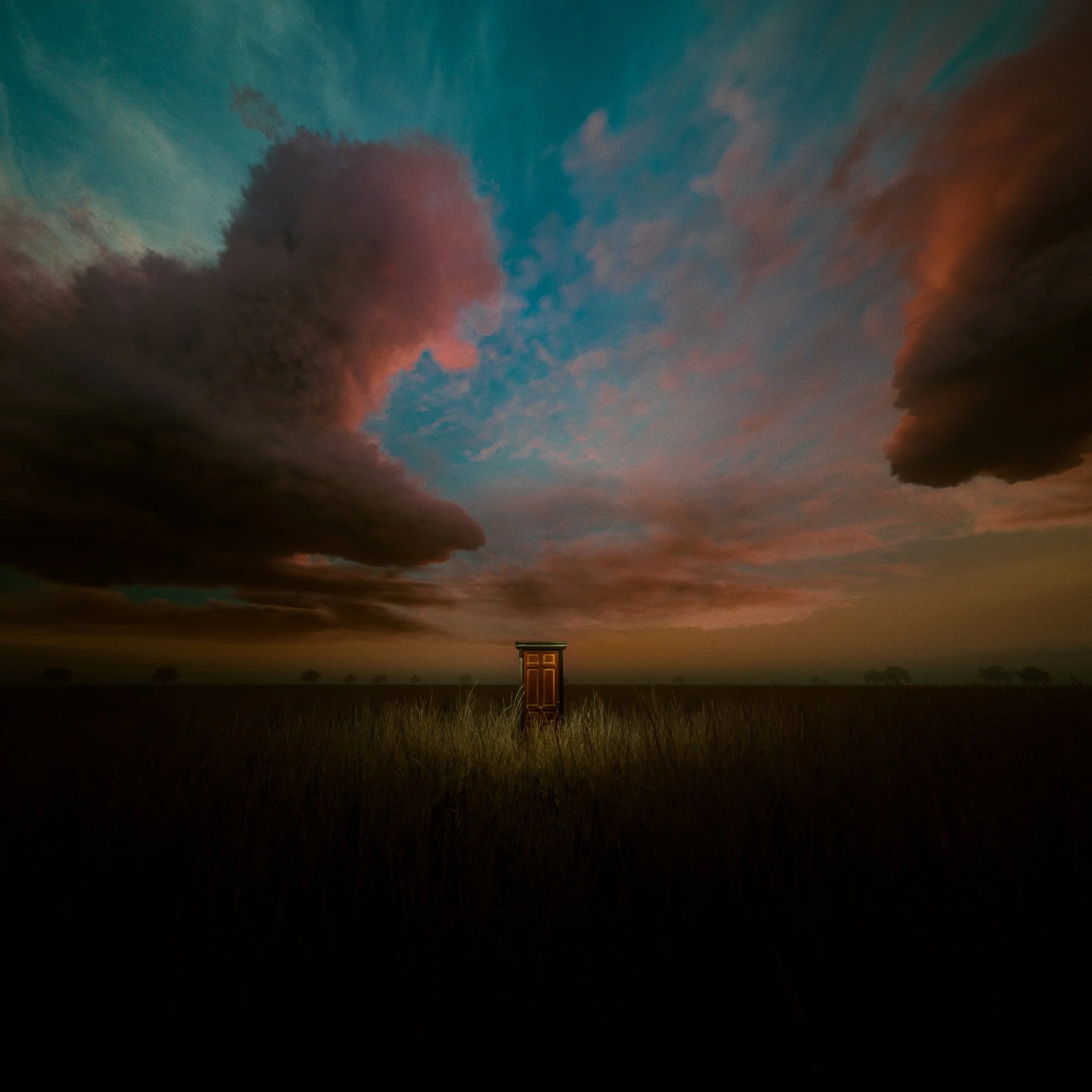
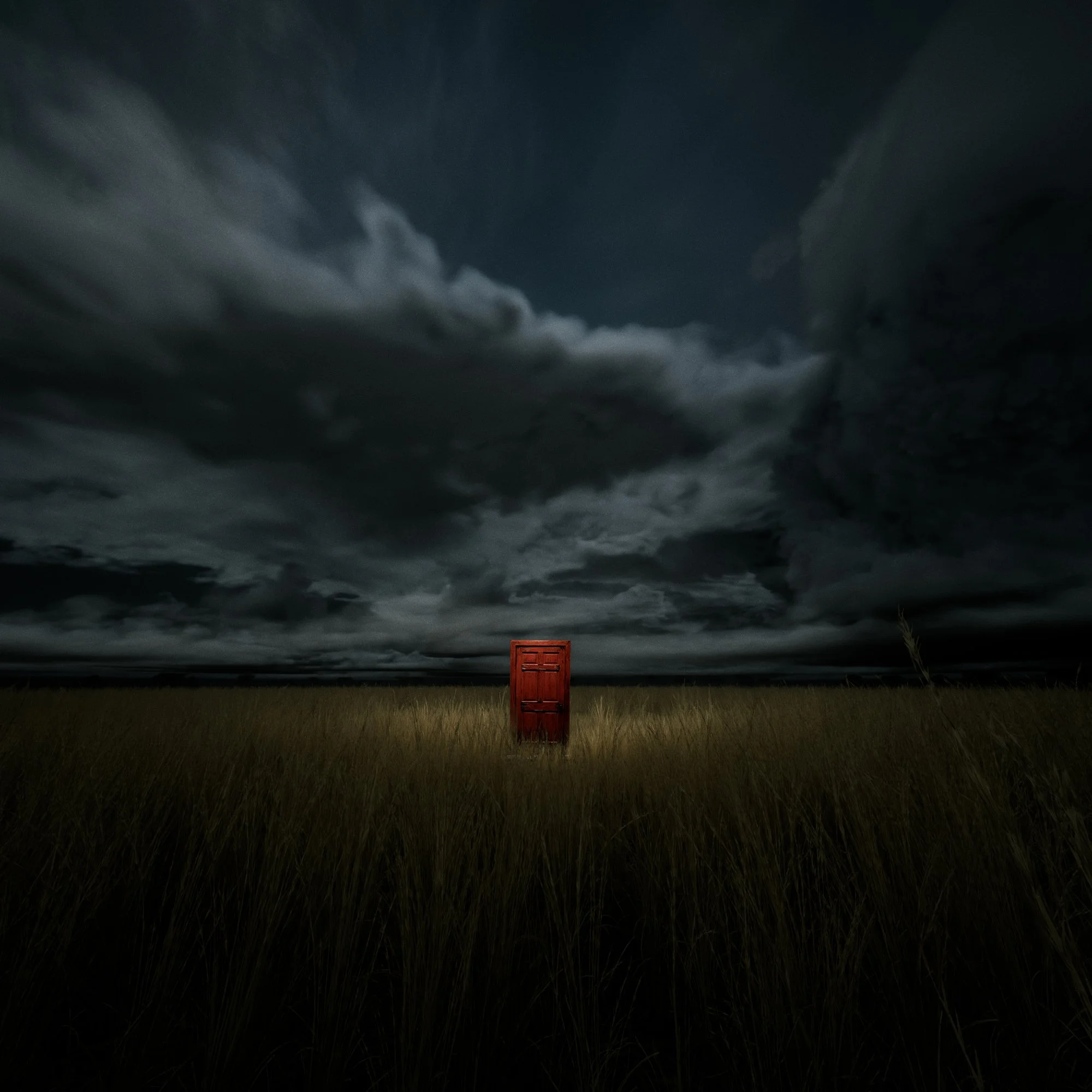
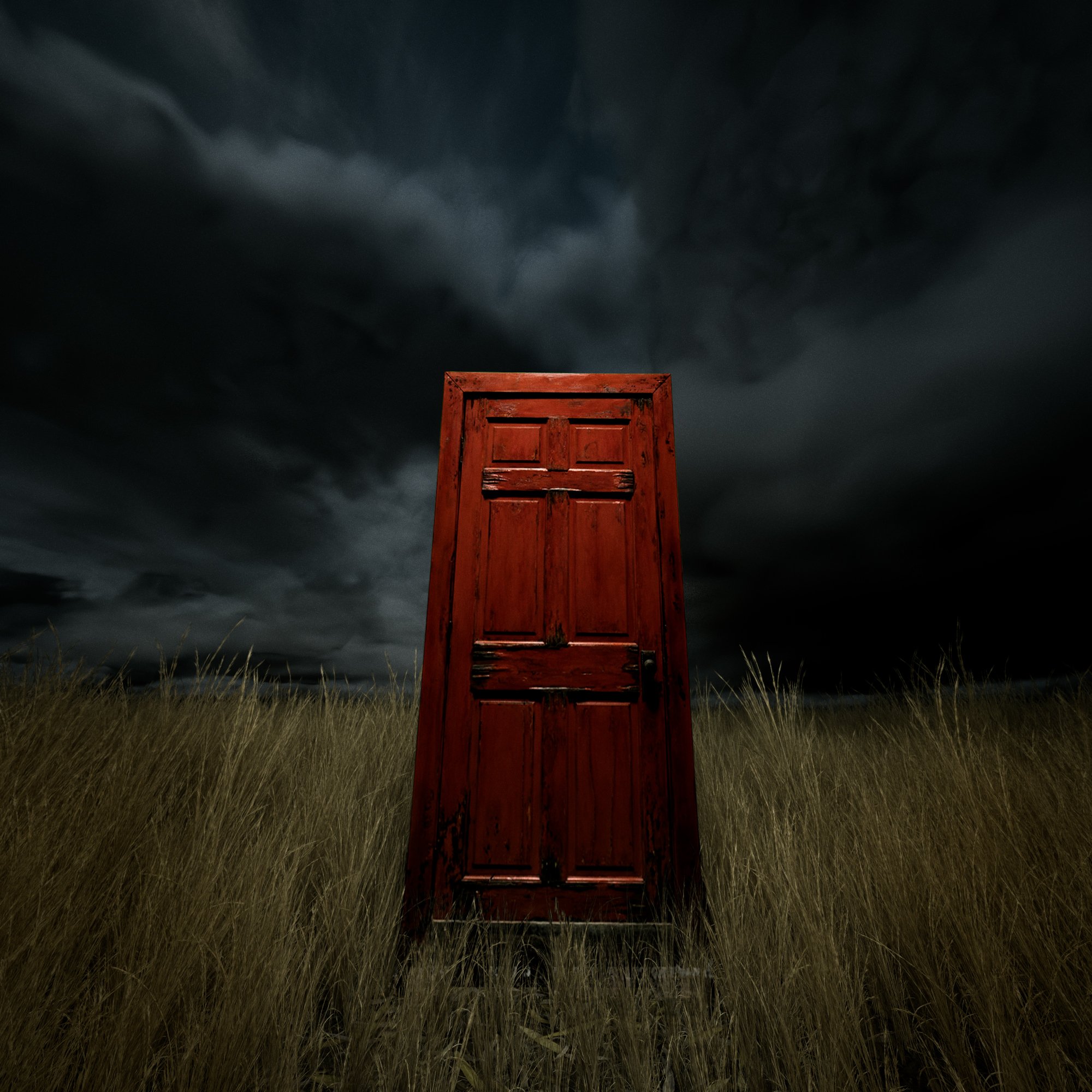
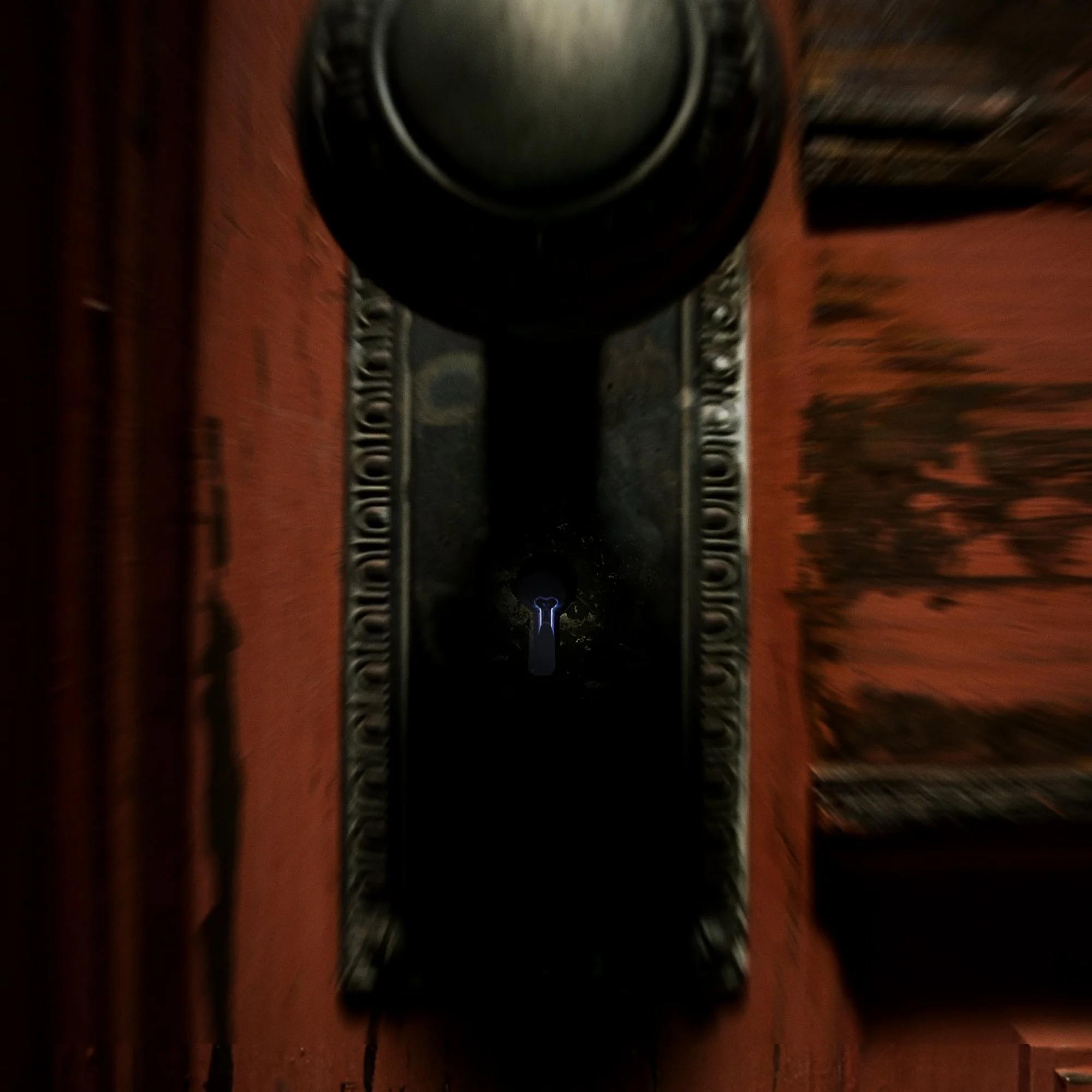
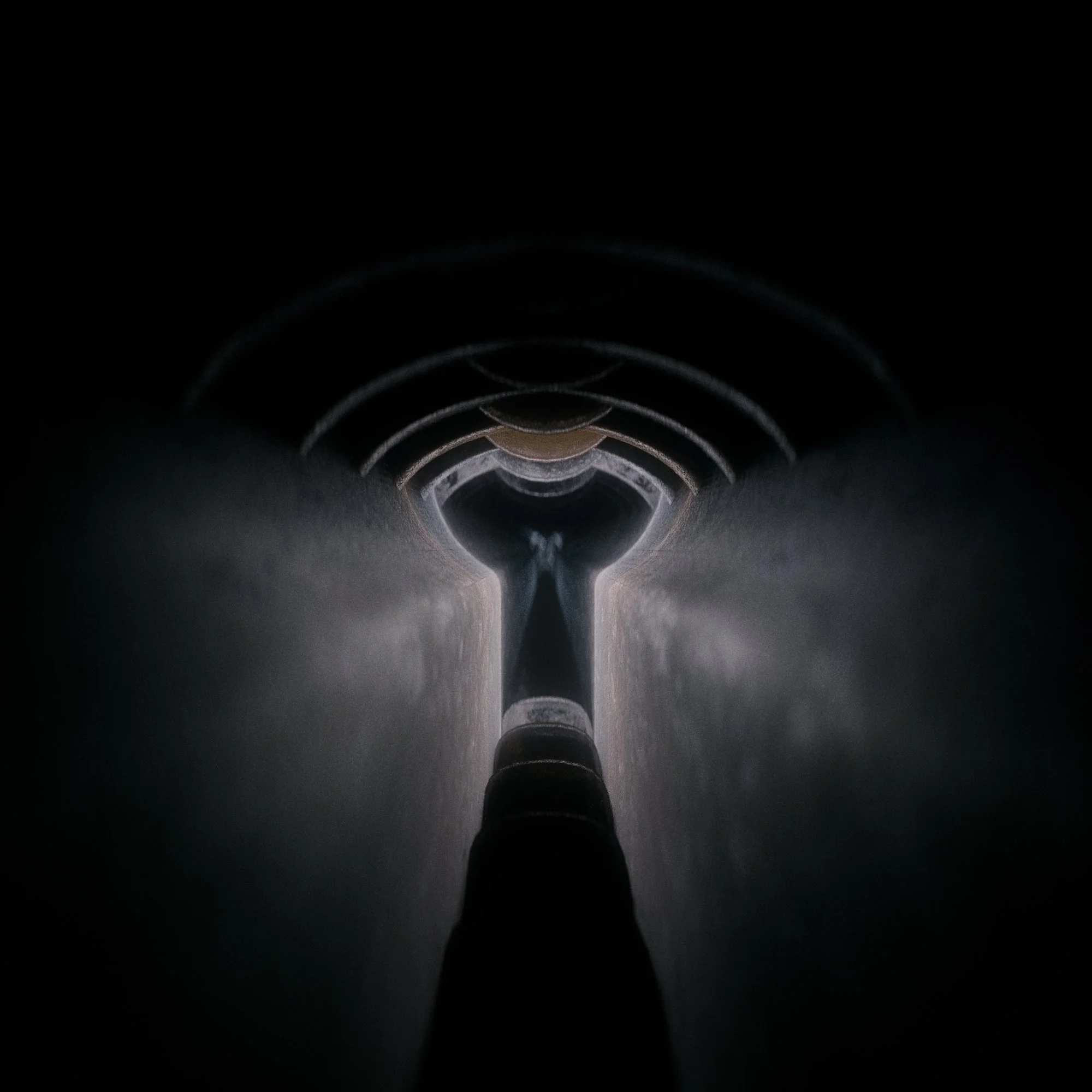
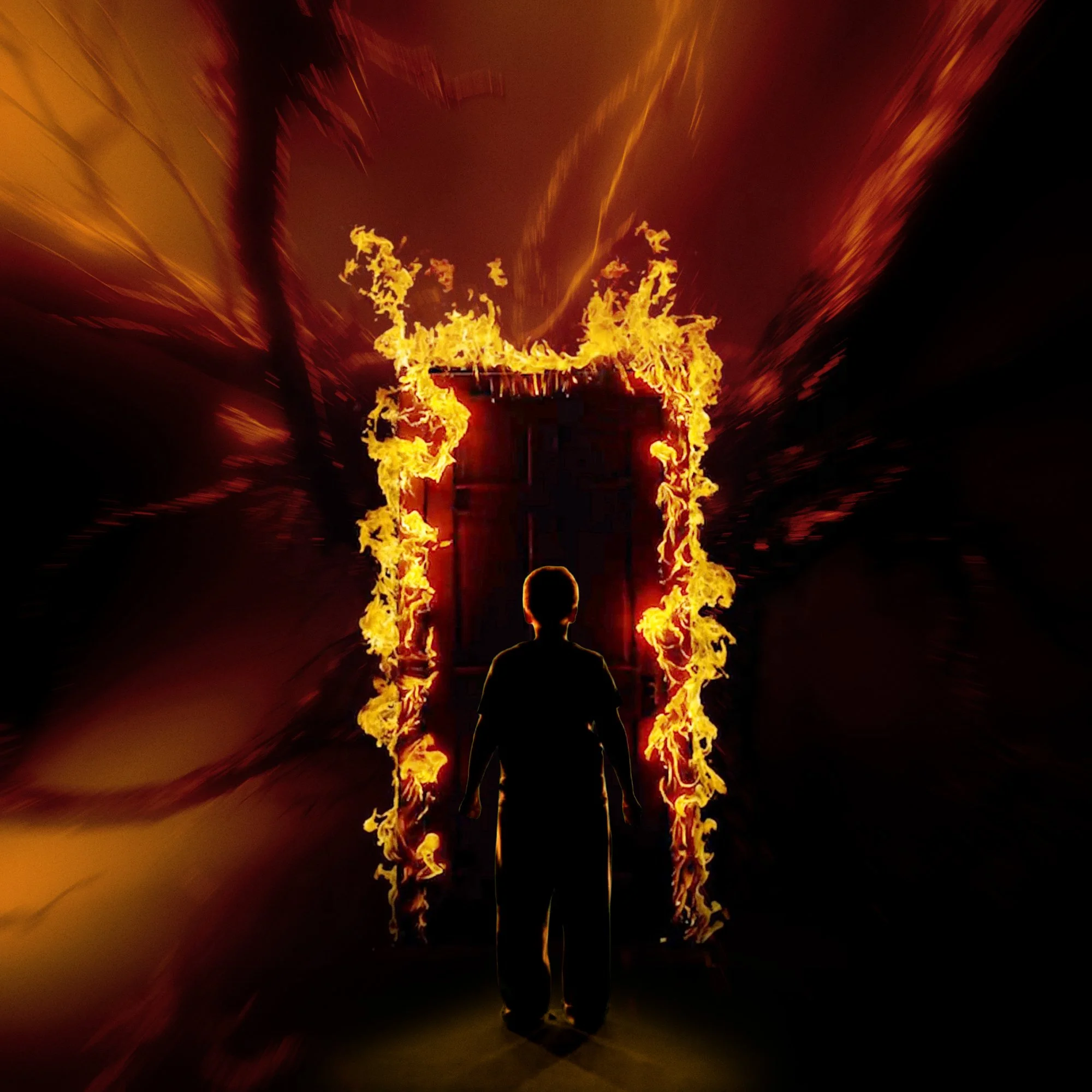
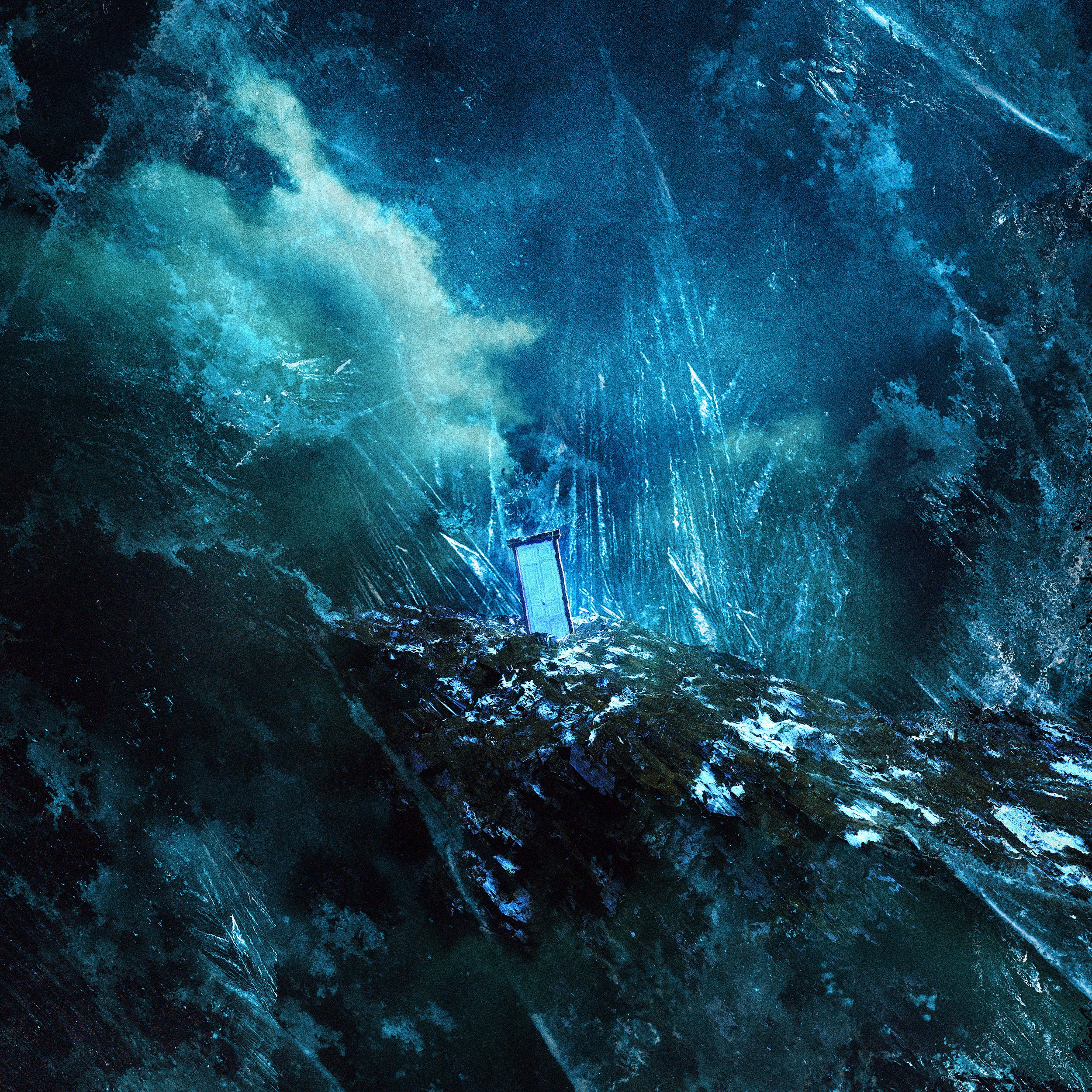
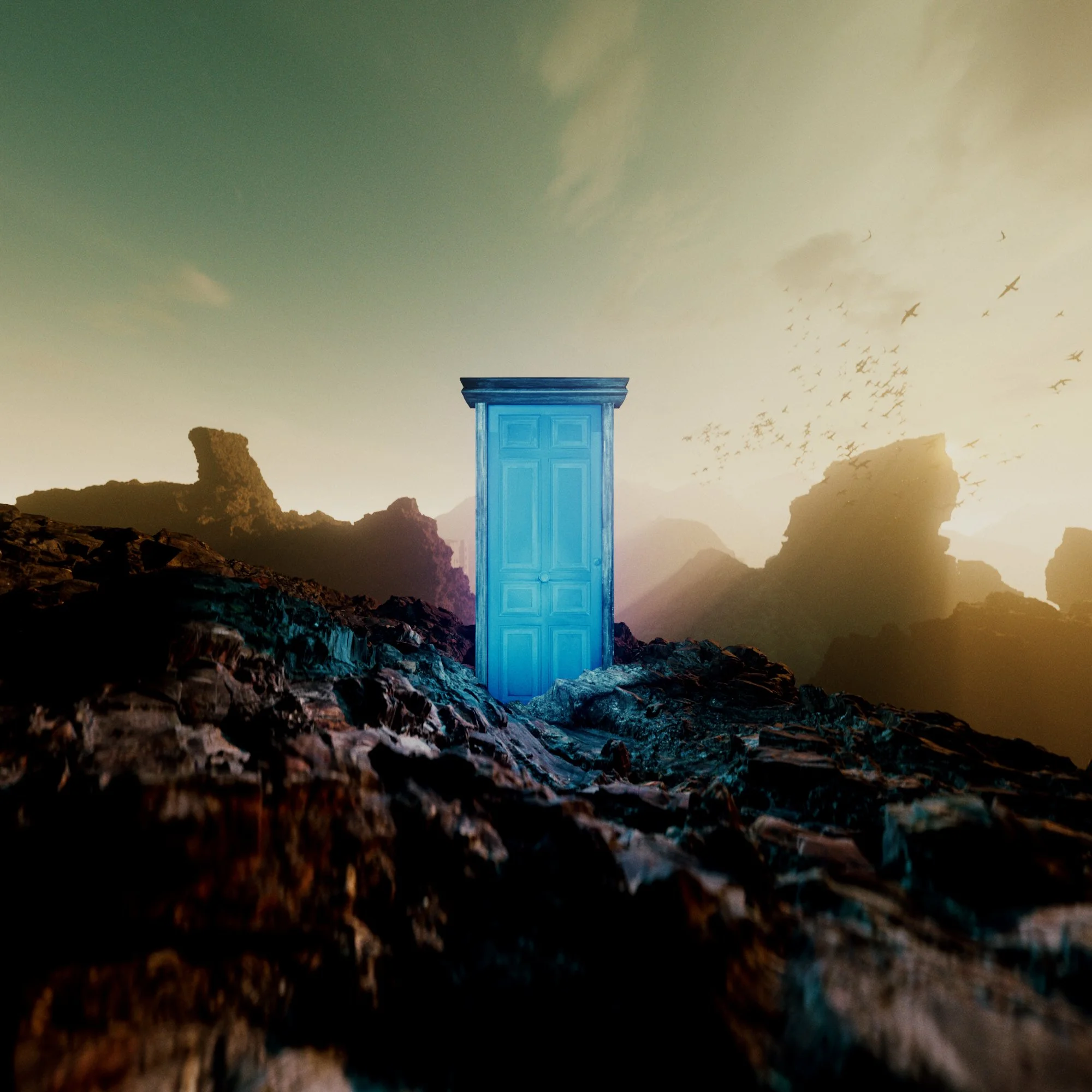
Architectural thresholds became essential storytelling devices throughout the show. Doors, hallways, and windows functioned both as symbolic motifs representing transformation and as practical transitional mechanisms between songs and emotional states. For “Exosphere," an ice-encrusted door explodes into flame to reveal the boy's metamorphosis. Floating doorways dissolve urban constraints into paradise, in “Toes”. These portal elements allowed seamless narrative flow, the camera passing through one threshold to enter an entirely new world, maintaining momentum while signaling shifts in perspective. By treating transitions as literal passages rather than simple cuts, each doorway reinforced the journey structure: crossing from one song to another, one emotional state to the next.

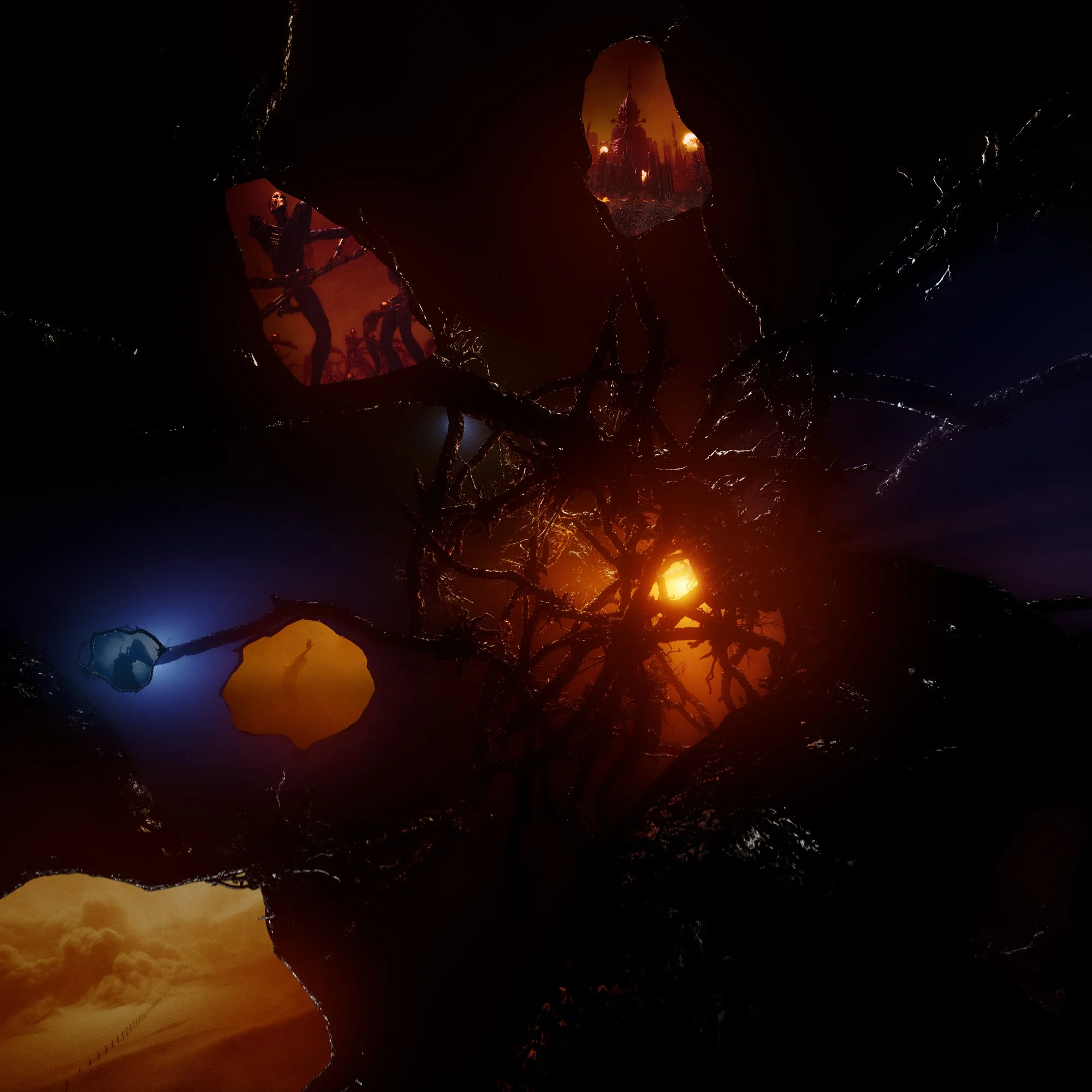
SPHERICAL DESIGN FOR PRODUCTION
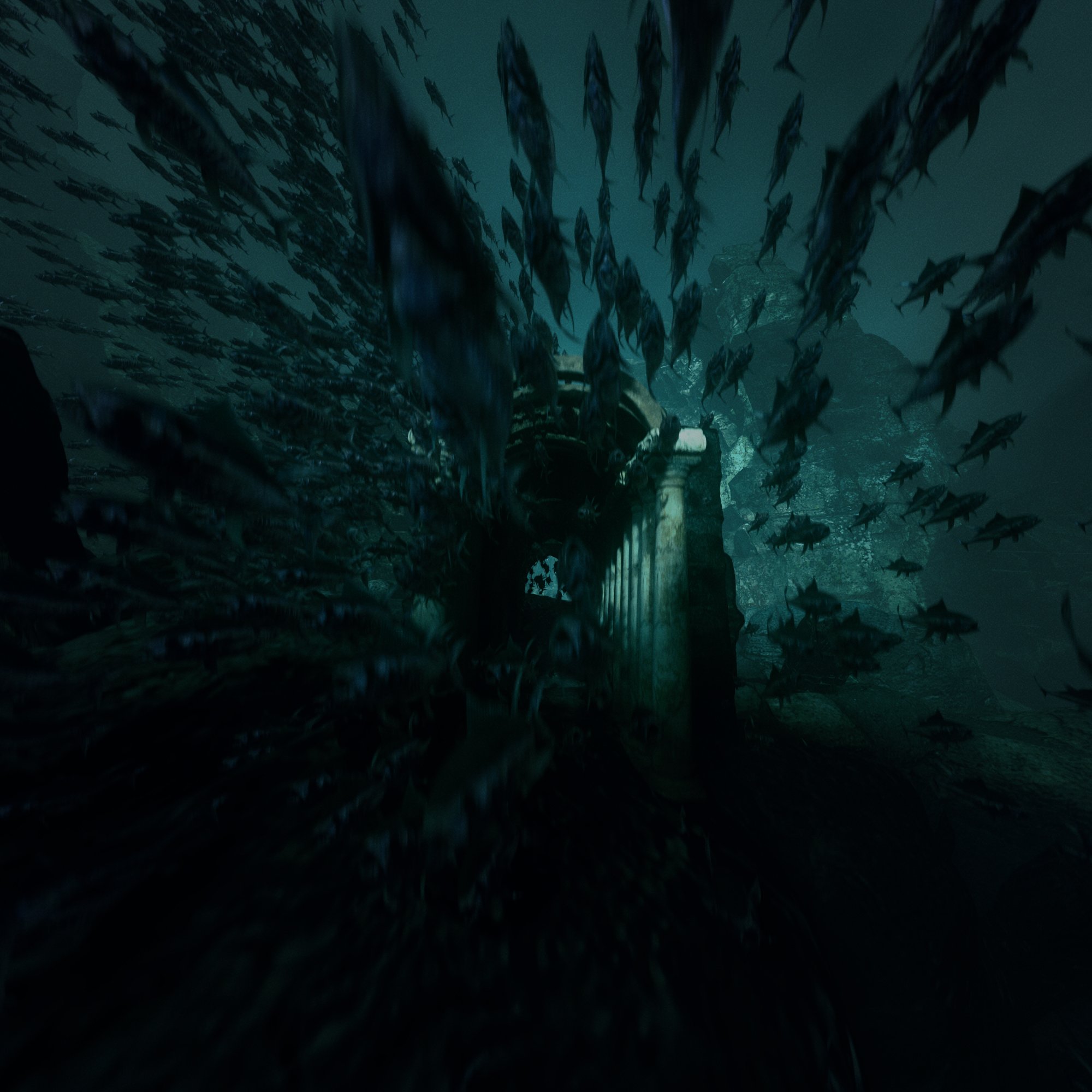
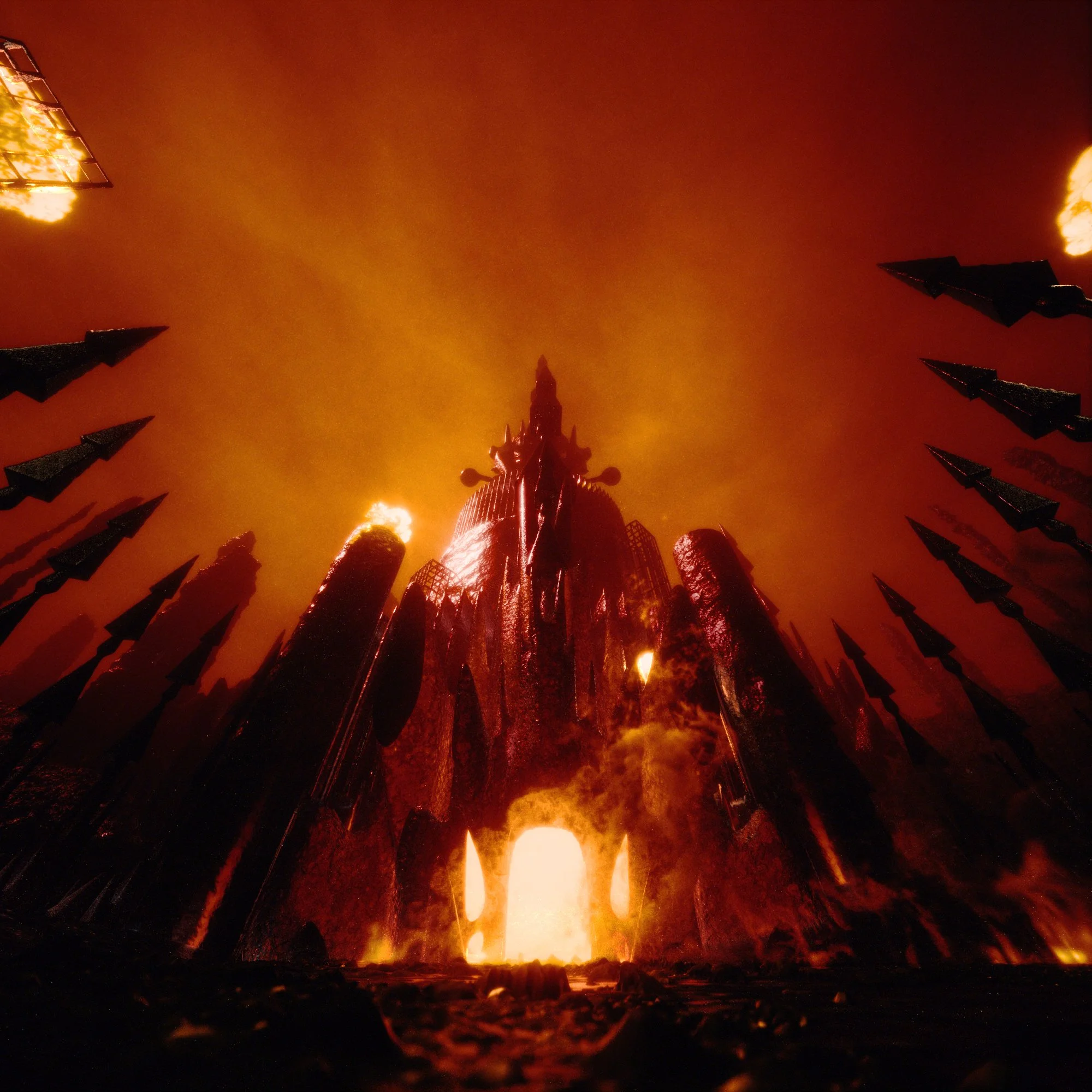
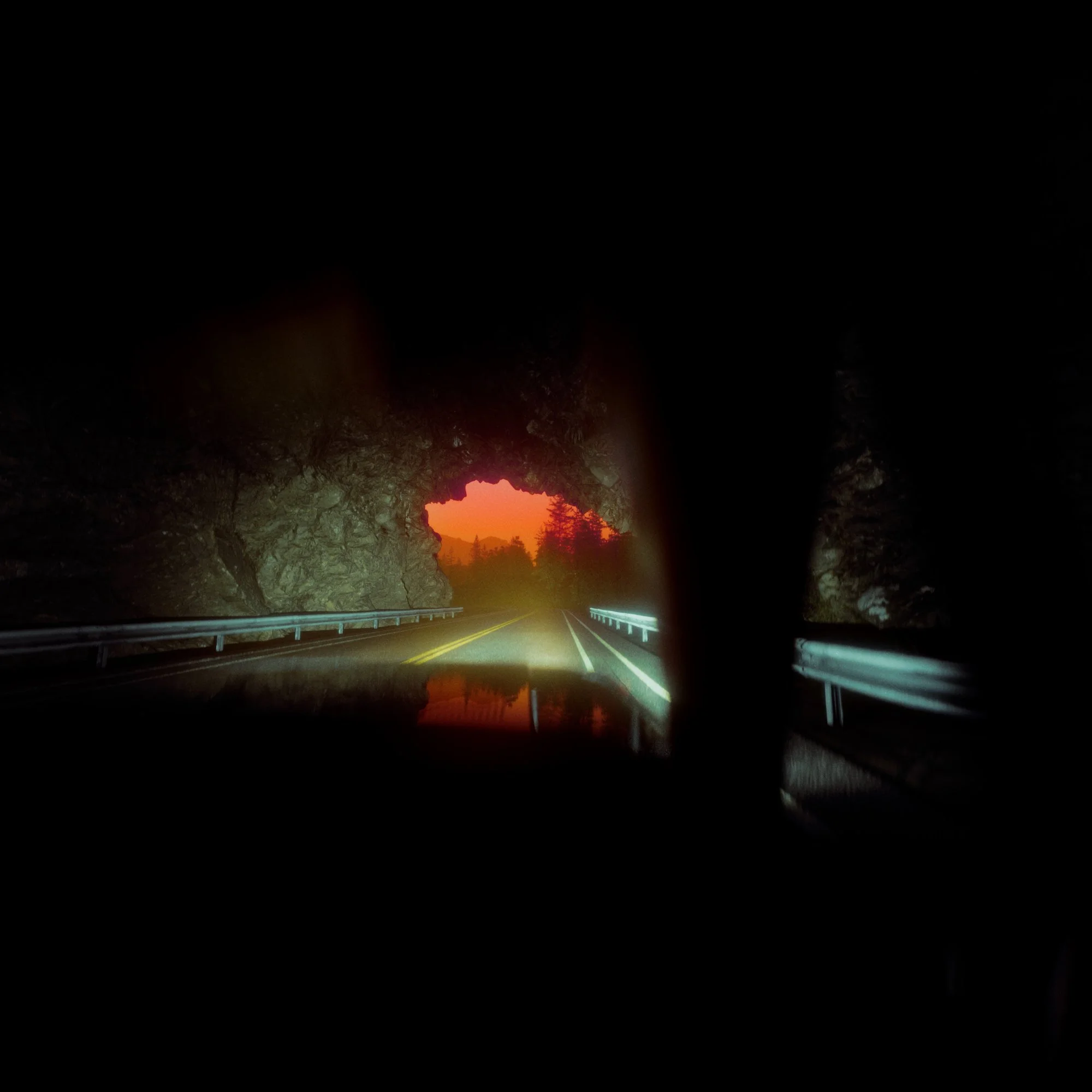
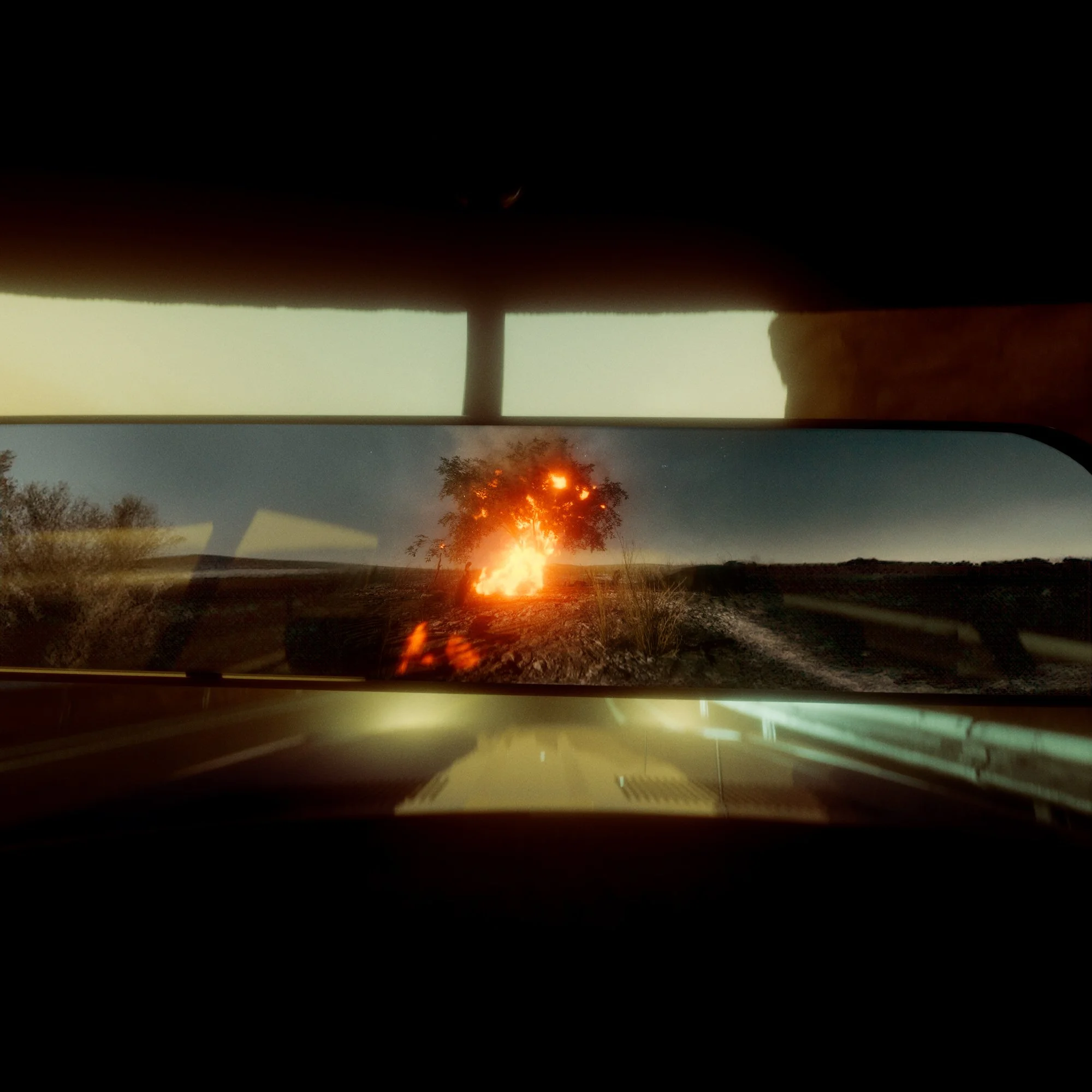
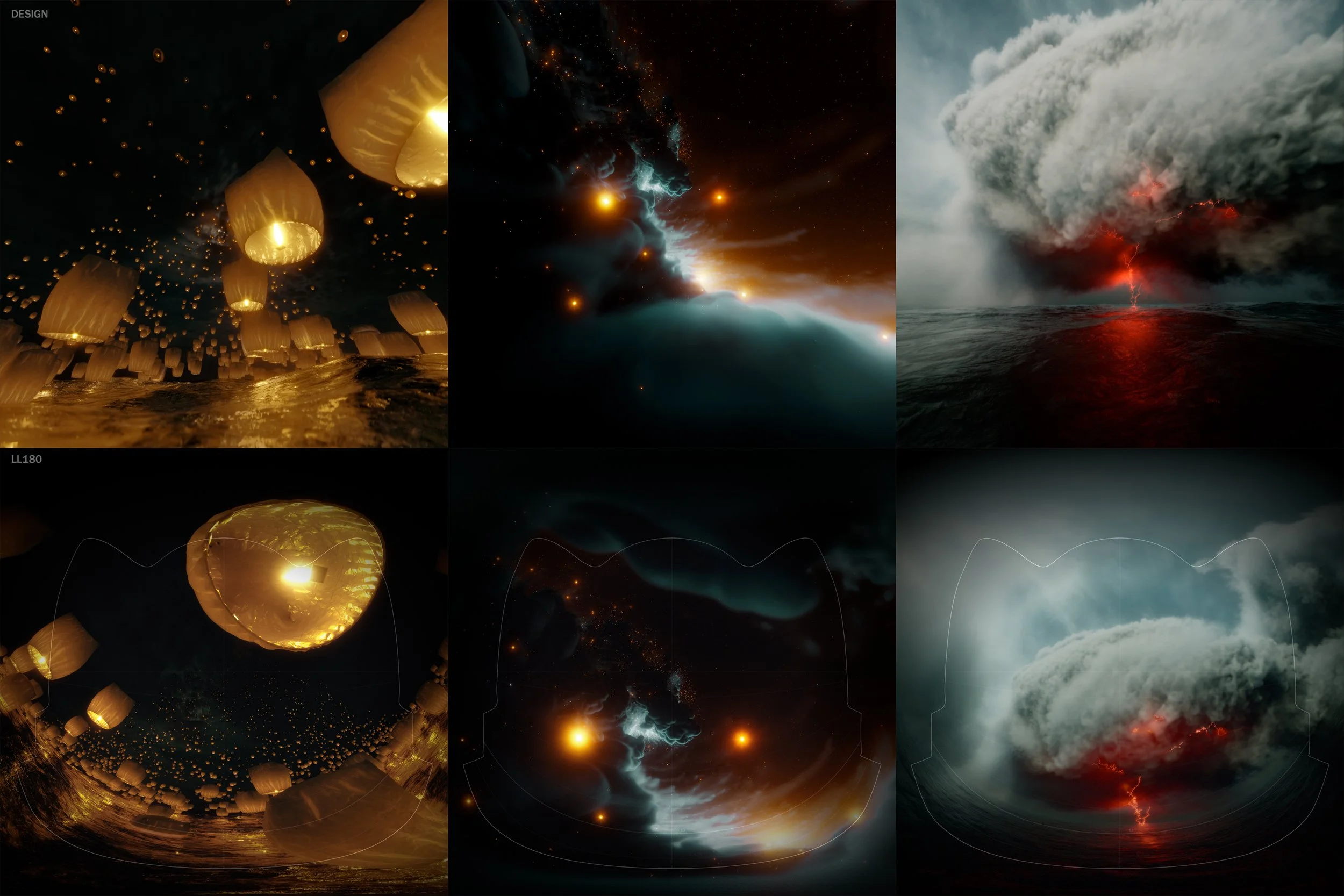
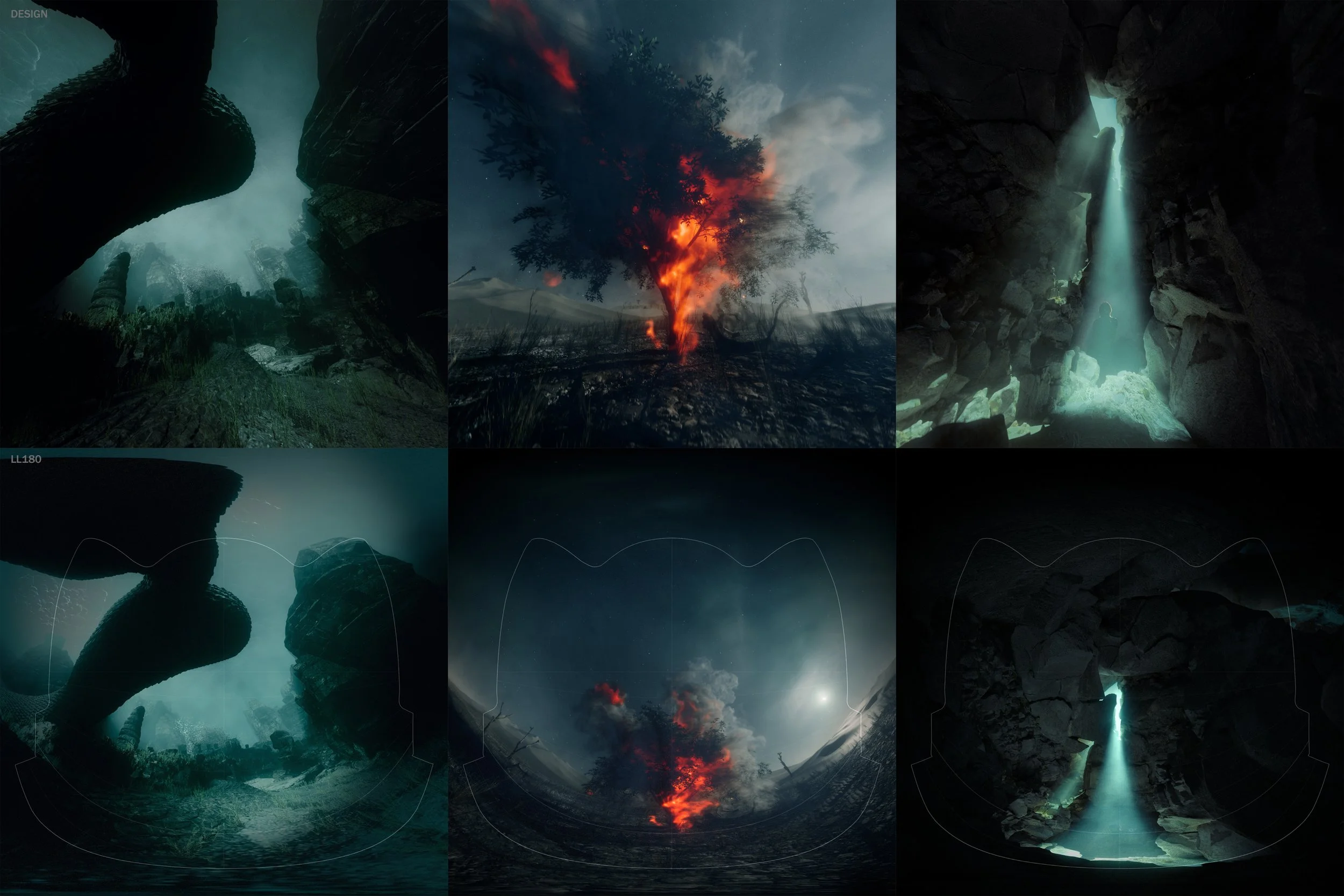
Designing for the Sphere's 360-degree canvas required rethinking traditional frame composition from the ground up. Rather than designing flat frames that would later require extensive extension work, I built complete wraparound worlds from the start, using an extremely wide-angle lens during the design phase to capture as much of the surrounding environment as possible. This approach made scene extensions significantly easier for animators downstream, as the foundational world-building was already complete within my design frames.
However, this wide-lens approach created its own challenges. Rendering everything in-camera with such expansive coverage made compositing and tracking more complex, which further justified my "work in-camera" philosophy of getting shots production-ready within the IPR rather than relying on heavy post-compositing. The payoff came during the transition to the Sphere's proprietary LL180 camera; my design methodology meant the switch was remarkably simple, requiring minimal rework because the world was already in place. Below are examples demonstrating how design frames translated seamlessly to the Sphere's unique projection format, proving that designing for immersion from the beginning saves significant production time and maintains visual integrity.
LIVE STREAM PERFORMANCE (IMAG)
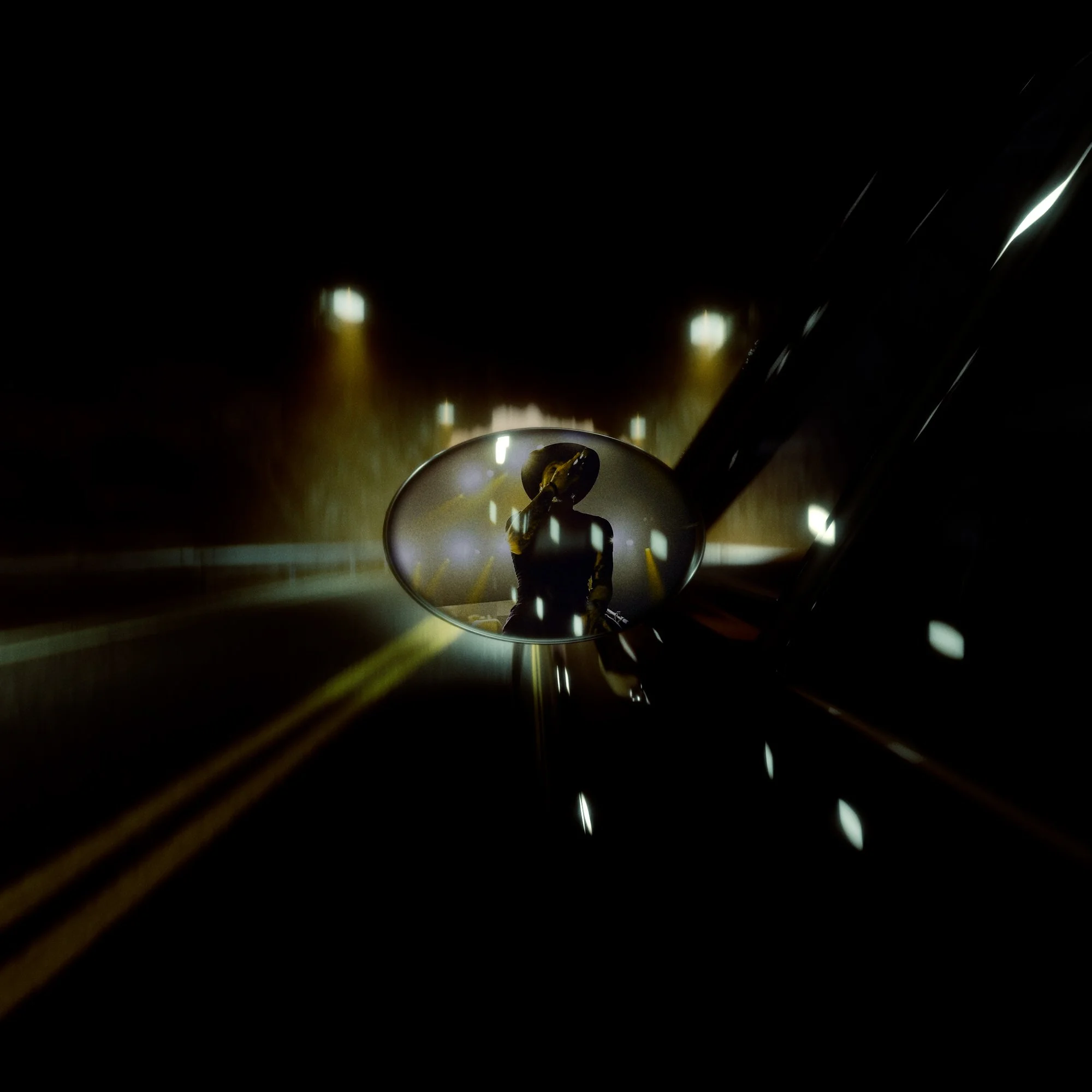
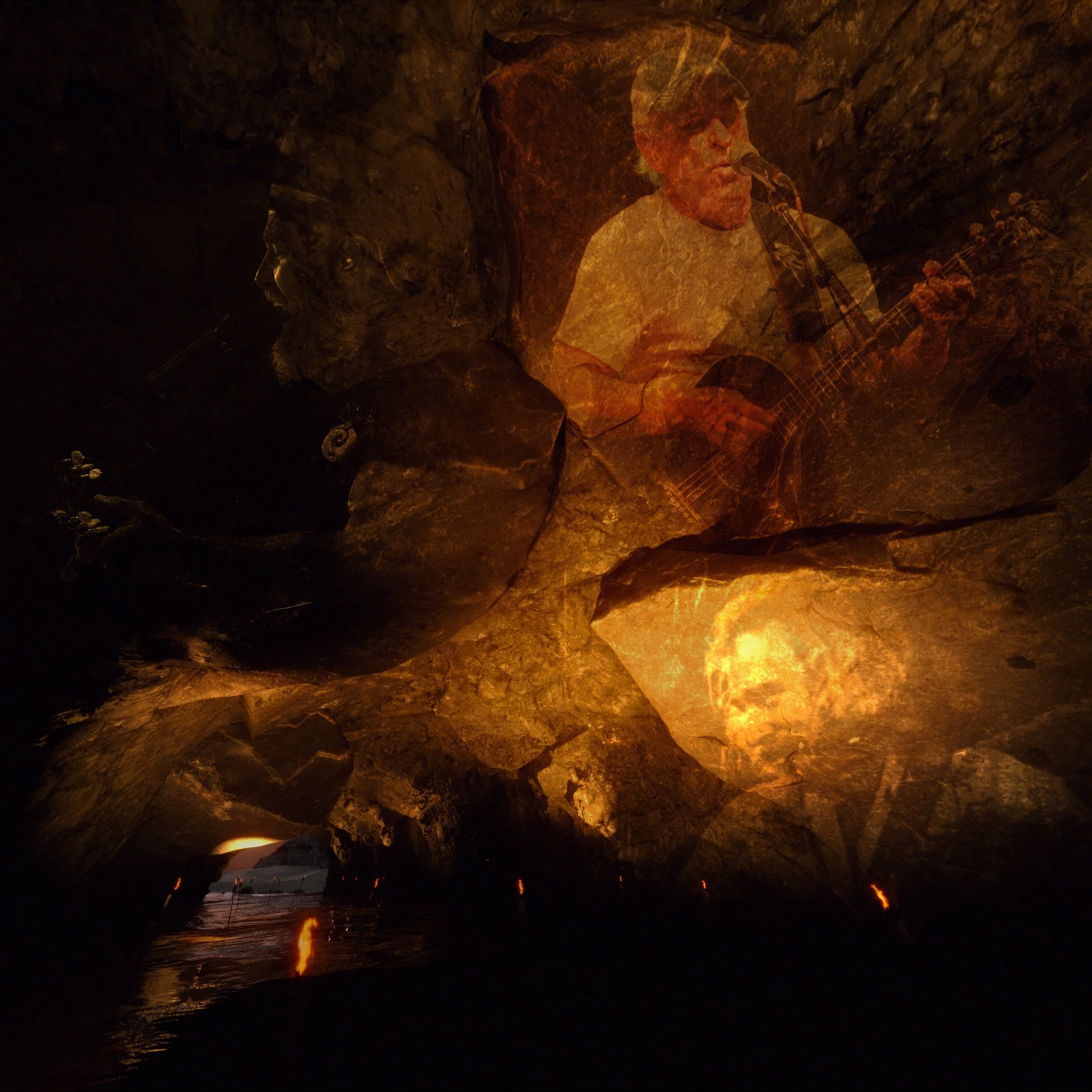
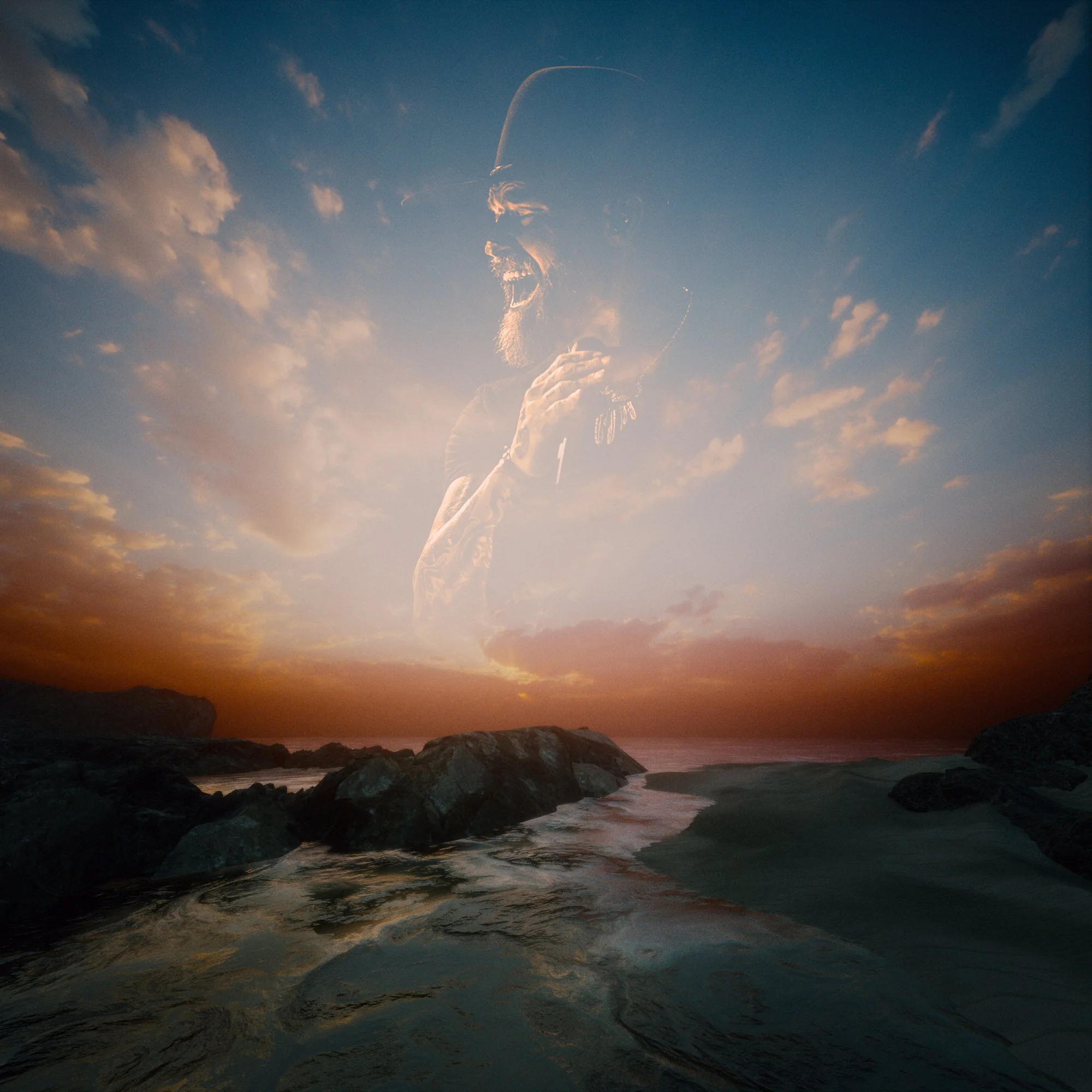
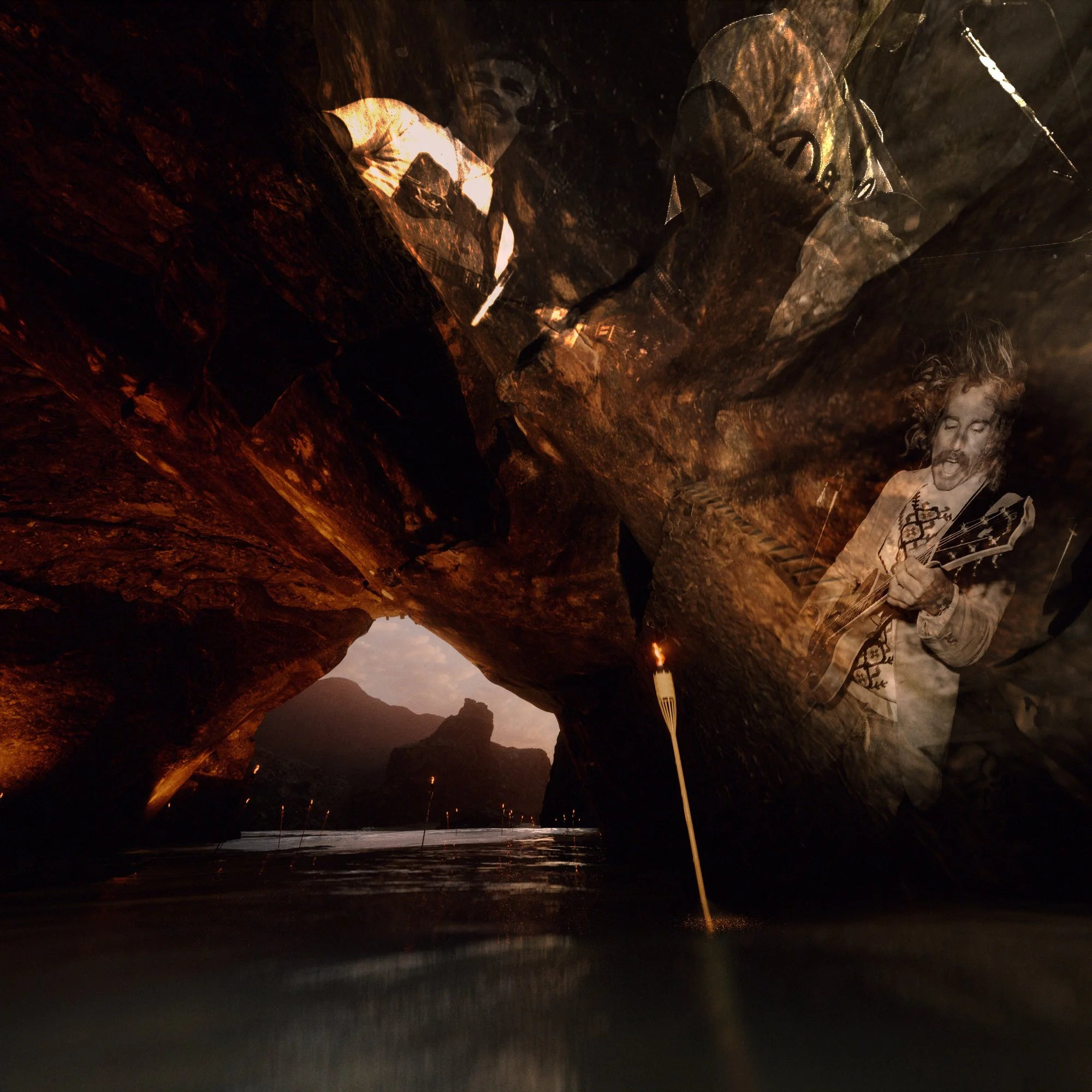
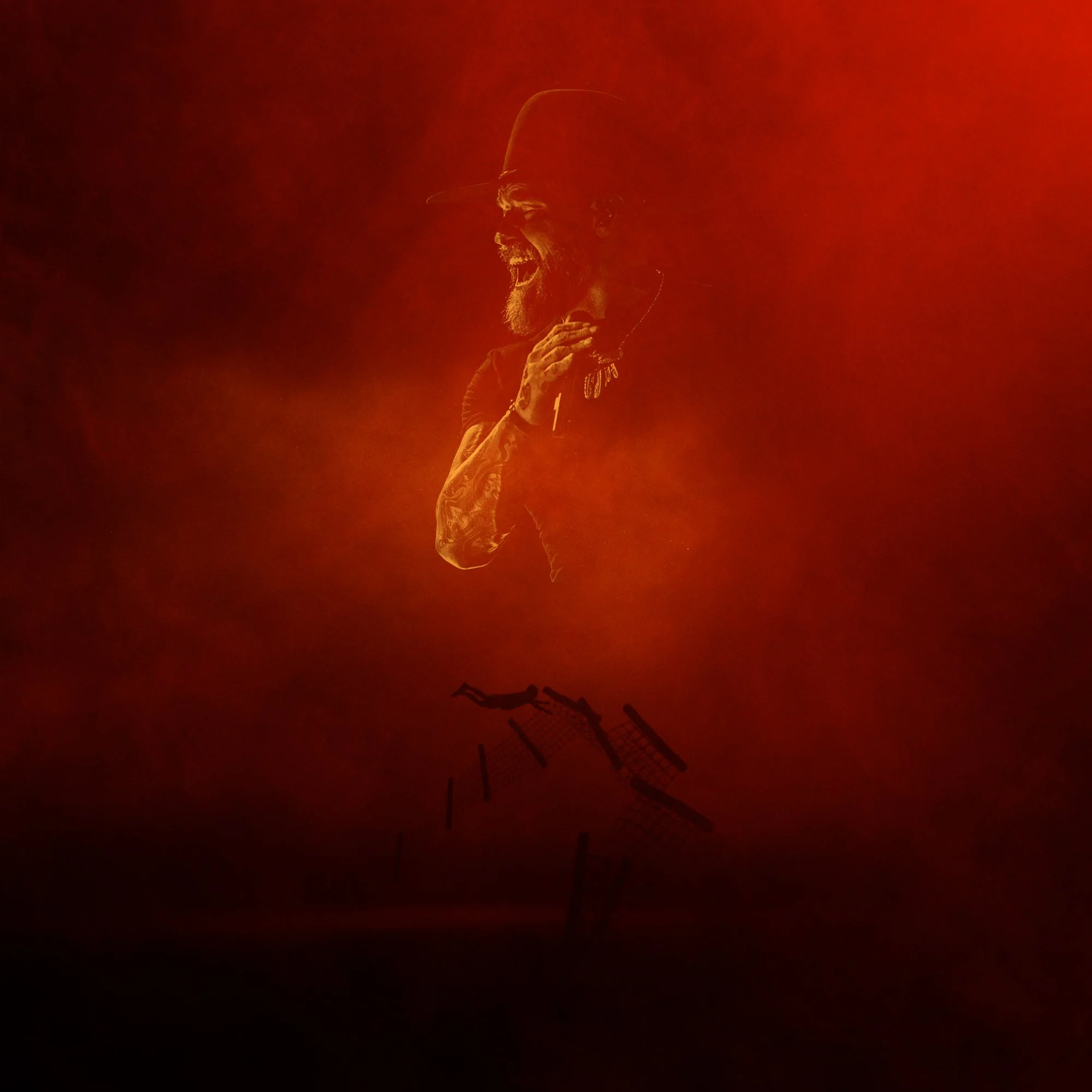
Integrating live band performance into the cinematic narrative presented a unique challenge: how to showcase real-time footage without disrupting the immersive storytelling. The solution drew from classic television production techniques, reimagined for the Sphere’s scale. I designed clean alpha channel wipes, mortices, and transitions that could frame performances seamlessly within fantastical environments without compromising the show’s cinematic vision. The Notch and D3 systems proved remarkably powerful for real-time compositing, but the key was restraint and strategic simplicity. Desaturated performance overlays layered onto textural landscape beds allowed the band to exist within the worlds we’d built, crimson skies behind guitar solos, storm clouds framing drum fills, crystalline cities reflecting during intimate moments. By treating the live feed as another visual element rather than the dominant focus, we maintained narrative continuity while honoring the concert’s fundamental purpose: showcasing the band. The result was a hybrid experience where Zac and his musicians became characters within their own story, performing against the very demons and landscapes their songs described, creating a seamless real-time synthesis of performance and cinema.



OPENING AND CLOSING IMAGE
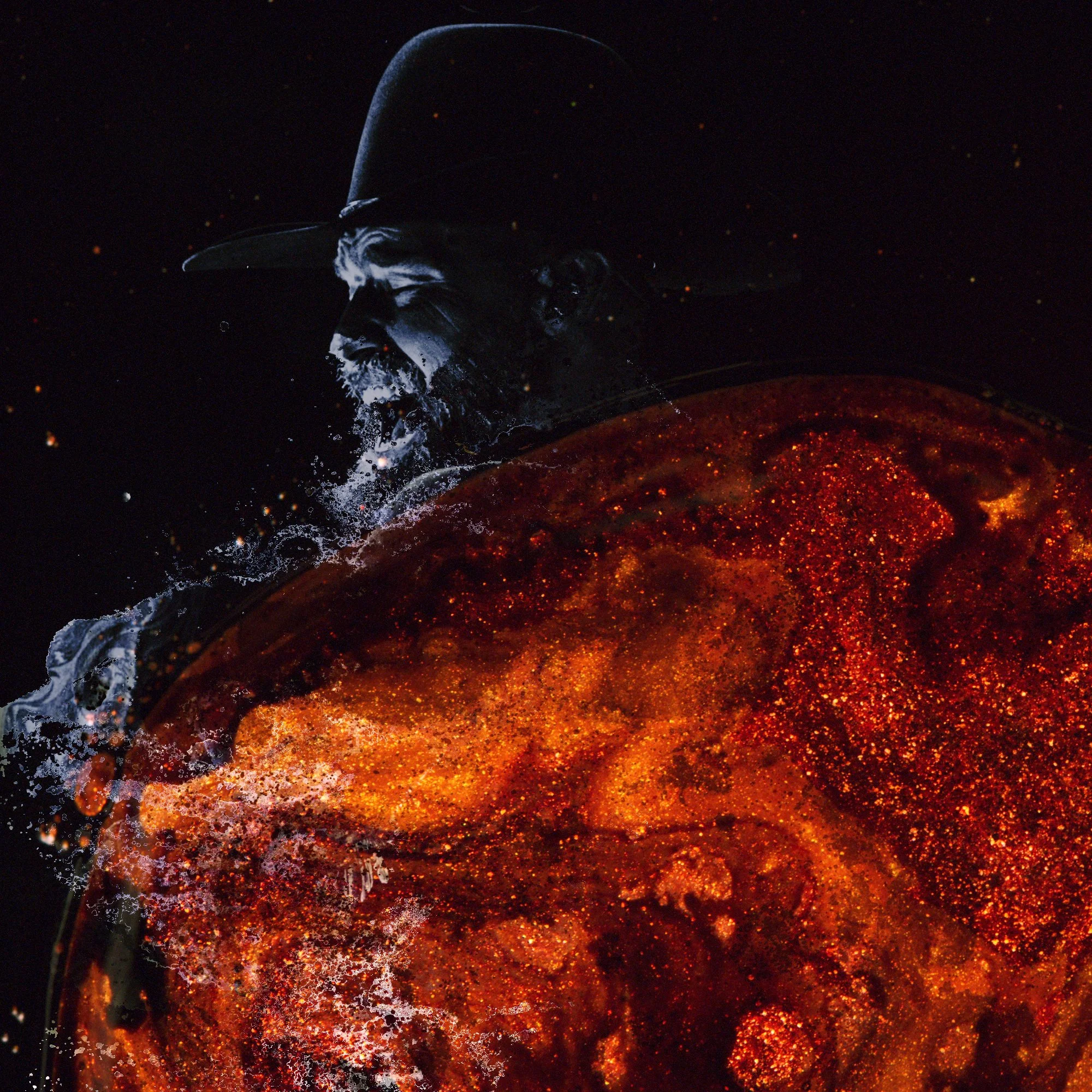
The opening and closing images of “Love and War” function as visual bookends that encapsulate the entire spiritual journey, mirroring one another in composition while representing opposite poles of the soul’s transformation. The show opens with “Heavy is the Head,” plunging audiences into a hellscape where golden skeletal figures claw desperately over one another, establishing the depths from which our hero must rise. The closing image inverts this nightmare into its divine opposite: “Remedy” presents a celestial realm where the crystalline city of sapphires and rubies refracts prismatic light, and angelic figures float peacefully among clouds, no longer climbing in desperation but existing in grace. These parallel compositions, one descending into darkness, the other ascending into light, frame the entire narrative as a passage from damnation to salvation, from isolated suffering to universal love, proving that the weight of the crown can be transformed into the wings of transcendence.