THE SHOW DESIGN CASE STUDY
ZAC BROWN BAND “LOVE & WAR” at SPHERE
AN IMMERSIVE MYTHICAL FILM
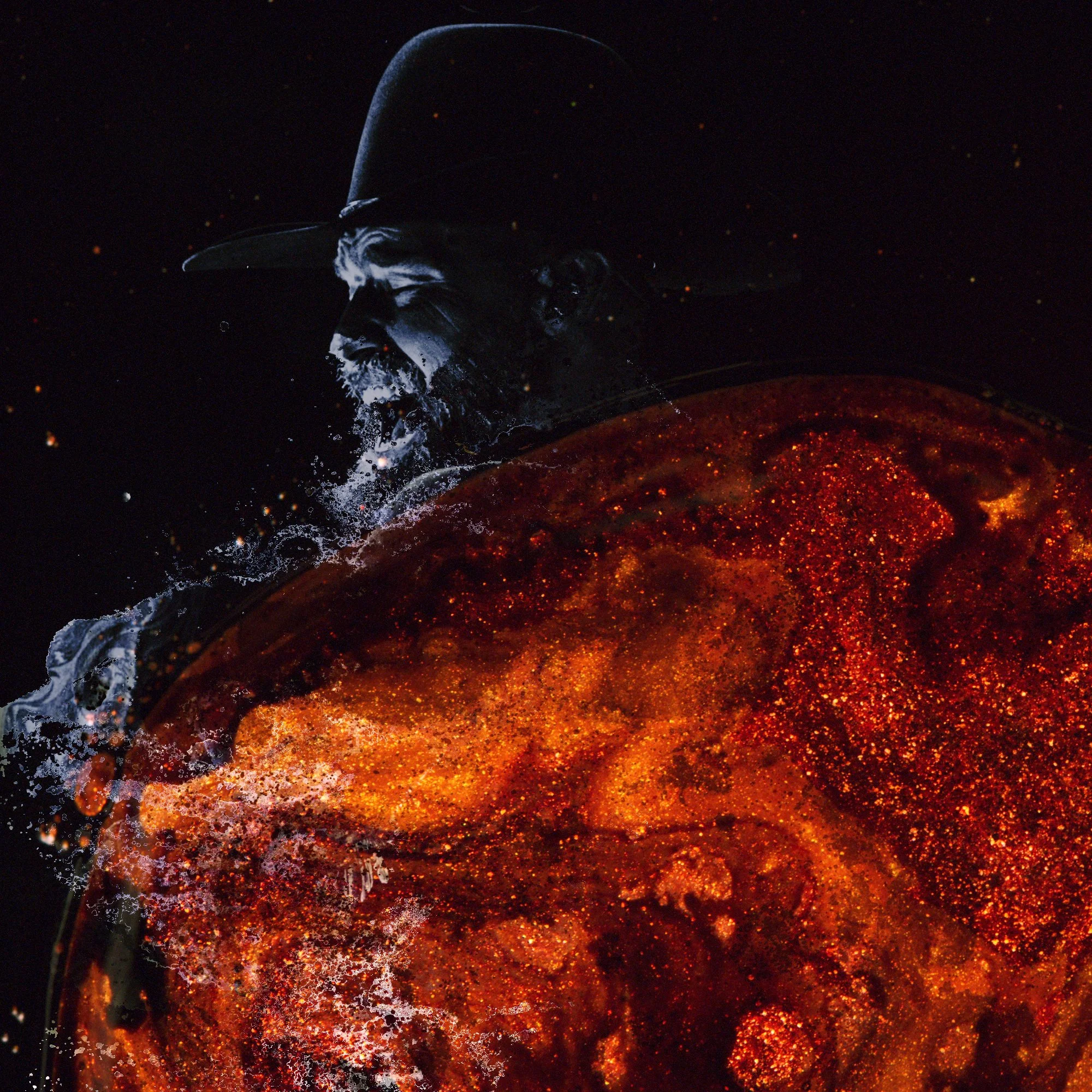
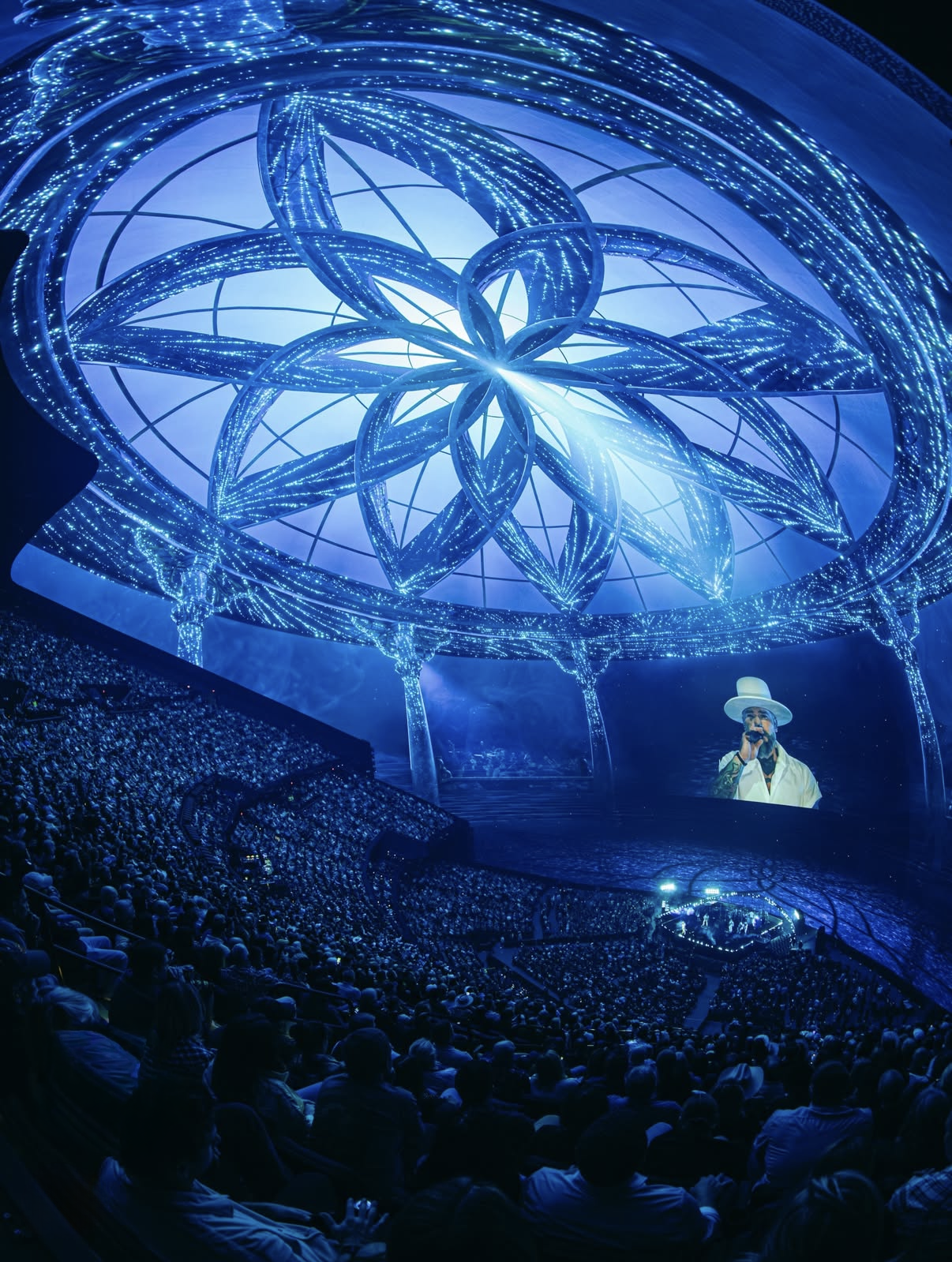
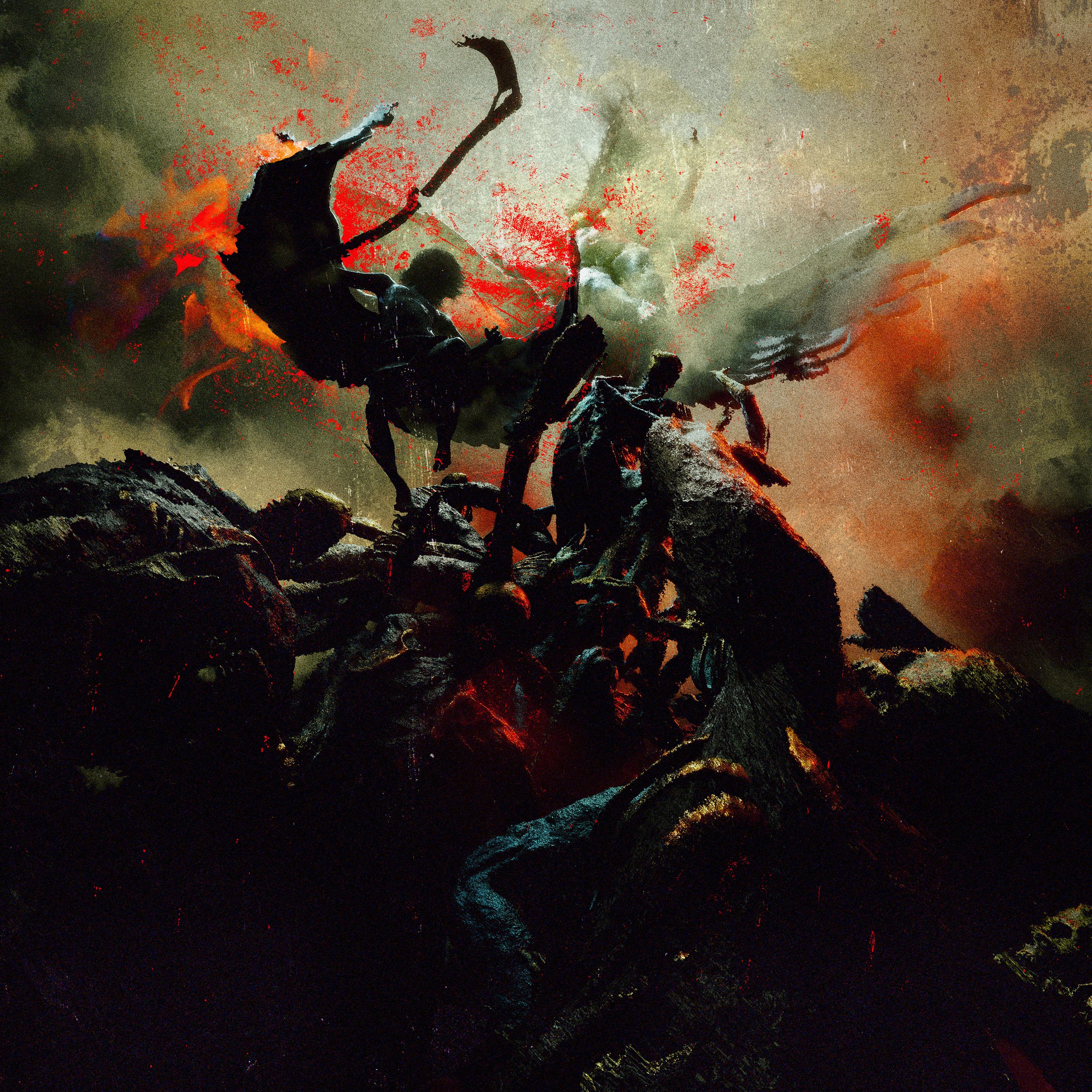
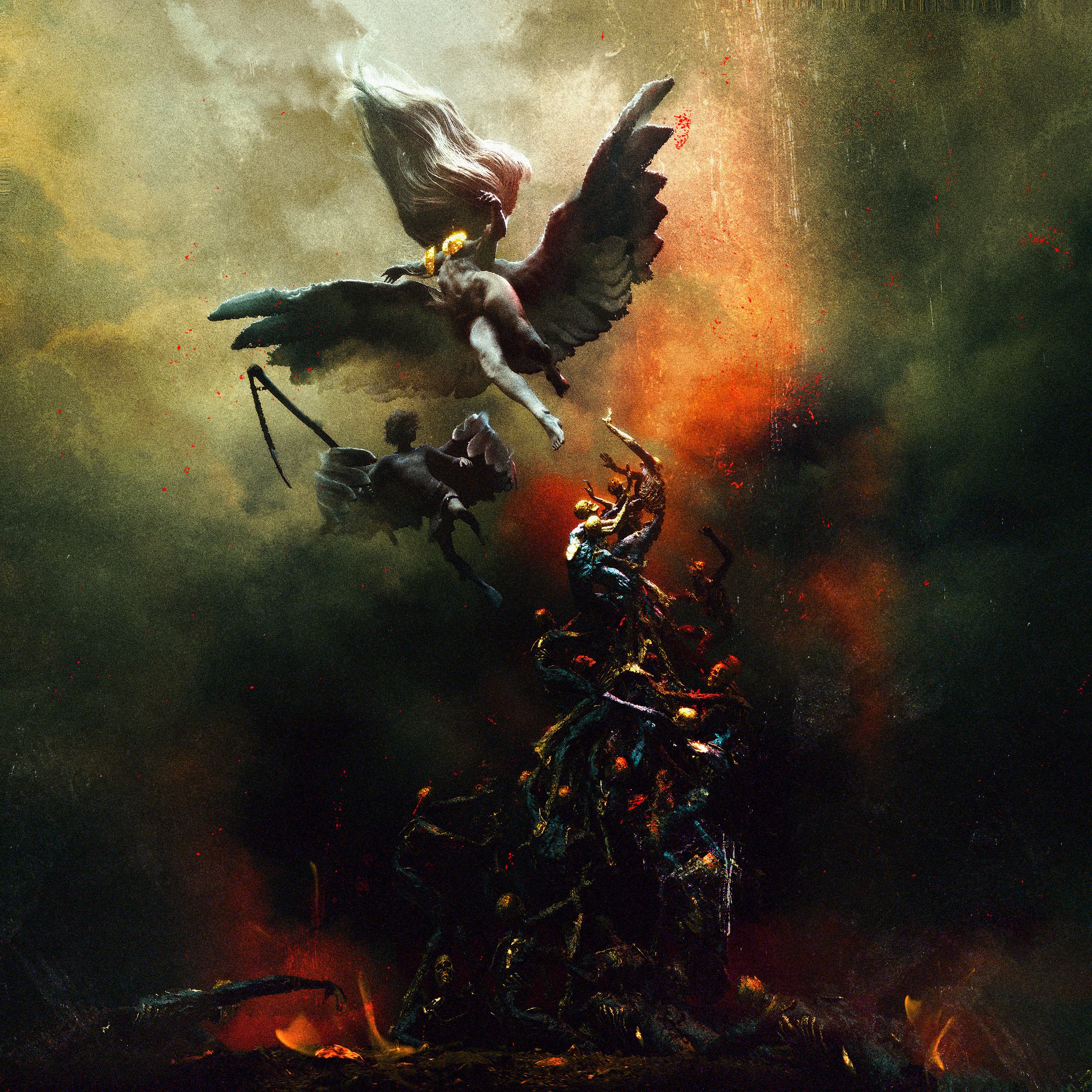
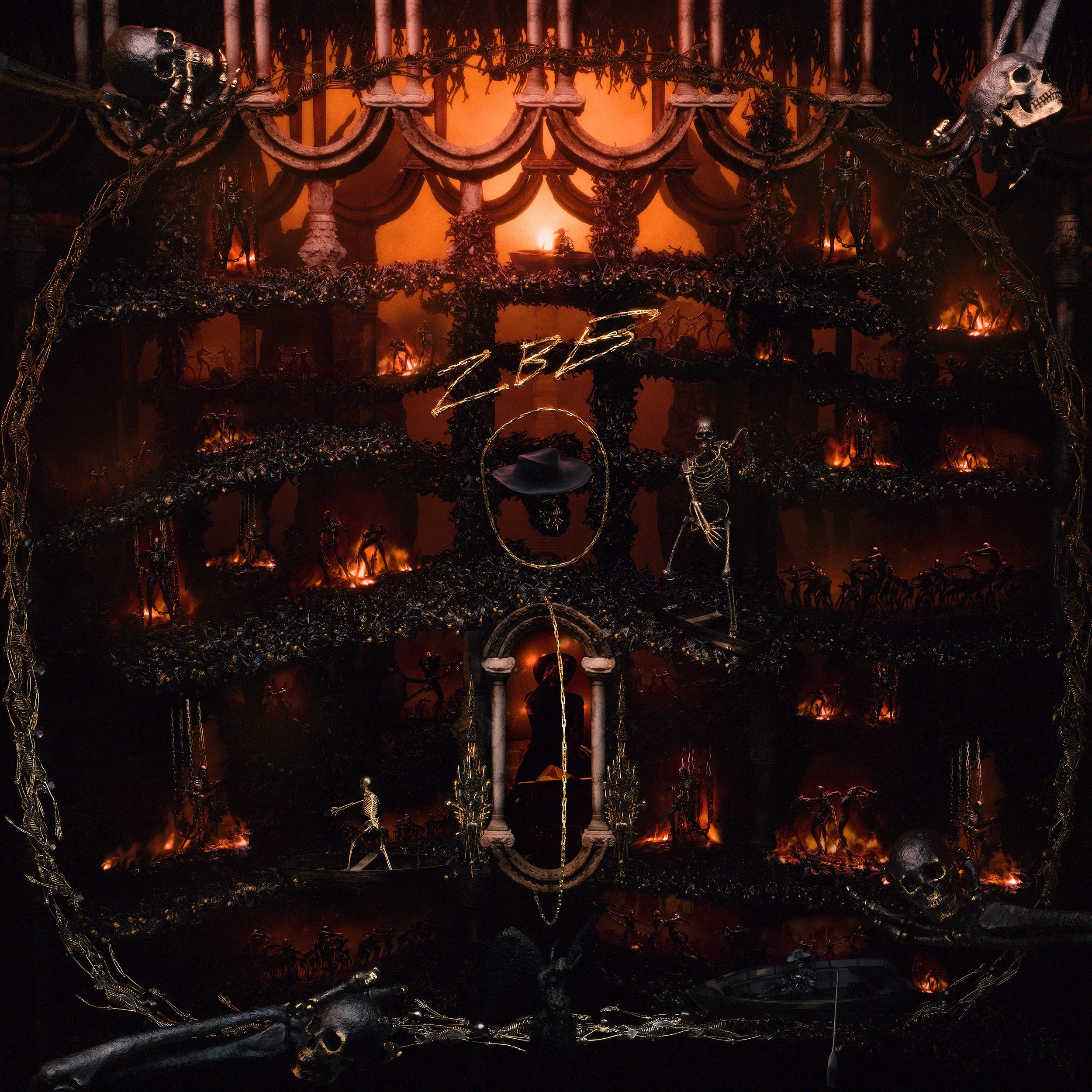
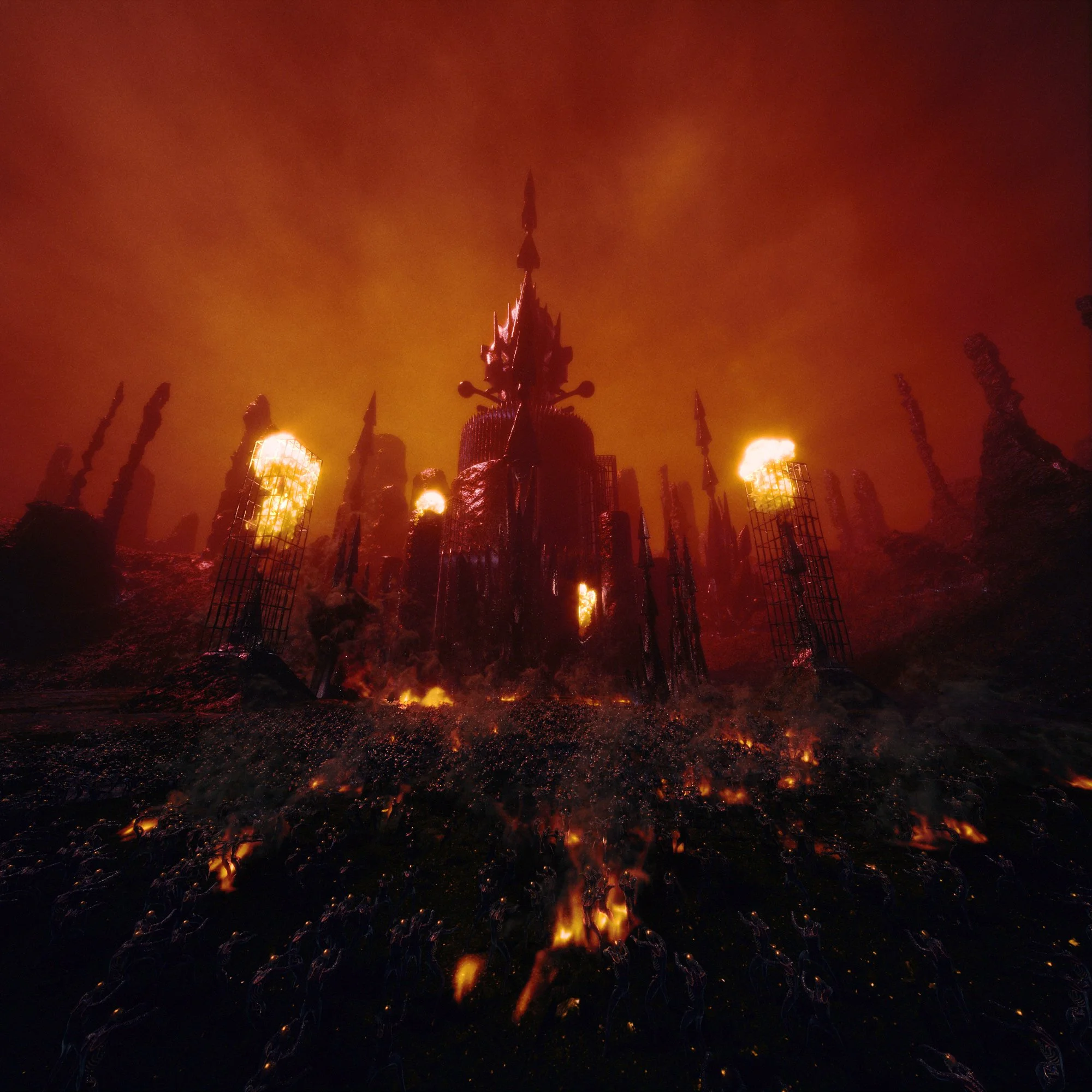
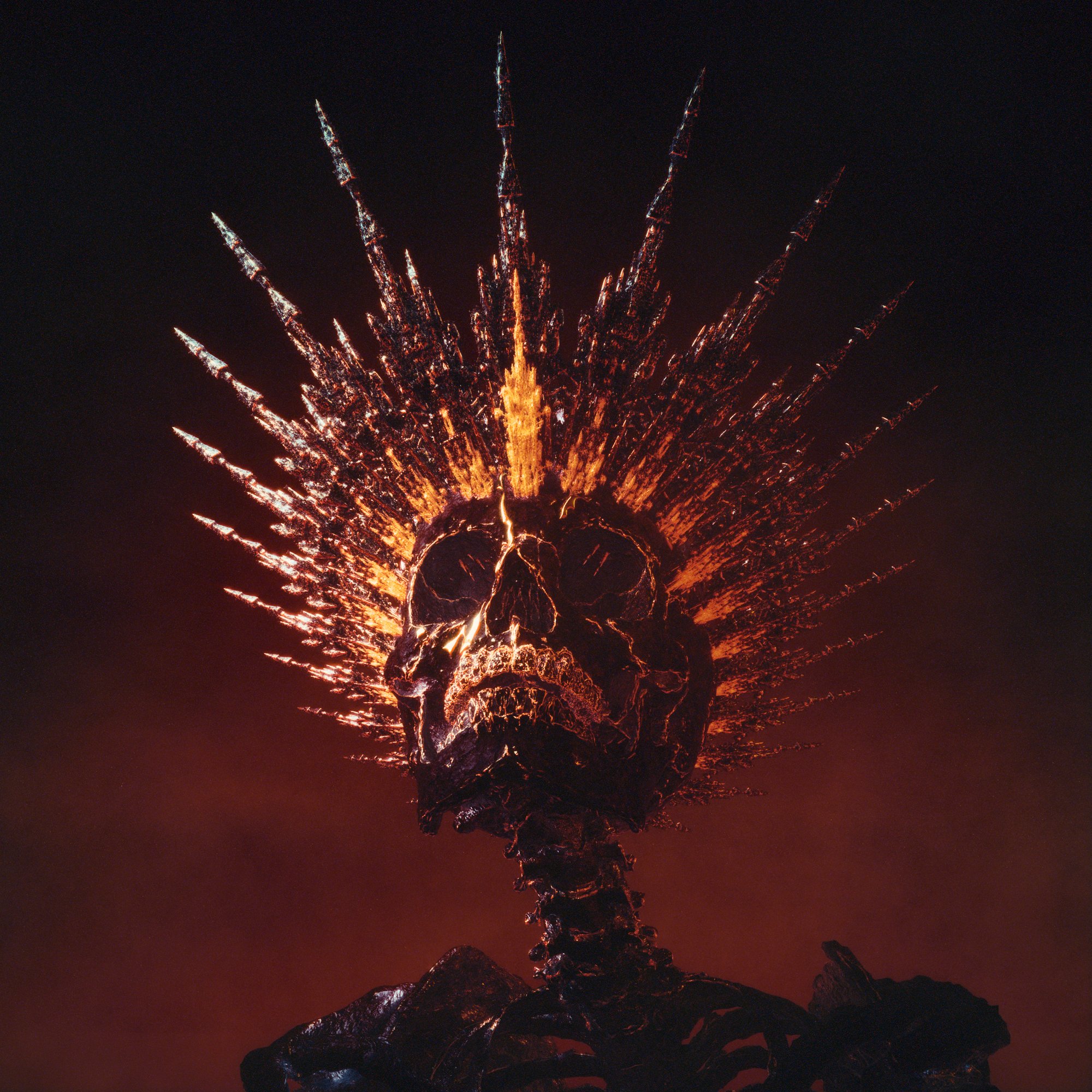
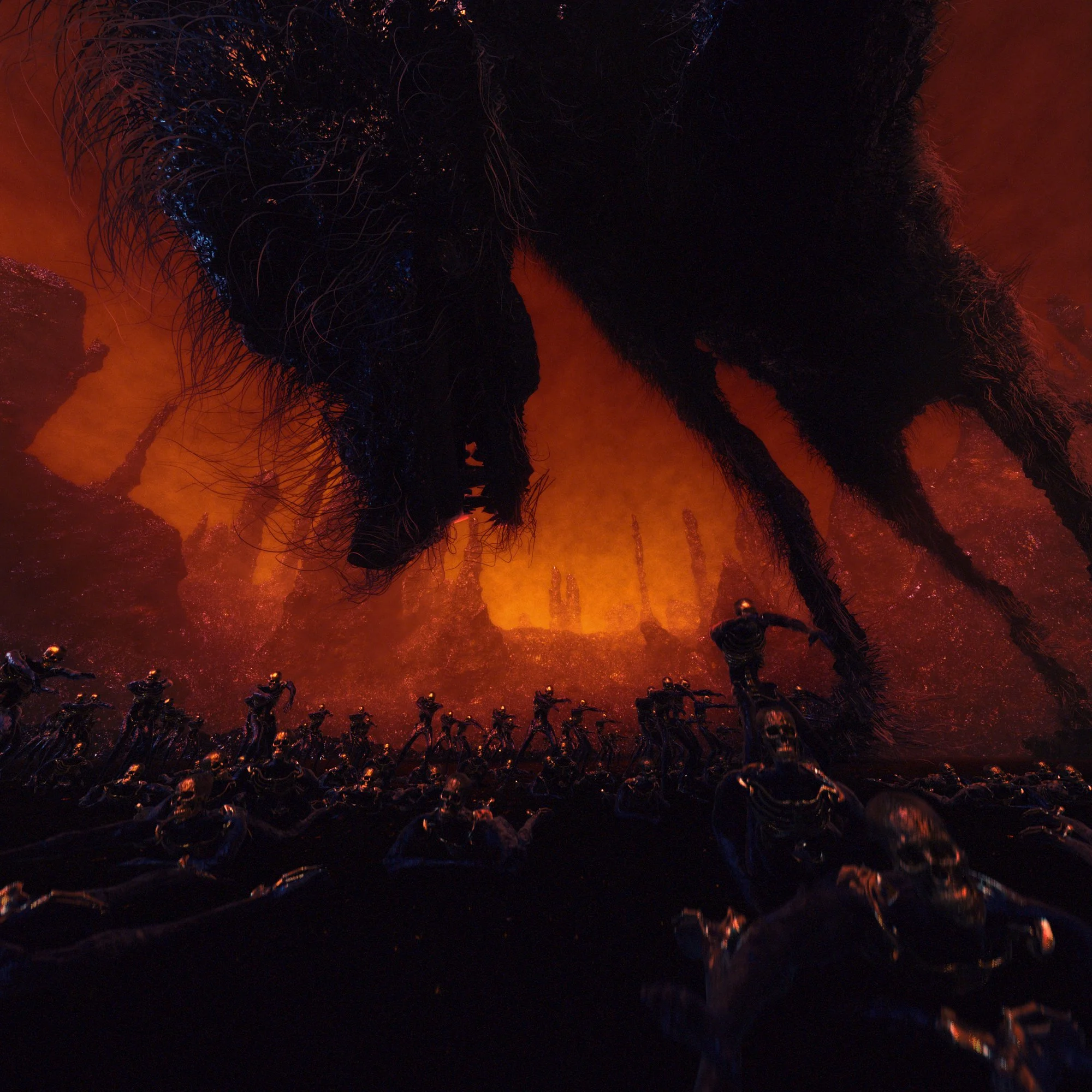
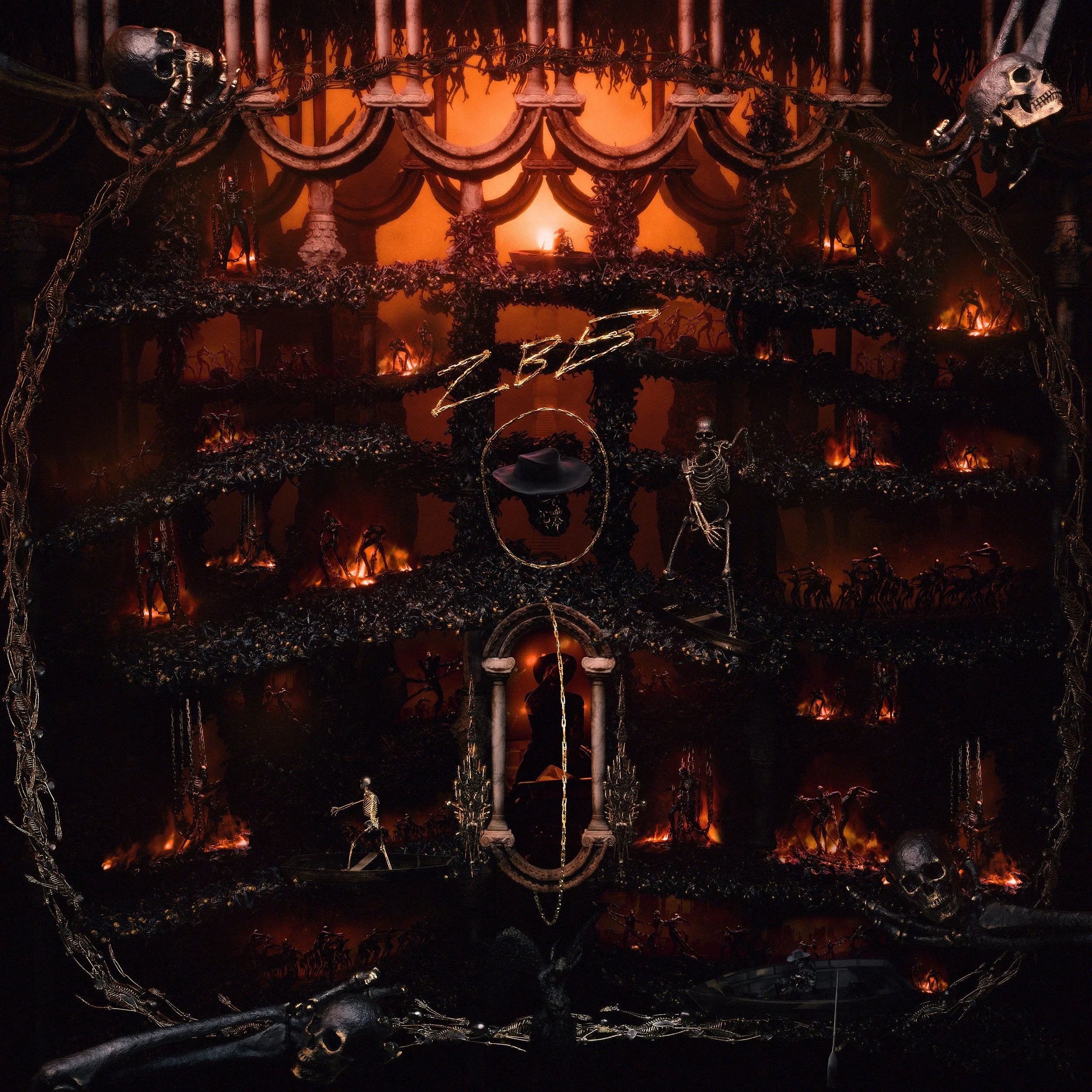
YOU DIVE INTO ZAC’S MIND. YOU’RE IN HELL. A MASSIVE SKULL WEARING A CORRUPTED CROWN. GOLDEN SKELETONS CLIMB LIKE INSECTS TOWARD UNATTAINABLE POWER. DEPRESSION, ADDICTION, ALL FRAMED WITHIN DANTE’S INFERNO. THIS IS “HEAVY IS THE HEAD,” THE OPENING OF ZAC BROWN BAND’S “LOVE AND WAR” AT THE LAS VEGAS SPHERE.
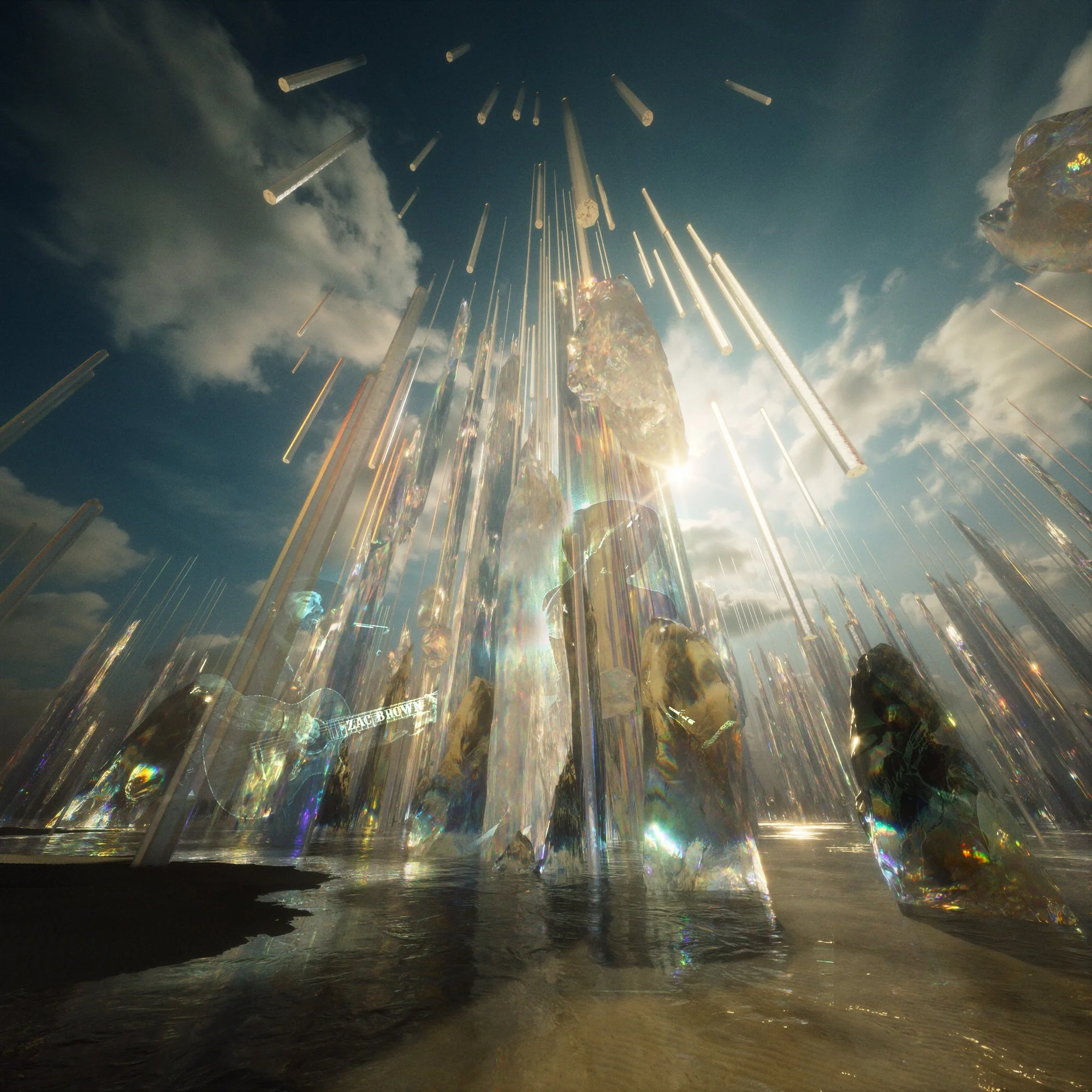
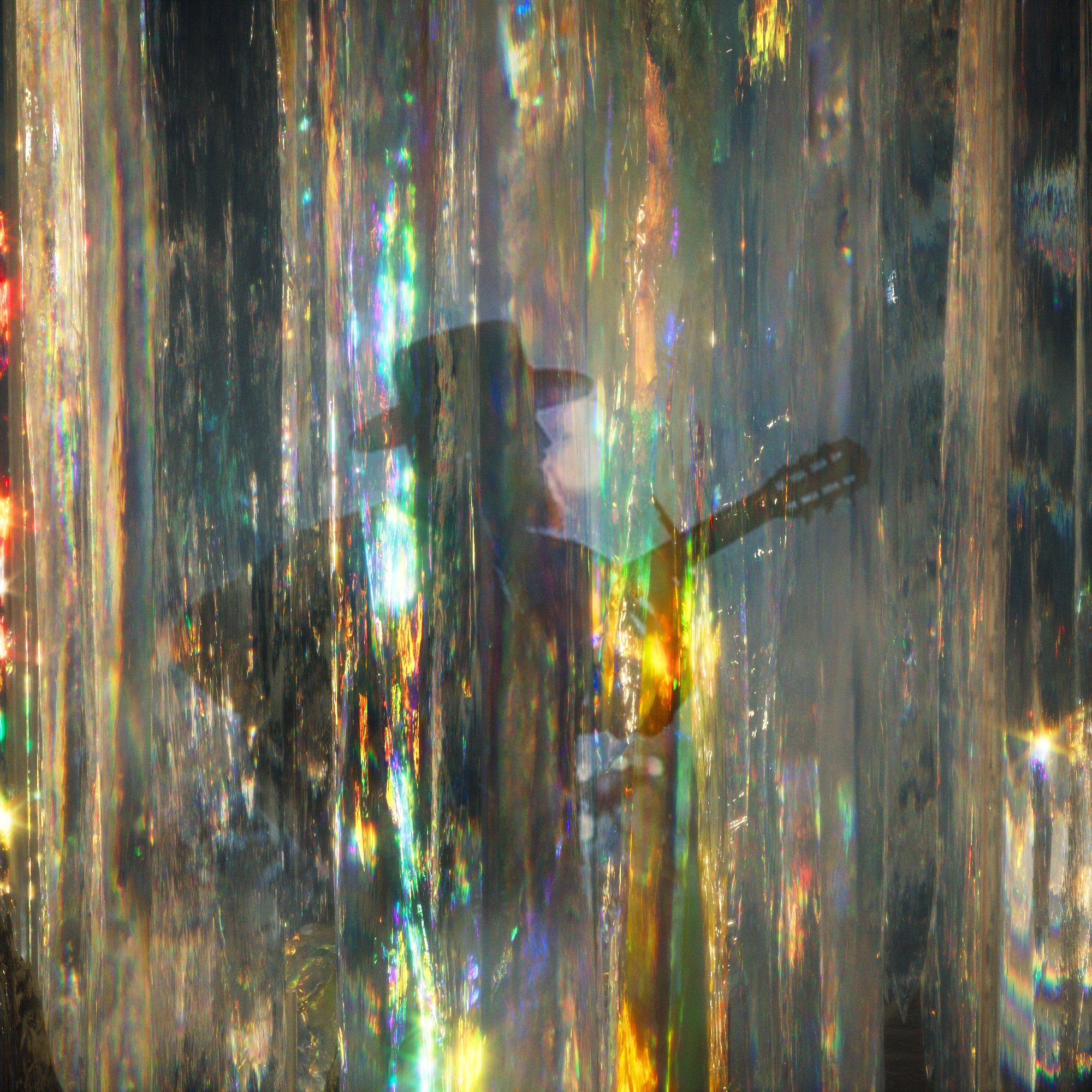
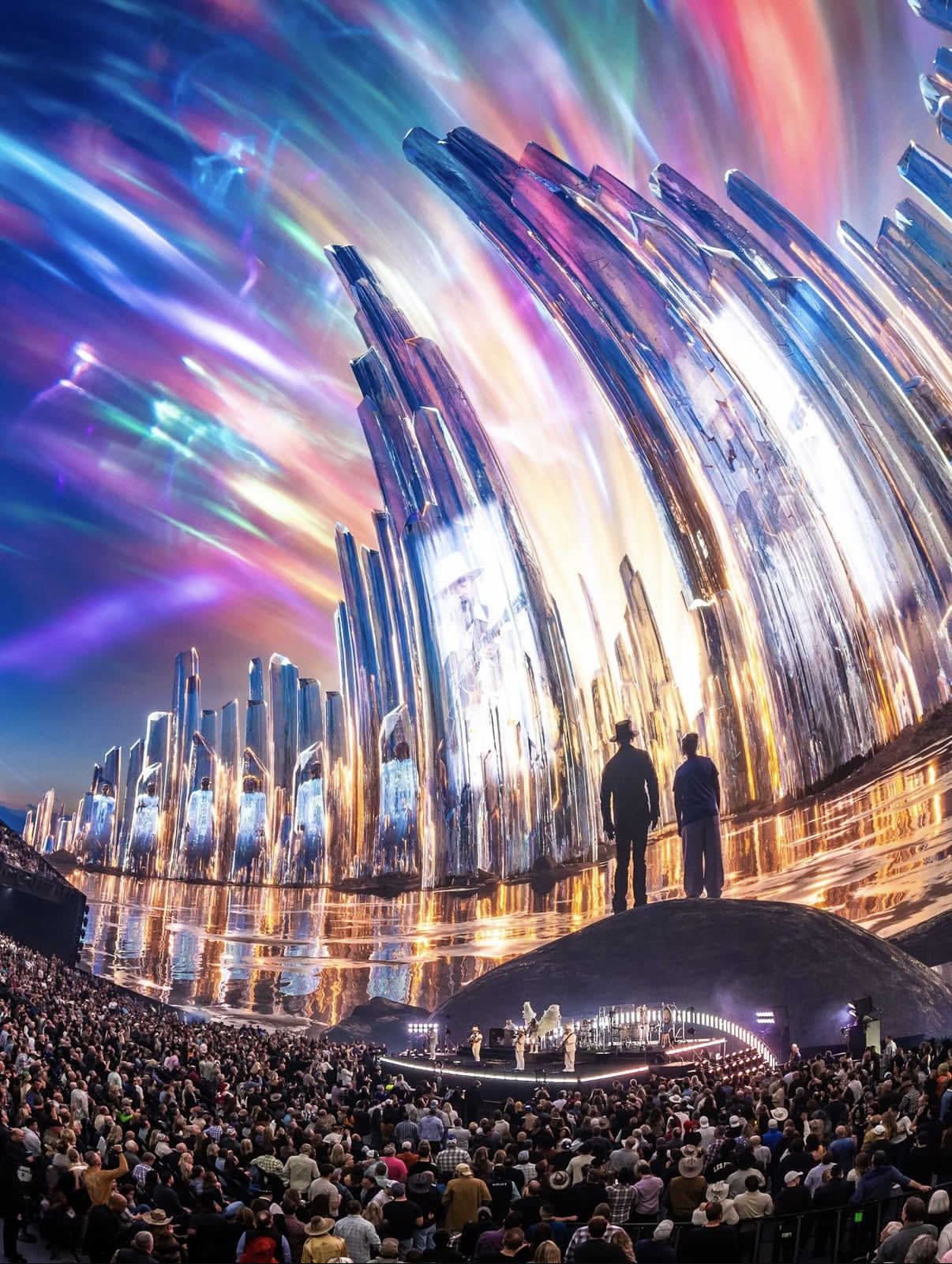
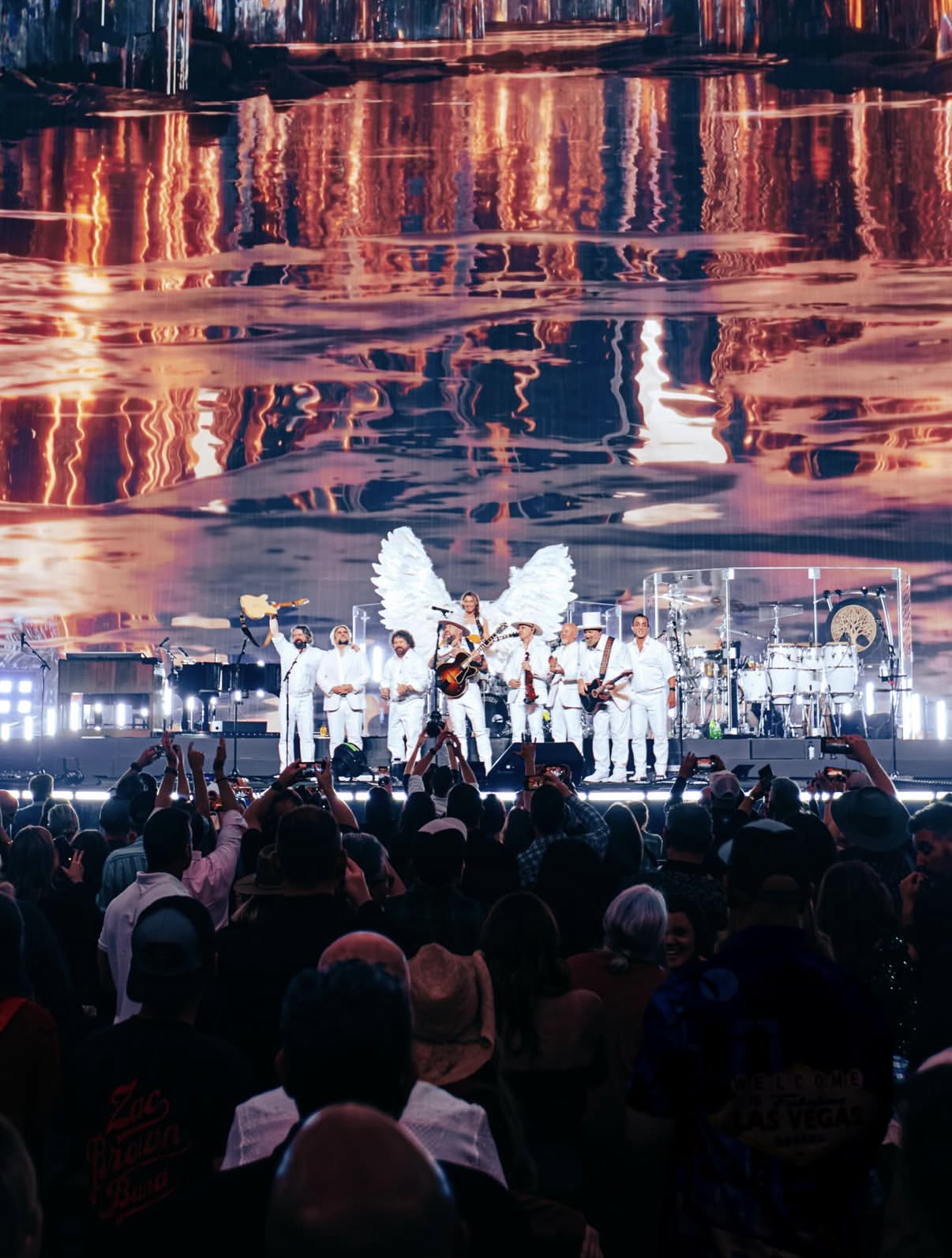
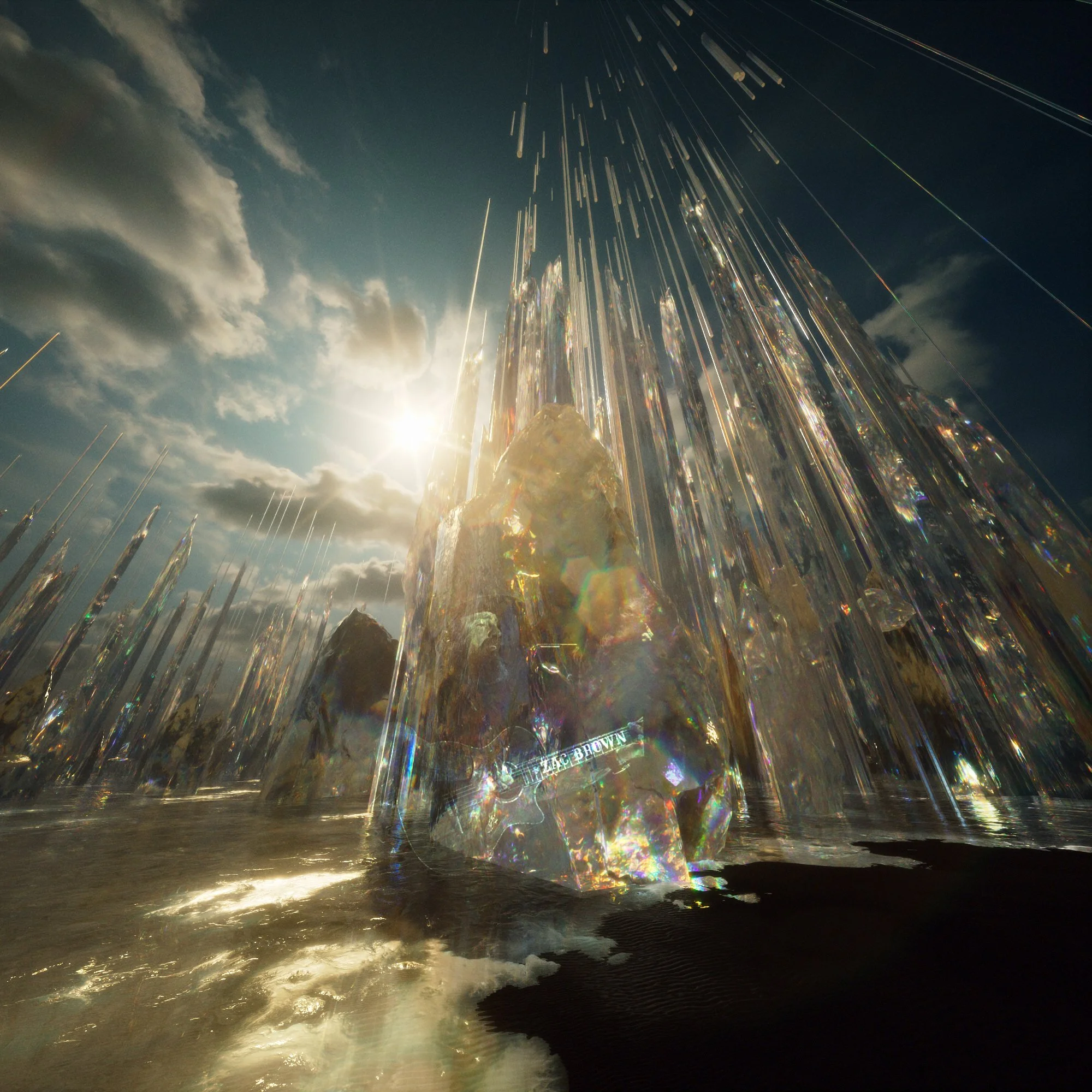
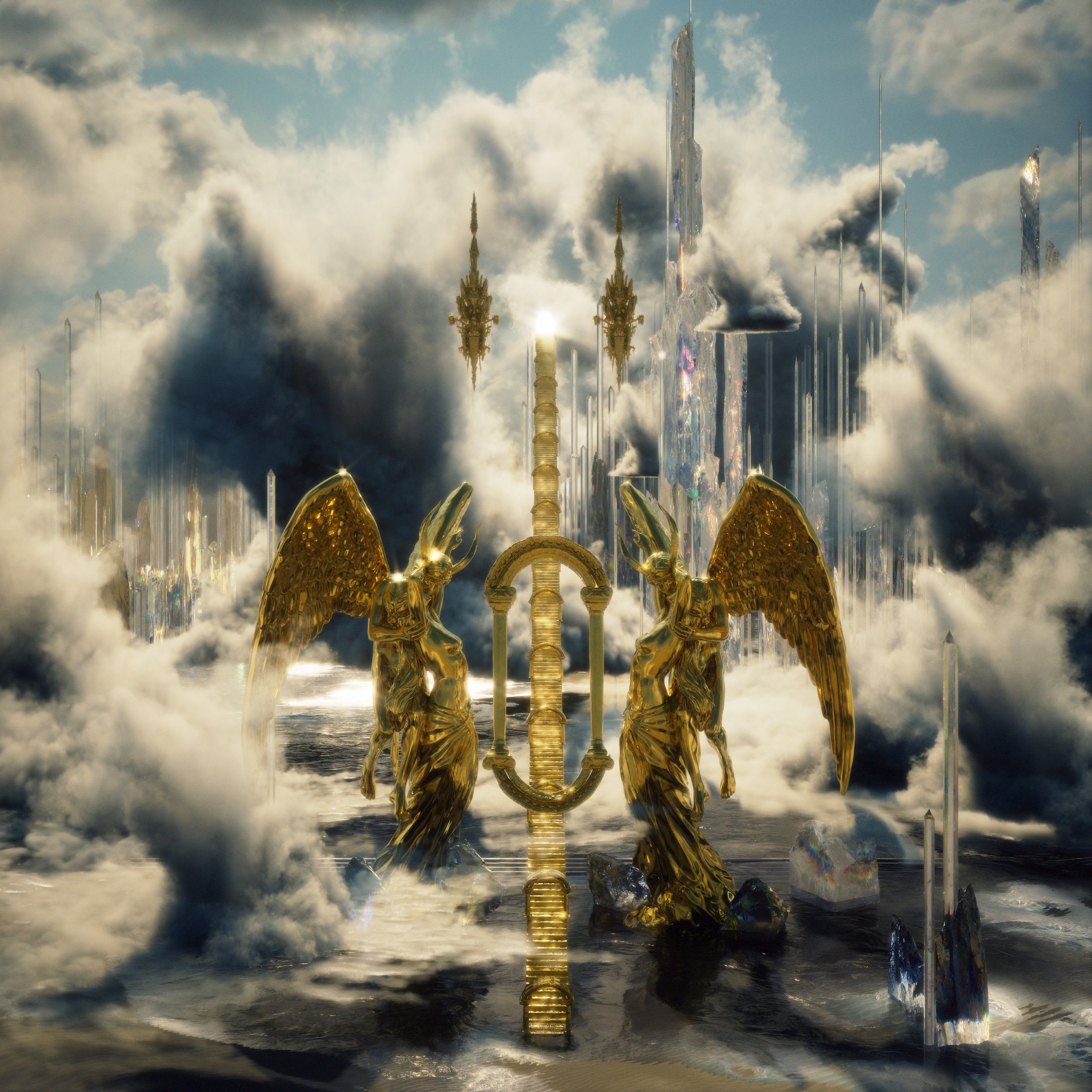
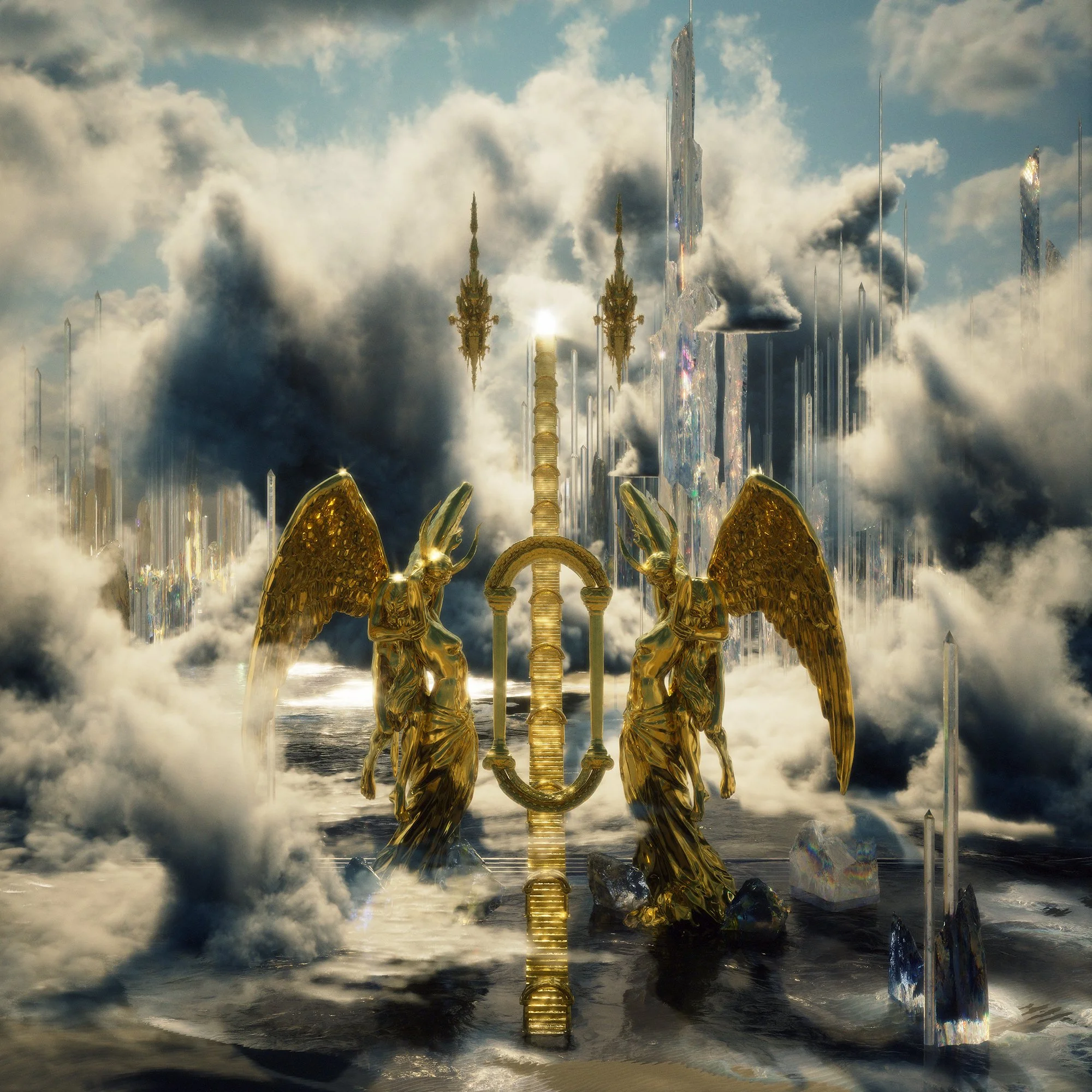
This wasn’t a concert. It was a film. We took 33 individual songs and wove them into one complete story, mapping Zac’s life from childhood trauma to spiritual transcendence through Joseph Campbell’s Hero’s Journey, a single character arc that moves from darkness into light. The show opens with an intro sequence that dives literally into Zac’s childhood mind, establishing our protagonist before the journey begins. Act I: The Ordinary World. Southern poverty. Abuse. Internal demons clawing at the edges of consciousness, threatening to drag him under. Act II: Alaskan adolescence, where snow and silence teach hard lessons. Father-son relationships tested by distance and time. First love discovered under northern lights. Trials that forge character in the crucible of the wild, tempering the boy into something stronger. Act III: The Return. Simple pleasures reclaimed, “Chicken Fried and Homegrown” the hard-won peace of a man who’s survived the war and came out the other side. It culminates in “Remedy,” where a crystalline city of sapphires and rubies refracts divine light across 19,000 souls. Love as universal medicine
Proof that anyone can be reborn if they’re willing to walk through fire.
WORKING LOOSELY WITHIN THE HERO’S JOURNEY STRUCTURE
33 SONGS. ONE CHARACTER ARC.
THE PROBLEM:
How do you expect lyrics, which tell their own stories, to fit neatly into the beat structure of the Hero’s Journey? The songs weren’t written as a single narrative. The lyrics were dialogue set in concrete. But across those 33 pieces, love, loss, rage, nostalgia, we needed to find one complete arc from darkness into light.
THE SOLUTION:
After a deep analysis of the lyrics, we dislocated them from literal interpretation, using symbols and metaphors that could serve dual purposes, honoring each song's emotional truth while advancing Zac's character arc. Golden skeletons. Dust storms. Fire. Water. Architectural portals. These motifs thread through multiple songs, creating visual continuity while each song stands as its own complete scene.
Each song follows a nested three-act structure: Setup-Climax-Resolution. Individual songs become complete short stories. 33 distinct visual experiences compound into one transformation. From isolated burden to spiritual connection. From childhood wounds to protective love.
THE CONCEPTUAL PROCESS
The design frames in this portfolio were created by Josh Childers at Prodigal Pictures under Creative Director Ben Hurand, who maintained the show’s creative vision throughout production. When Ben first contacted me, he had already pitched and won the job with concepts for “Heavy is the Head” and “Intro.” These were locked in. Our job would be to concept each remaining song.
As Lead Designer, I worked alongside Art Director Marria Menshikova within the Hero’s Journey framework. This is how Ben, Zac, and Tyler Lord wanted to approach the project. My primary contribution extended beyond design and art direction to include narrative development. I focused on writing a three-act scene structure before each song I designed, ensuring every visual element served the larger story. I had never worked in such long form professionally, so I drew on years of short story writing to ensure every visual element had purpose and meaning, creating mythical narratives that brought Zac’s story to life.
Marria, Ben, and I worked closely with Zac and Tyler for months to develop the visual direction for each song. Marria's concepts were particularly influential. Her vision for songs like "Tomorrow Never Comes," "Loving You Easy," and "Hard Run" set a visual tone I carried through adjacent sequences for continuity. This case study represents the original 33 song setlist design. Not all songs were ultimately produced, and the setlist changed dramatically over the year-long project. Several concepts were passed to other production companies, many of which maintained the narrative foundations established in our initial development.
I couldn’t be more grateful to Ben for bringing me on board early and giving me space to shine. Thank you, my friend.
CONCEPT TEAM:
Creative Director: Ben Hurand
Designer/Director: Josh Childers
Art Director: Marria Menshikova
Creative Director for Zac Brown Band: Tyler Lord
Client: Zac Brown
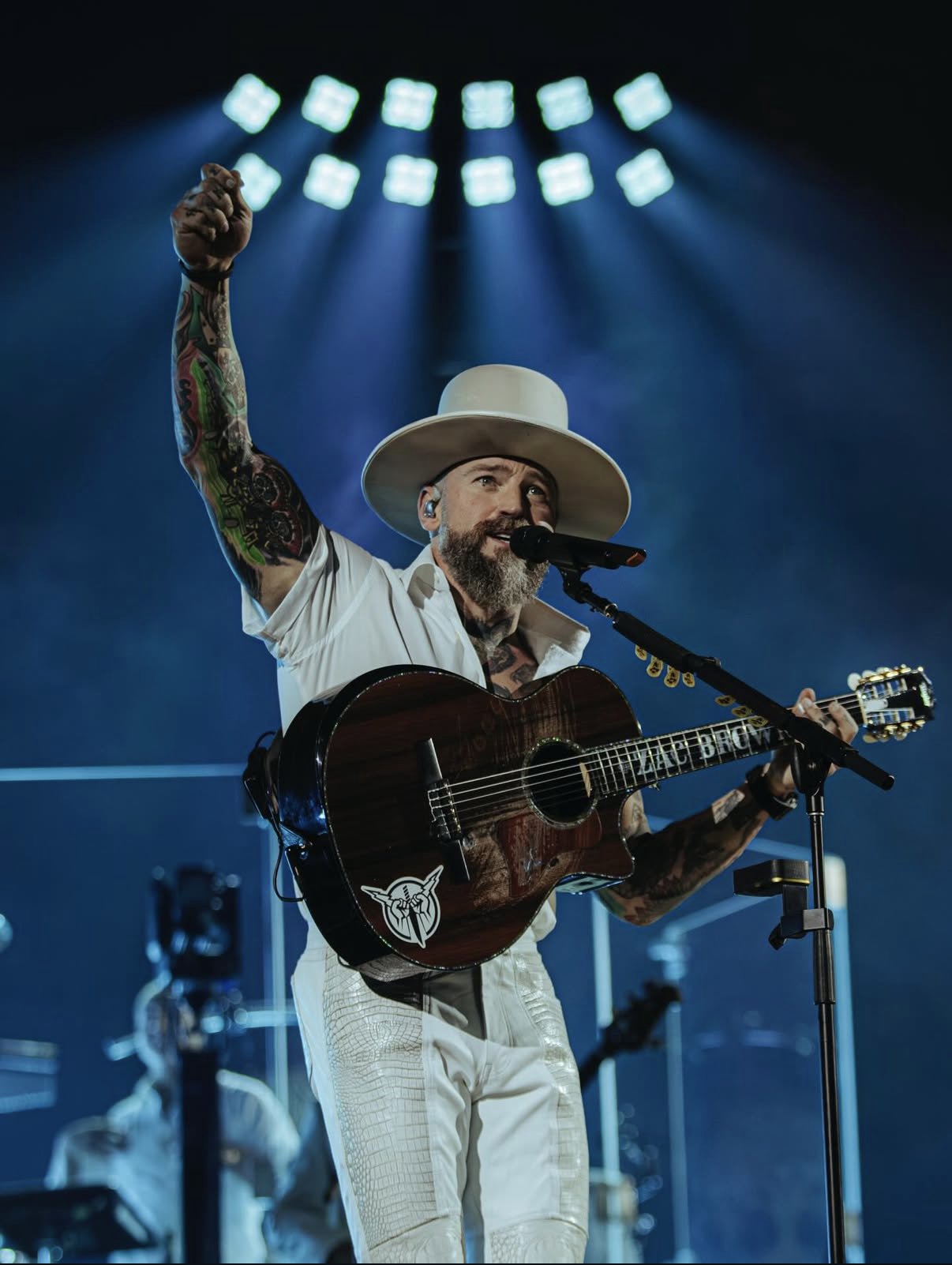
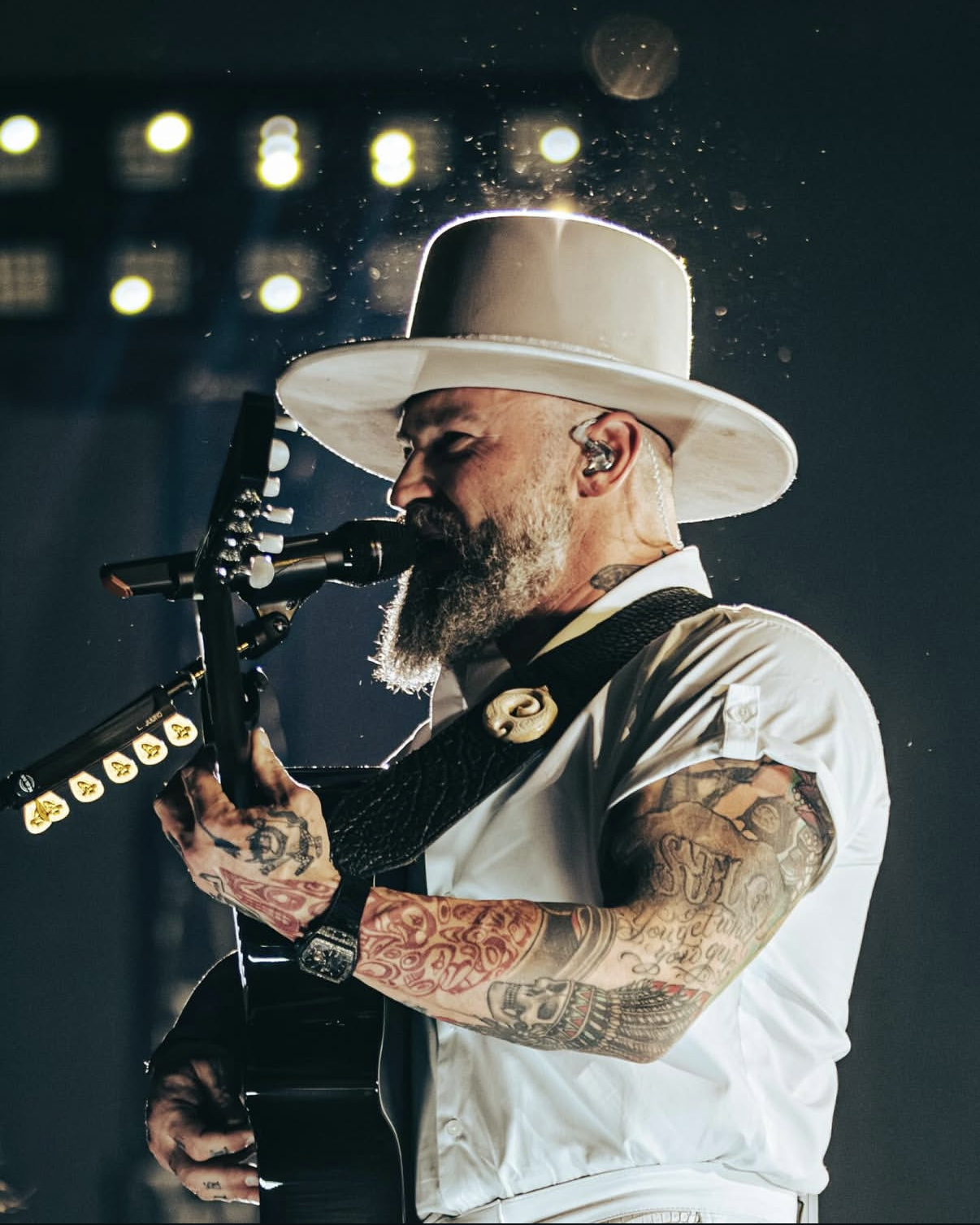
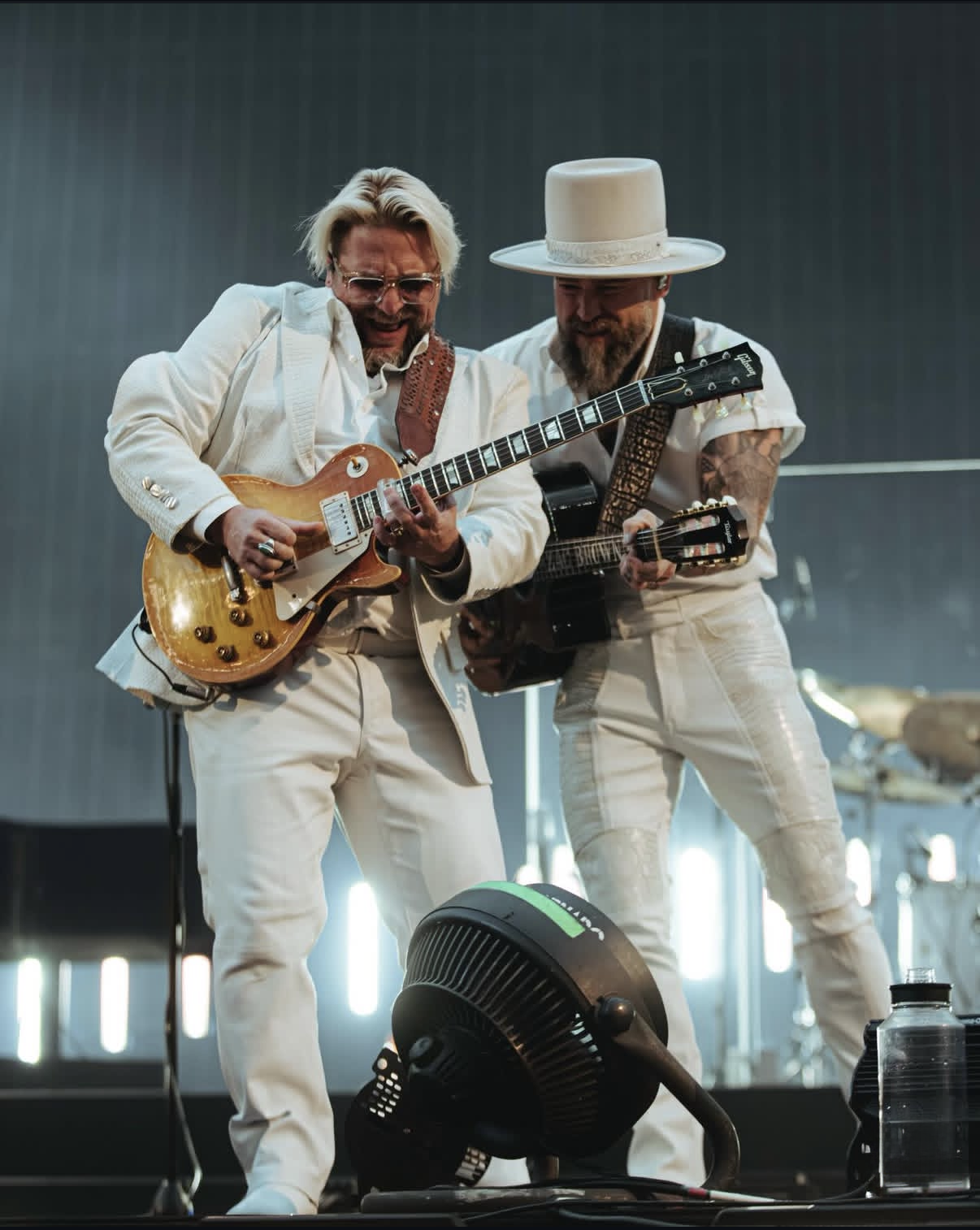
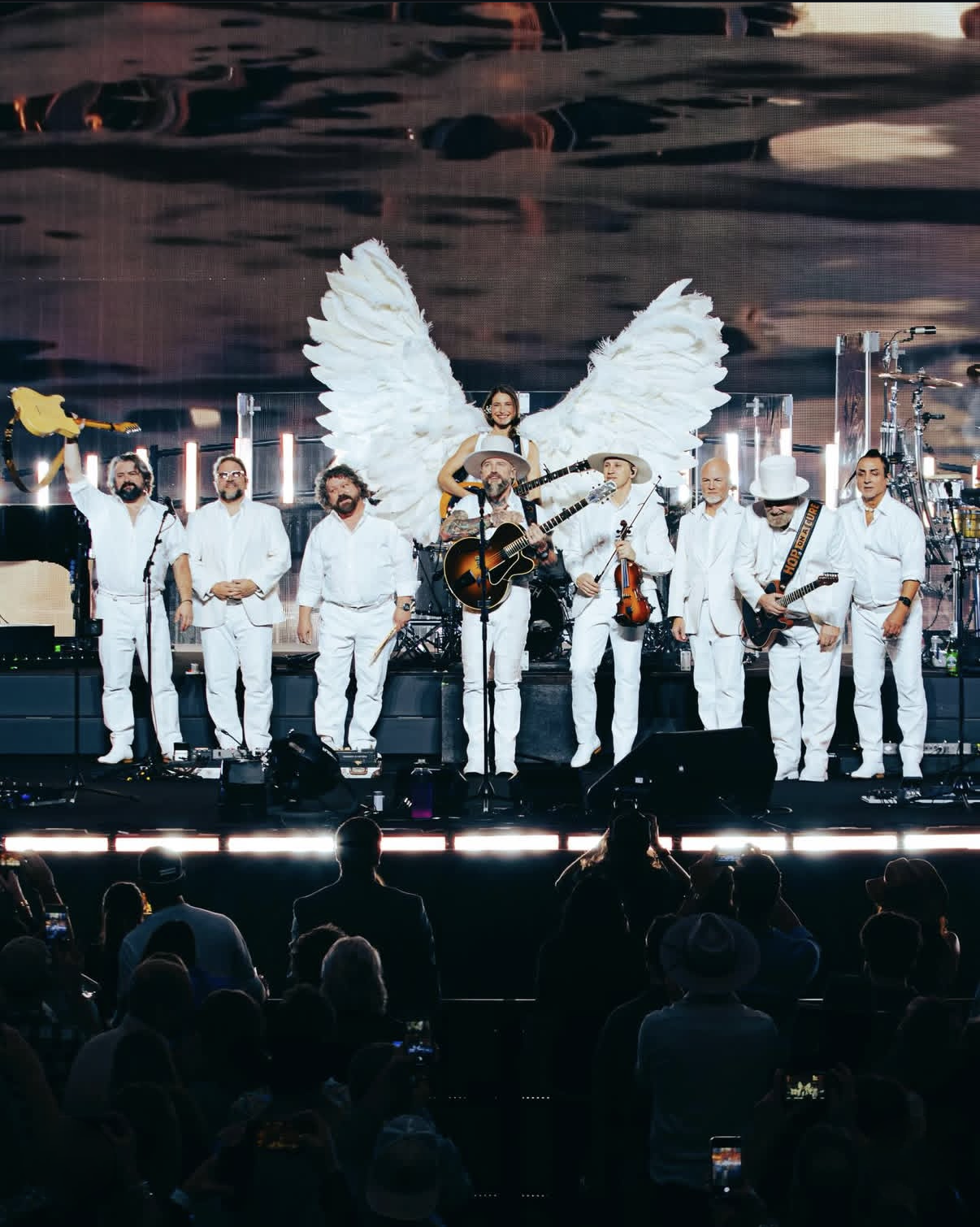
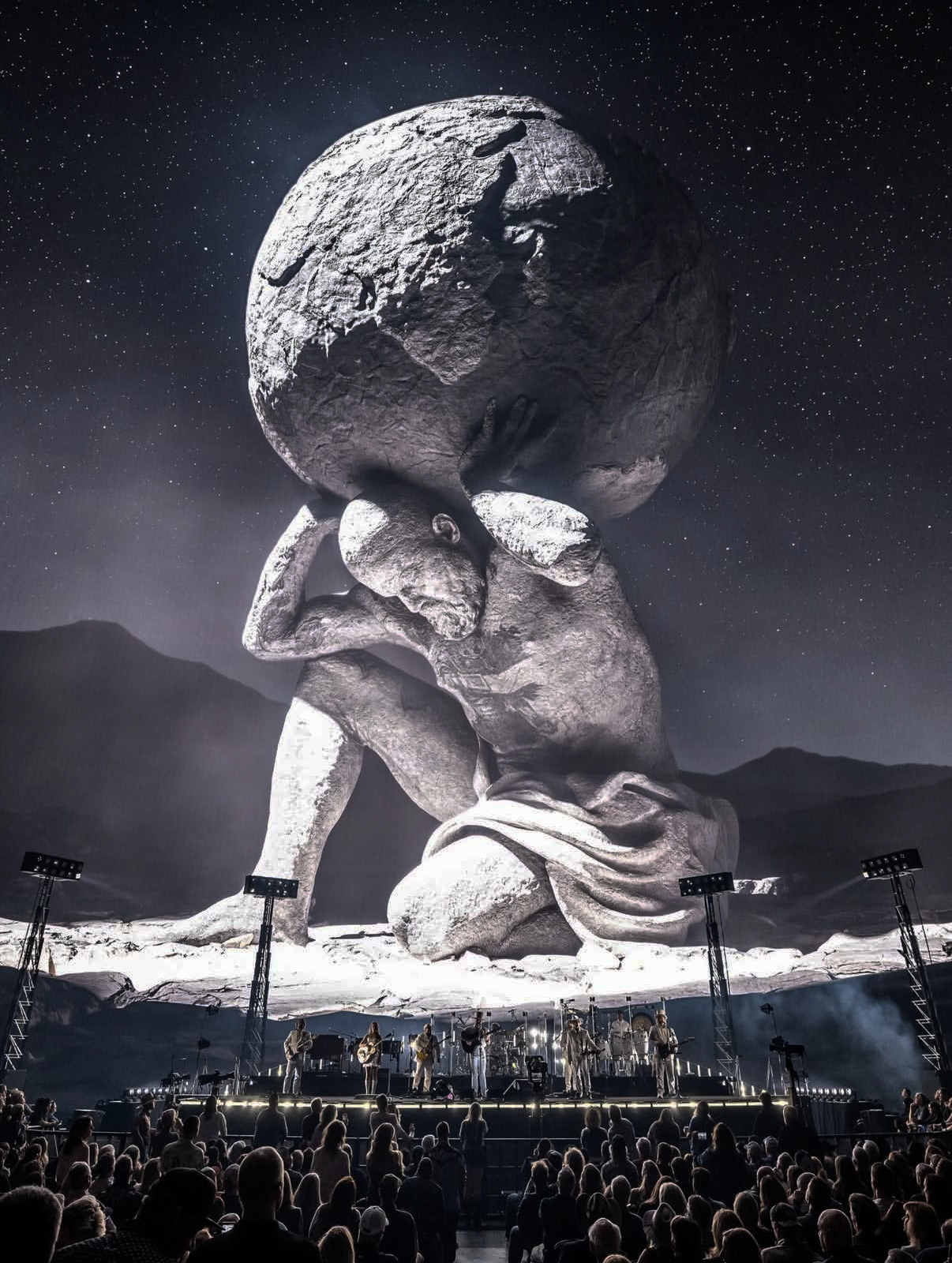
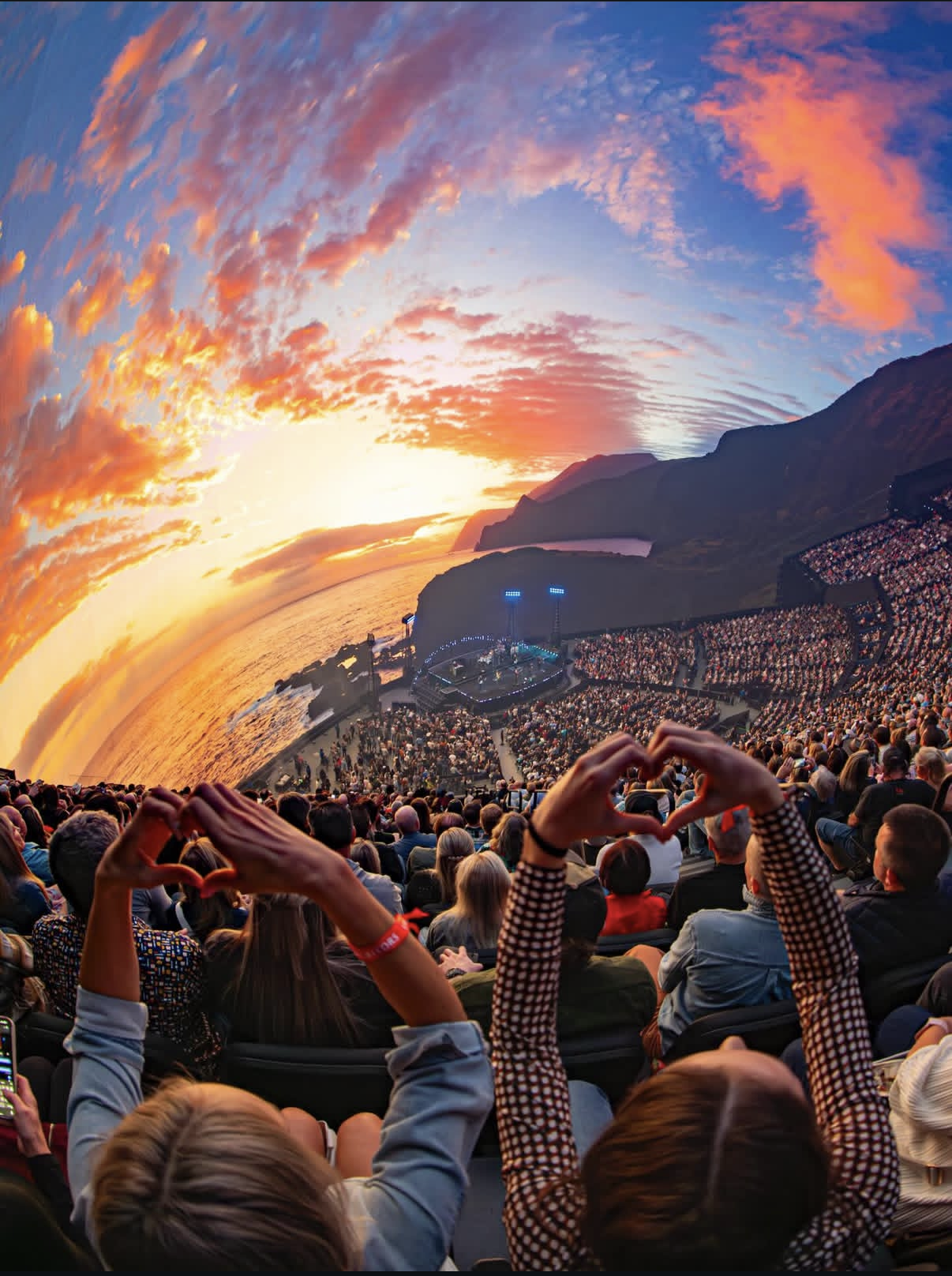
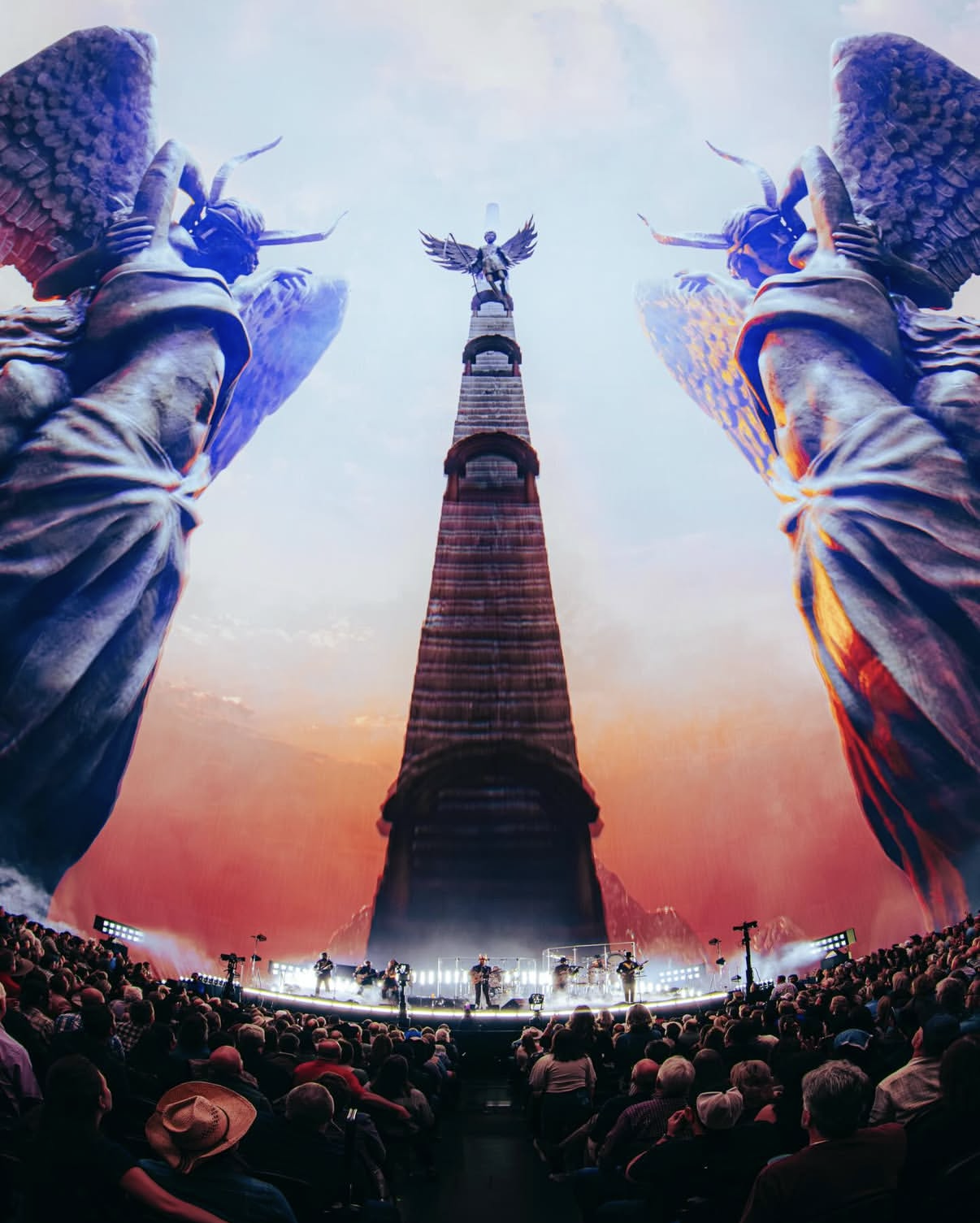
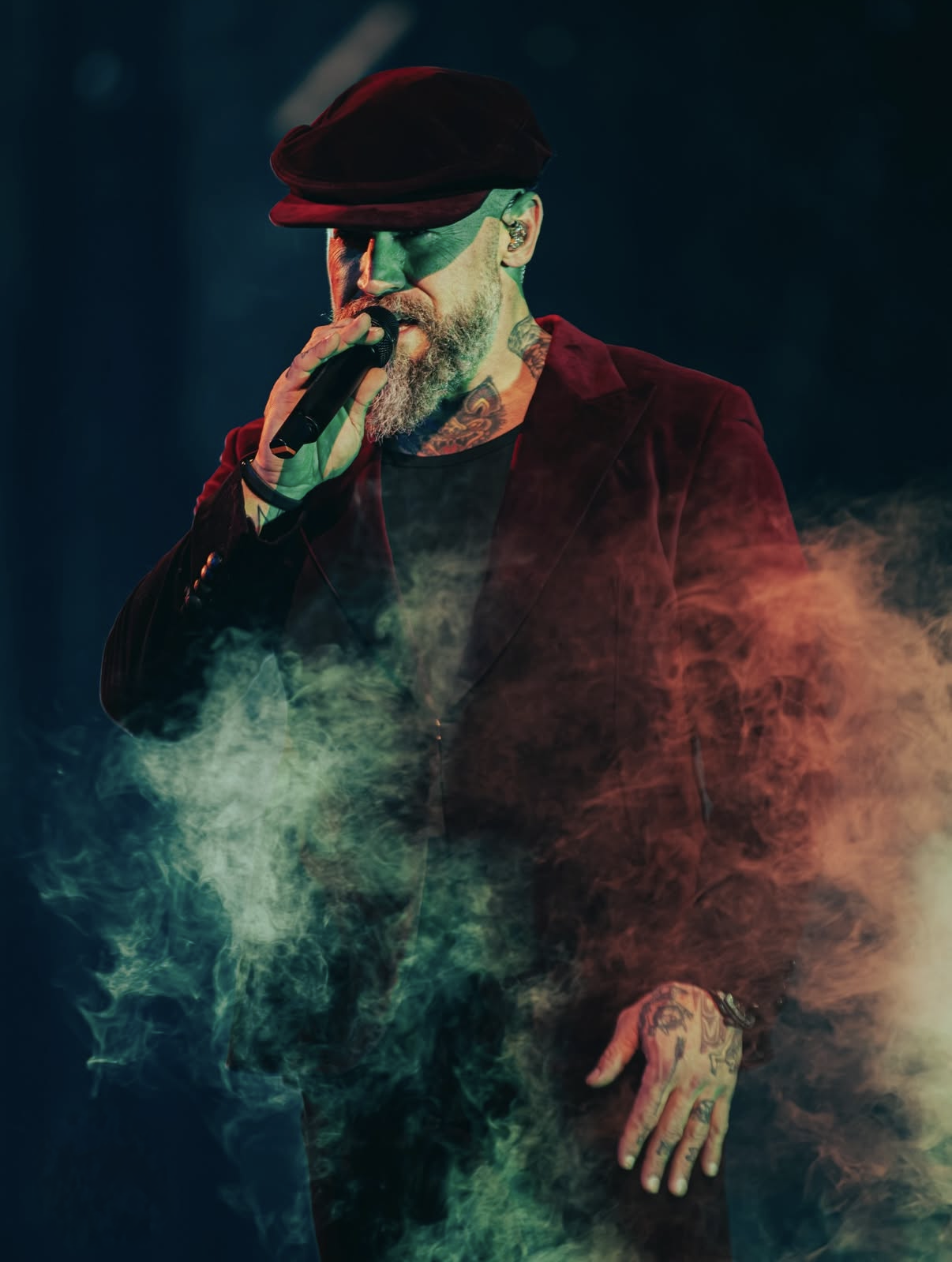
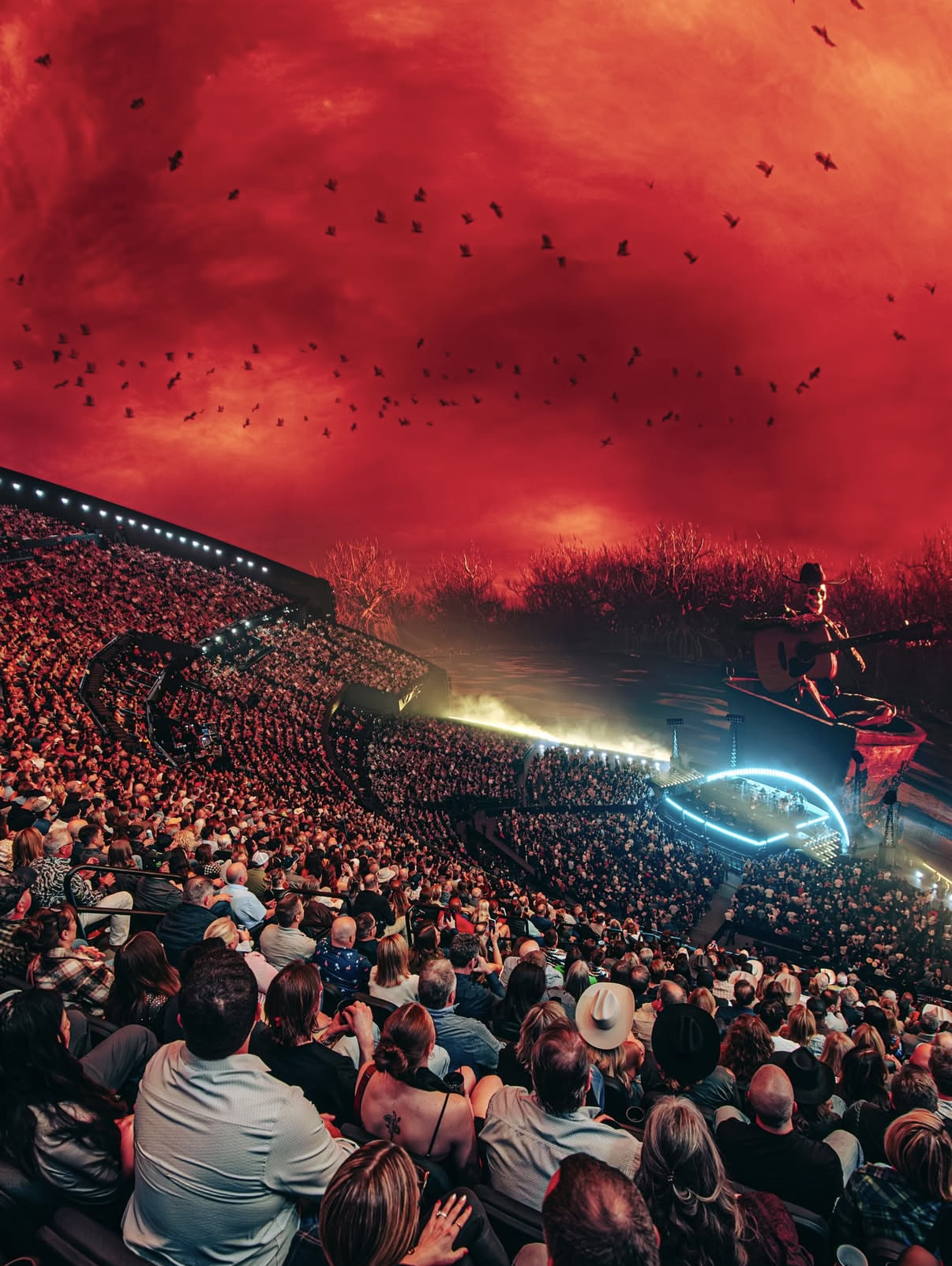
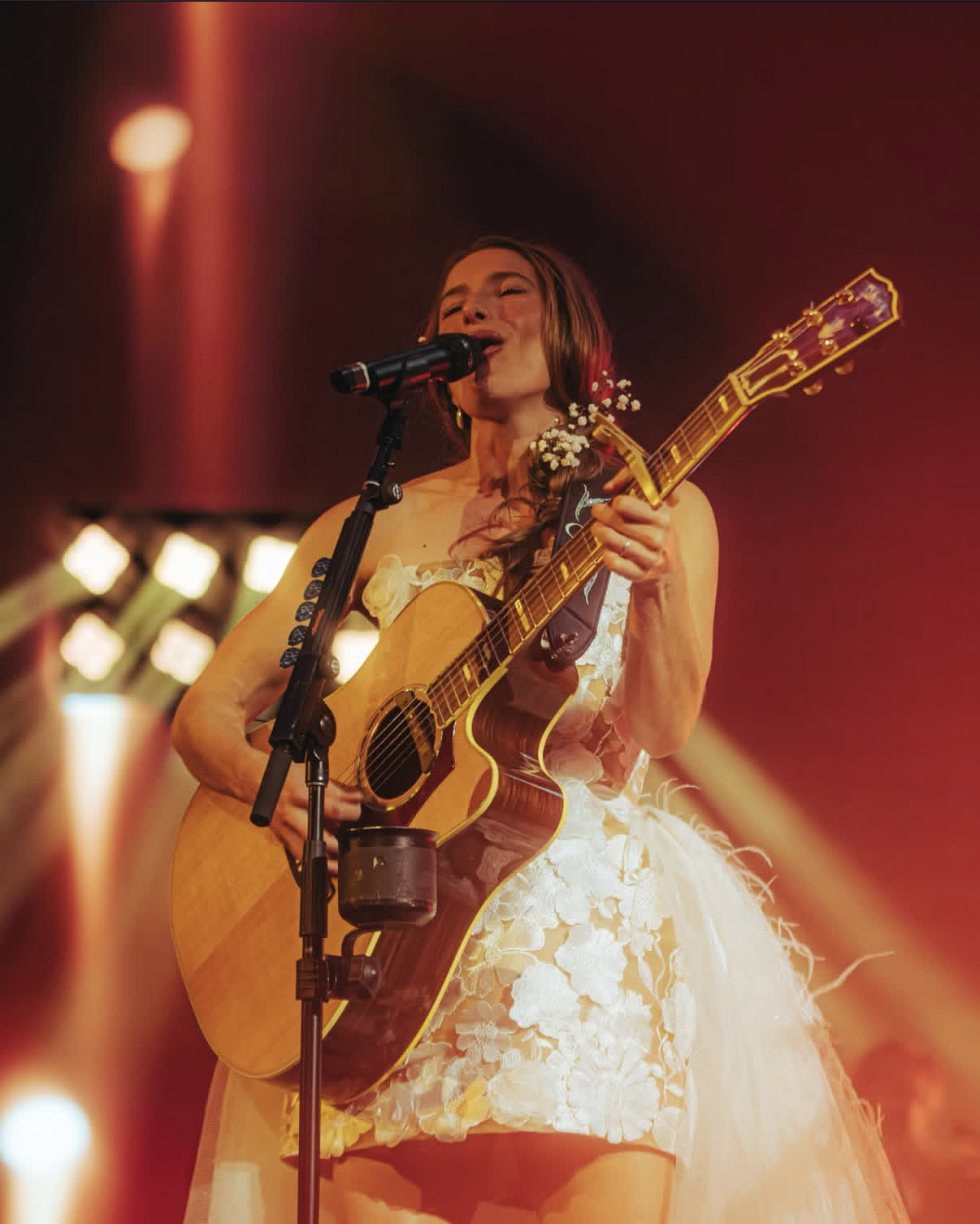
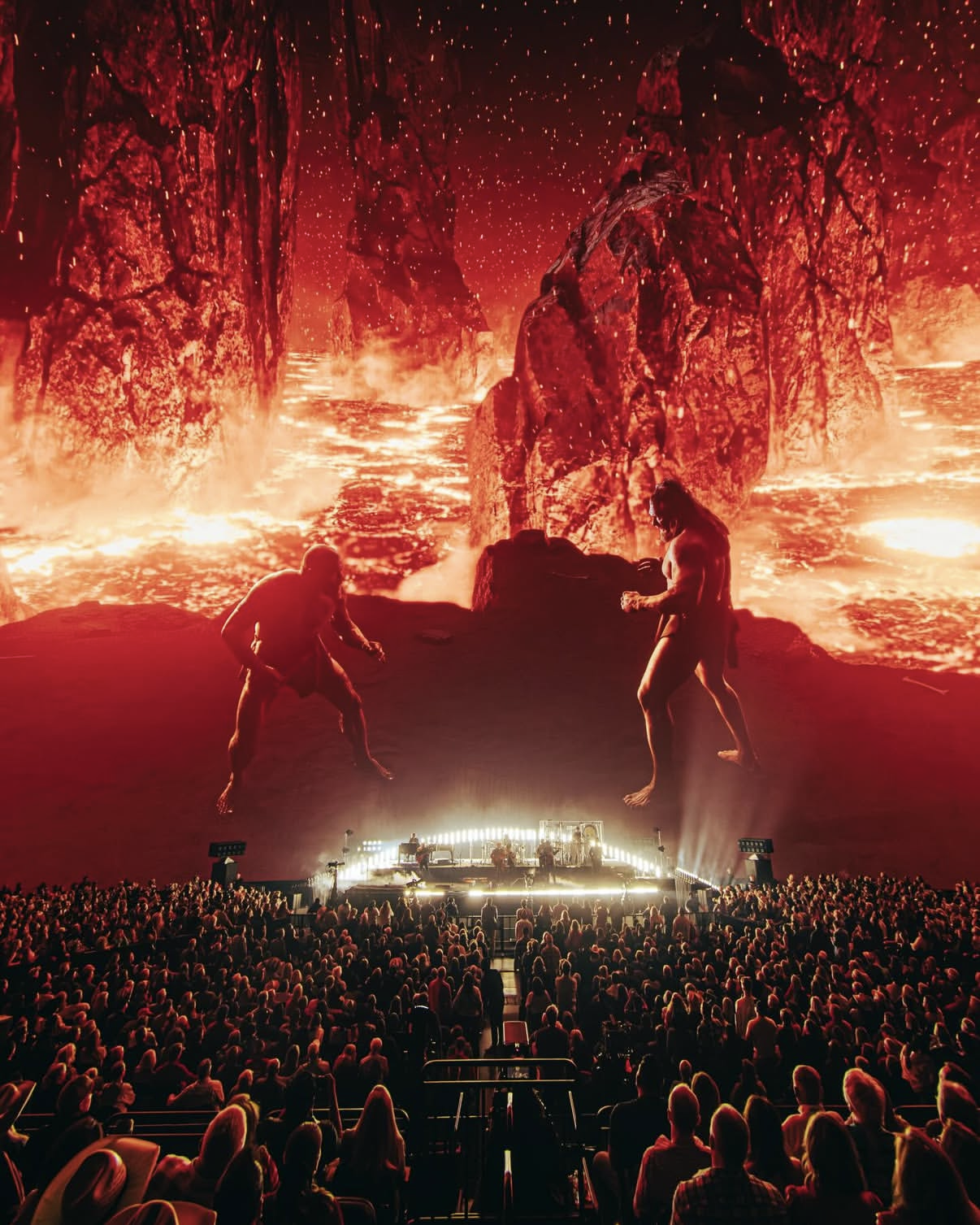
PHOTOS COURTESY - ALIVE COVERAGE
COPYRIGHT © PRODIGAL PICTURES 2026
THE STORY CONSTRUCTION
BIBLICAL FRAMEWORK
FROM DANTE'S INFERNO TO HEAVEN'S GATES
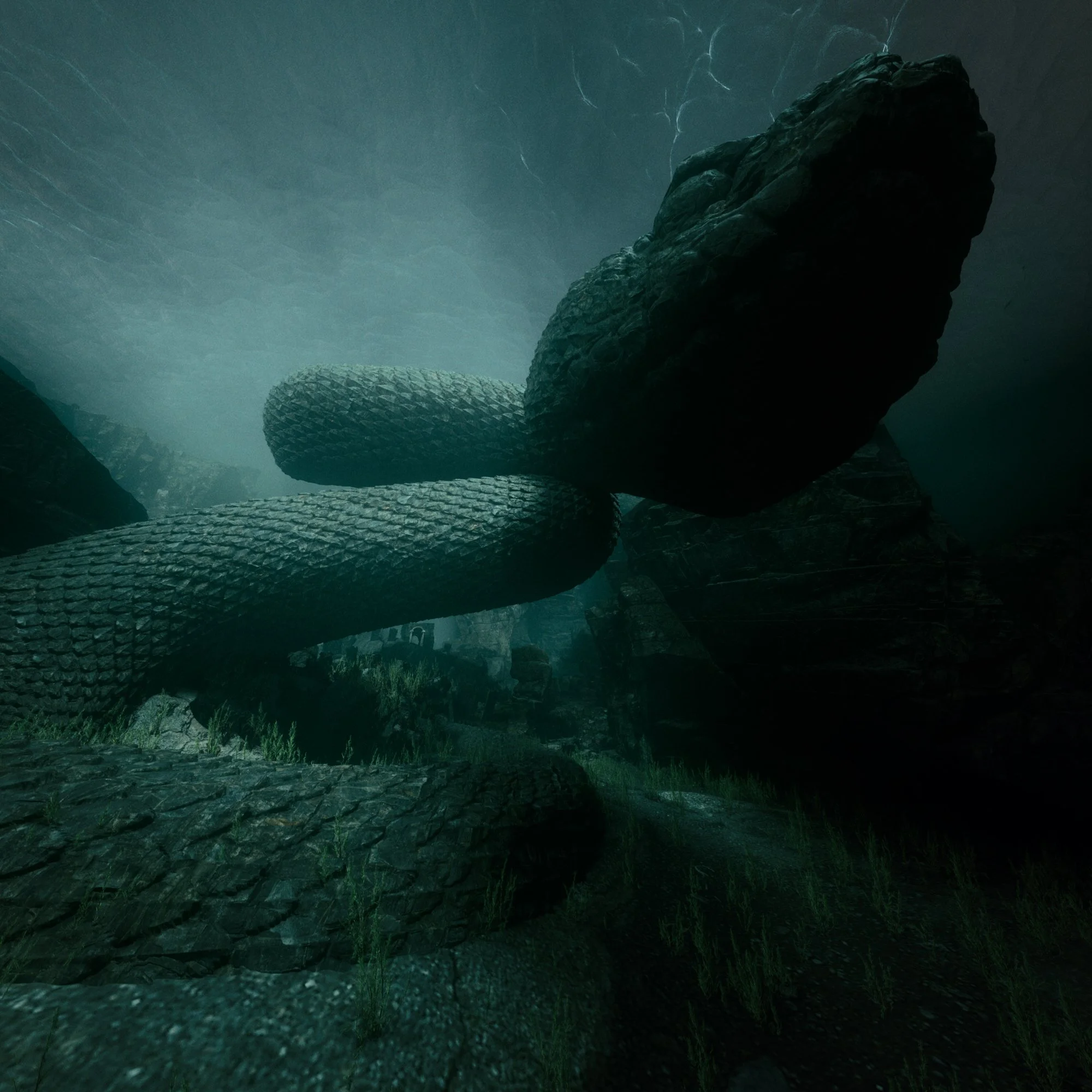
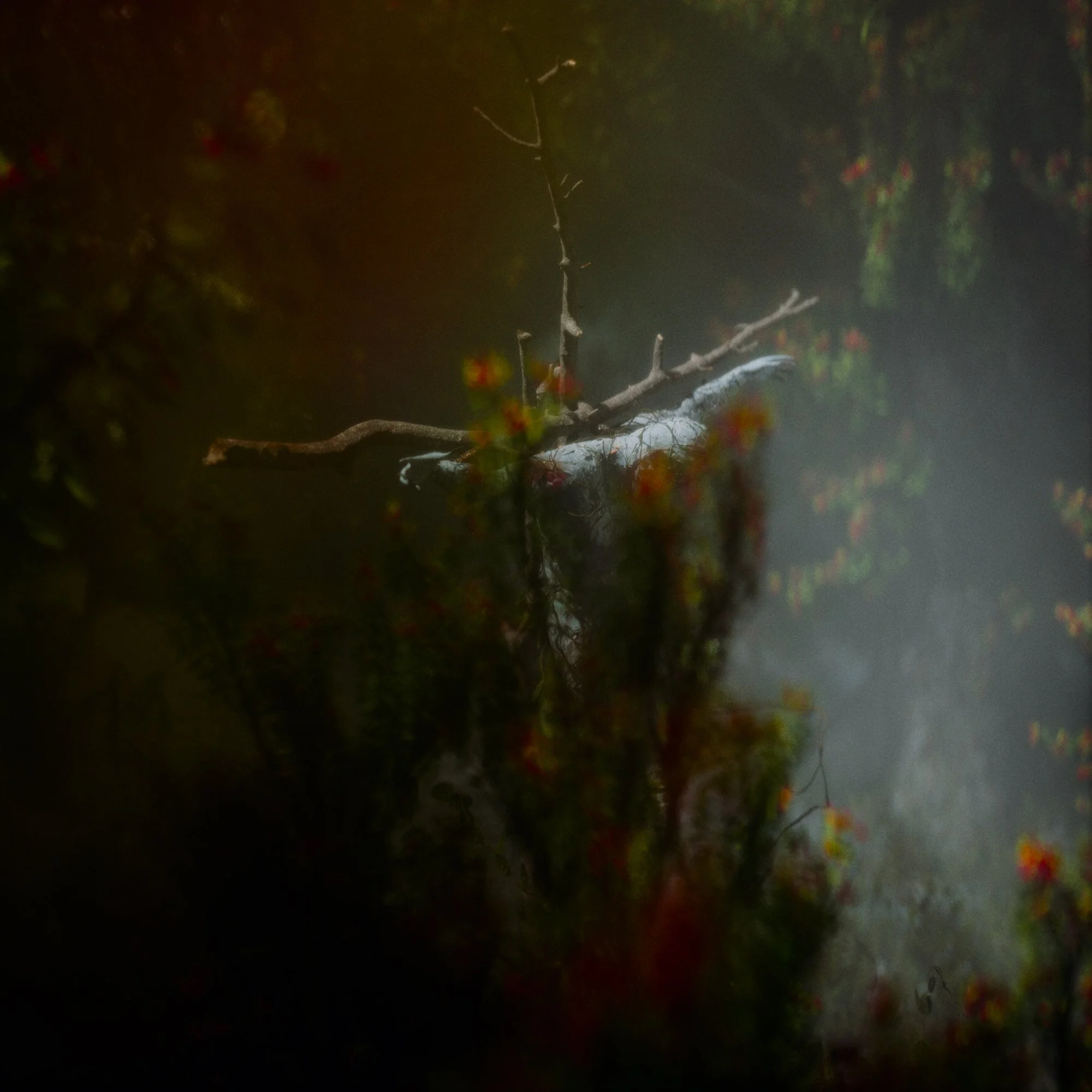
"Heavy is the Head" reimagines Dante's Inferno through Hieronymus Bosch's hellscape paintings, industrial wastelands. Tormented figures climbing over one another. Contrast that against a Garden of Eden rendered in painterly Baroque darkness, where serpents coil through vine growth and shadows hold the memory of innocence lost.
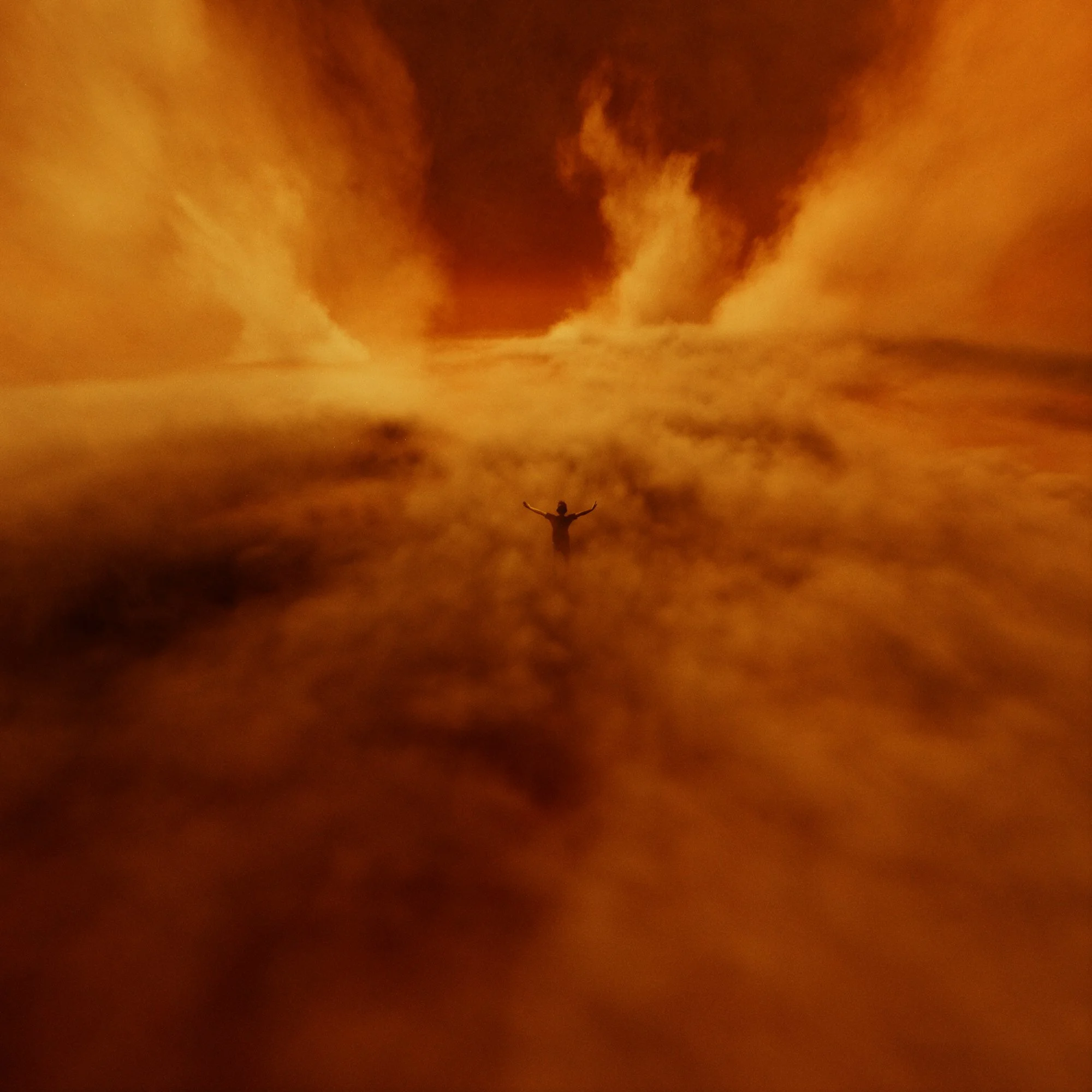
The crystalline city in "Remedy" references Isaiah 54:11-17, in which sapphires and rubies symbolize God's blessing and restoration, a prismatic metropolis radiating divine light. Cherub transformations echo protective angels, their wings unfolding in slow grace. The journey through clouds evokes Genesis creation imagery, breath becoming form, form becoming spirit.
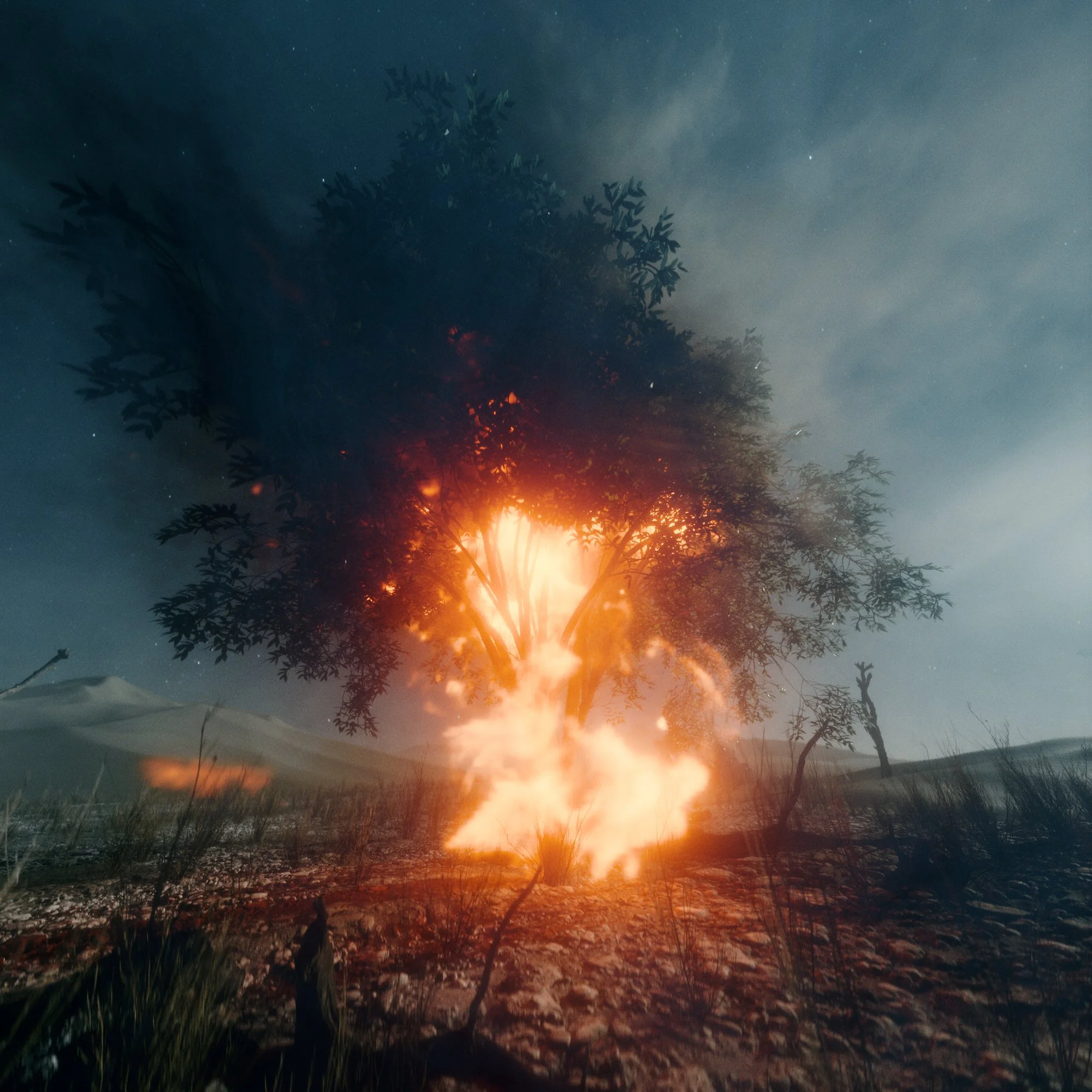
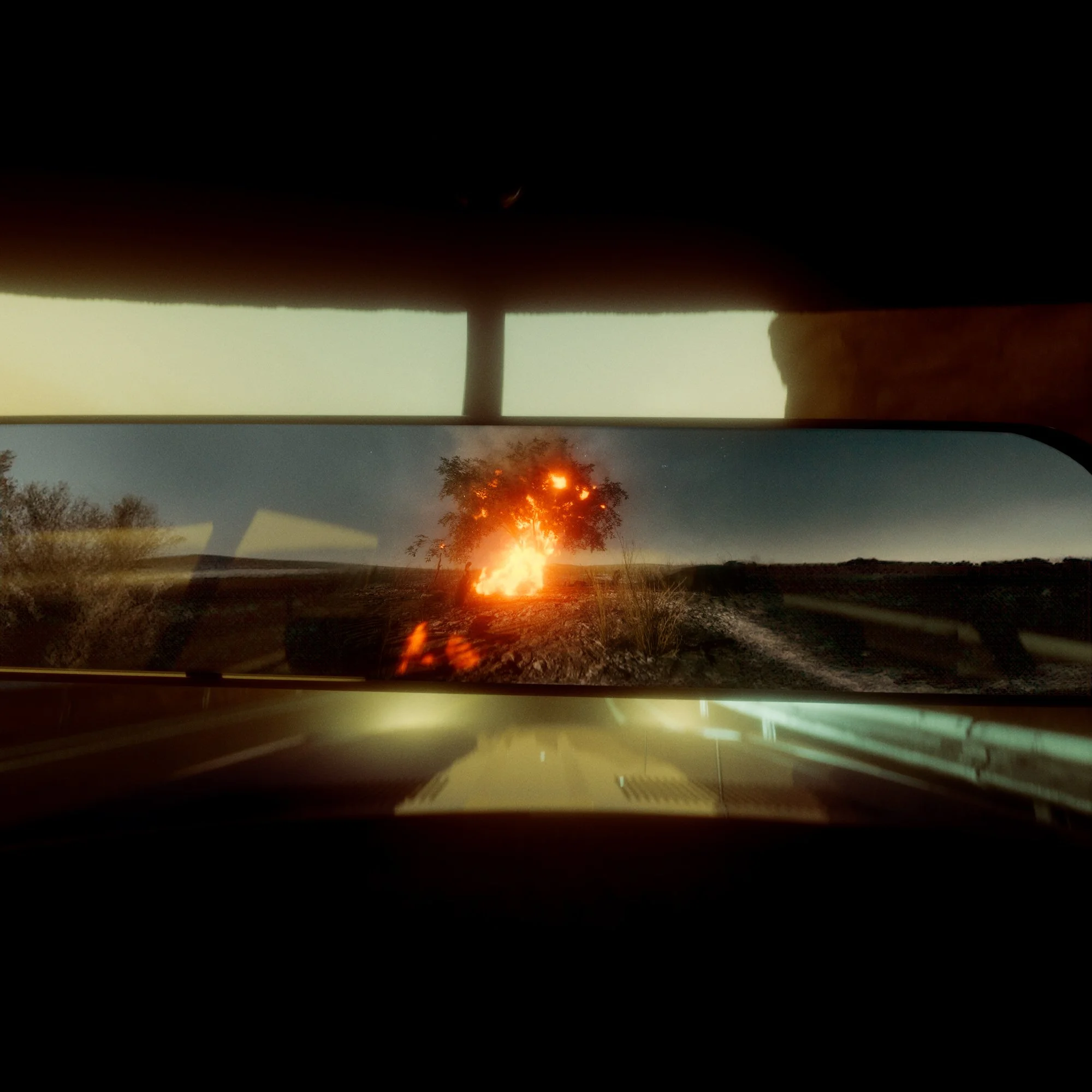
Fire becomes biblical purification. Water symbolizes spiritual rebirth. Burning bushes become divine revelation. The show traces from Dante’s Inferno to its exact inversion, heaven’s golden gates opening wide, embodying the promise that love leads us all to the promised land.

CHARACTER DESIGN
THE INNER CHILD
A SOUL CARRIED THROUGH DARKNESS INTO LIGHT
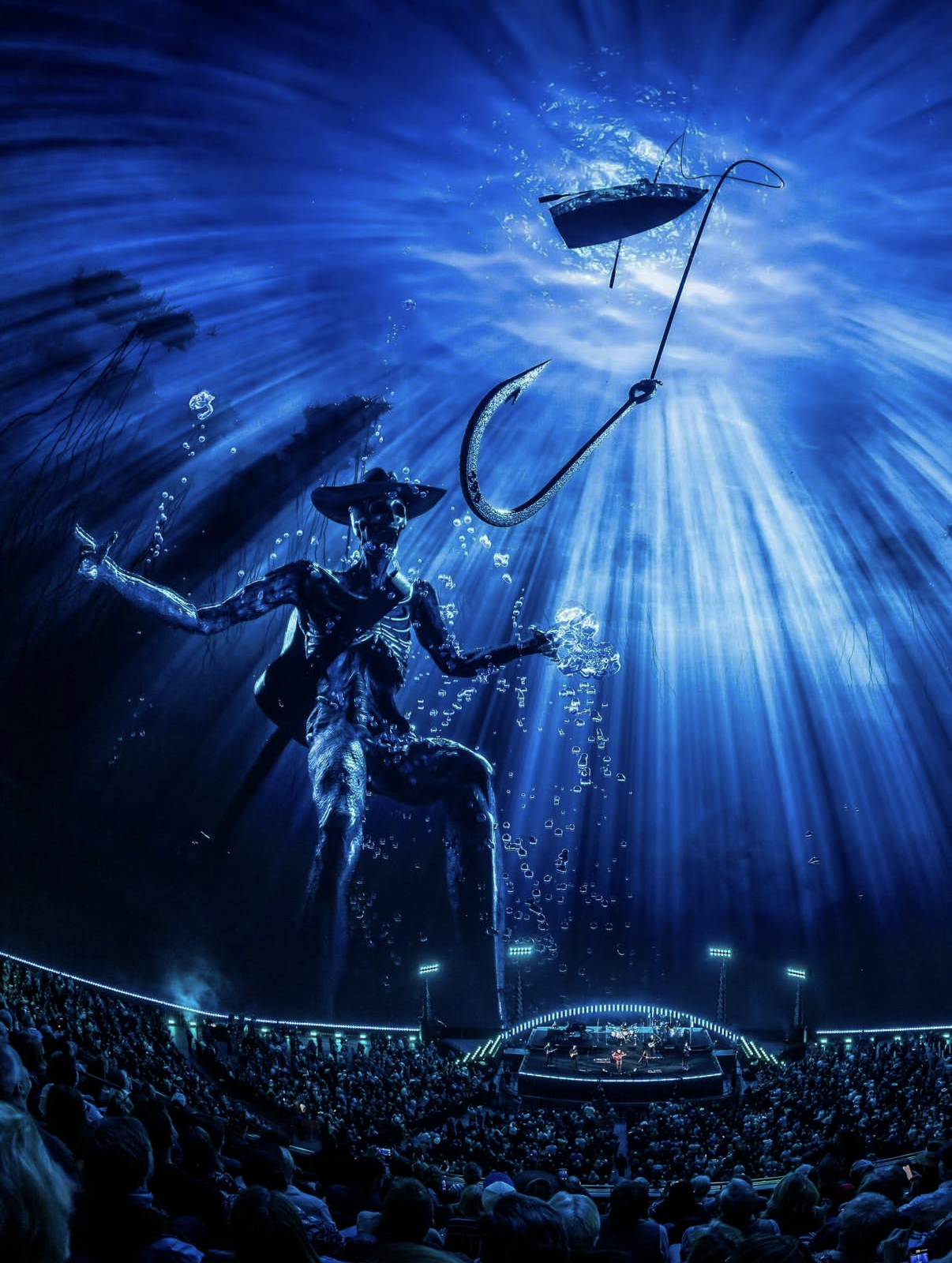
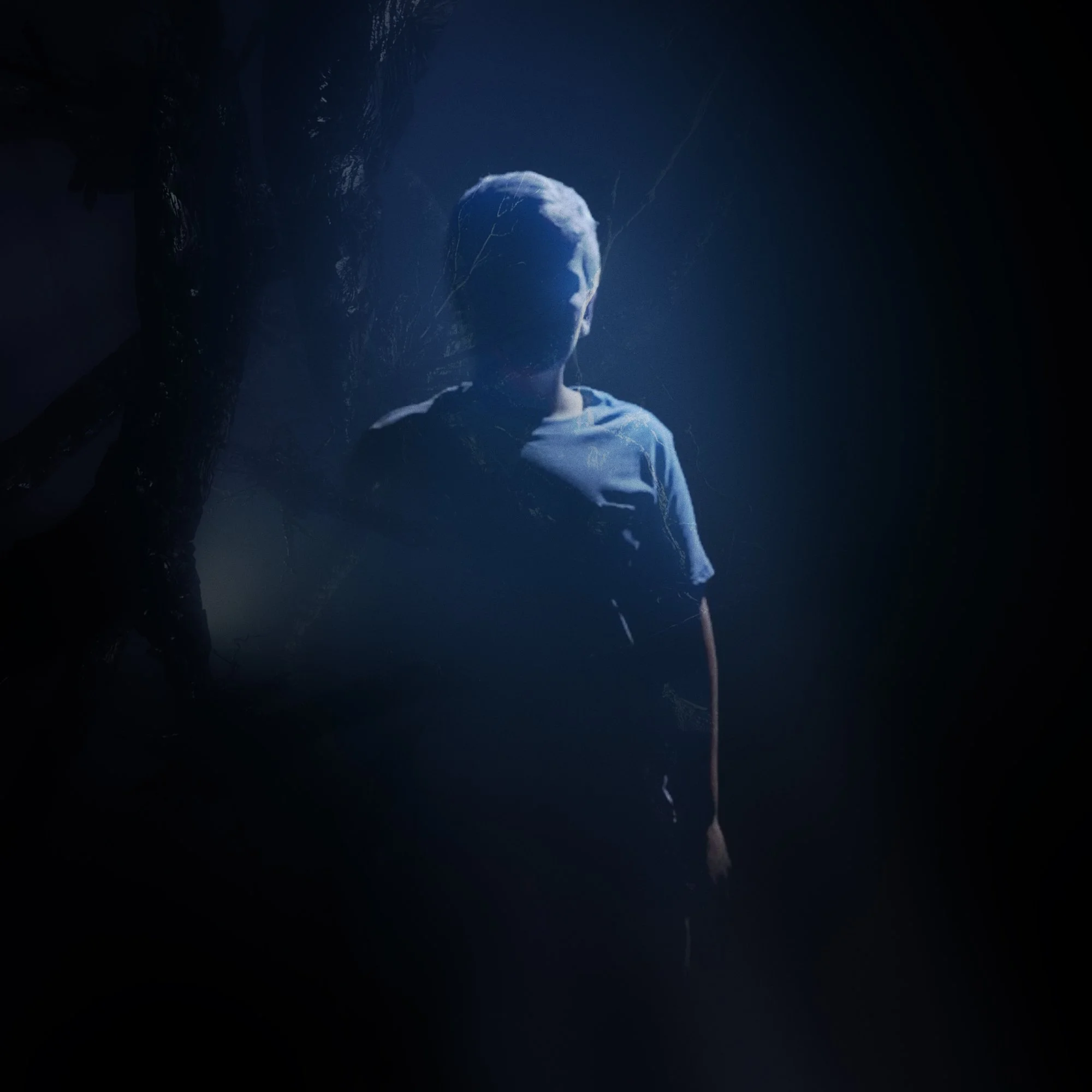
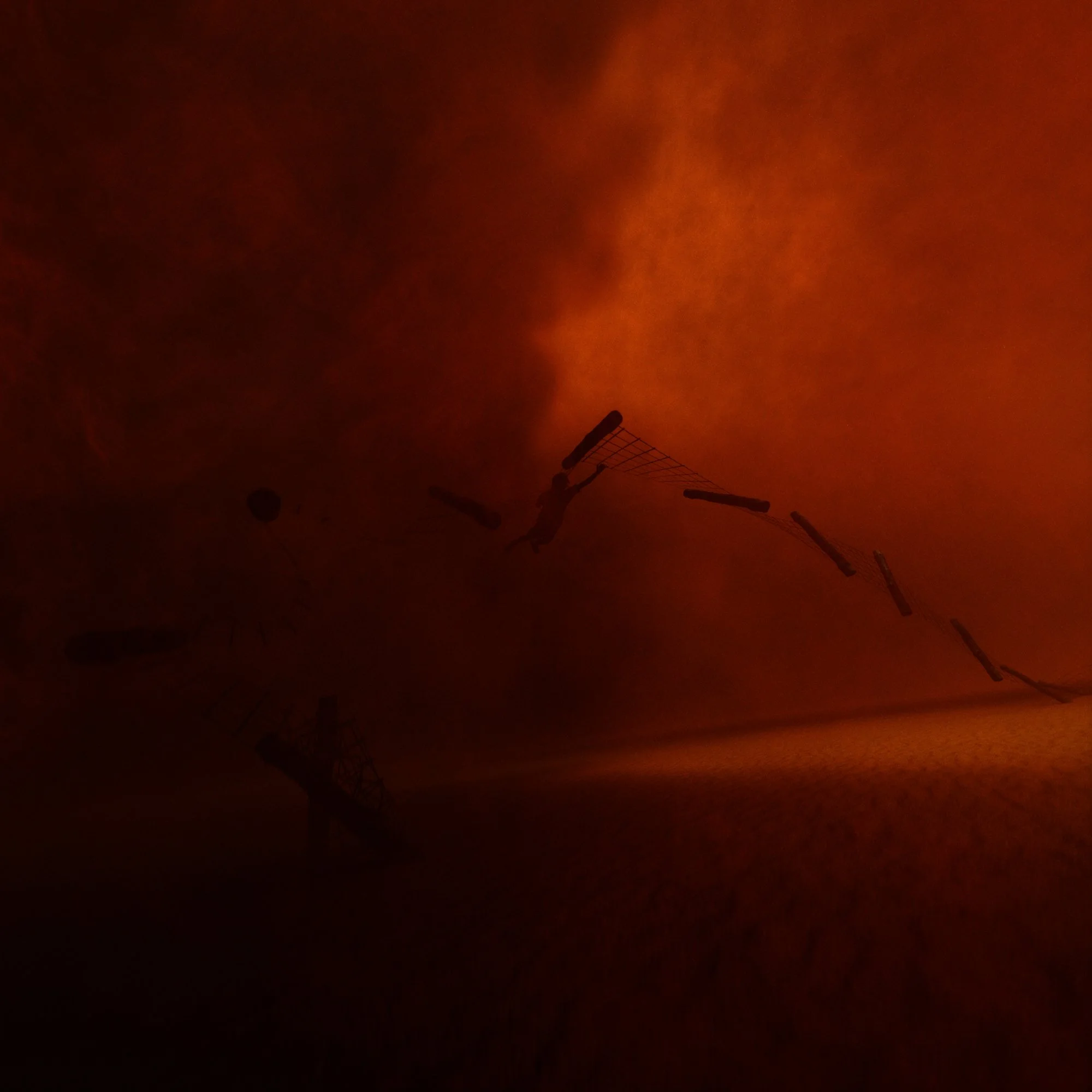
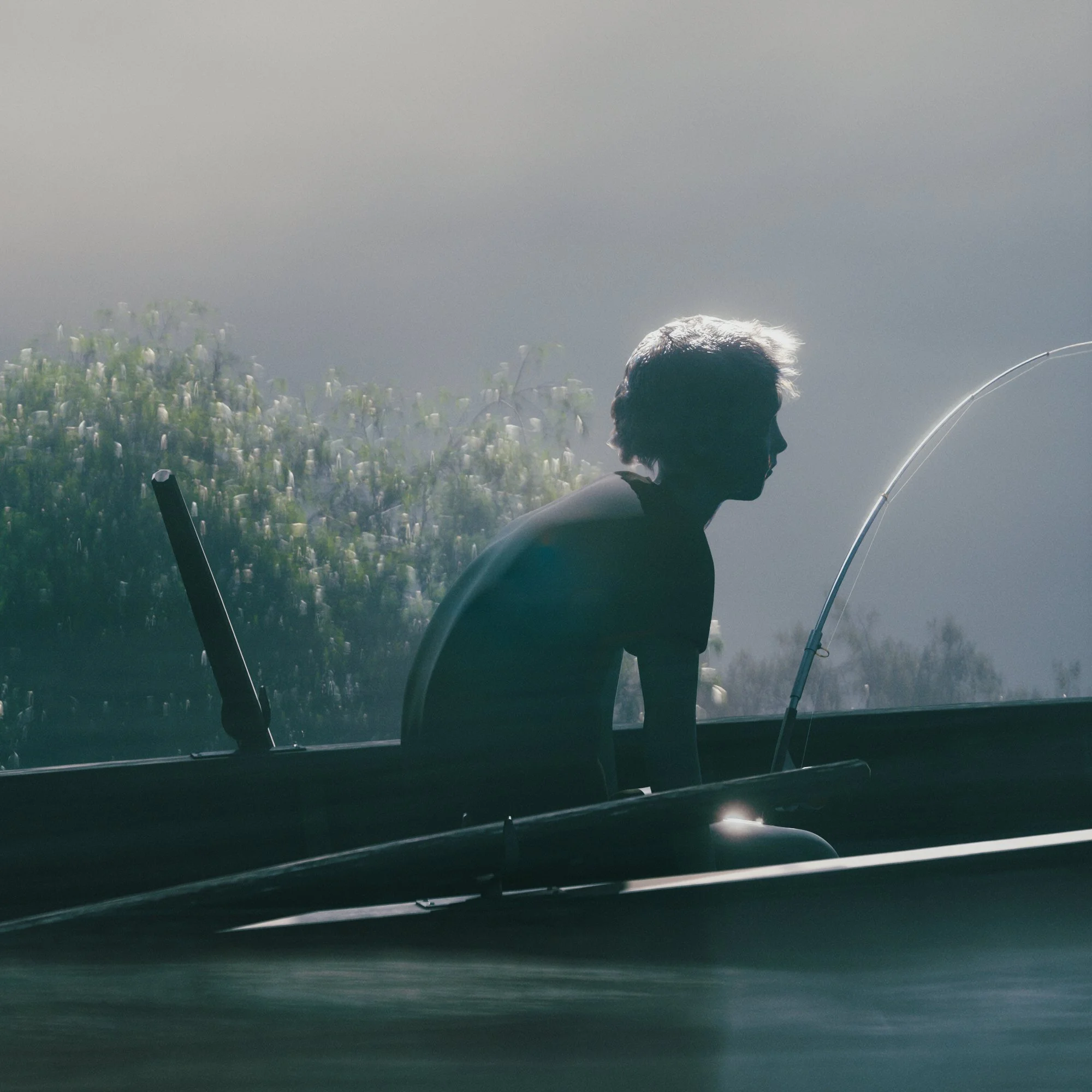
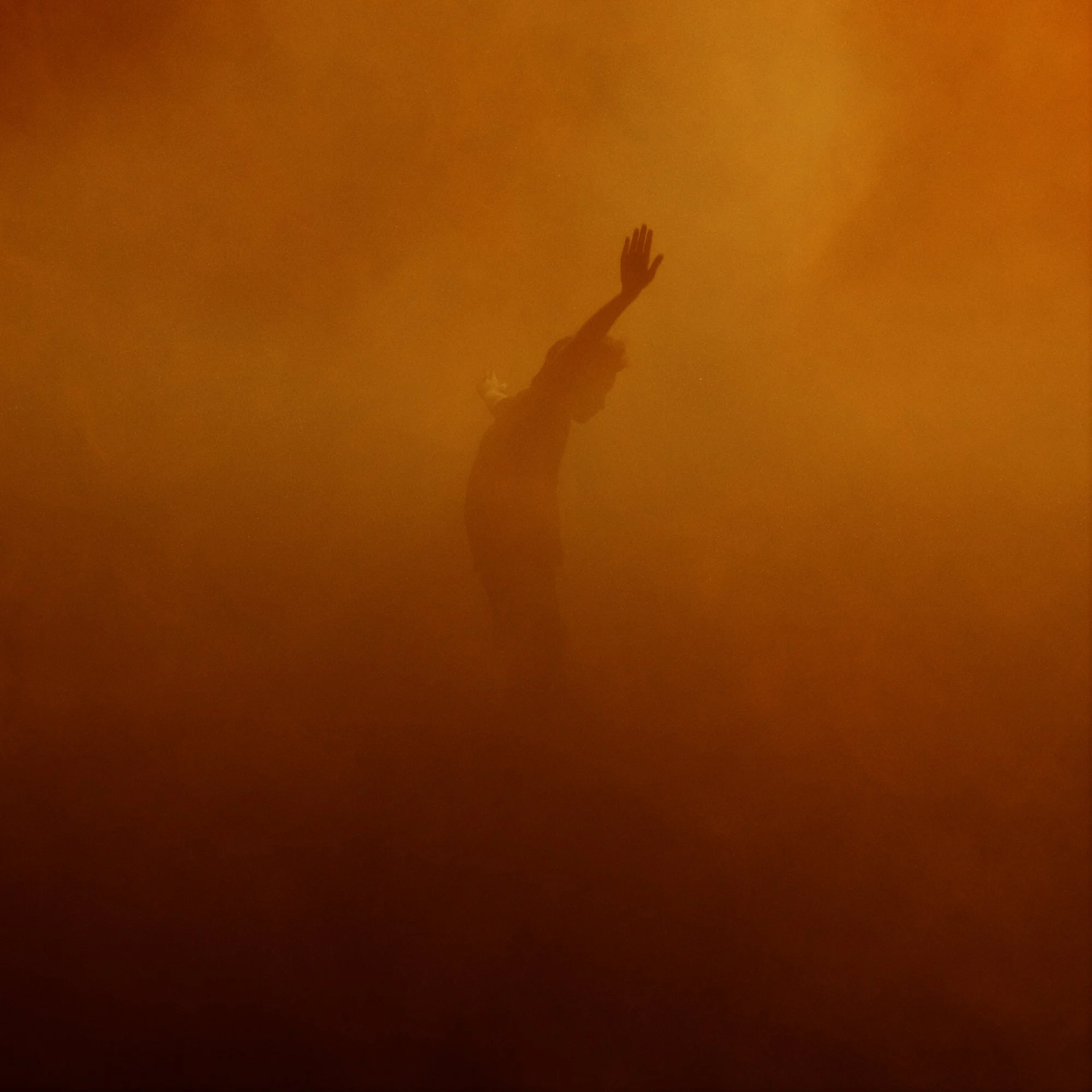
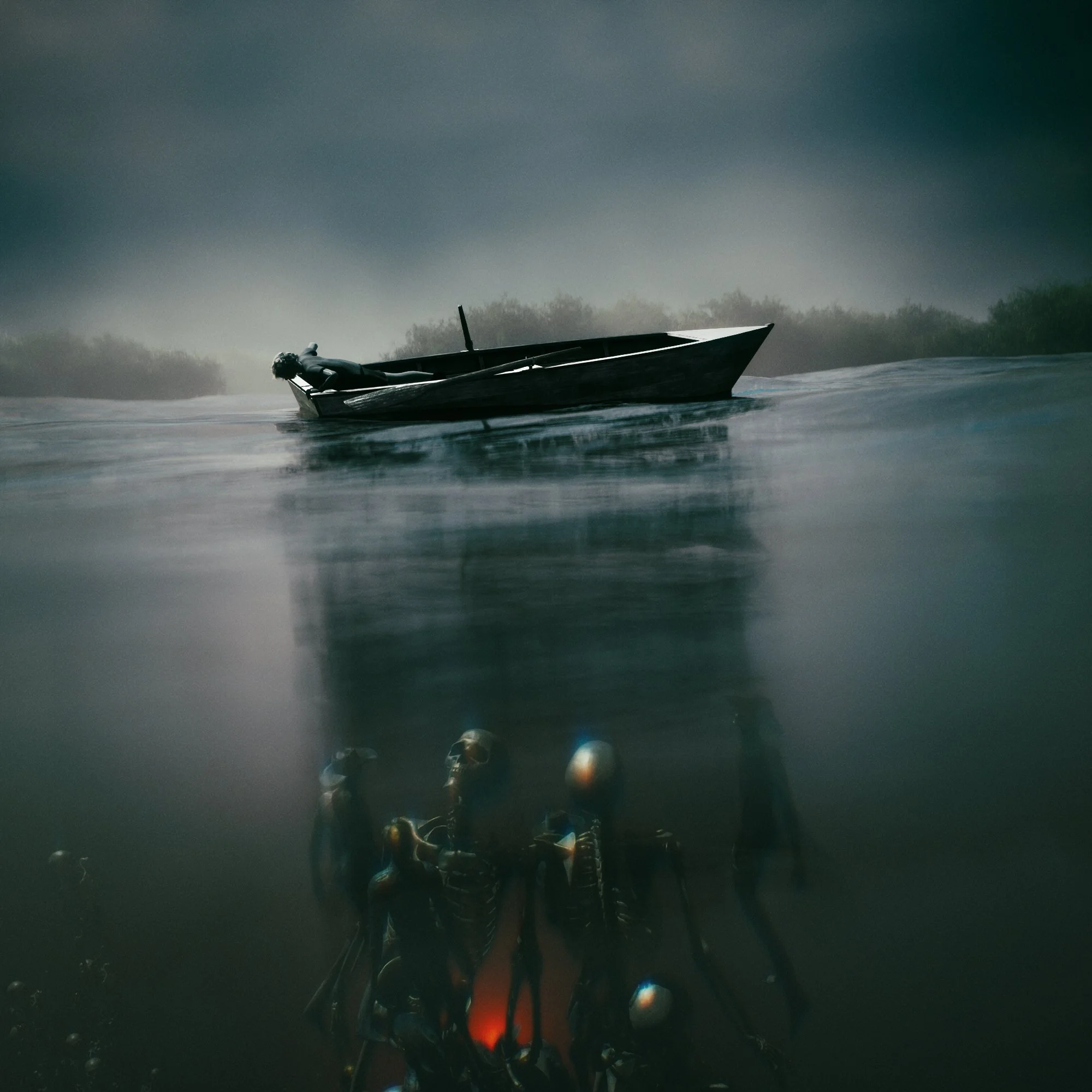
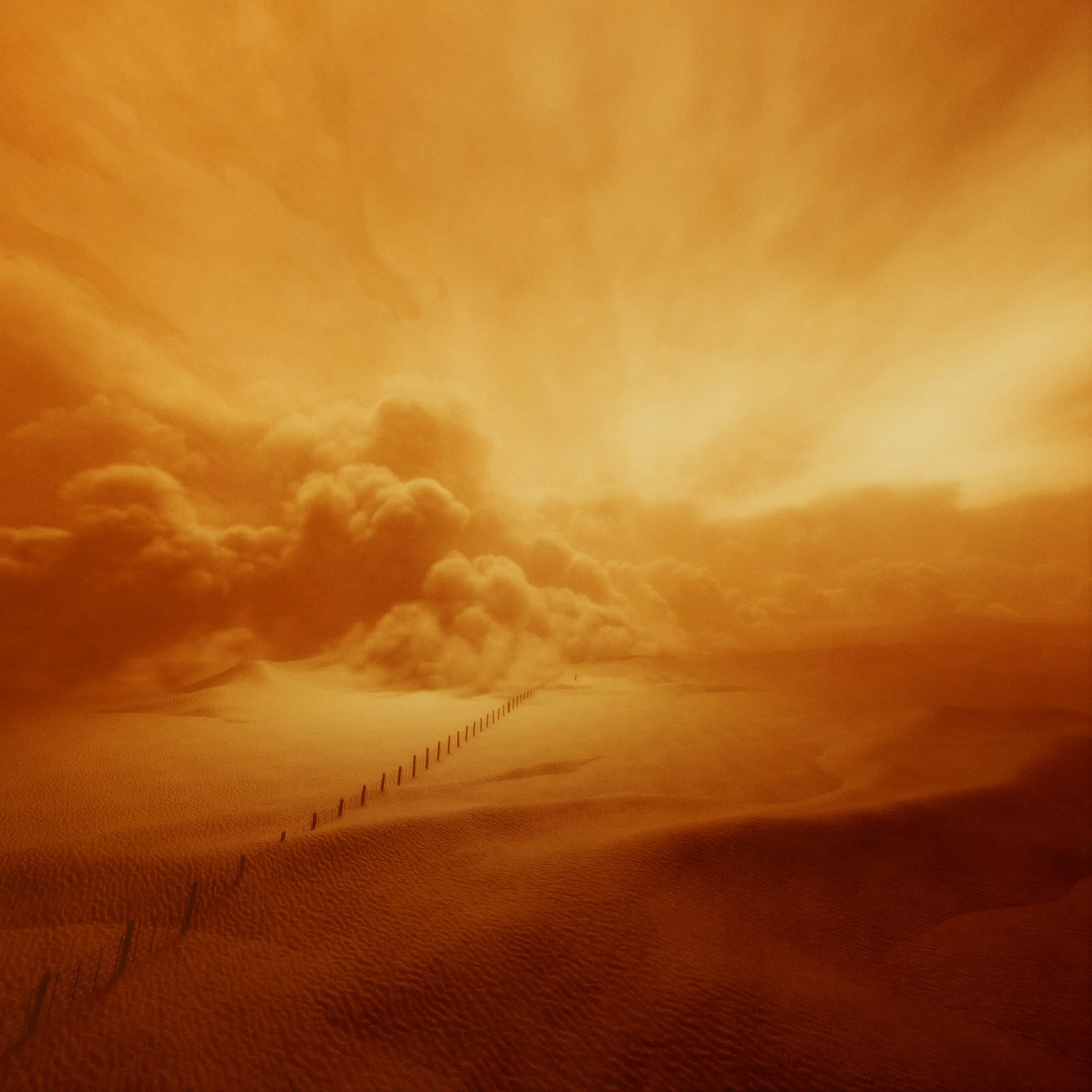
The protagonist manifests as Zac’s childhood self, rooted in Jungian psychology’s concept of the inner child carrying unhealed trauma into adulthood. Throughout Act I, the boy appears vulnerable. Clinging to fence posts during dust storms, small hands gripping weathered wood like surreal guitar frets as the world tries to tear him away. Fishing above demonic depths, his silhouette peaceful against summer skies, existing in quiet contrast to what looms beneath.
As the Hero’s Journey progresses, he transforms through trials that forge character. Each lesson tempering him like steel cooled in Georgia creeks. In “Remedy,” live-action footage shows adult Zac standing alongside his younger self before the crystalline city, both figures bathed in refracted light. Reconciliation between the wounded child and the healed man. Two selves, separated by decades and hardship, united in grace.
THE CENTRAL THESIS: Confronting childhood demons through fire and trial transforms the inner child into our greatest strength, integrating past and present into wholeness, spiritually awakened and capable of protecting others.
THE DEMON COWBOY
THE SHADOW; SHAPE-SHIFTING EMBODIMENTS OF TRAUMA
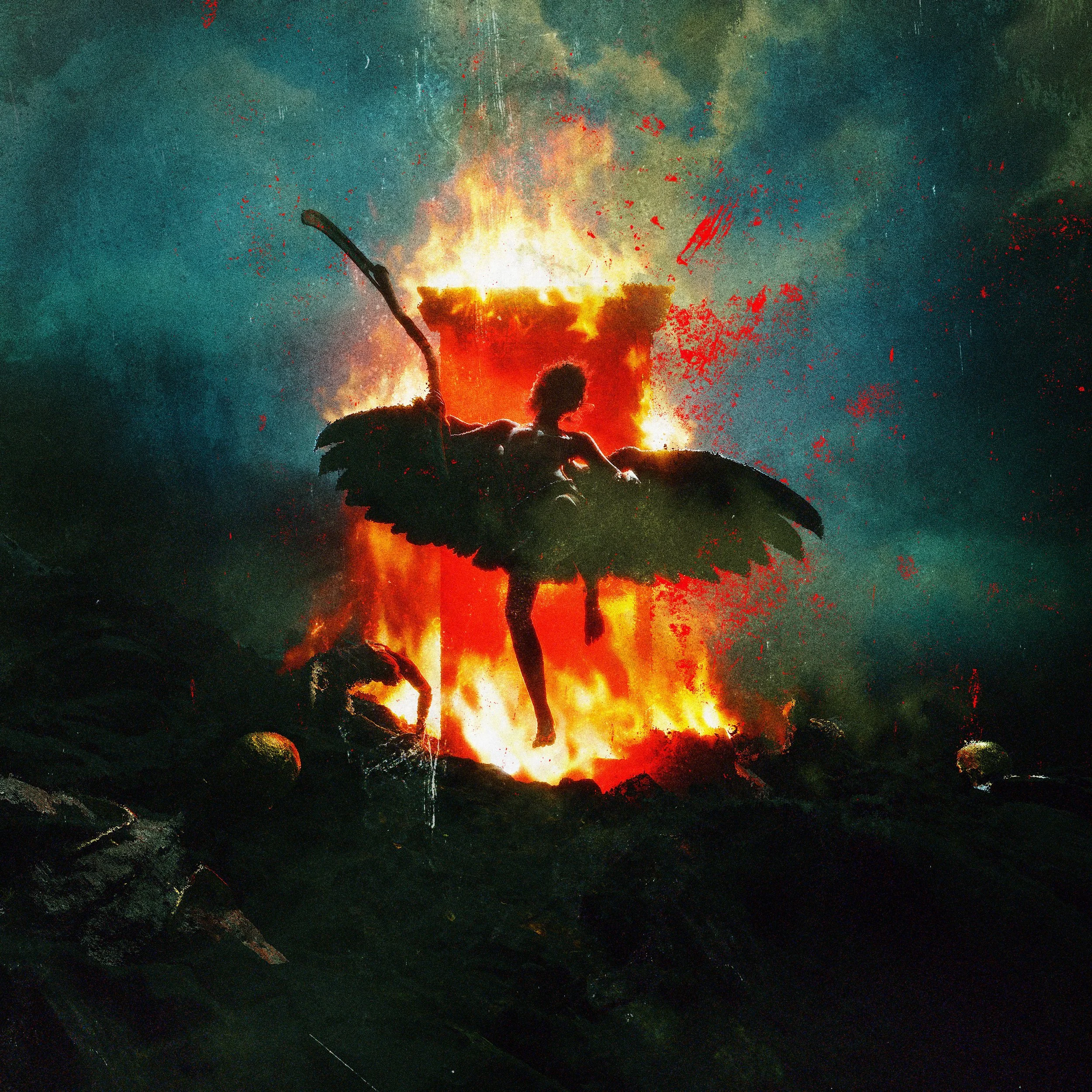
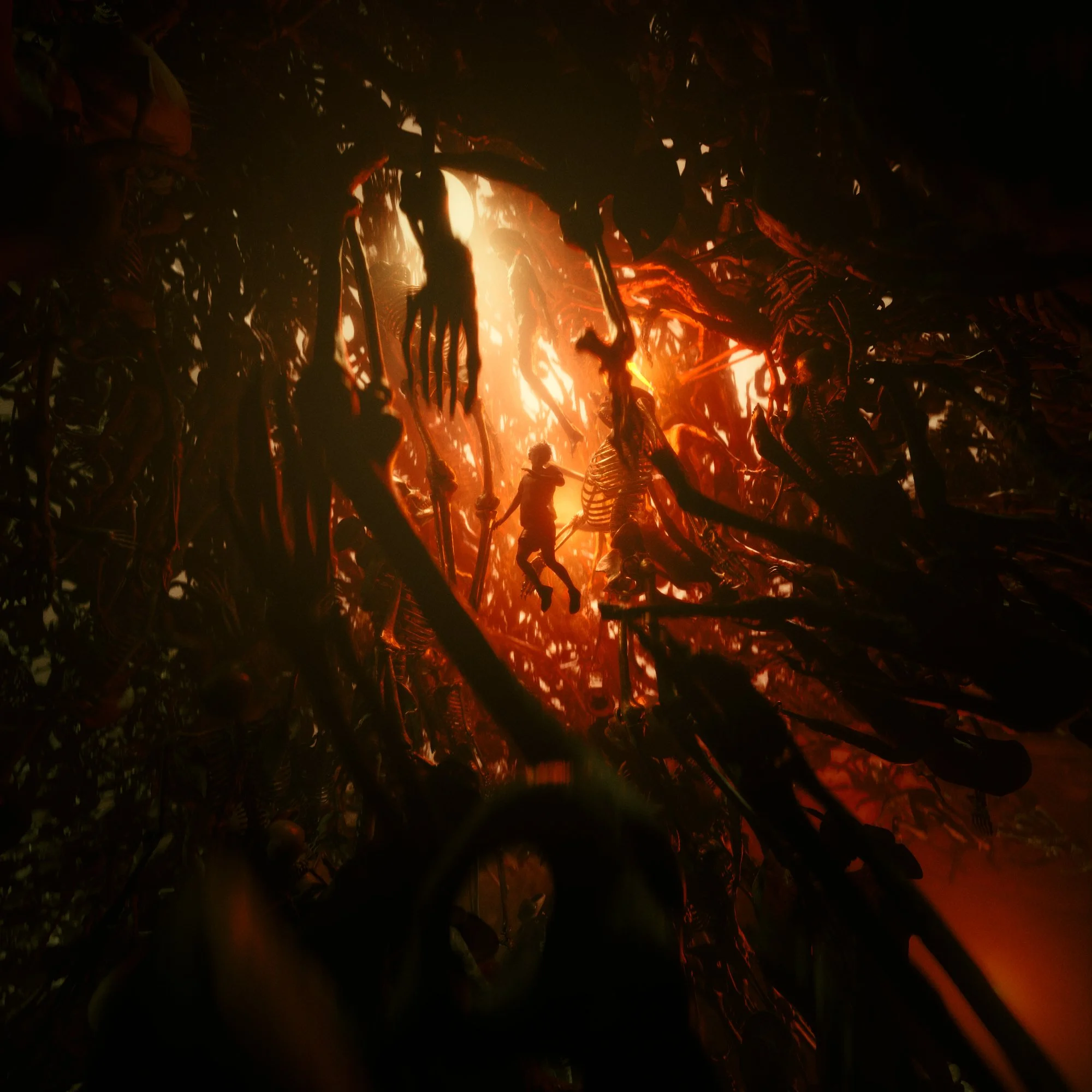
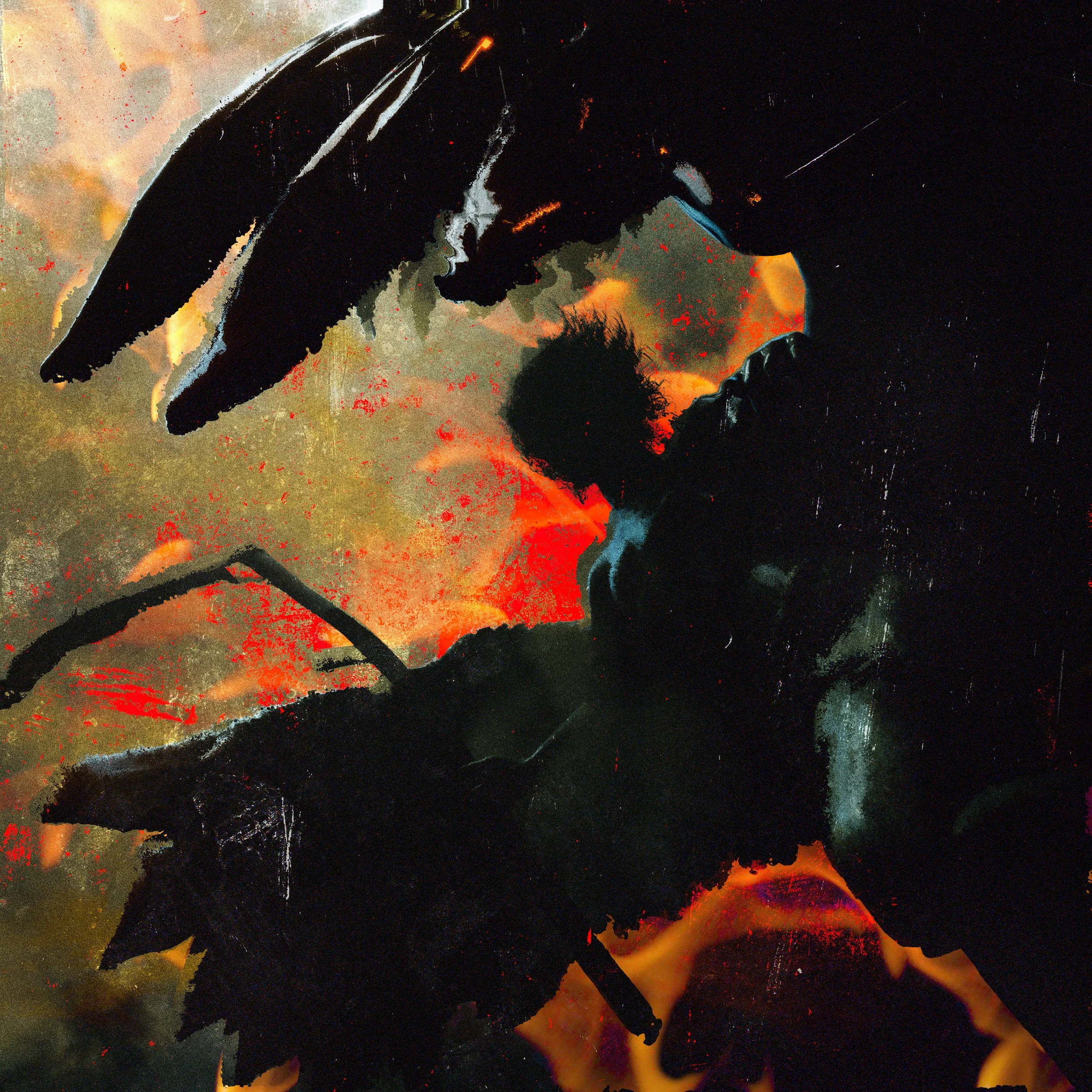
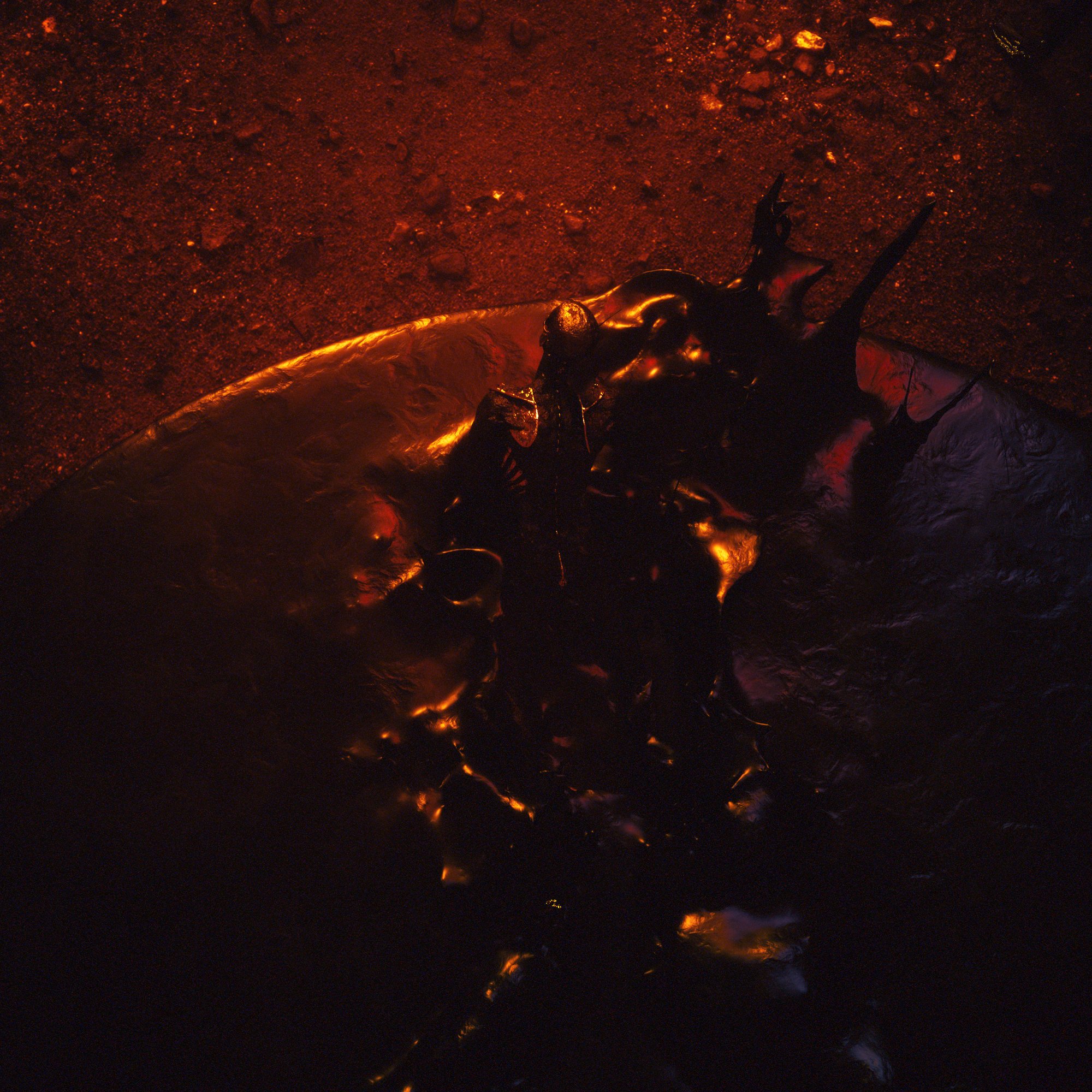
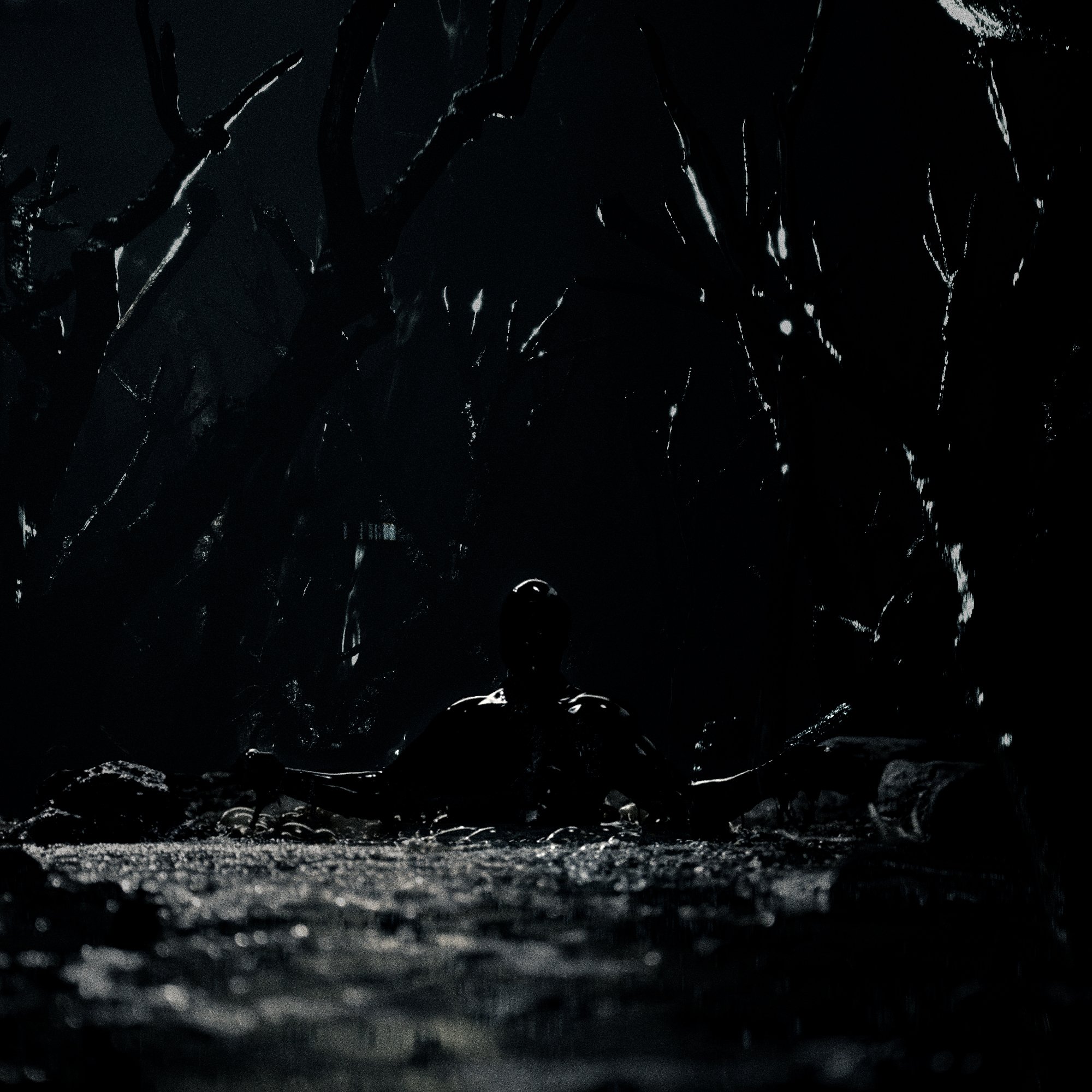
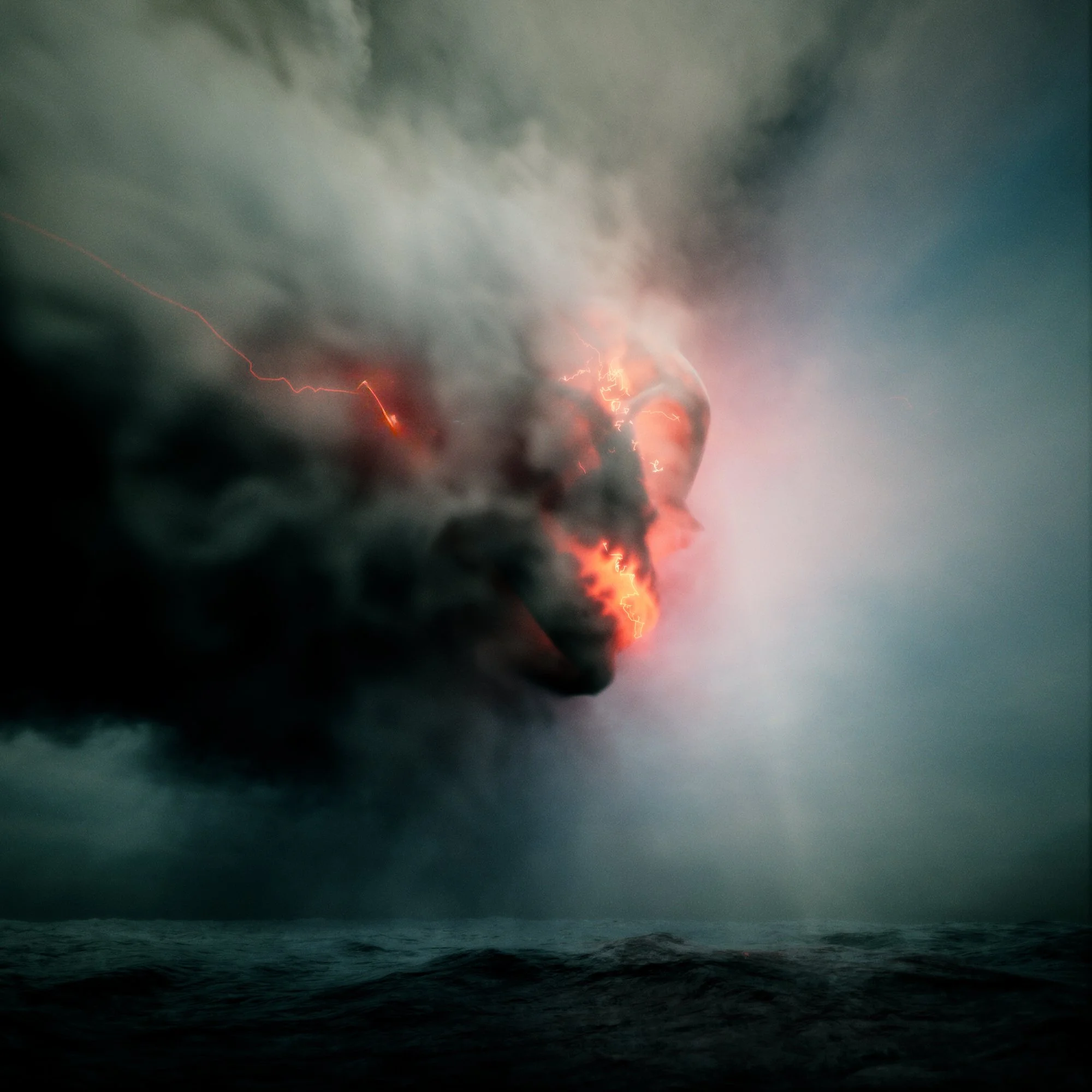
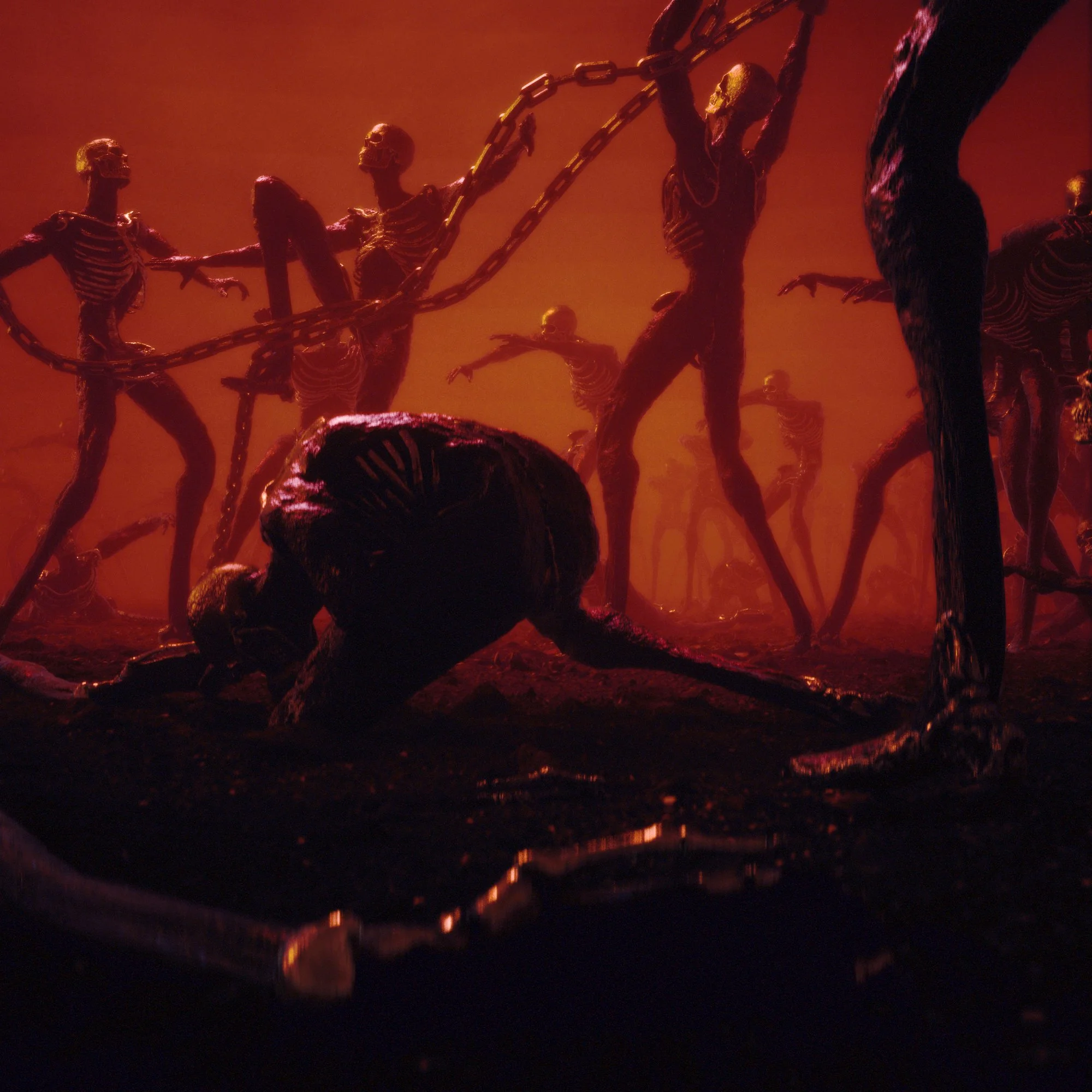
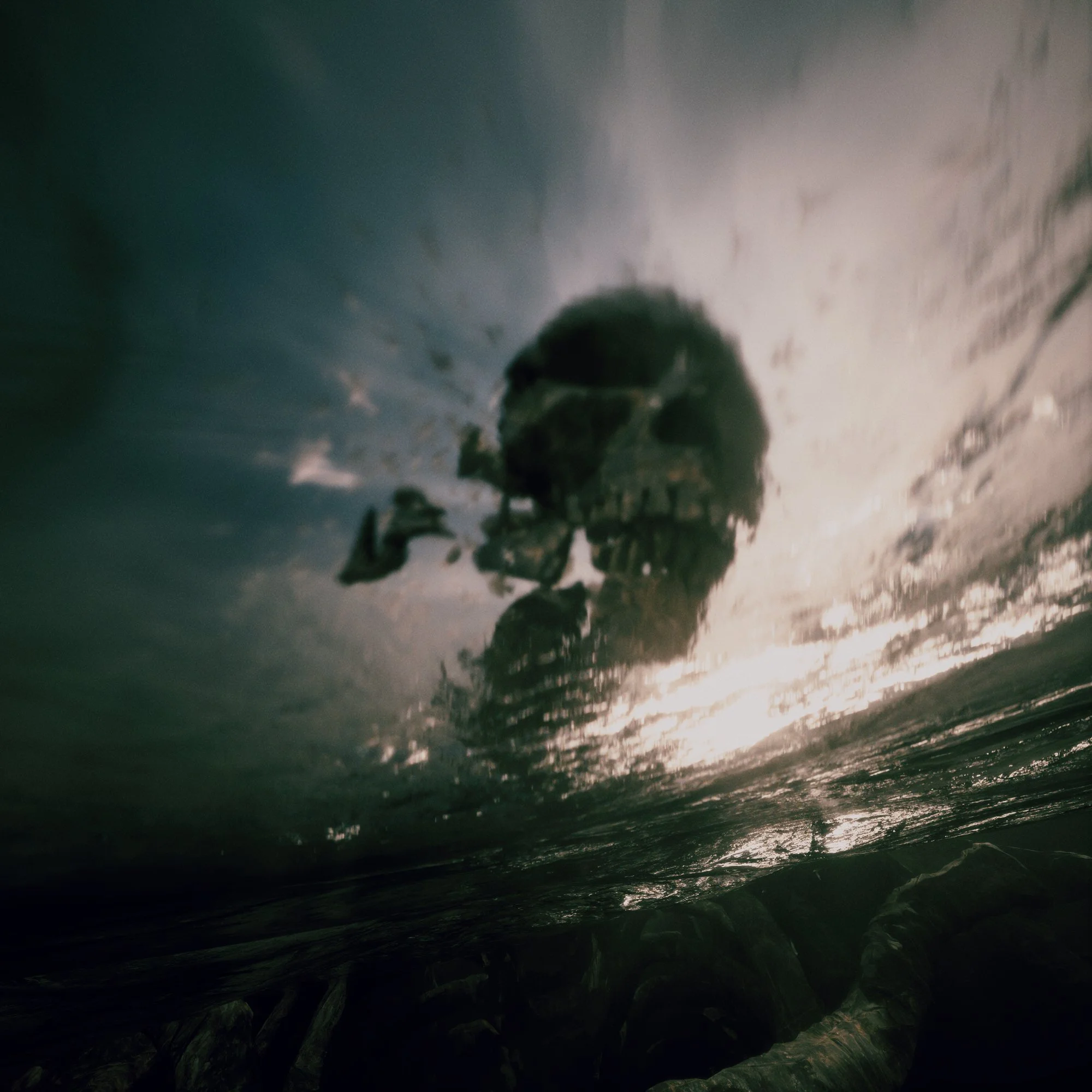
Golden skeletons climb endlessly toward corrupted power in "Heavy is the Head." Ambition's hollow pursuit. Their bony fingers scrape against industrial metal, desperate, clawing, never reaching the top. A colossal black dog embodies depression, drinking from pools of addiction, its massive form hunched and insatiable. Oil-covered figures crawl from sludge, souls trapped by materialism, dancing in agony.
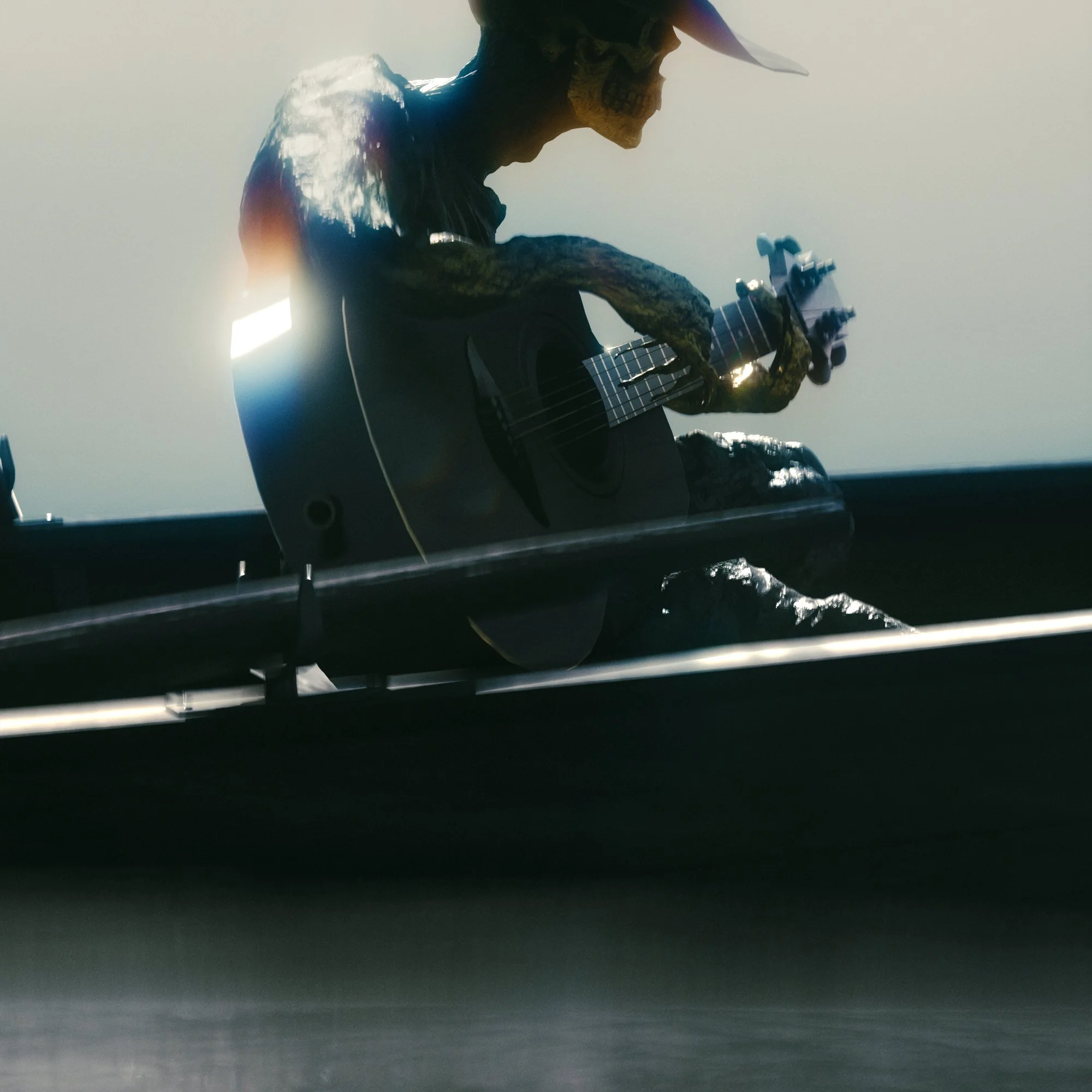
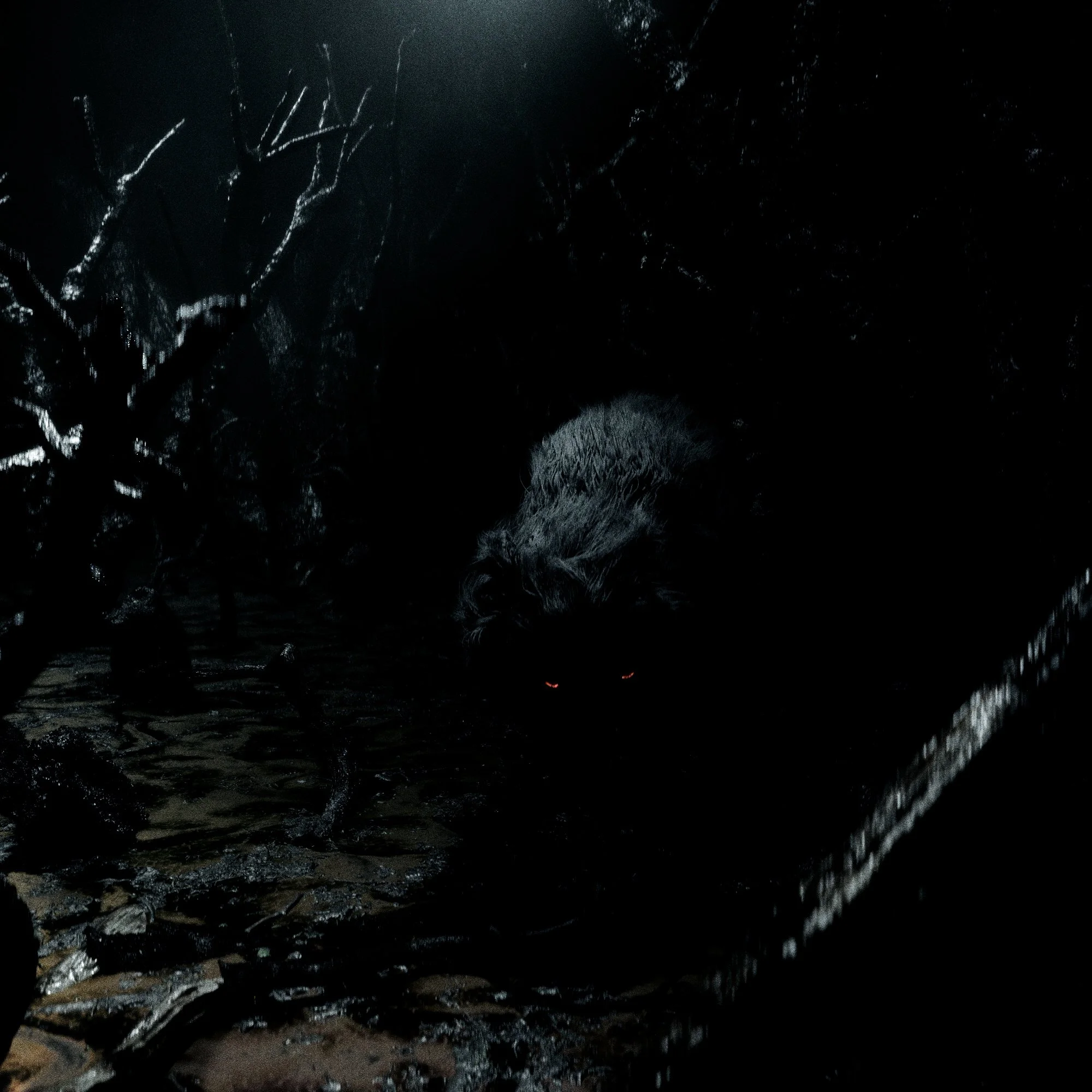
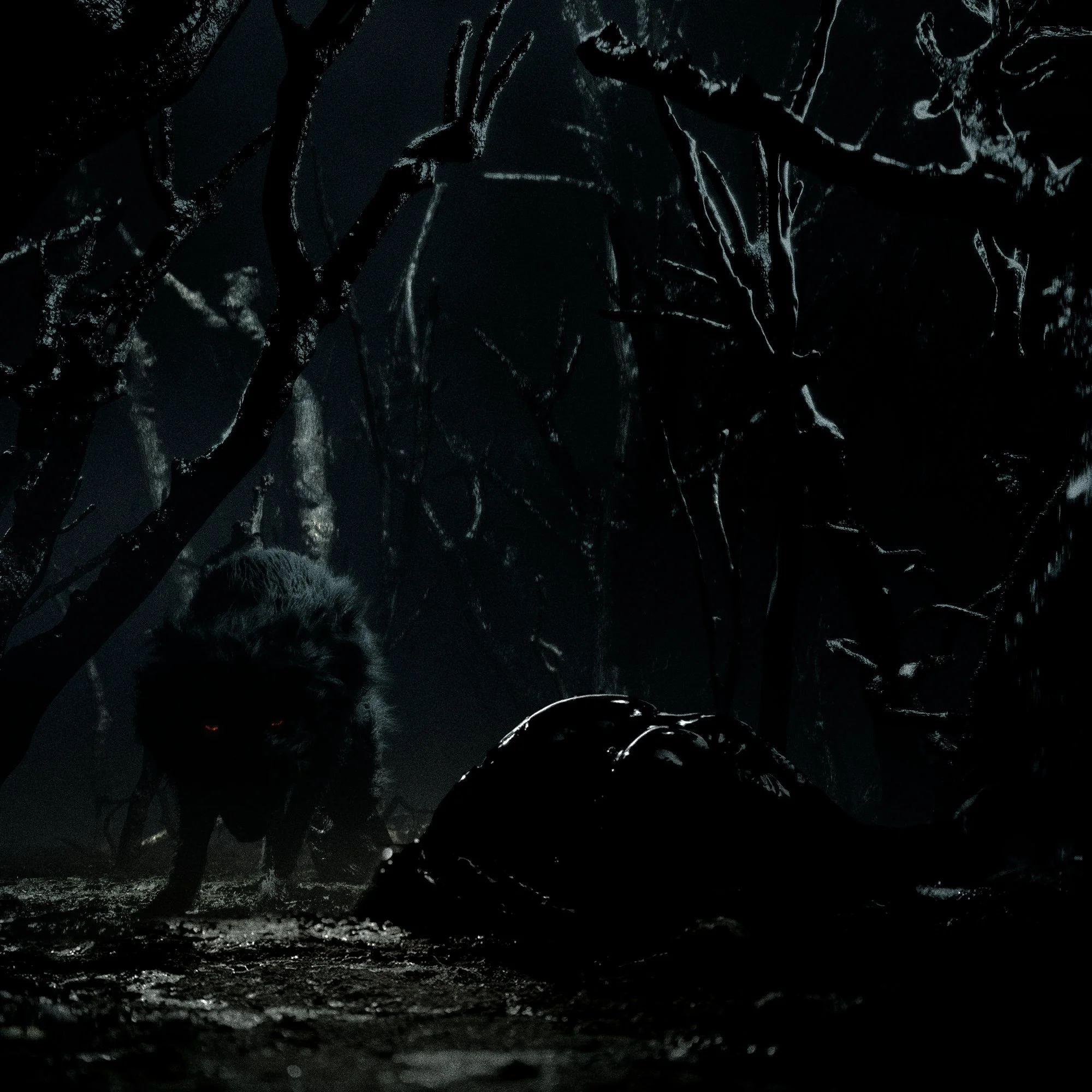
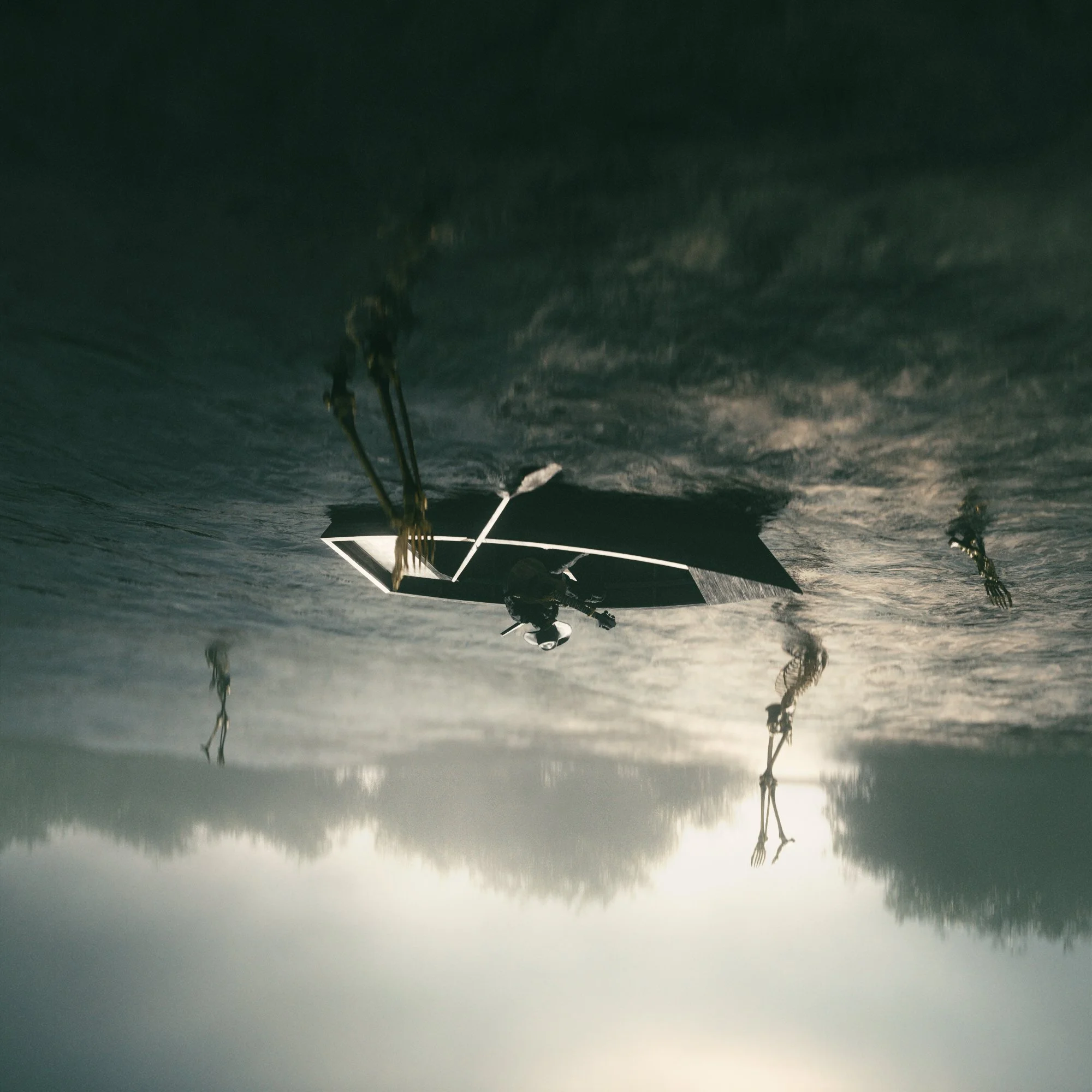
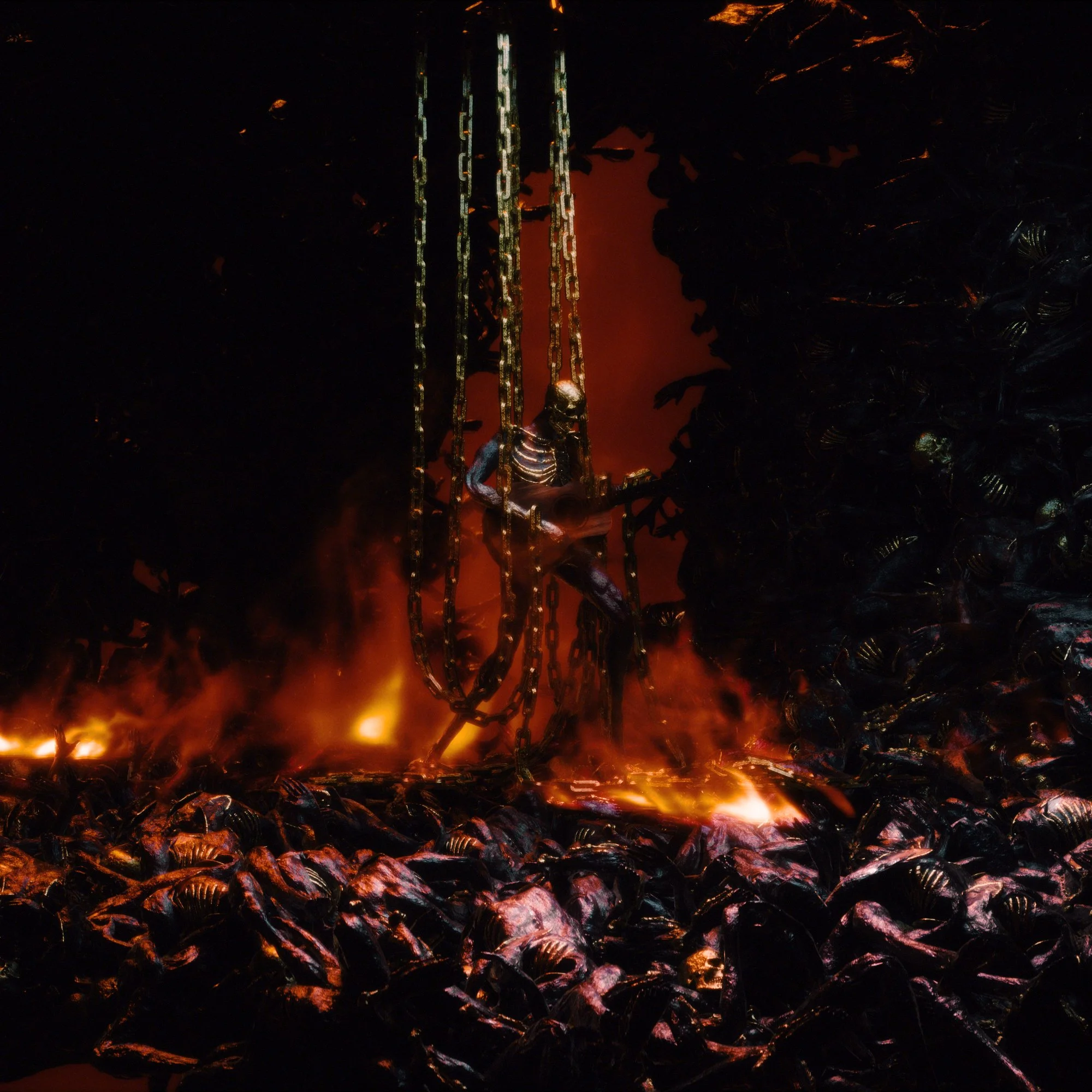
Wolves lurk in shadows during "Animal," representing the primal beast within, eyes gleaming, waiting for the moment you let your guard down. But one figure emerges as the primary antagonist: THE DEMON COWBOY. A golden skeletal figure wearing a cowboy hat. Like McCarthy's immortal Judge Holden, an embodiment of violence and control, he represents the seductive nature of power. The darkness that speaks in a voice we recognize as our own. He appears throughout the show's darker moments. A recurring specter. Our most dangerous enemy often wears a familiar face, tips his hat, and invites us to dance.
MOTIFS
WORLD BUILDING
SURREAL LANDSCAPES & EMOTIONAL WORLDS
CINEMATIC IMMERSION OVER TRADITIONAL CONCERT TROPES
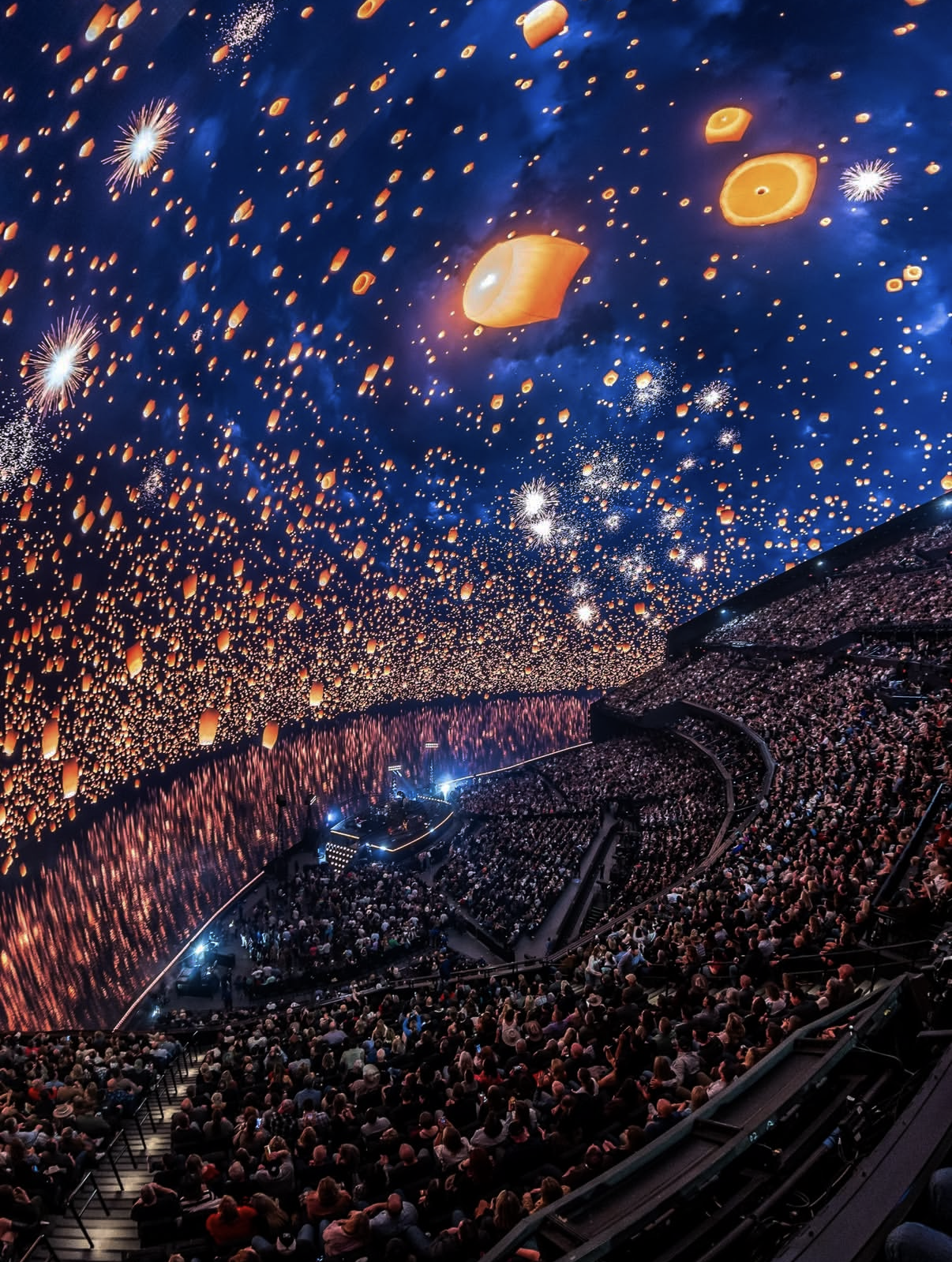
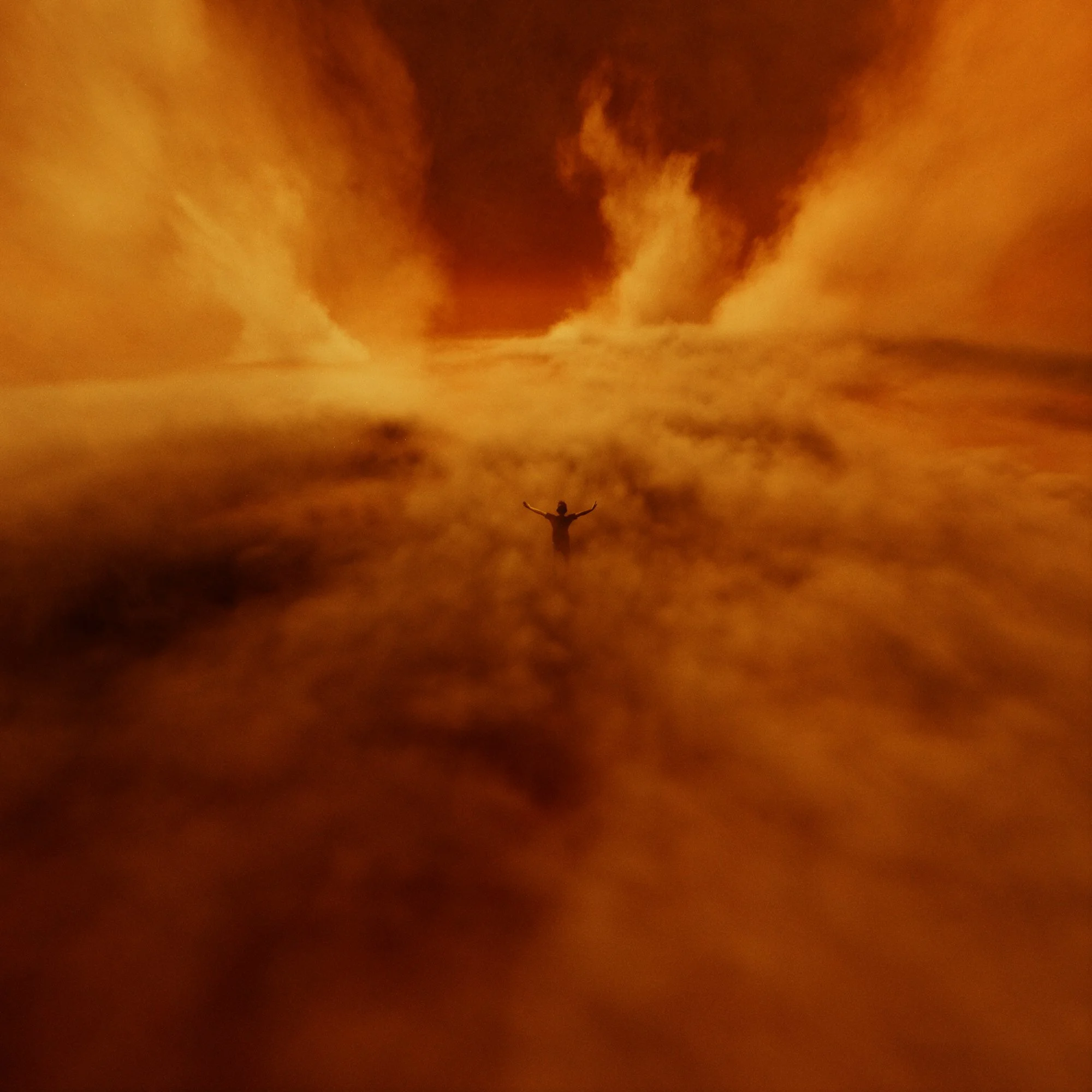
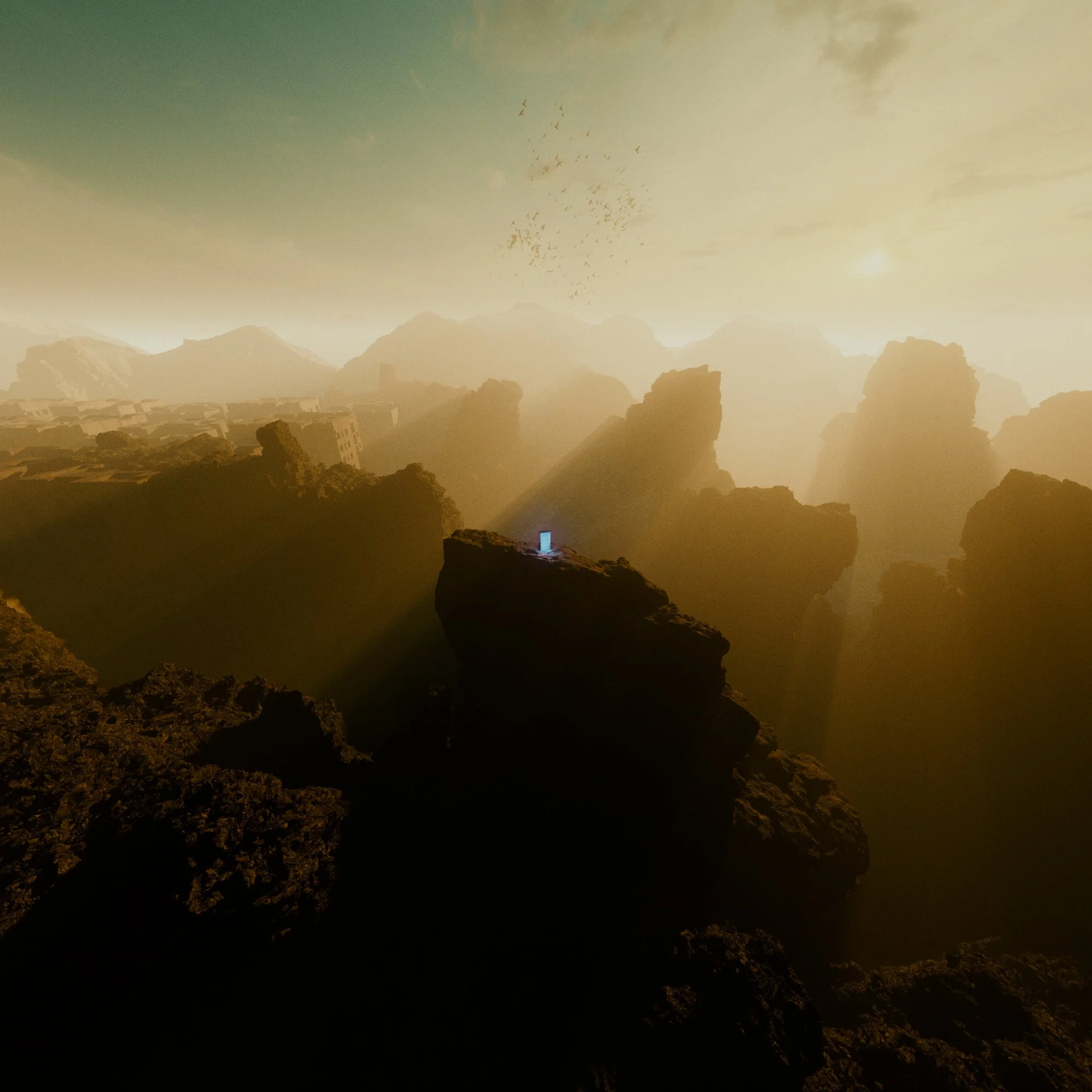
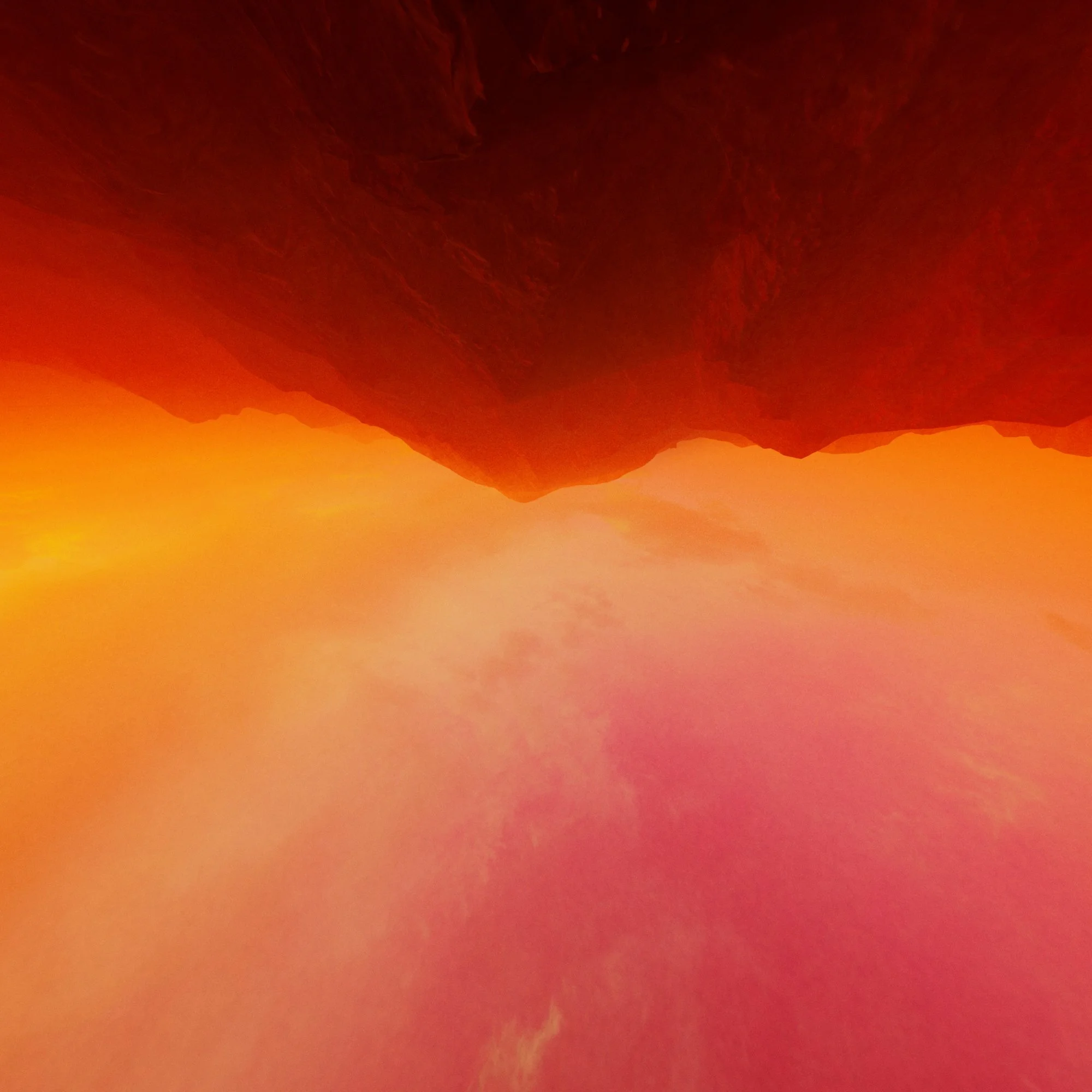
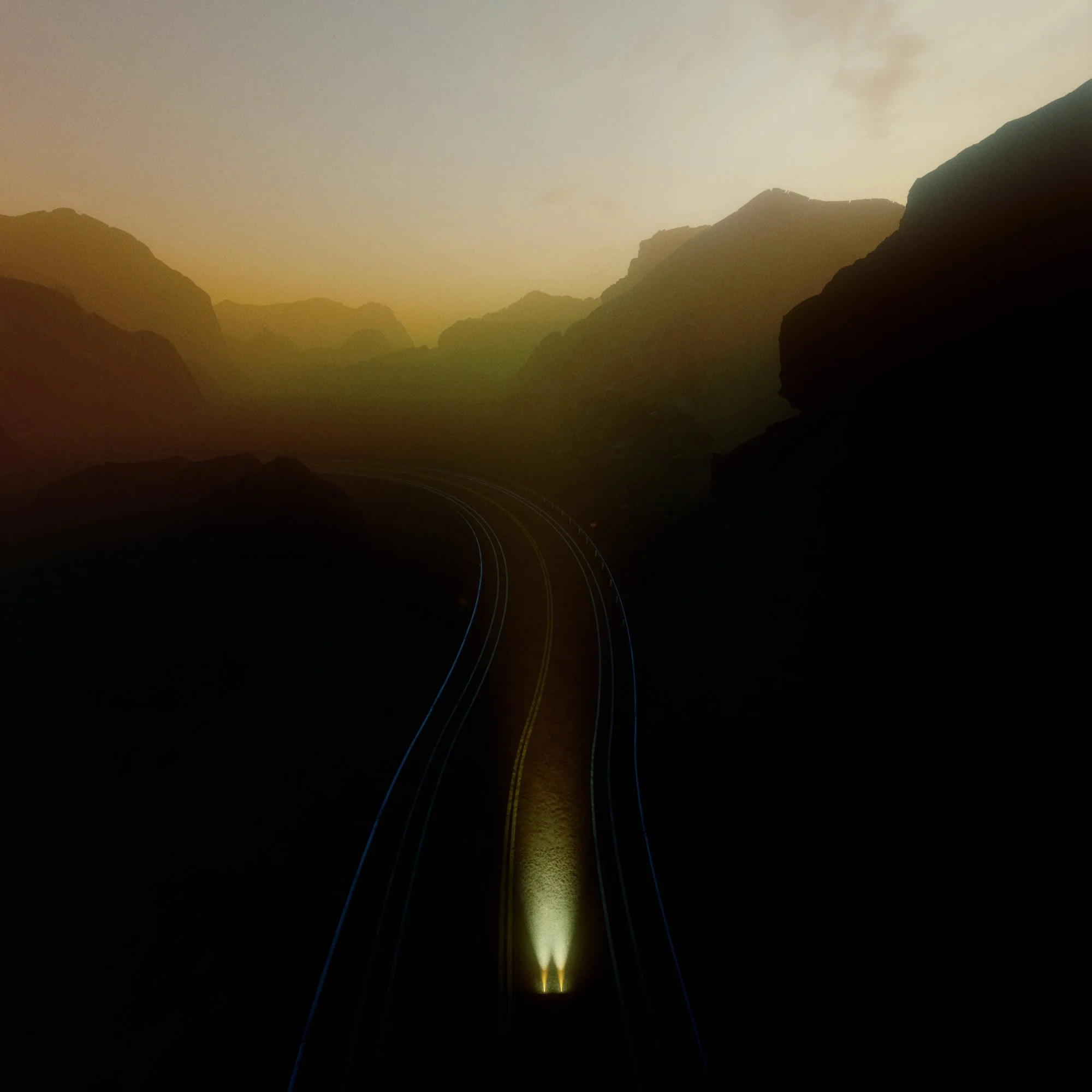
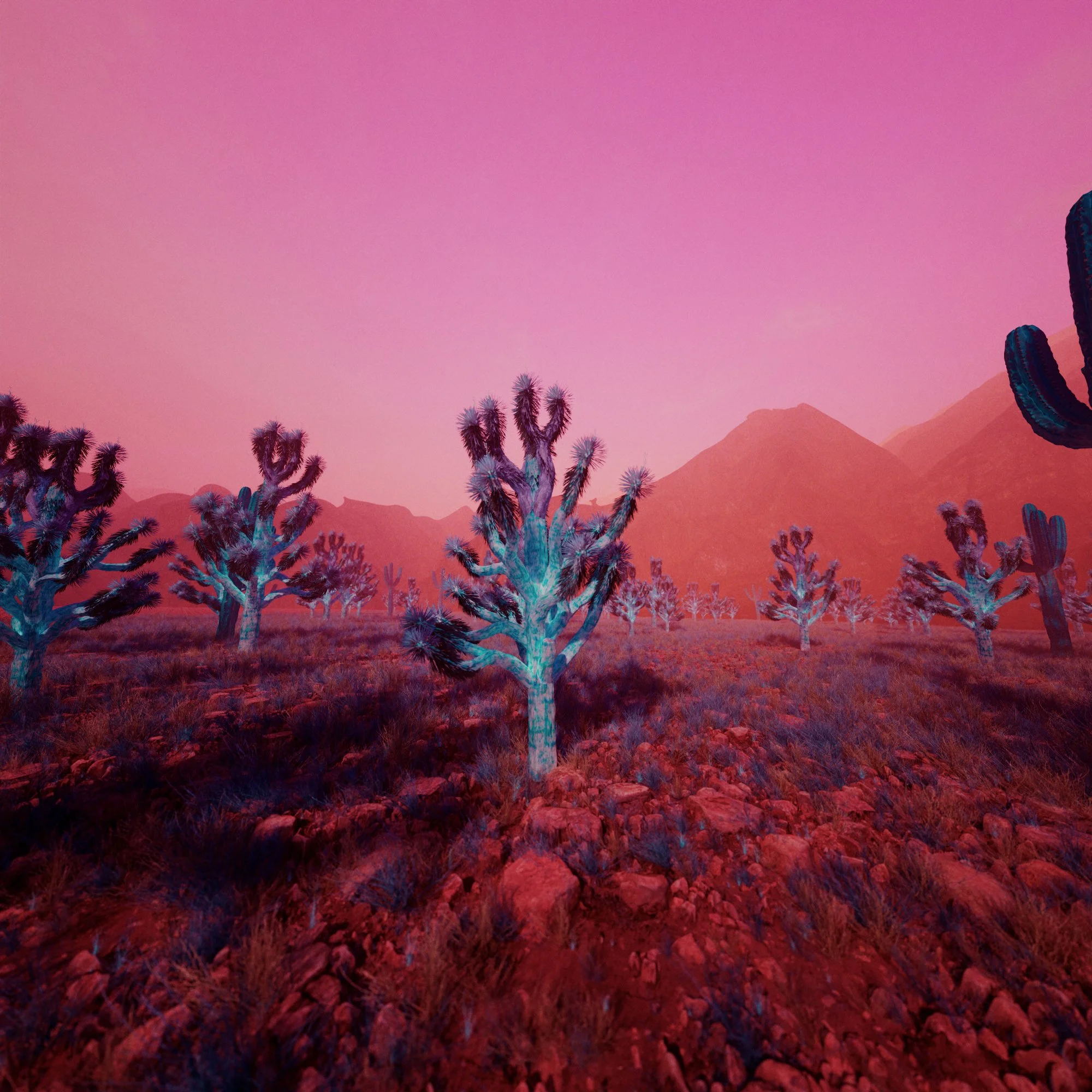
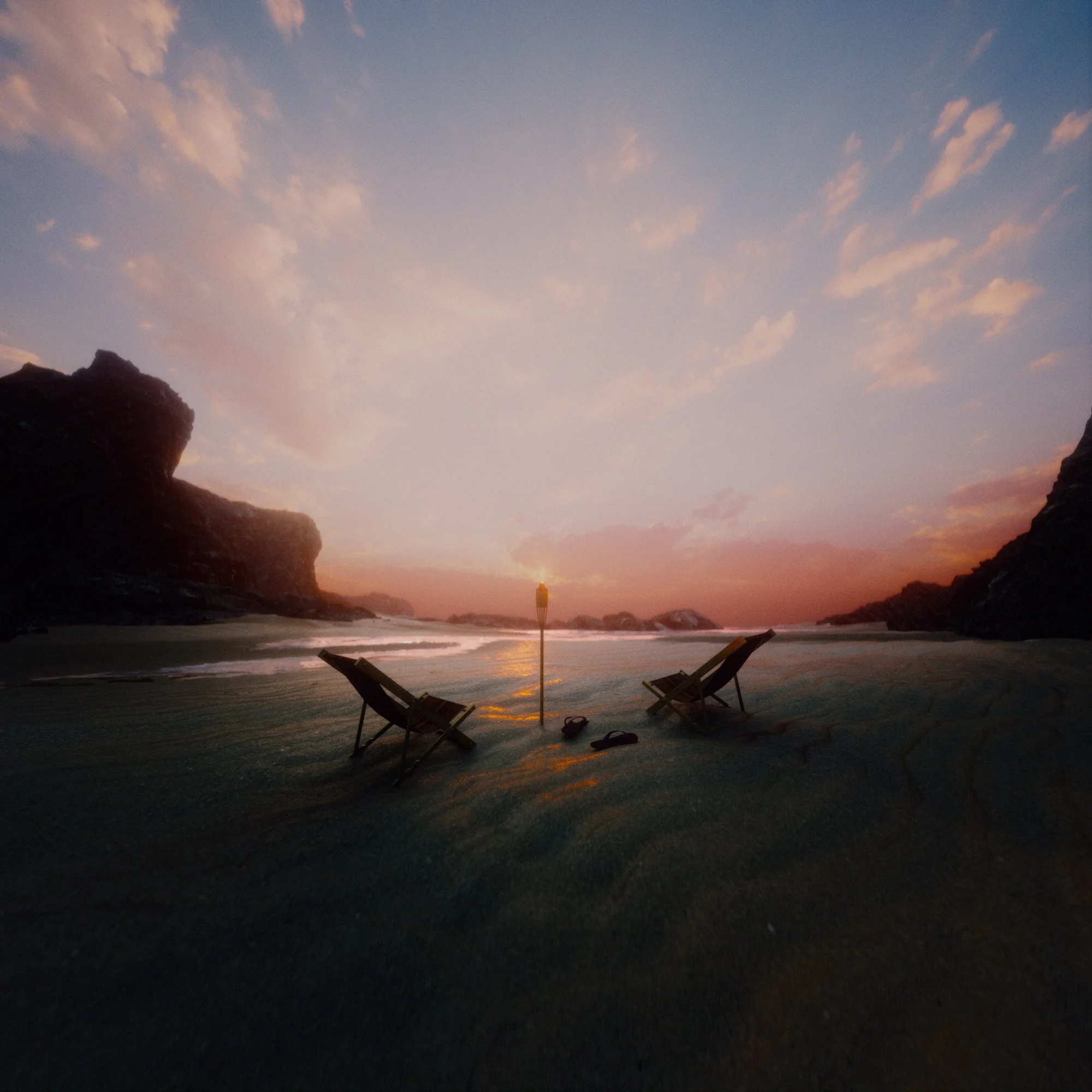
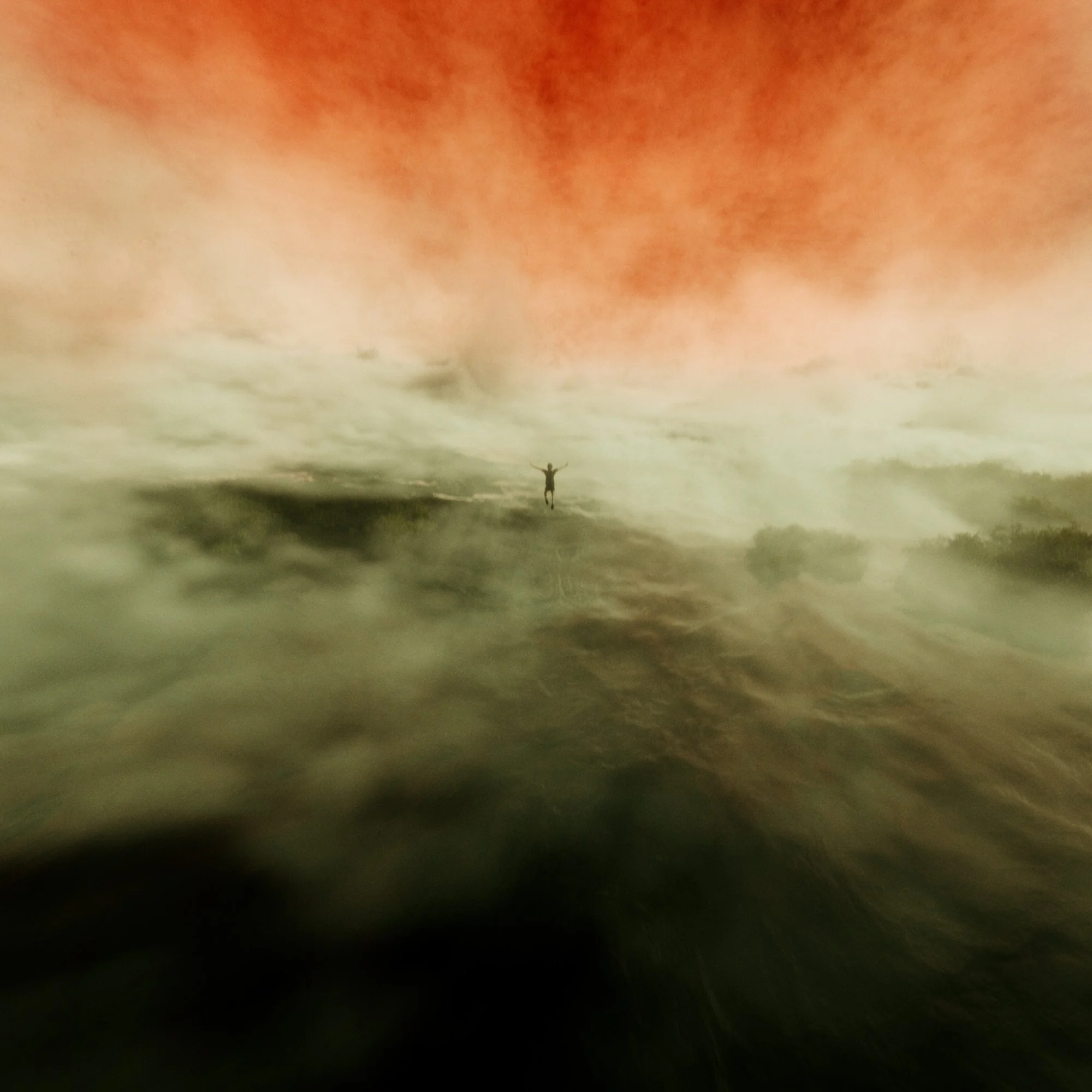
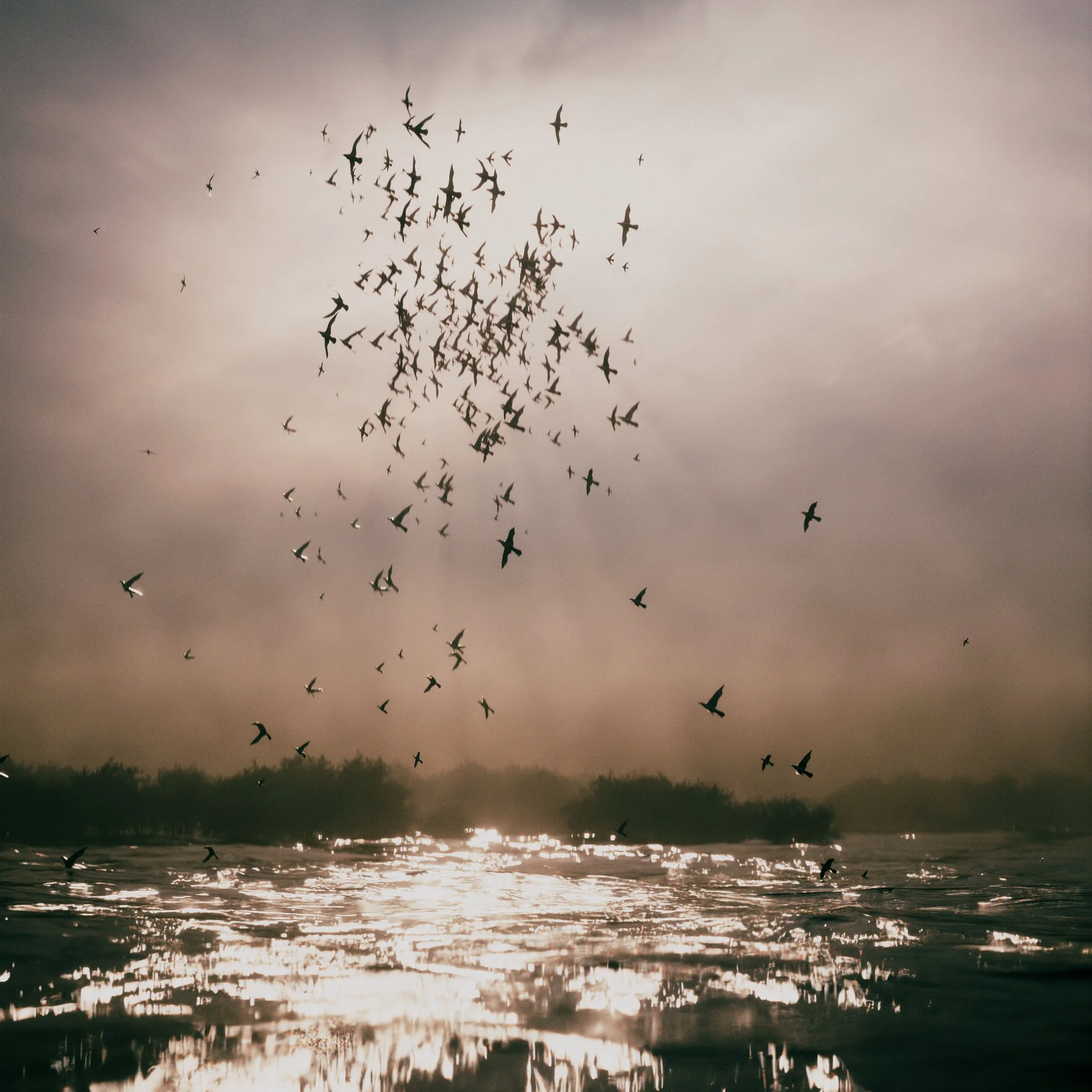
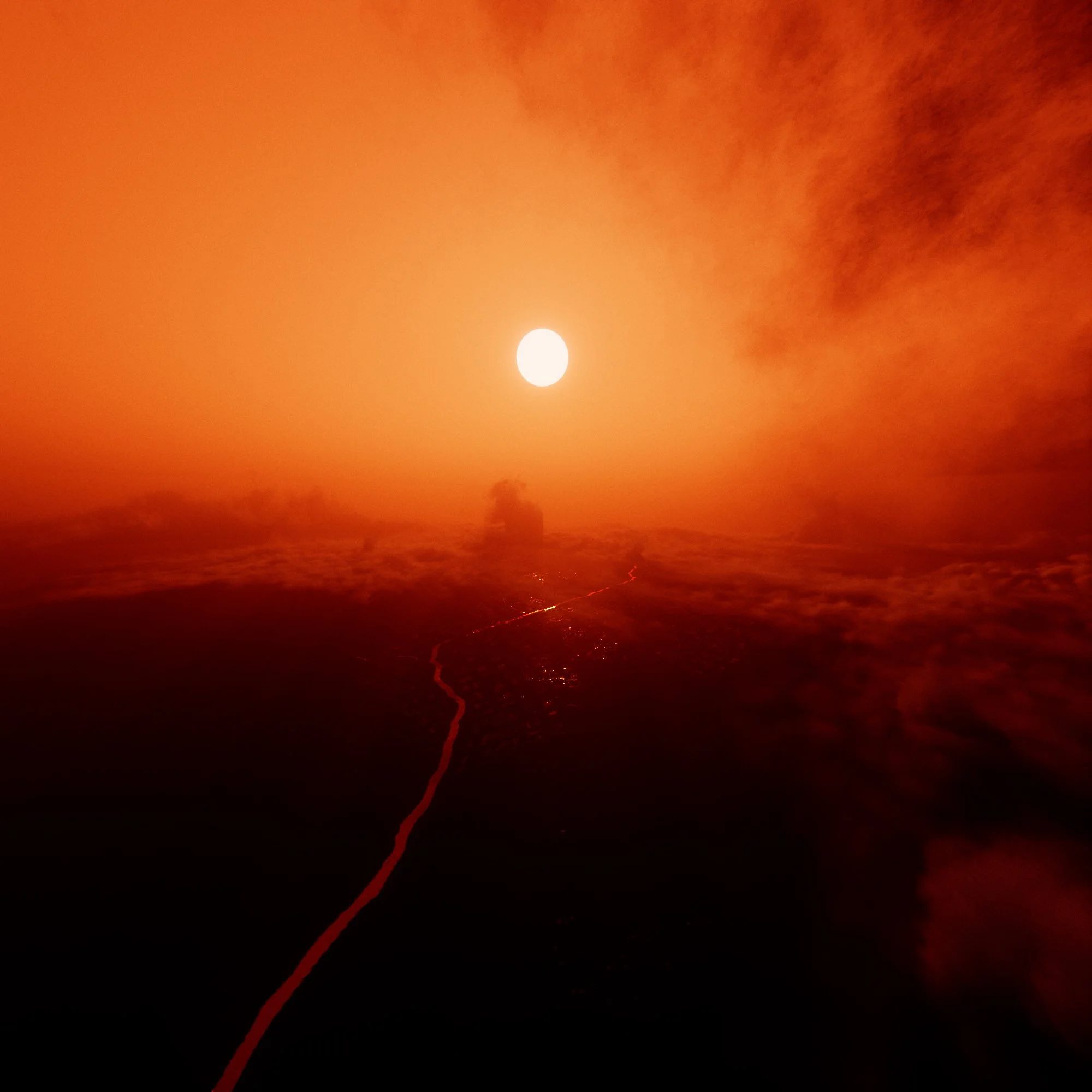
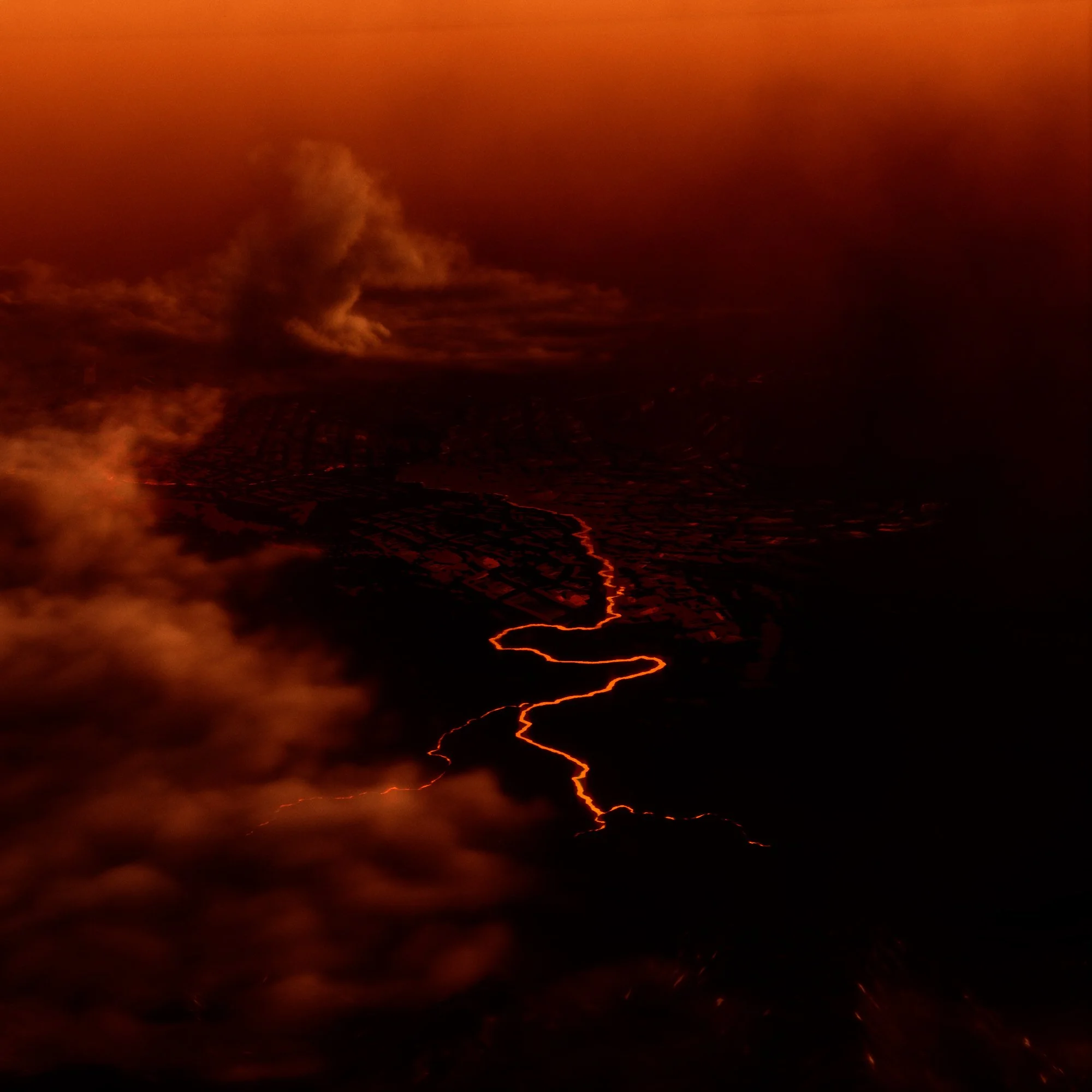
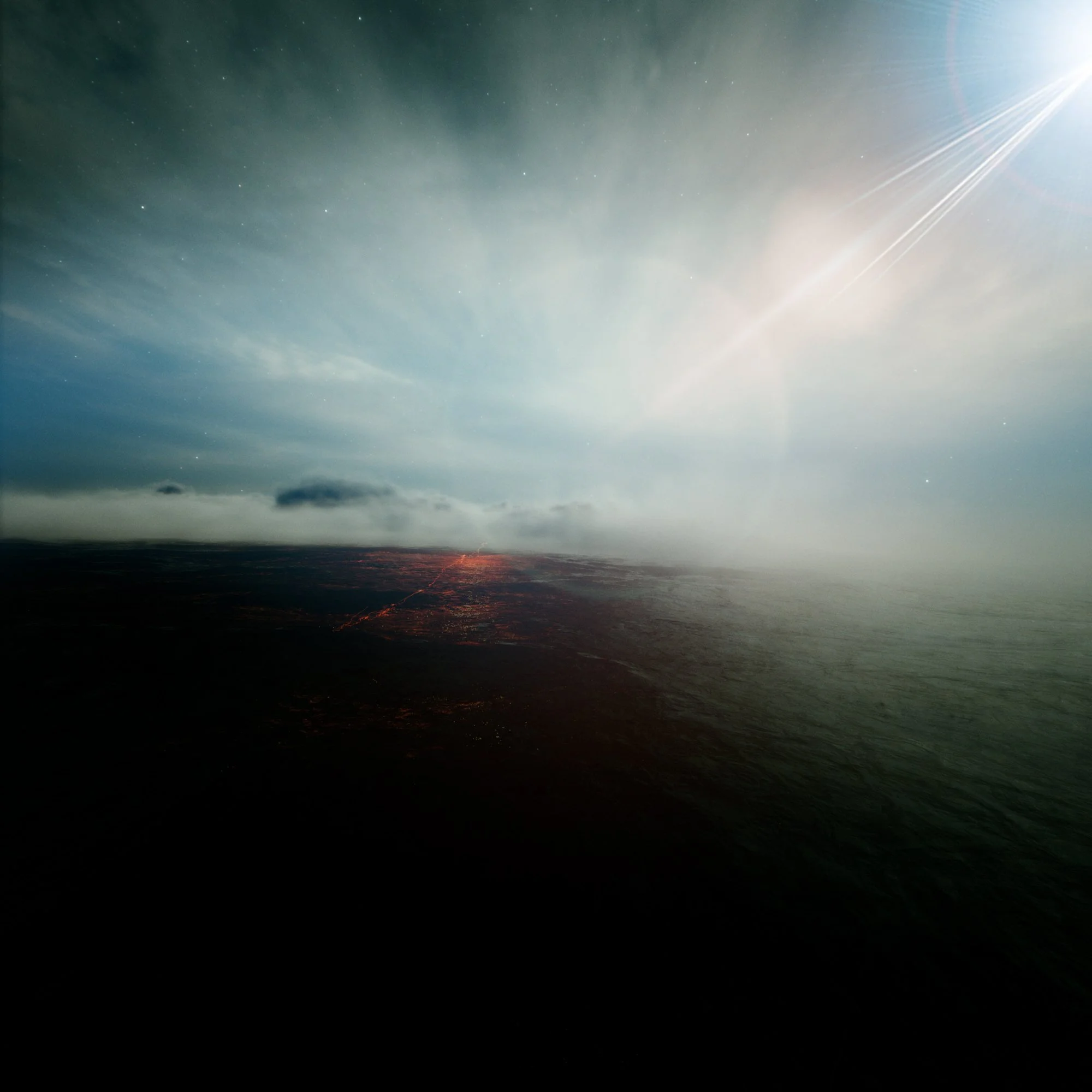
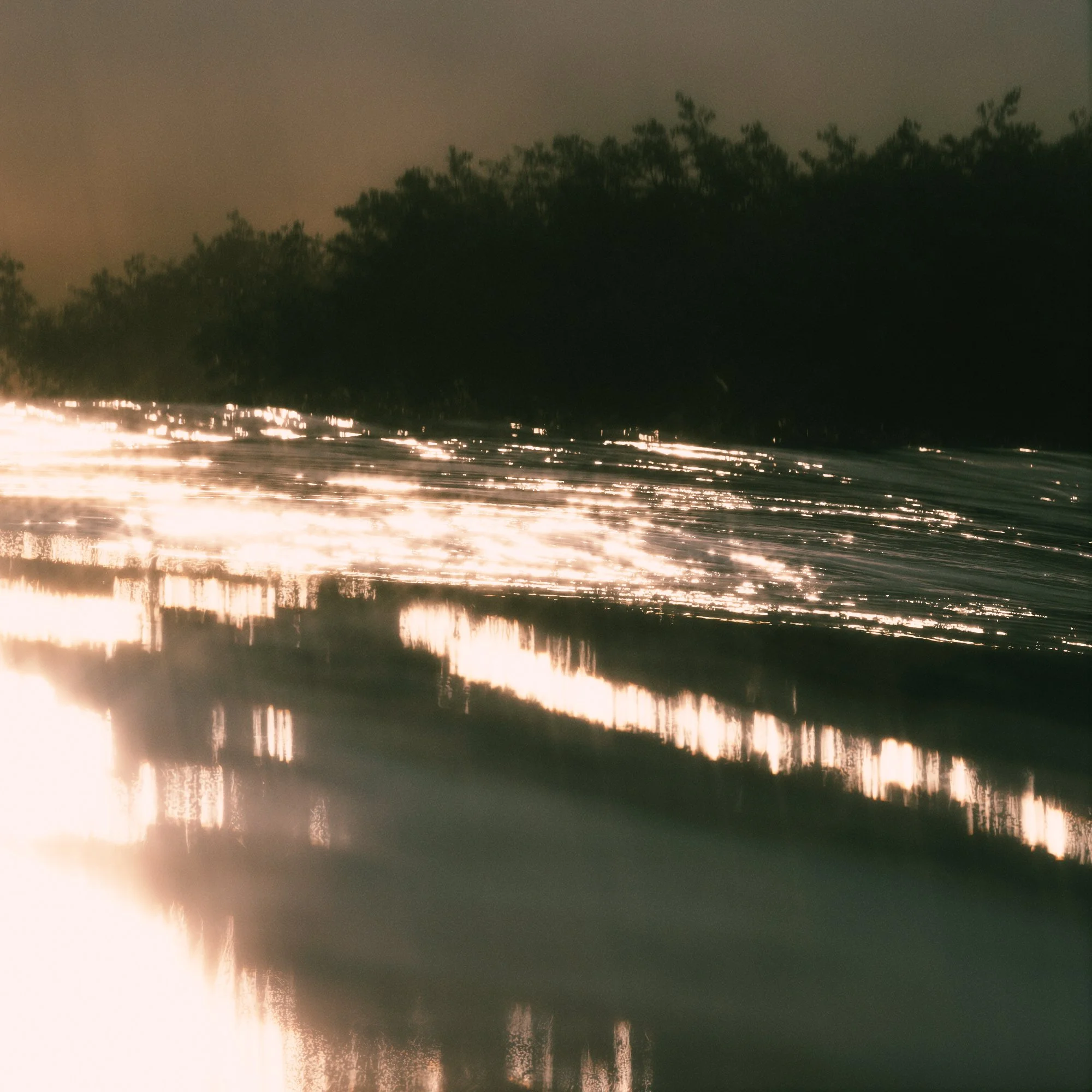
The Sphere's 360° canvas leant itself to our cinematic approach: no close-ups, instead expansive worlds the audience could fly through. Crimson badlands stretching to impossible horizons. Graphic beaches, colorful desert scapes. Crystalline lakes reflecting skies that shift from storm to serenity.
I began each song by establishing complete environments, reducing the technical burden of maintaining detailed foreground elements while maximizing immersive impact. The audience doesn't watch the film; they inhabit it like a character in the story, surrounded on all sides by Zac's emotional terrain.
EFFICIENCY THROUGH REUSE
I built a core asset library: VDBs, mountain terrains, tree models, and a single water shader, used across every scene. By adjusting the sun’s position and swapping 24K HDR skies, the same static elements evoked entirely different emotions. Desert terrain transformed from oppressive midday heat to golden-hour nostalgia, the same rocks now warm and welcoming, shadows soft and long.
The result: sweeping camera movements through fully realized emotional terrain that surrounded the audience, transforming the concert into a mythical journey where landscape becomes character, atmosphere becomes emotion.







LIGHTING & ATMOSPHERE
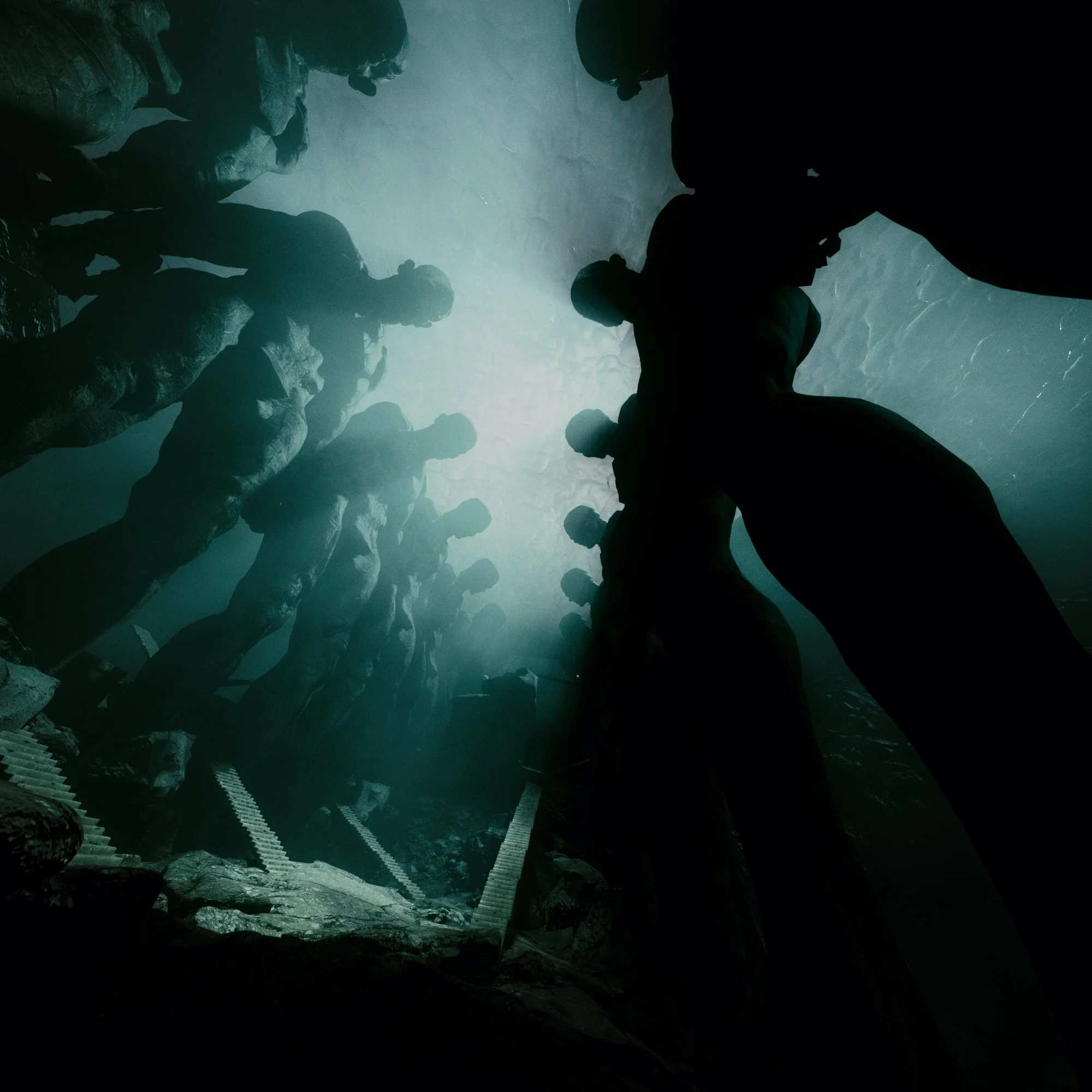
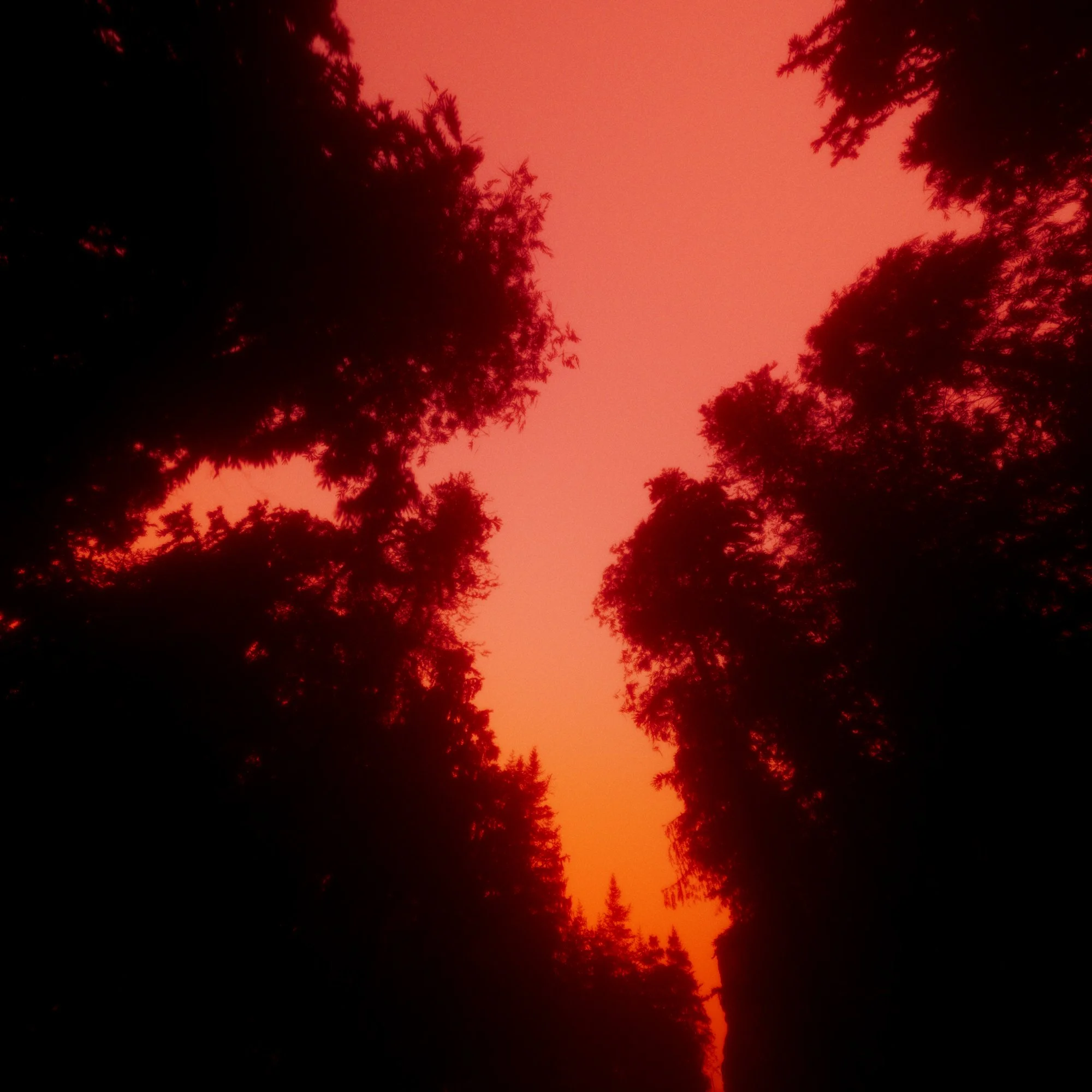
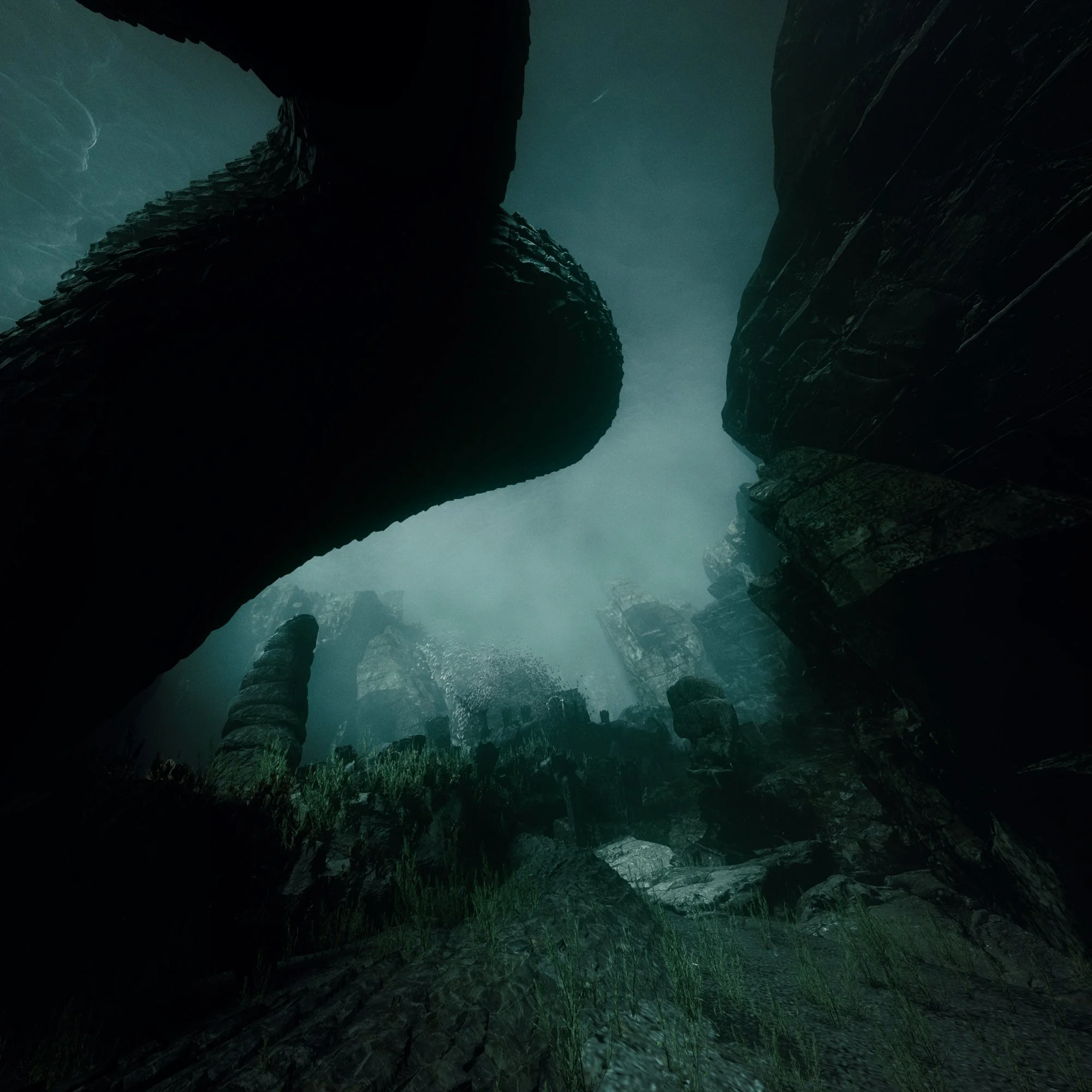
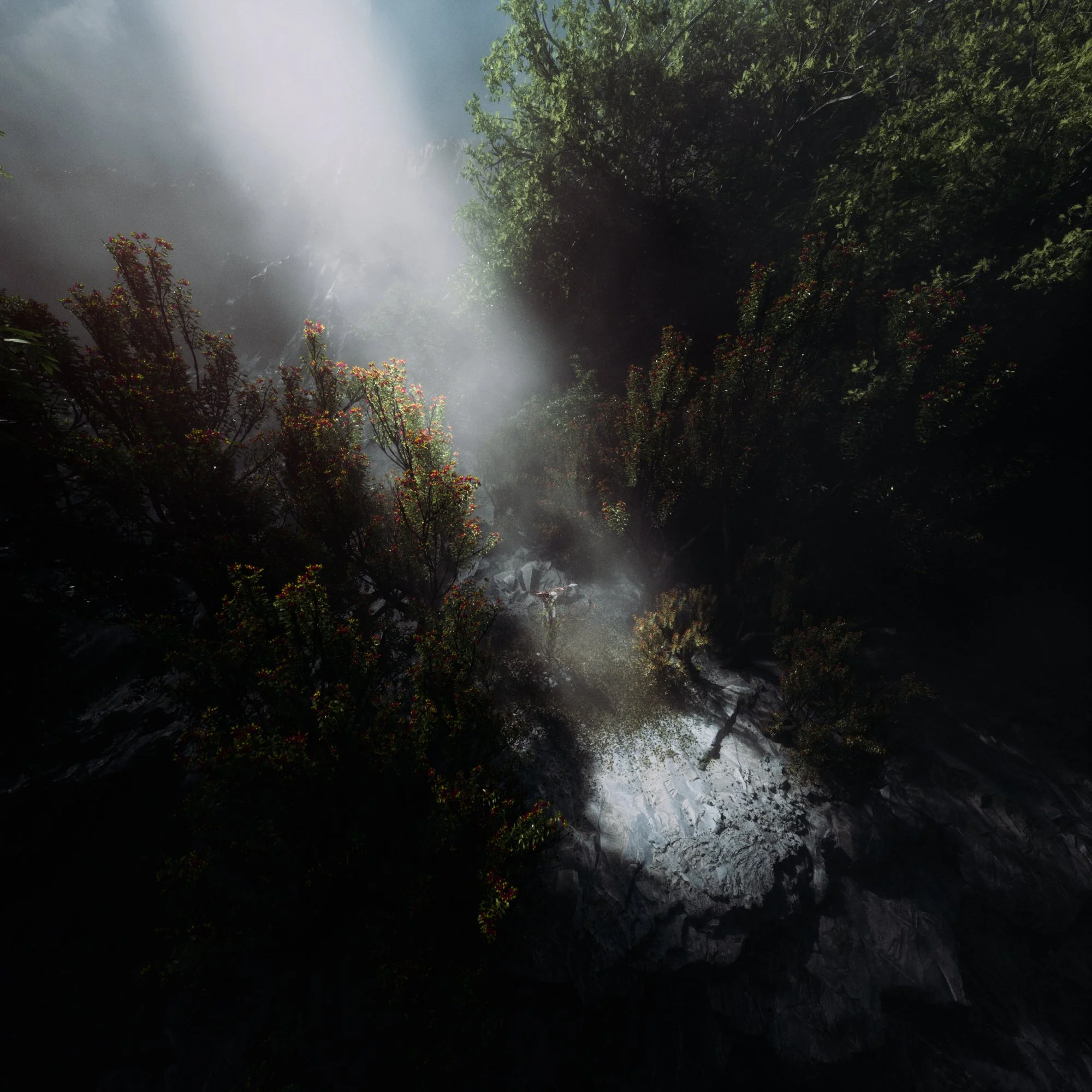
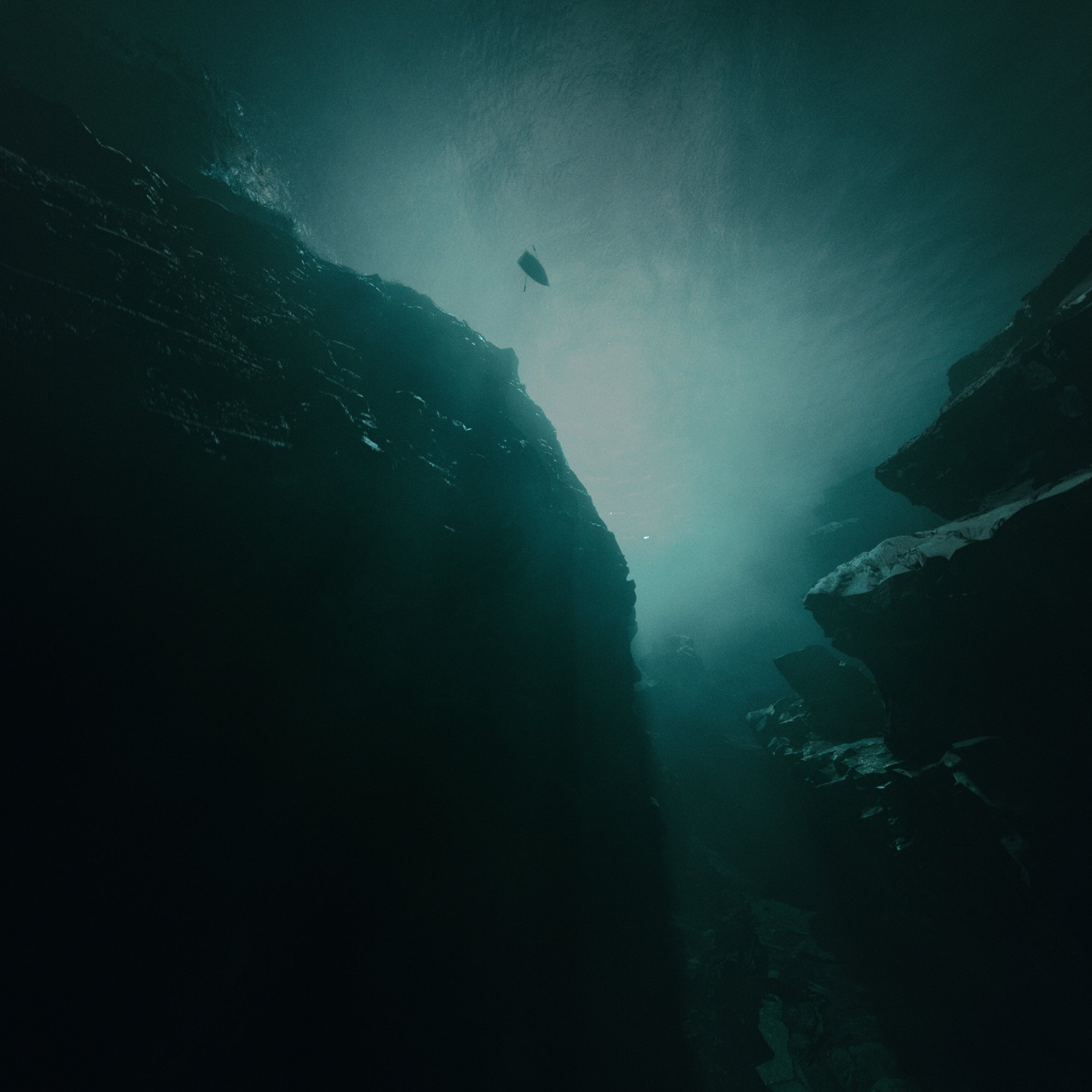
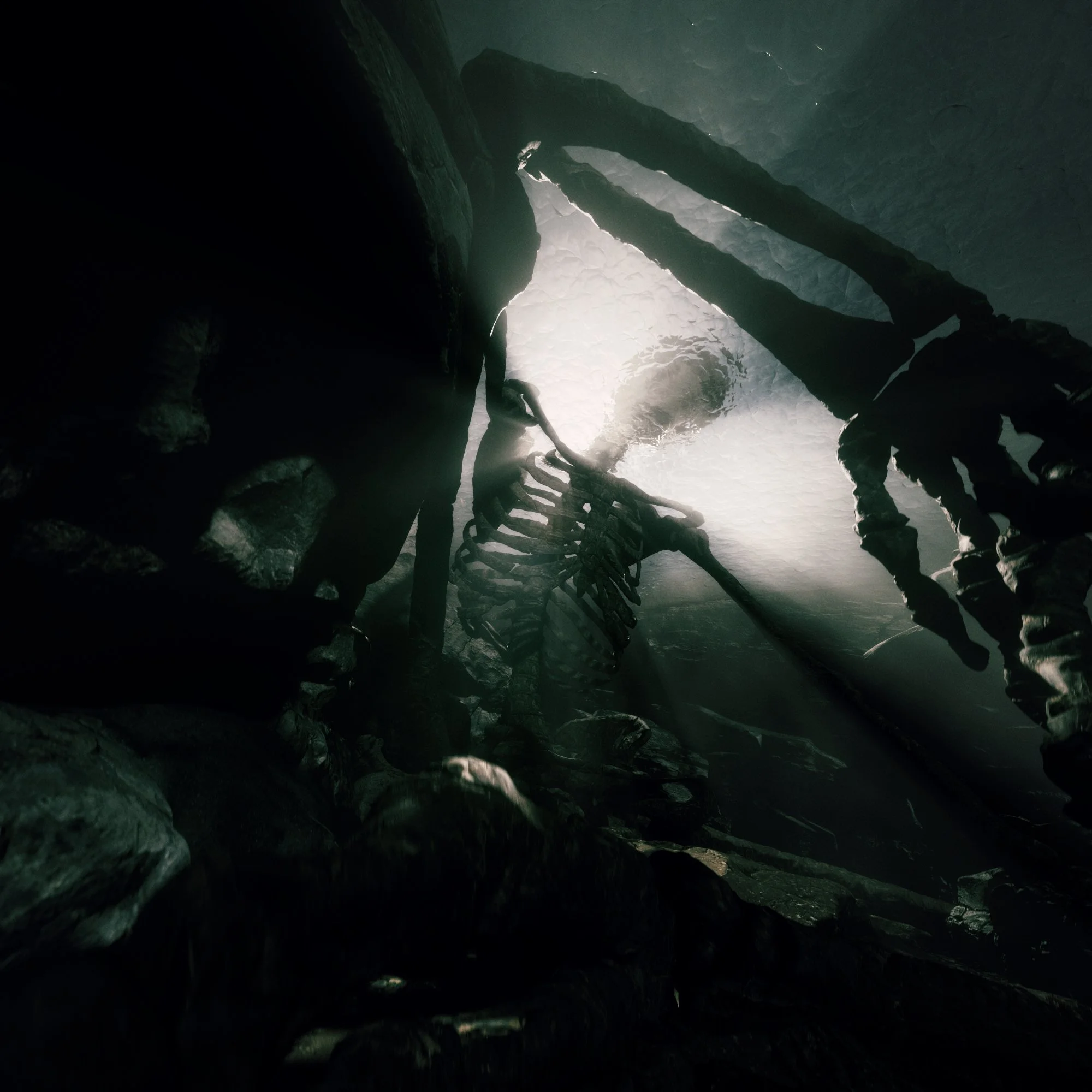
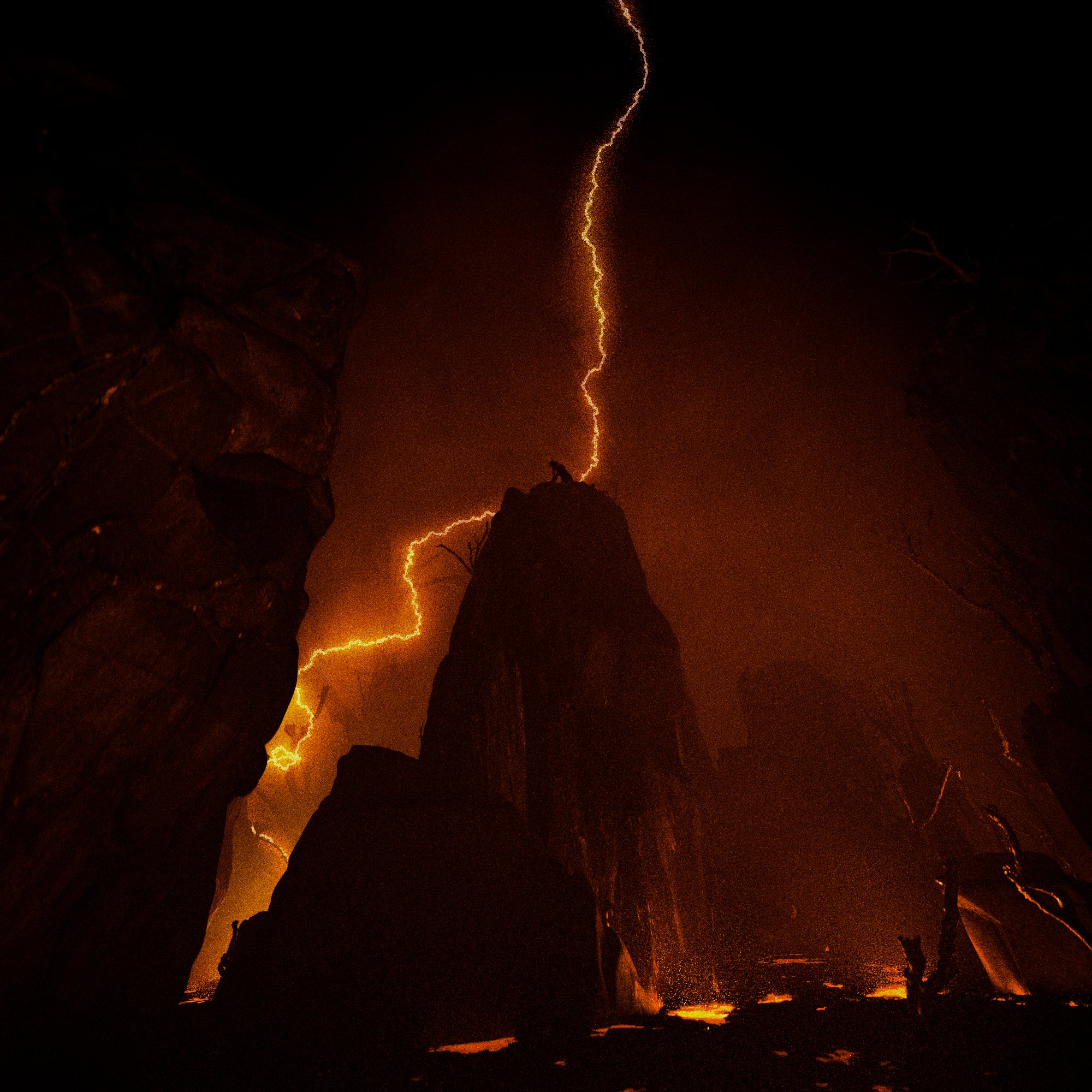
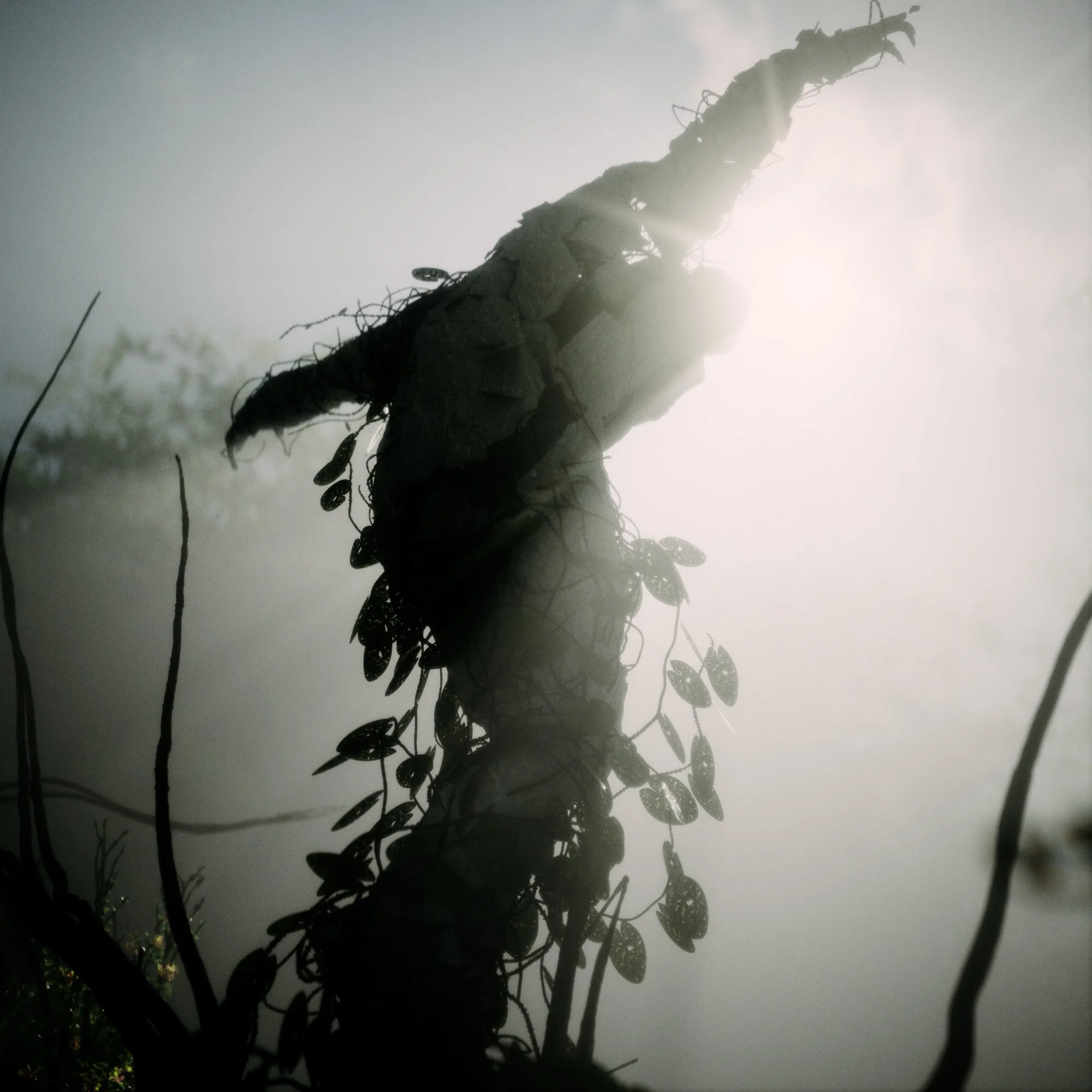
SILHOUETTES CUT OUT OF LIGHT
FINDING GRACE IN NEGATIVE SPACE
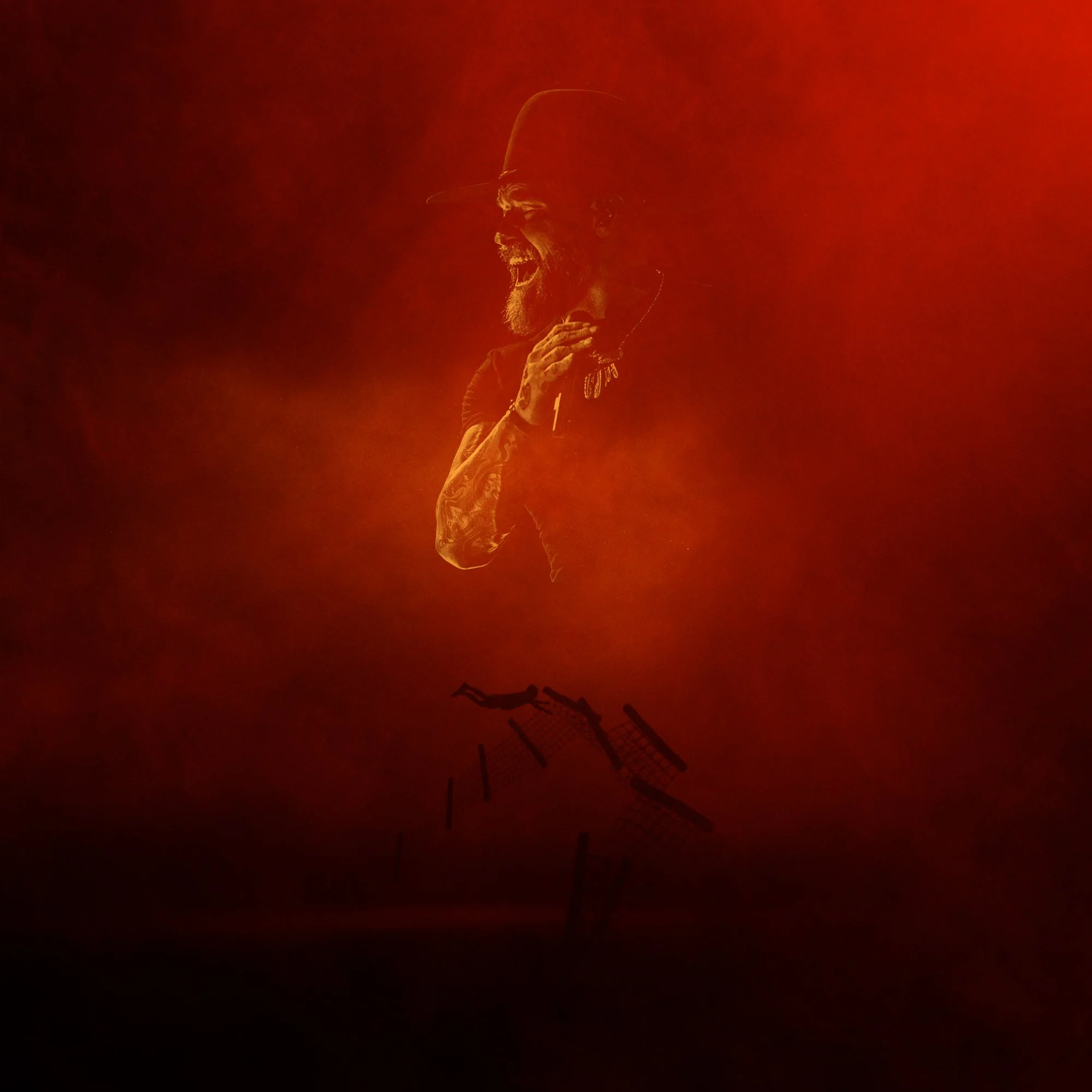
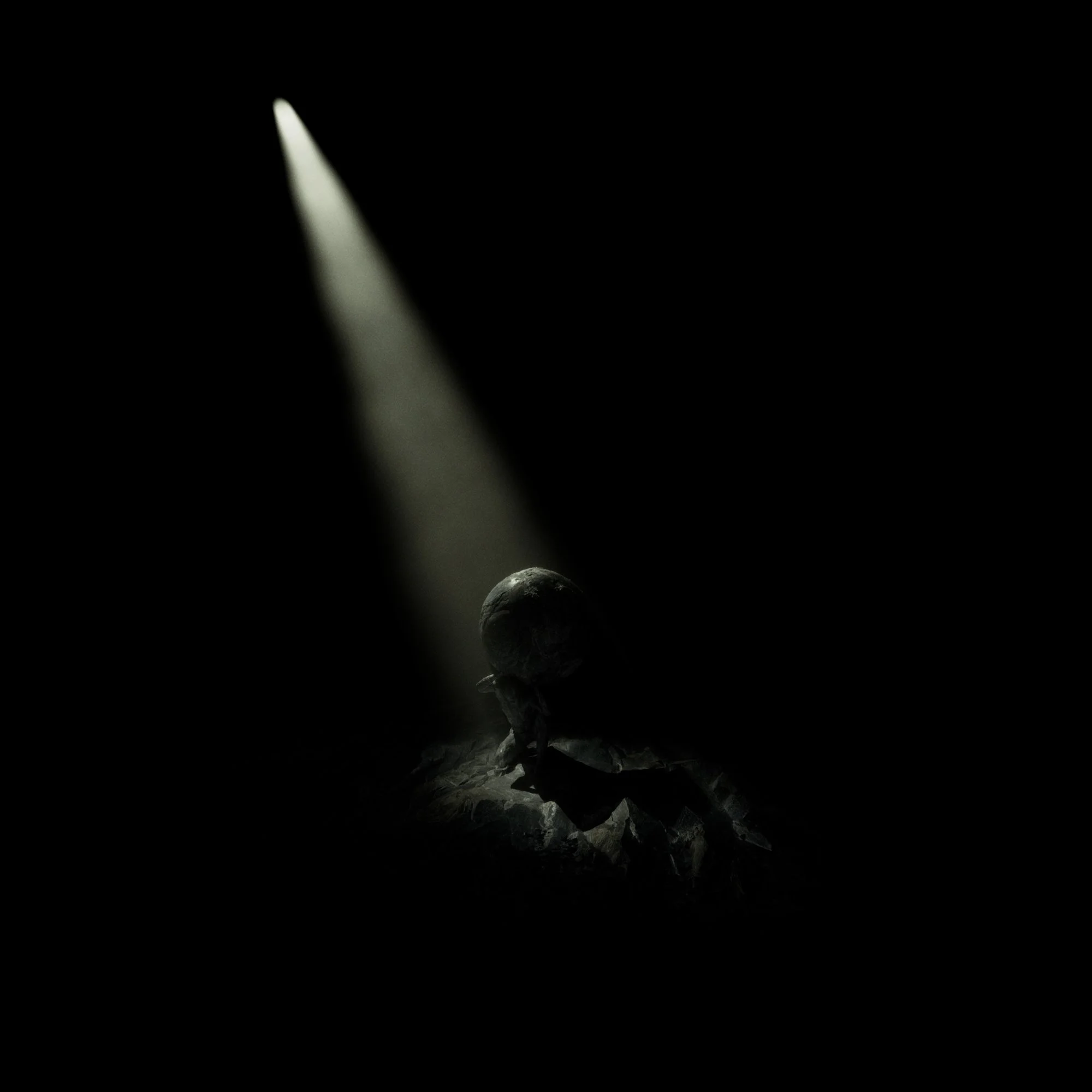
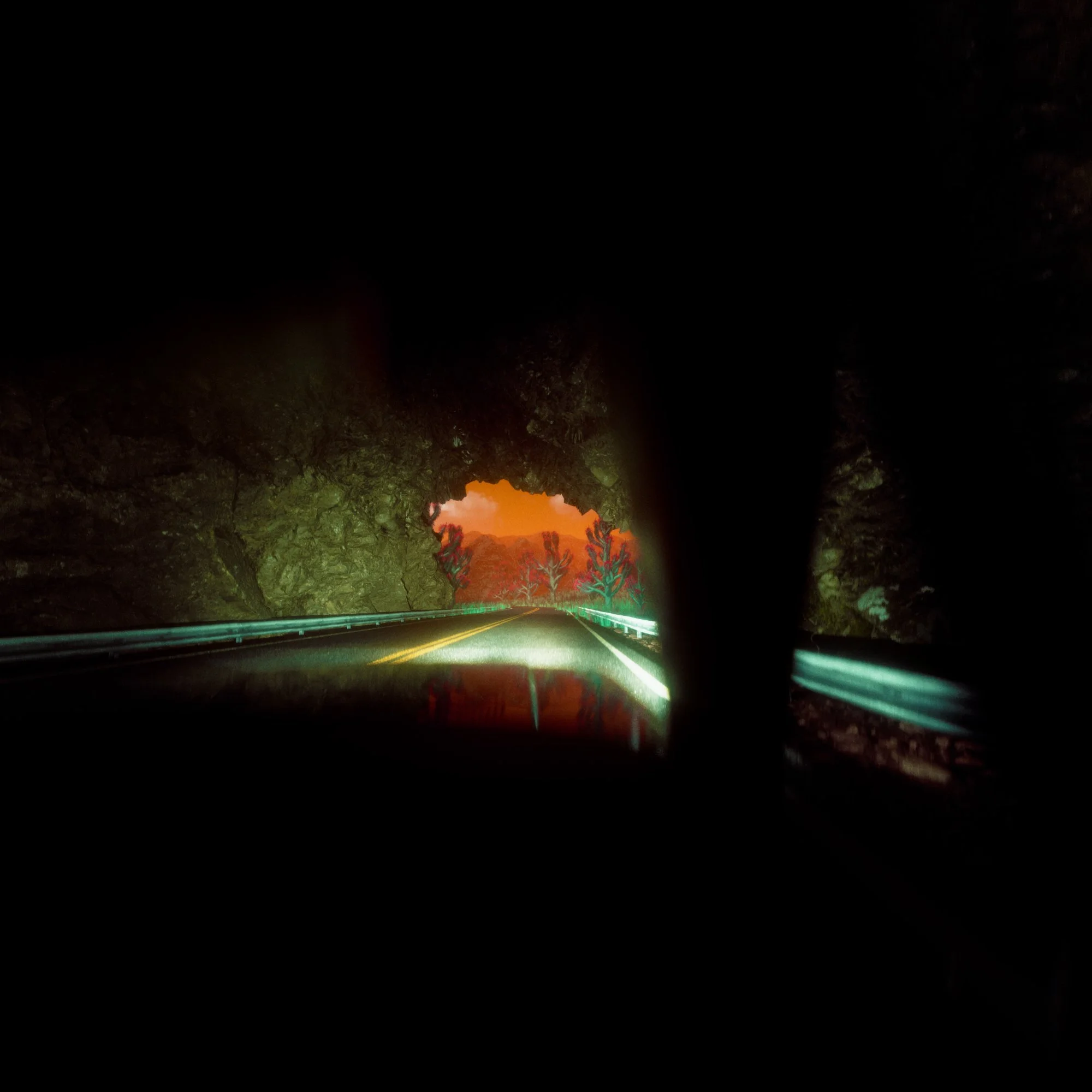
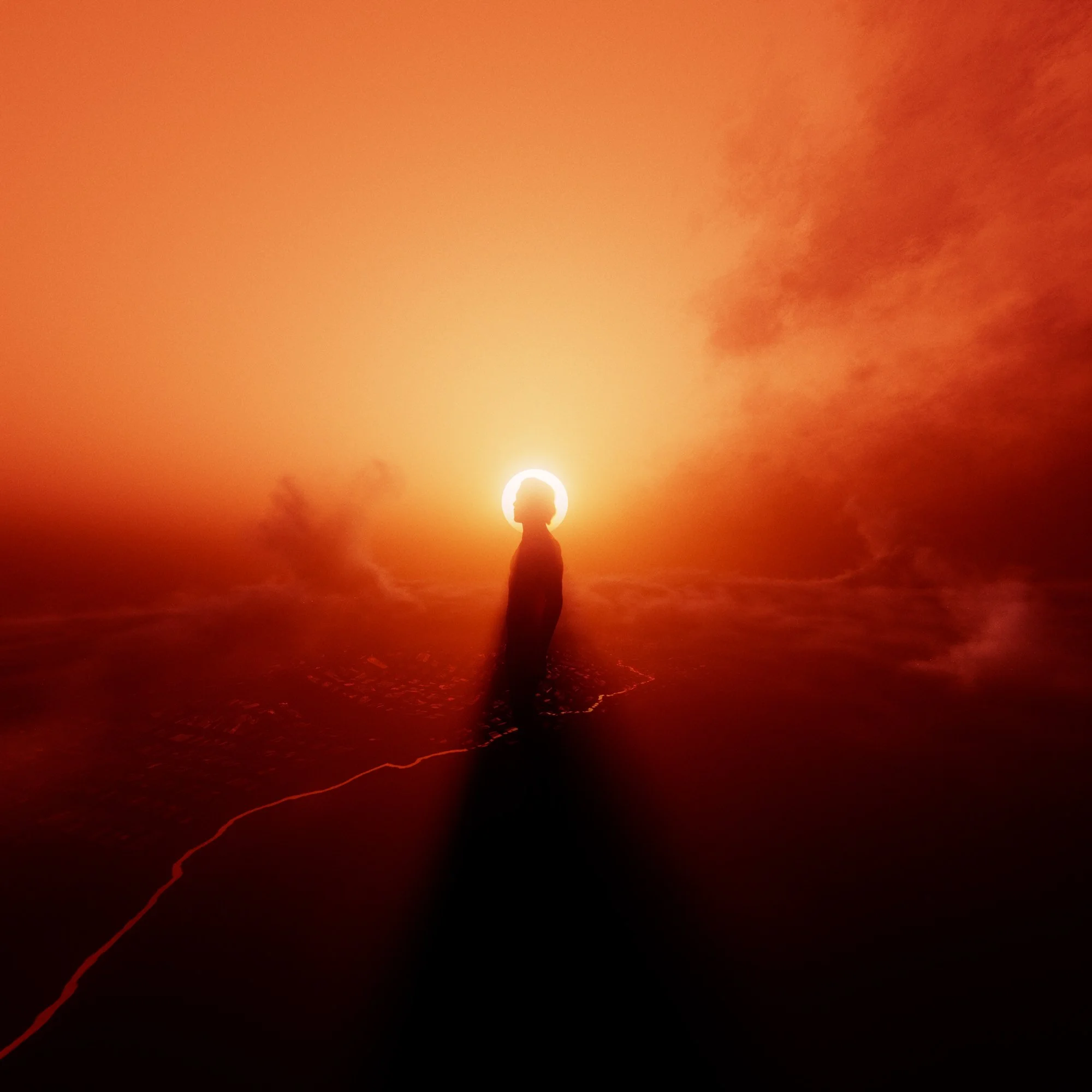
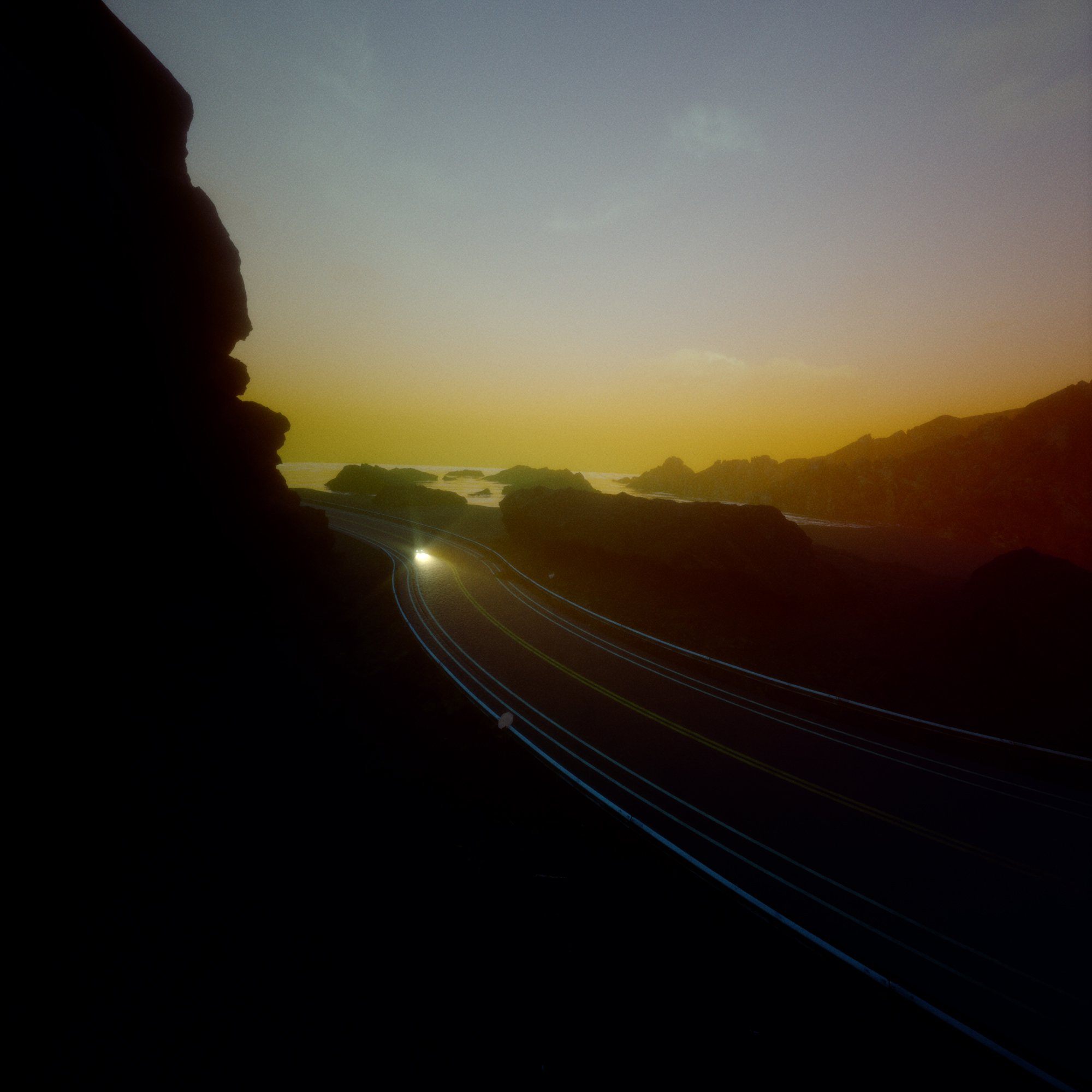
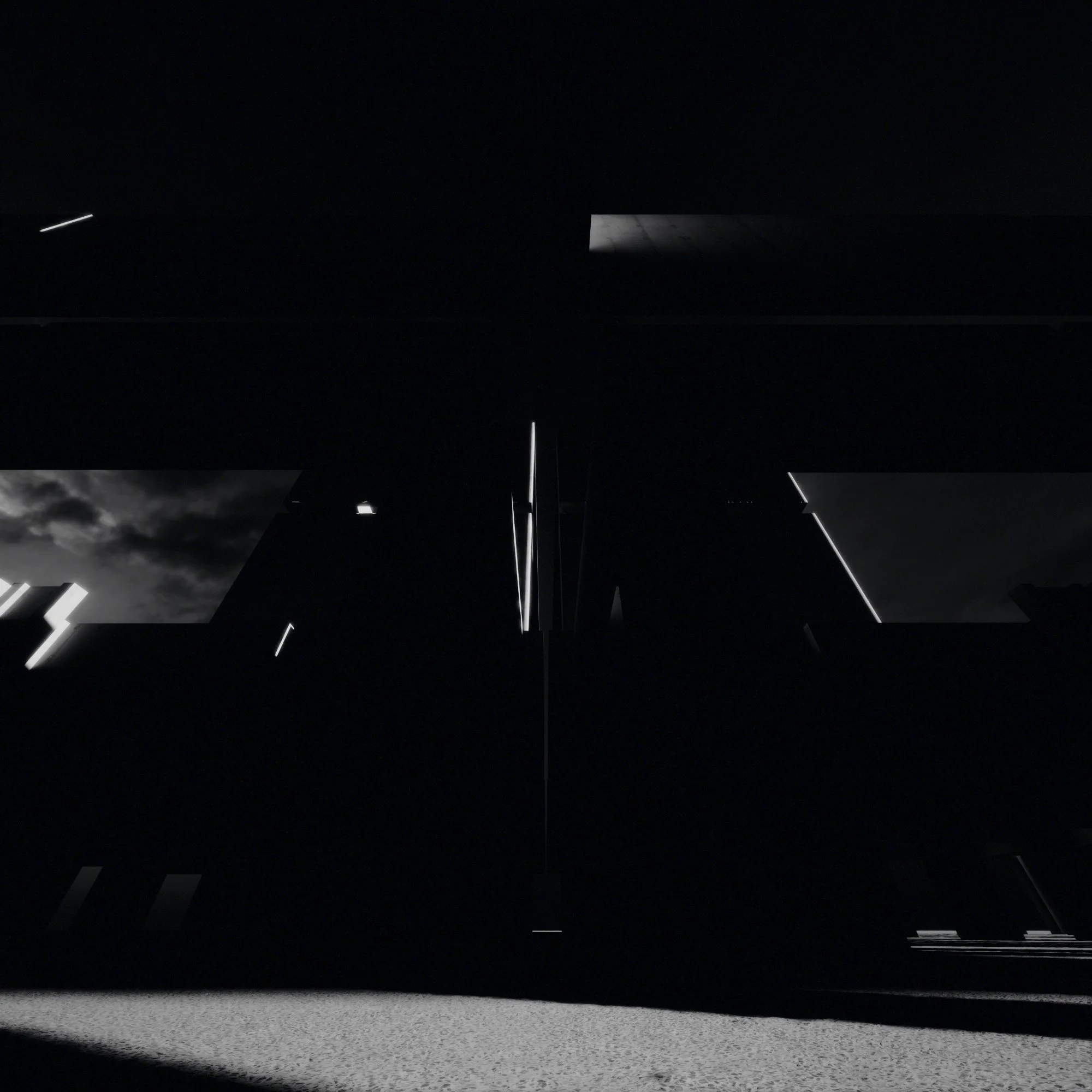
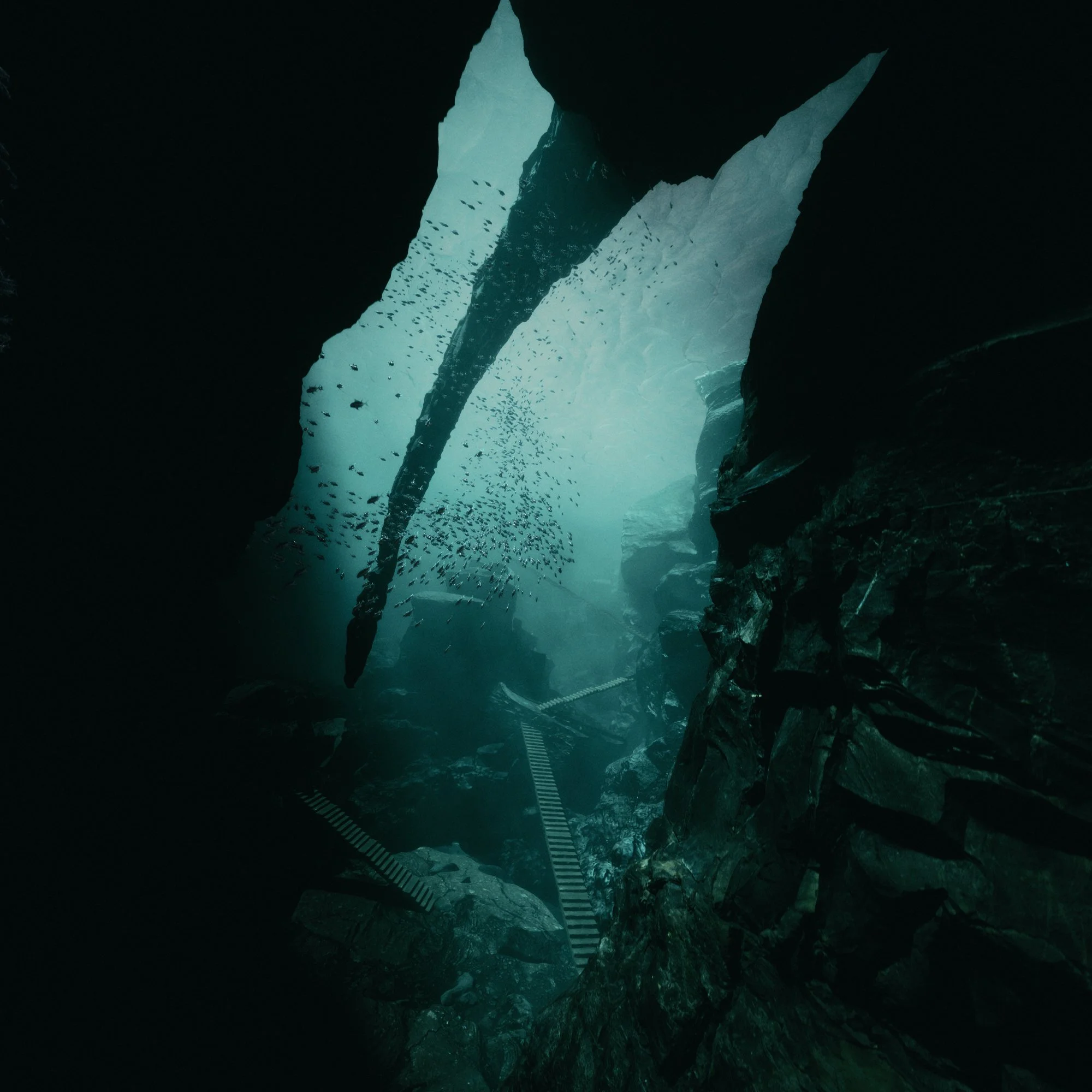
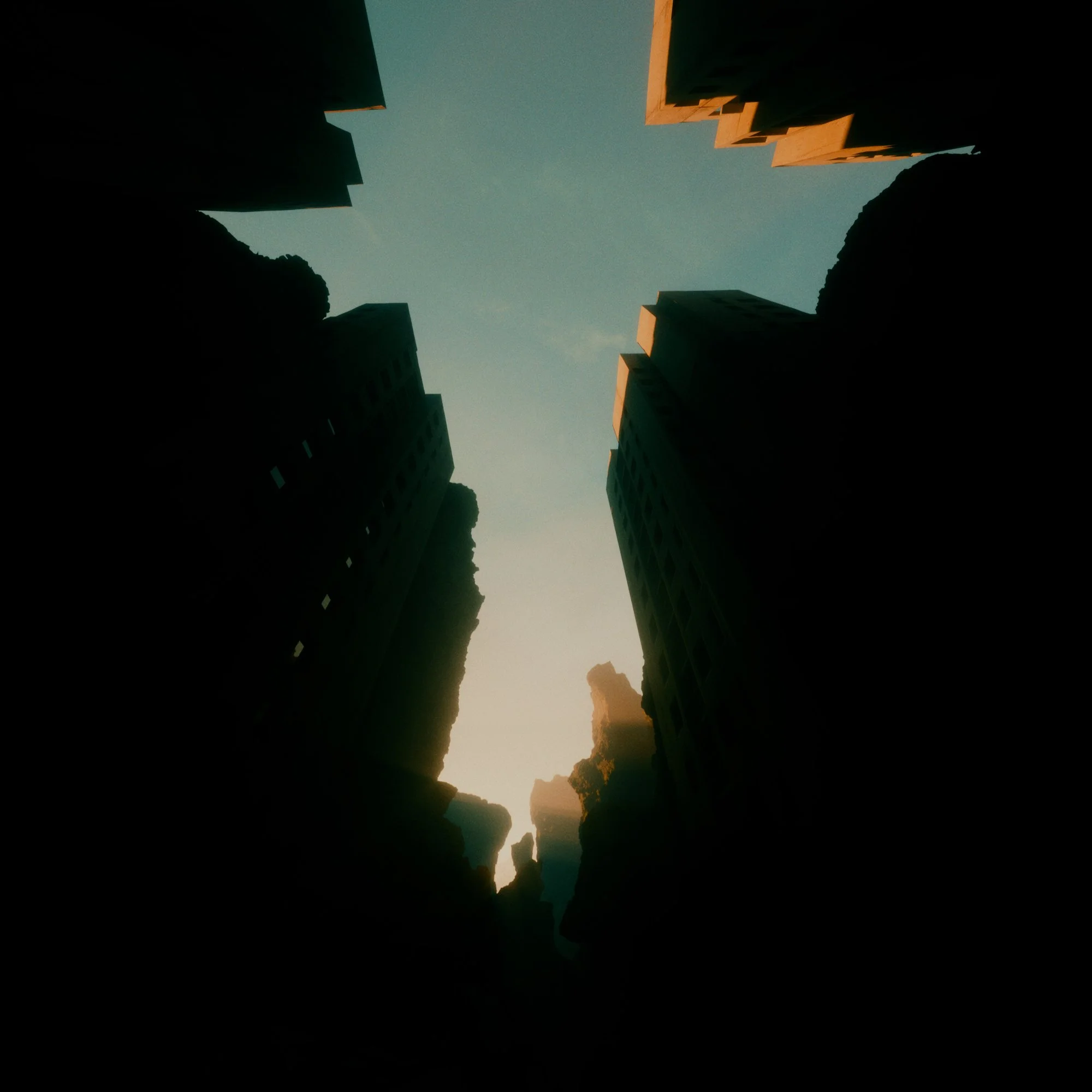
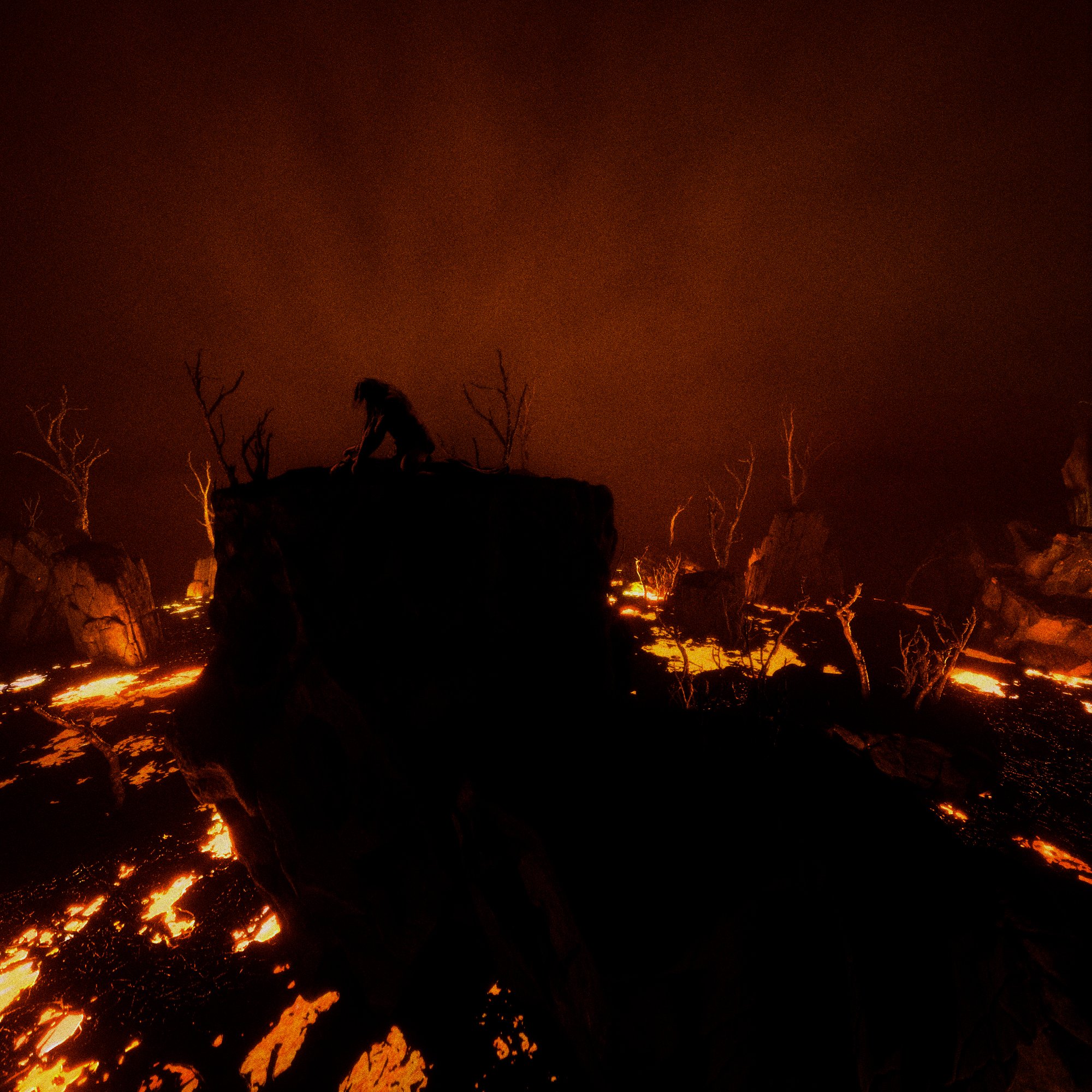
Large areas of darkness created focal points while reducing massive detail demands across the Sphere's 18K resolution. But more than a technical solution, this became visual poetry, backlighting figures against fire and atmospheric effects established continuity between moments of violence and moments of grace.
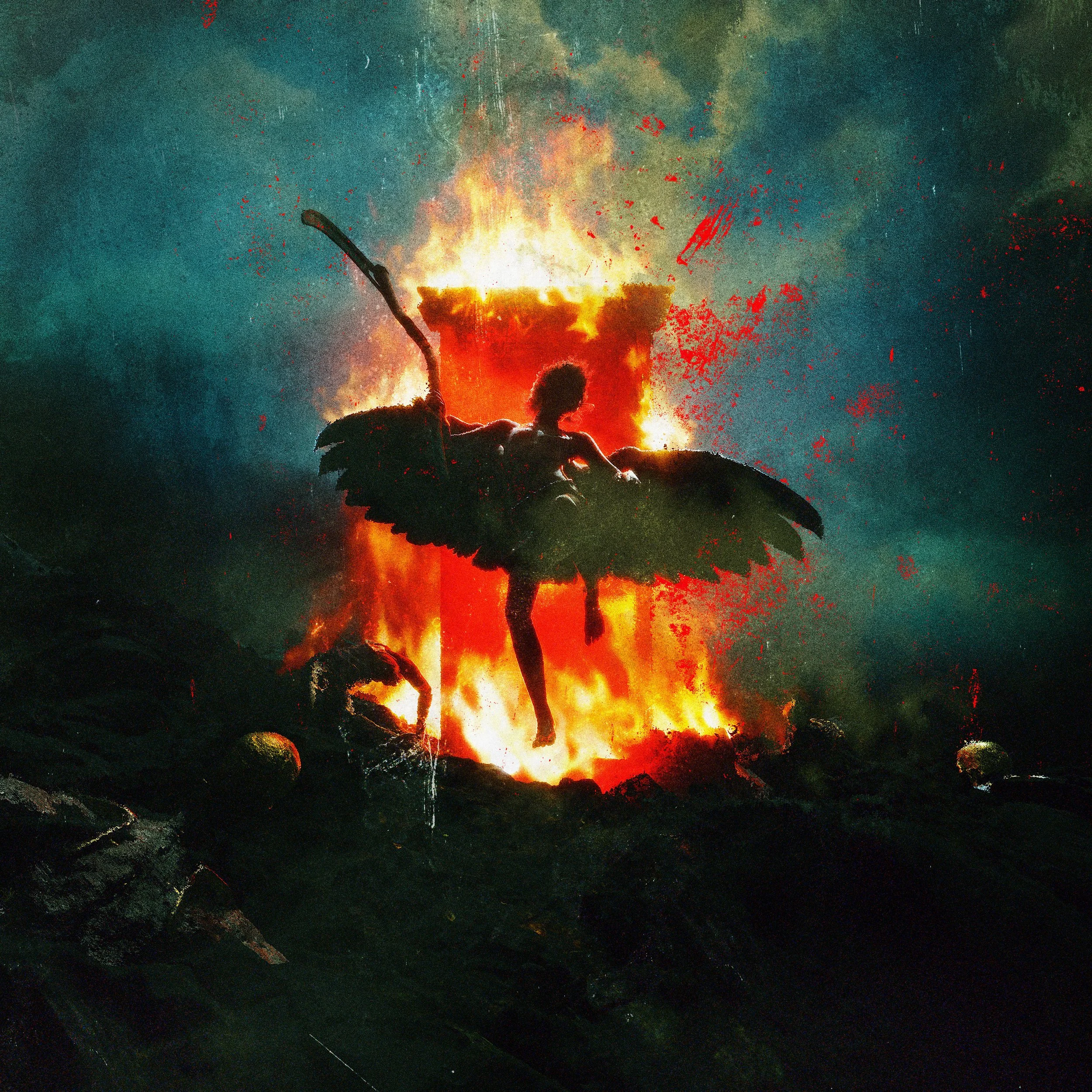
Golden skeletons rimlit against crimson skies, their forms reduced to iconic shapes. The boy's transformation silhouetted by flame, his small figure becoming something larger, something angelic. This approach dramatically simplified complex forms into compositions that felt timeless, archetypal.
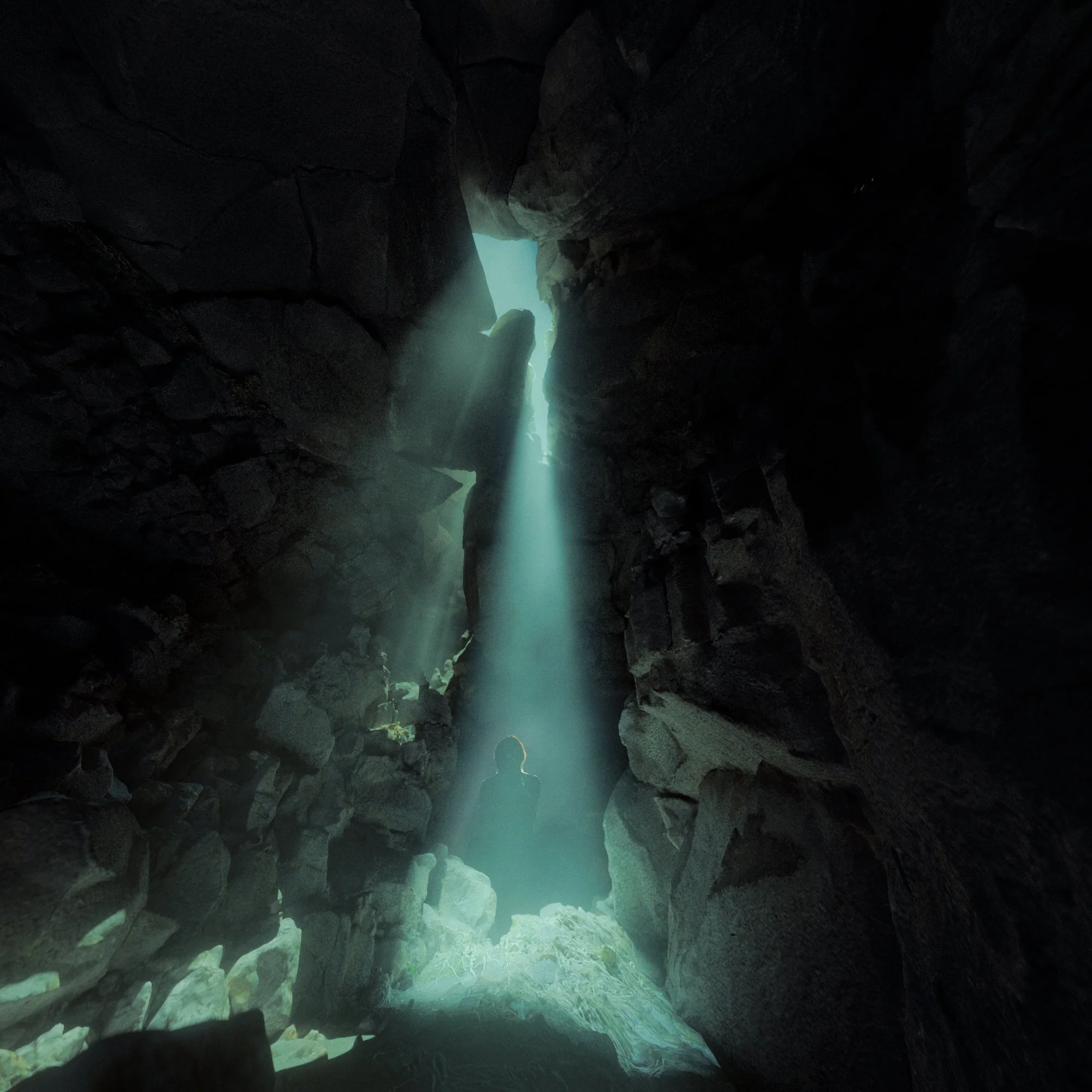
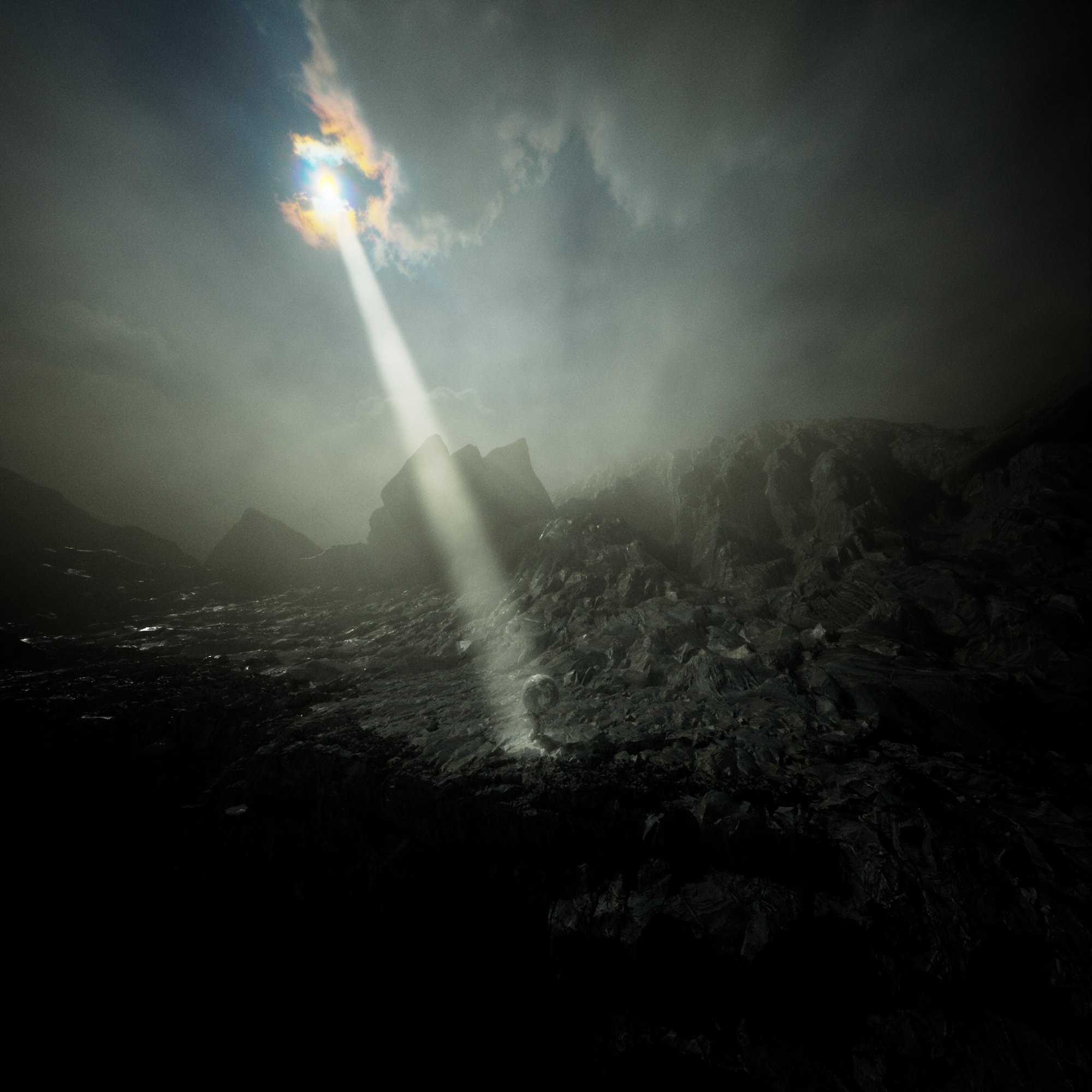
Strategic black shapes functioned as negative space, hiding technical limitations in shadow while creating breathing room for the eye. God rays create dimension, spotlights cutting through the atmosphere like divine attention, illuminating what needs to be seen, leaving the rest to mystery.
Silhouettes against light became signature techniques that unified diverse scenes, whether depicting industrial nightmares or ethereal cloud journeys.


TRANSITIONS
DOORS OF PERCEPTION
THE THRESHOLDS BETWEEN WORLDS
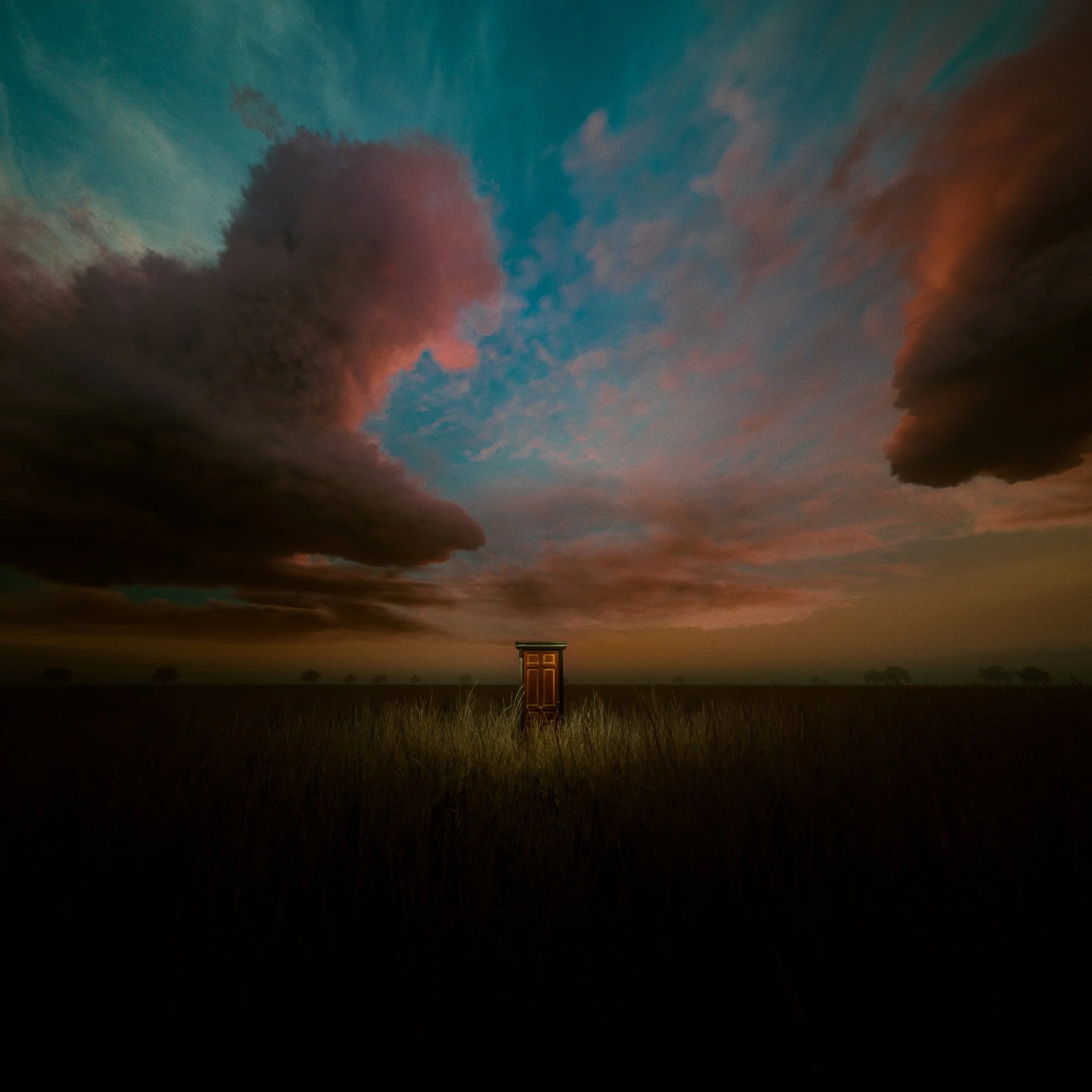
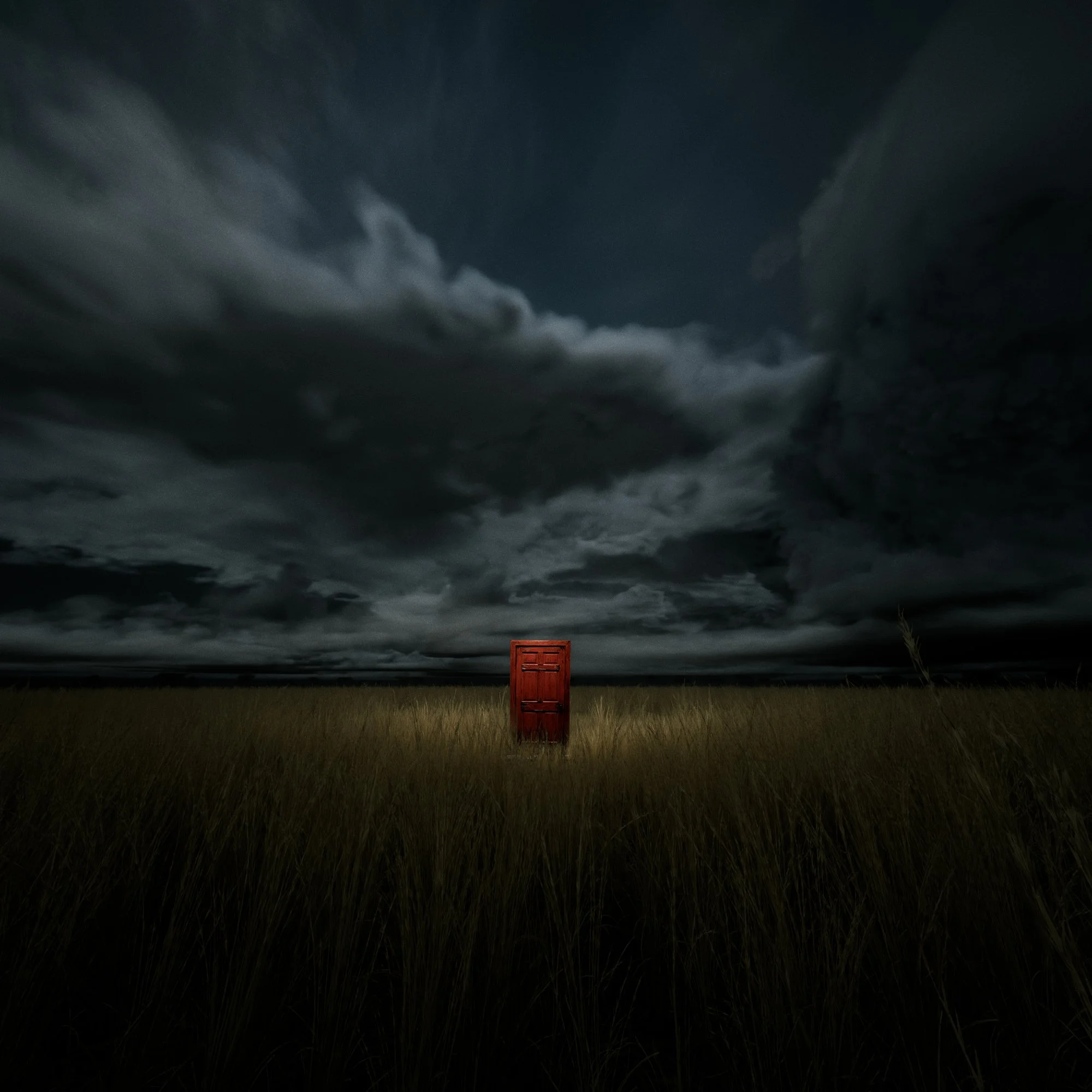
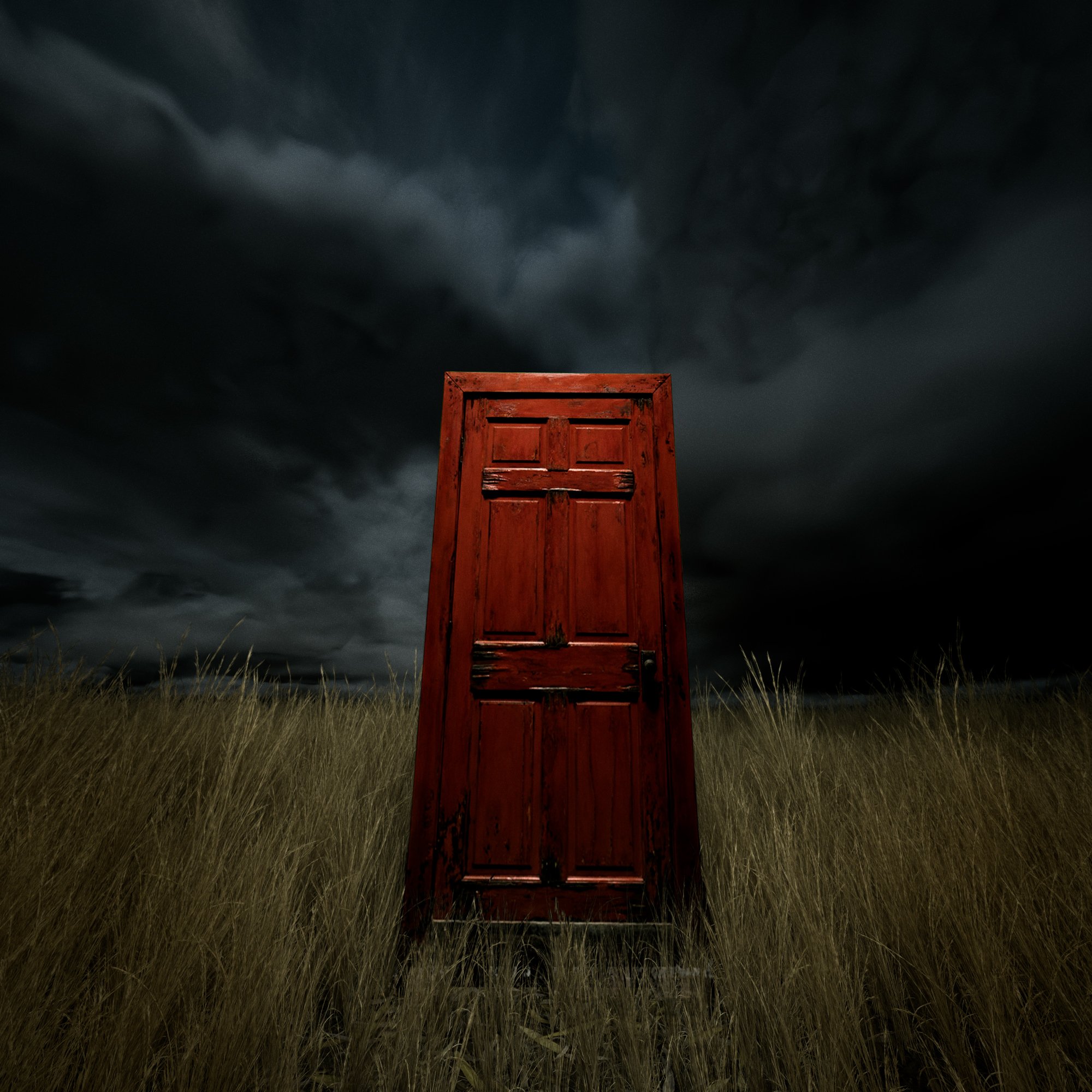
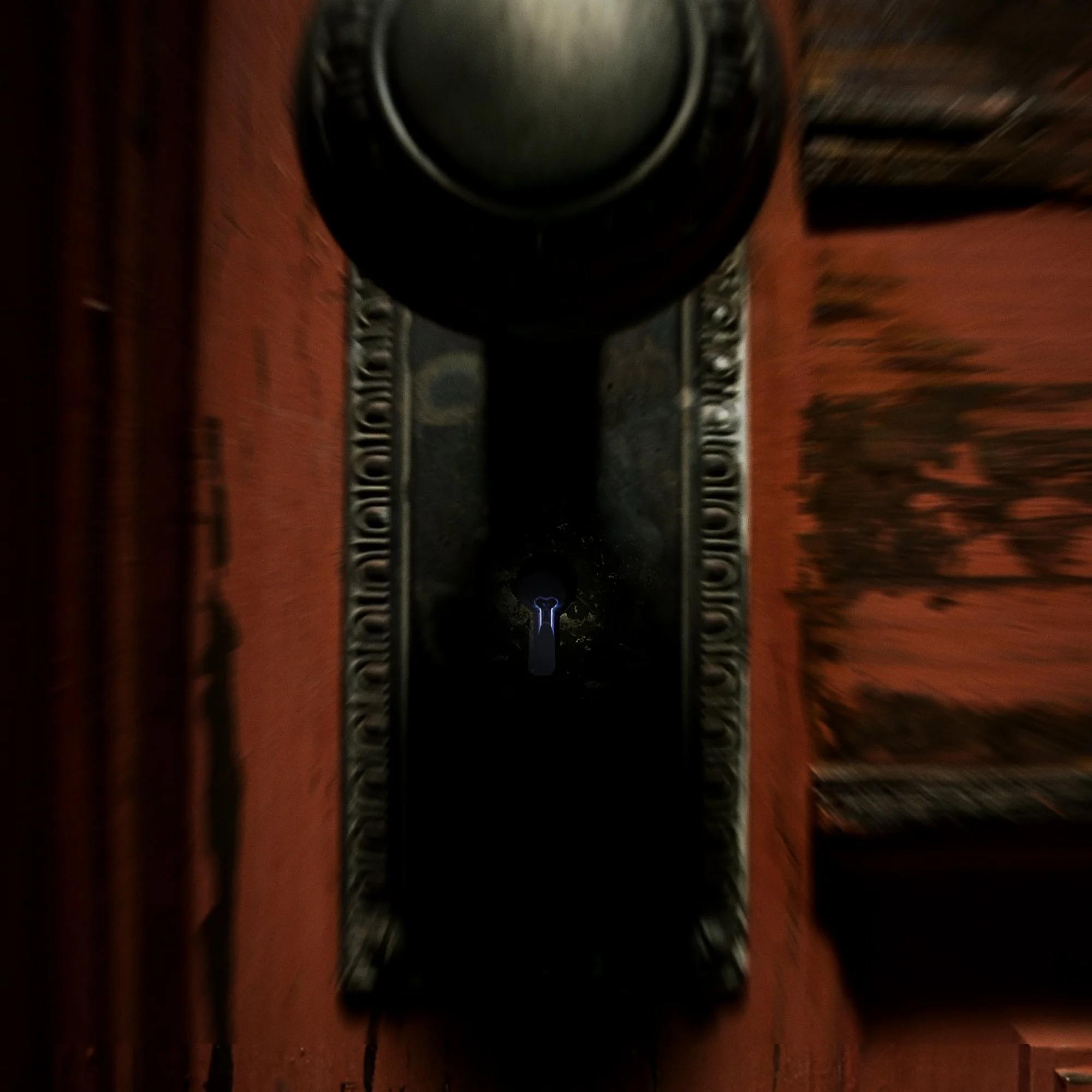
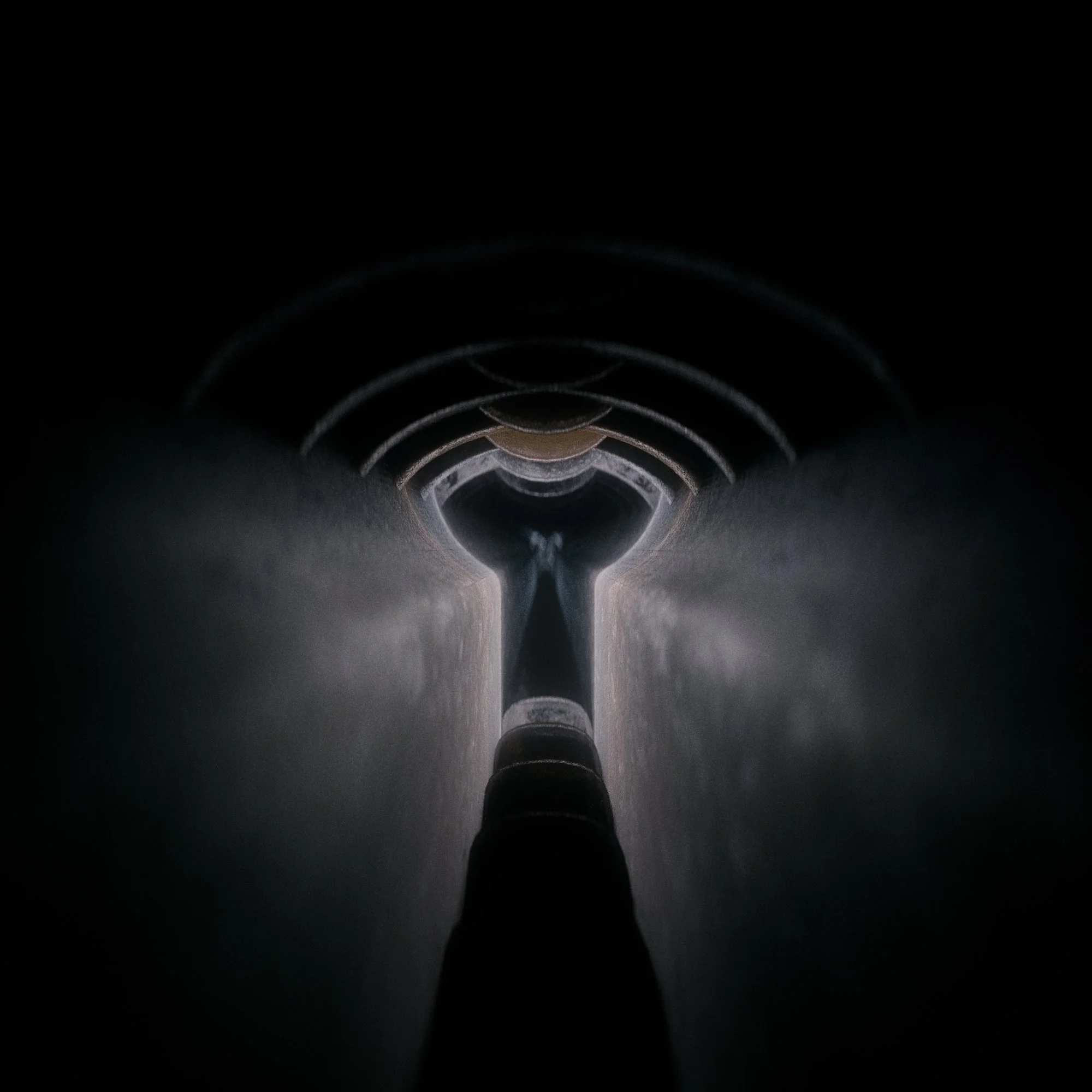
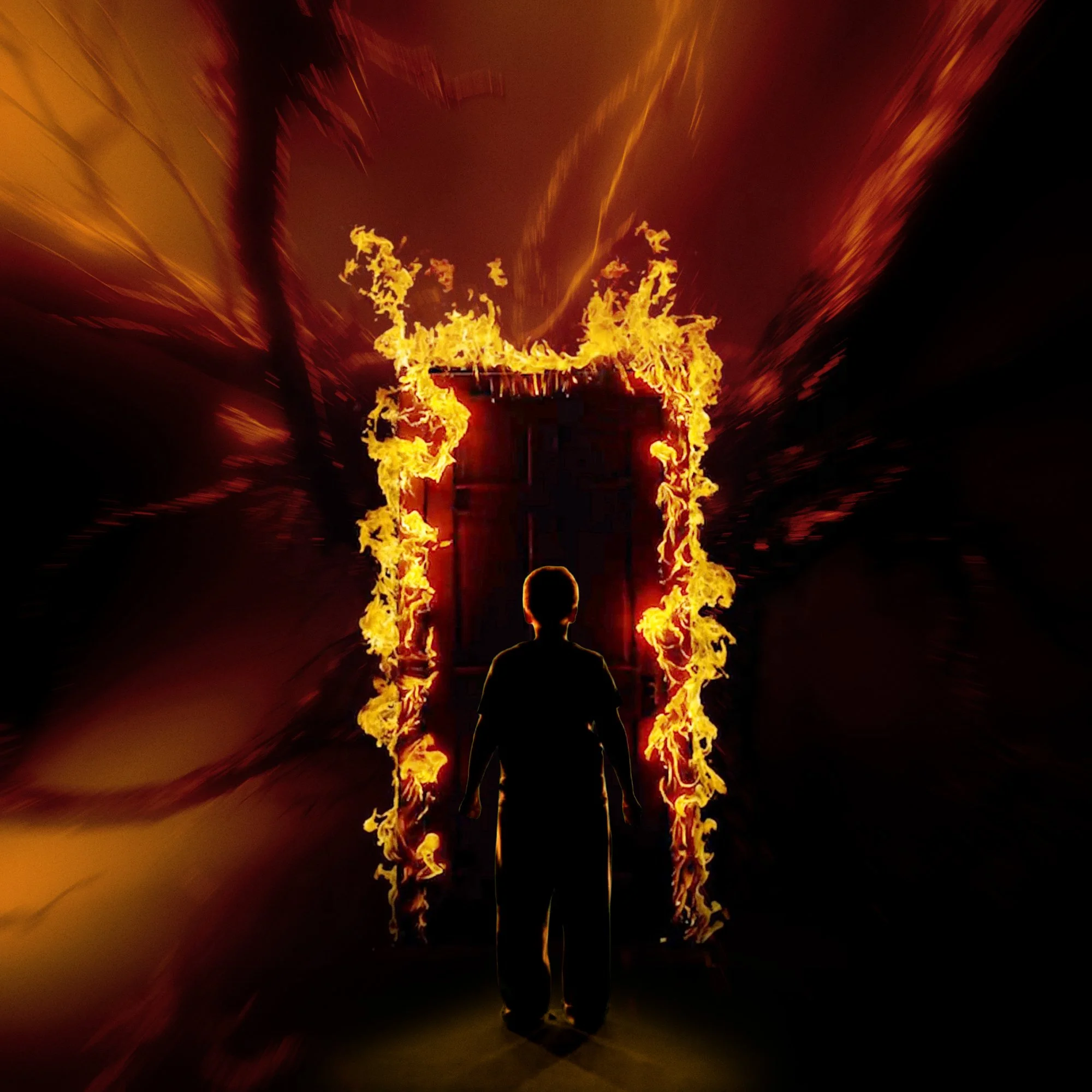
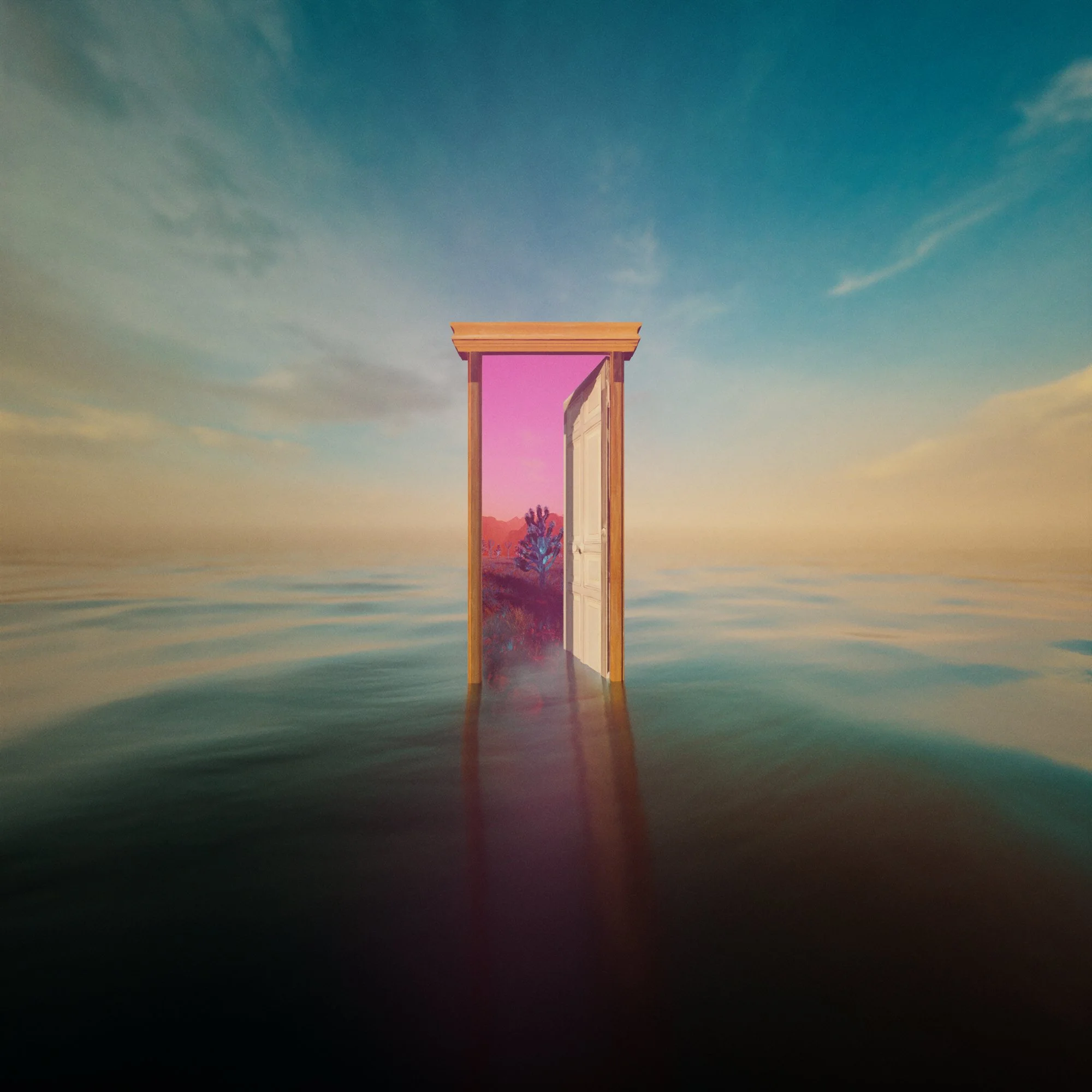
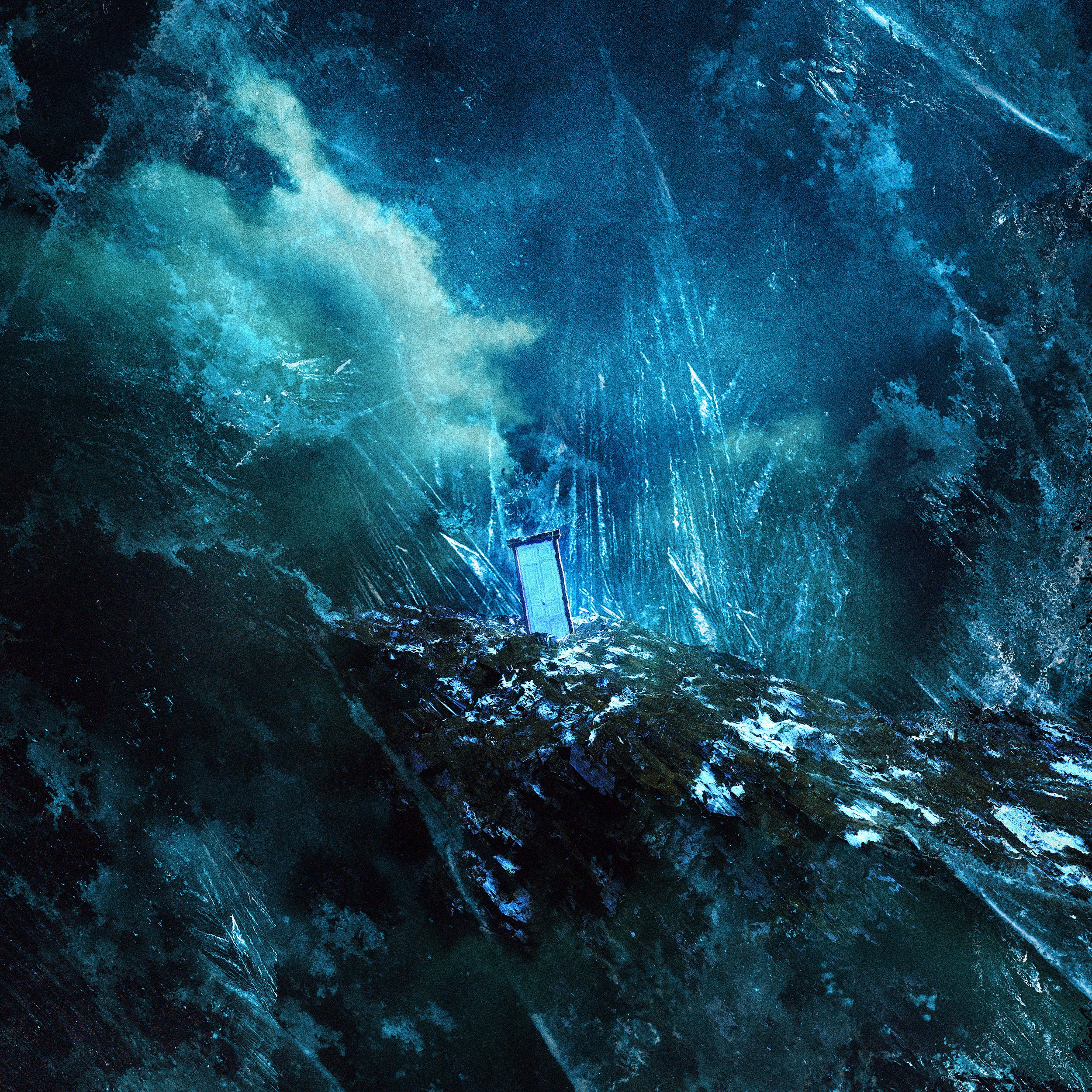
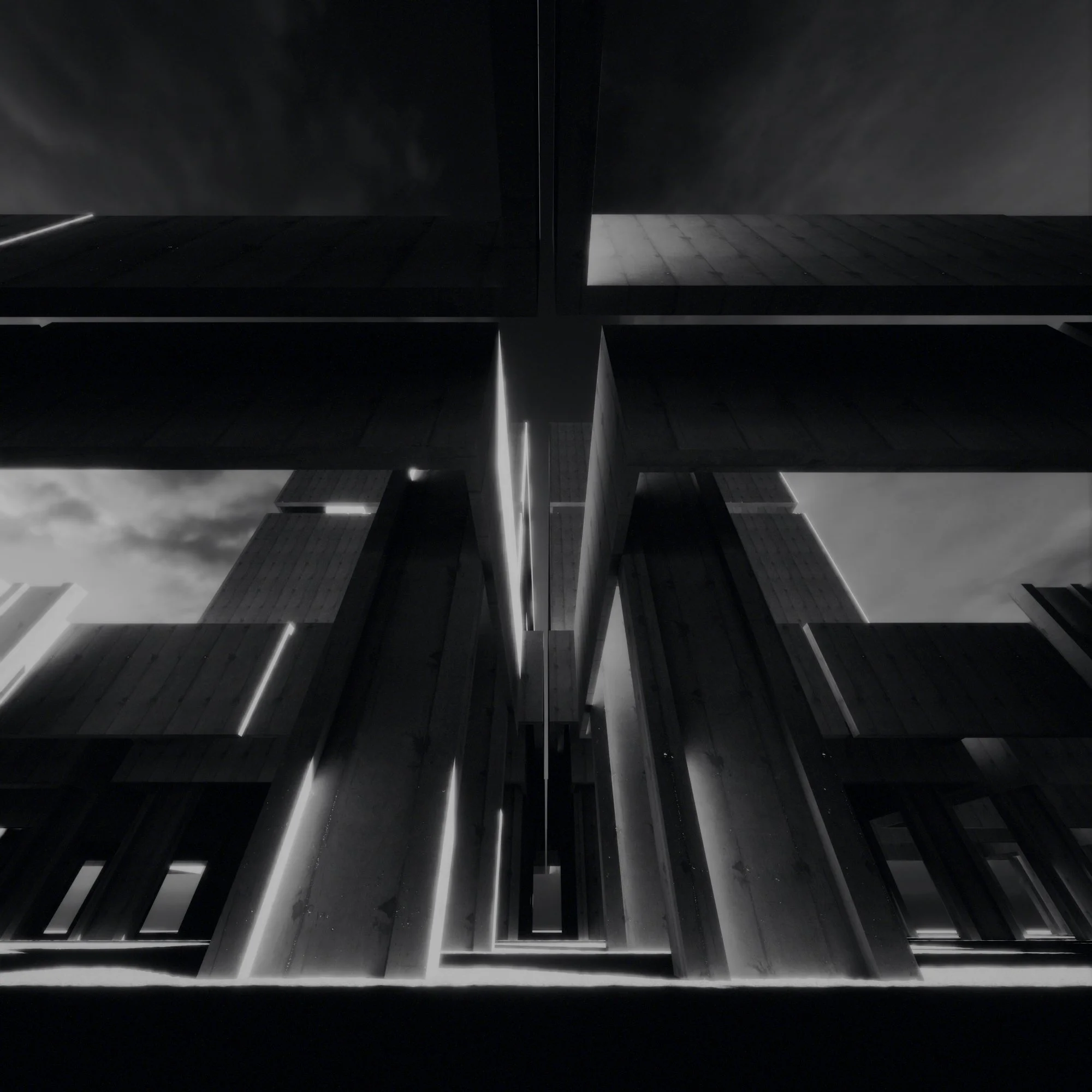
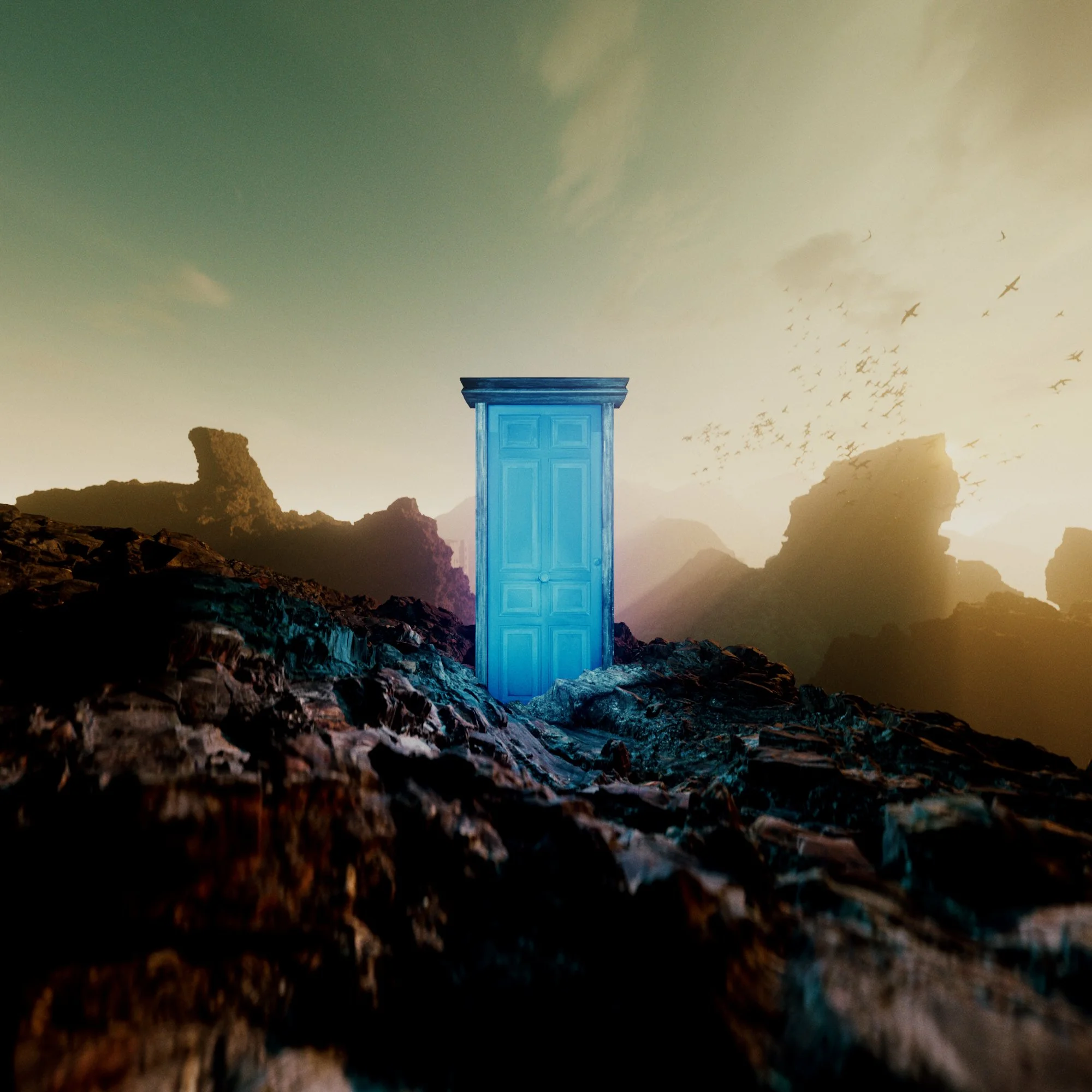
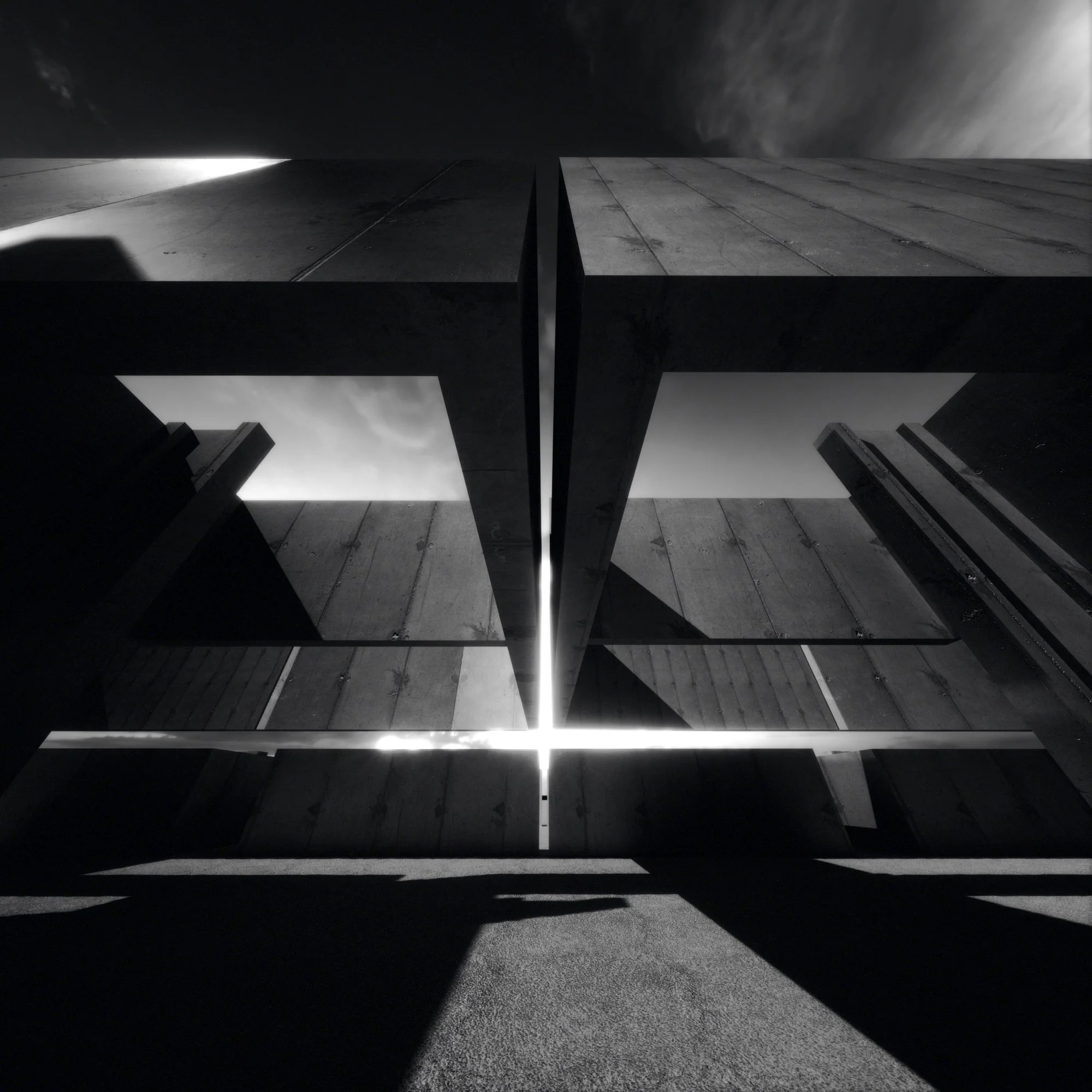
Architectural portals became essential storytelling devices throughout the show; doors, hallways, and windows function both as symbolic motifs representing transformation and as practical transitions between emotional worlds.
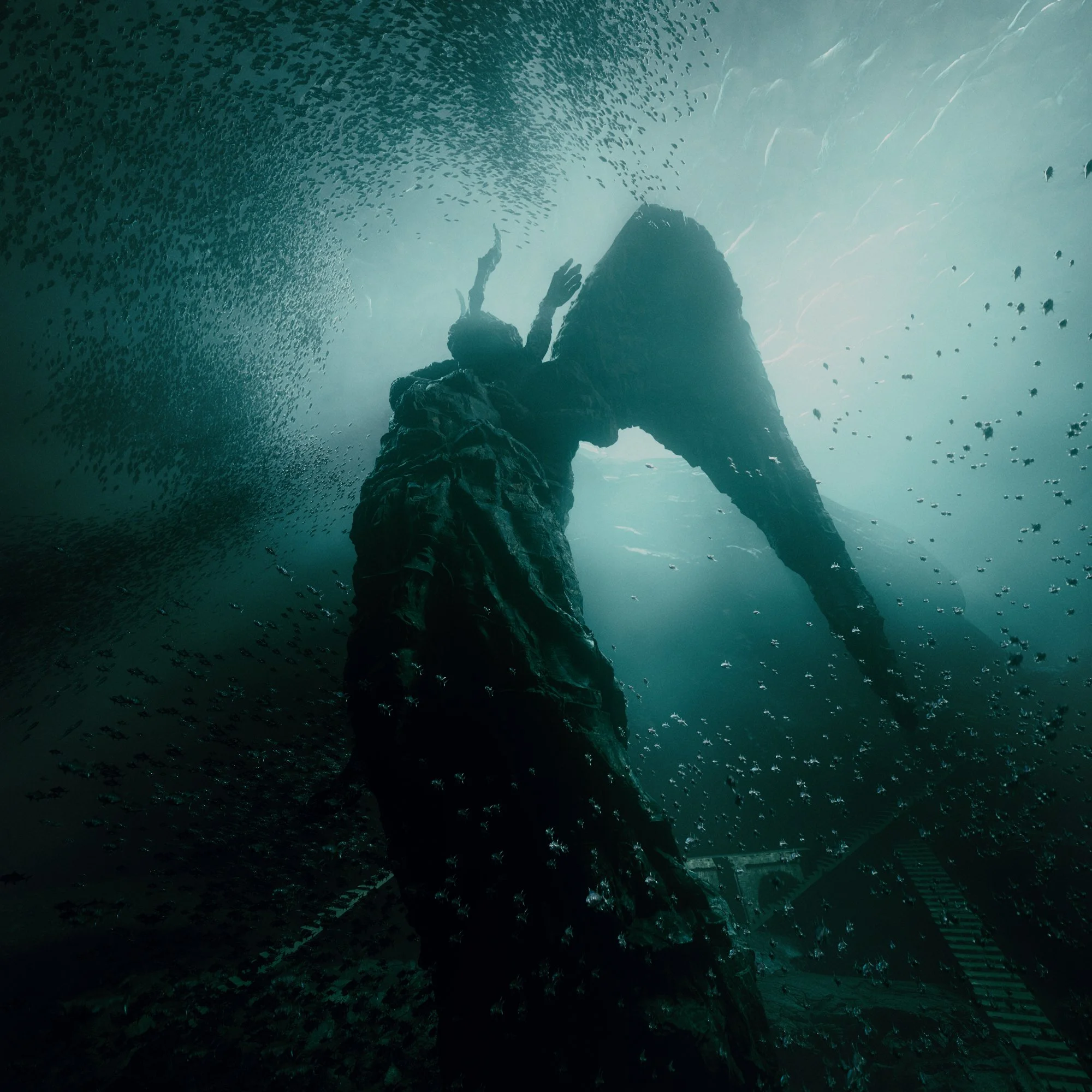
For "Exosphere," an ice-encrusted door explodes into flame, revealing the boy's metamorphosis on the other side, ice becoming fire, cold becoming passion, frozen becoming free.
Floating doorways dissolve urban constraints into paradise in "Toes": one moment, you're surrounded by concrete and glass; the next, you're stepping through a threshold into sand, sun, and endless ocean.
The camera passes through one threshold to enter an entirely new world, with a seamless narrative flow that treats transitions as literal passages rather than simple cuts. Crossing from one song to another. One emotional state to the next. Each doorway reinforces the journey structure: you cannot reach the promised land without passing through many gates.
OPENING AND CLOSING IMAGE
VISUAL BOOKENDS THAT MIRROR & INVERT
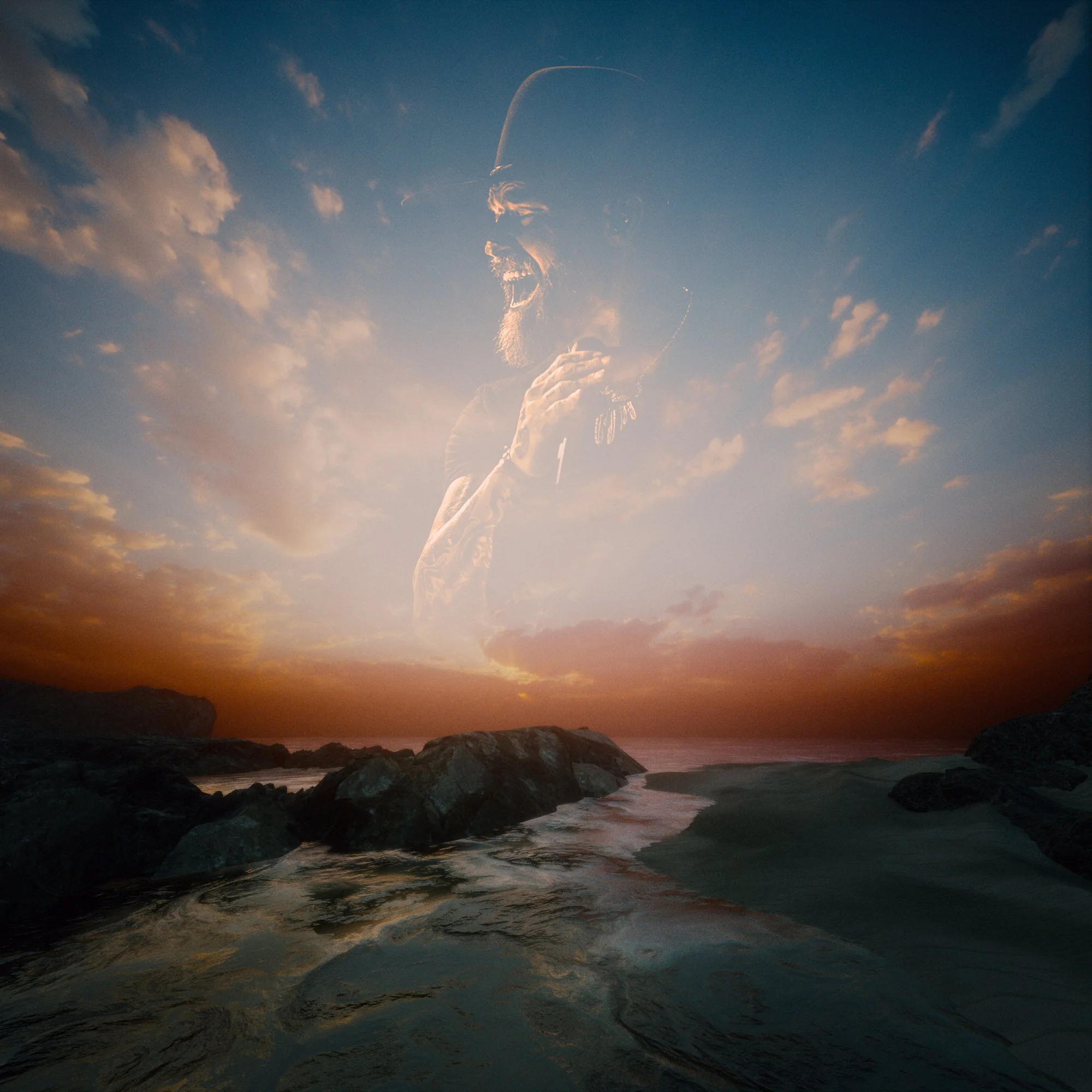
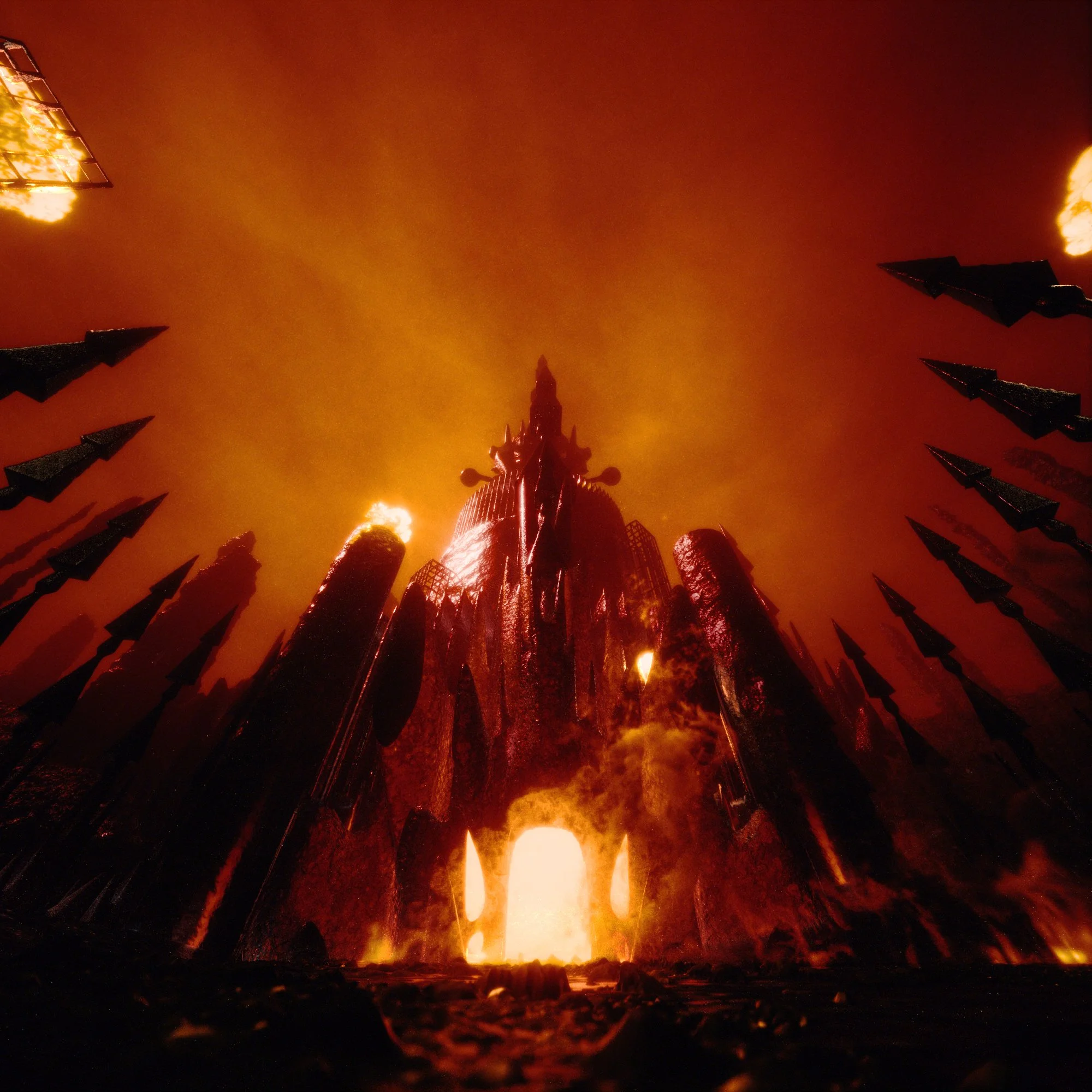
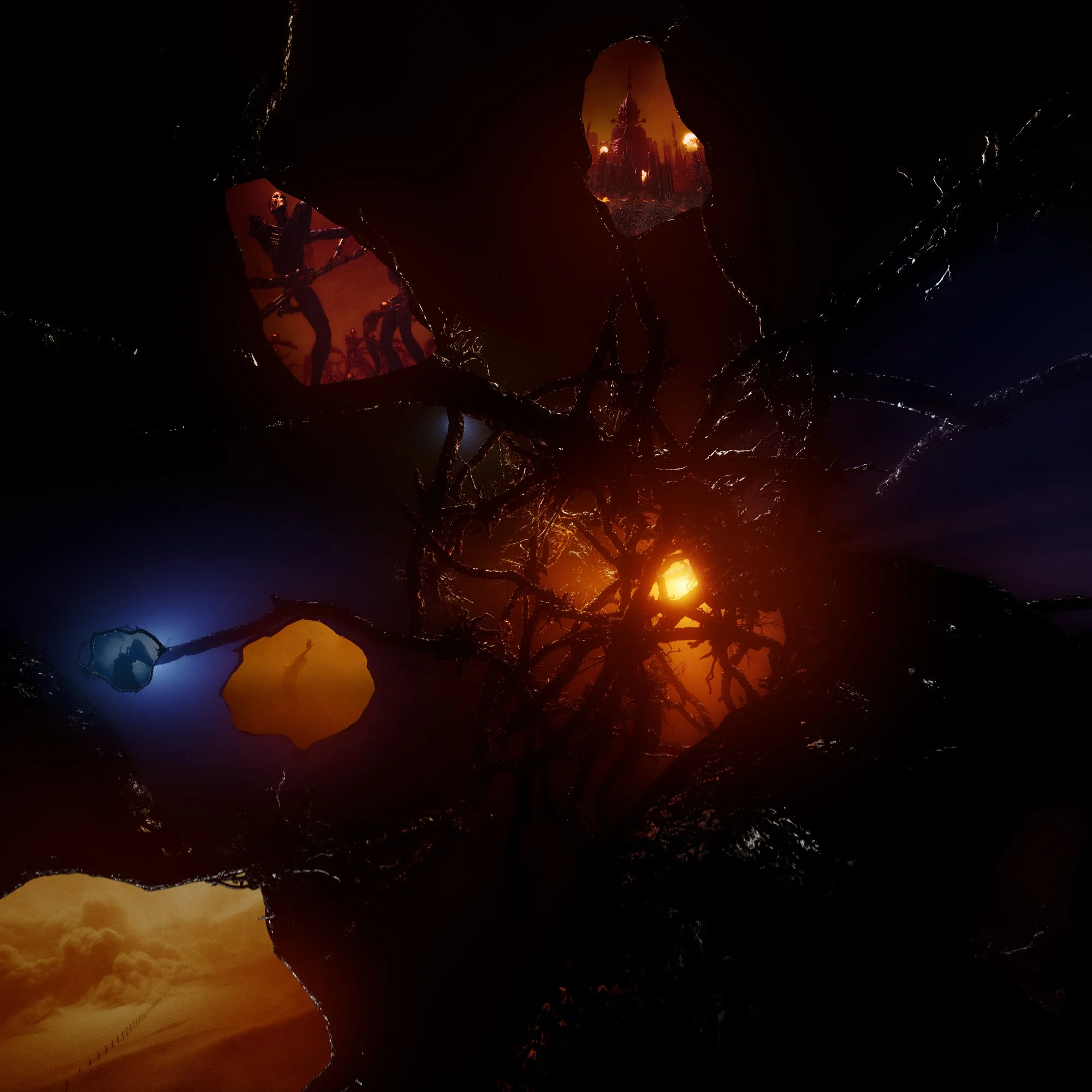
The show opens, plunging into a hellscape, establishing the depths from which our hero must rise. The closing song inverts this nightmare into its divine opposite. "Remedy" presents a celestial realm where the crystalline city refracts prismatic light, each surface catching and throwing radiance to the next in infinite brightness. Angelic figures float peacefully among clouds, no longer climbing in desperation but existing in grace, suspended in the knowledge that they are exactly where they need to be.
PARALLEL COMPOSITIONS.
One descending into darkness, violence, and isolation. The other ascending into light, peace, communion. From damnation to salvation. From isolated suffering to universal love. Proving that the weight of the crown can be transformed into the wings of transcendence, that what once dragged us down can lift us up, if we're willing to make the journey.
TECHNICAL DESIGN
DESIGN IN 360° FOR A PIPELINE
BUILDING WRAPAROUND WORLDS FROM THE START
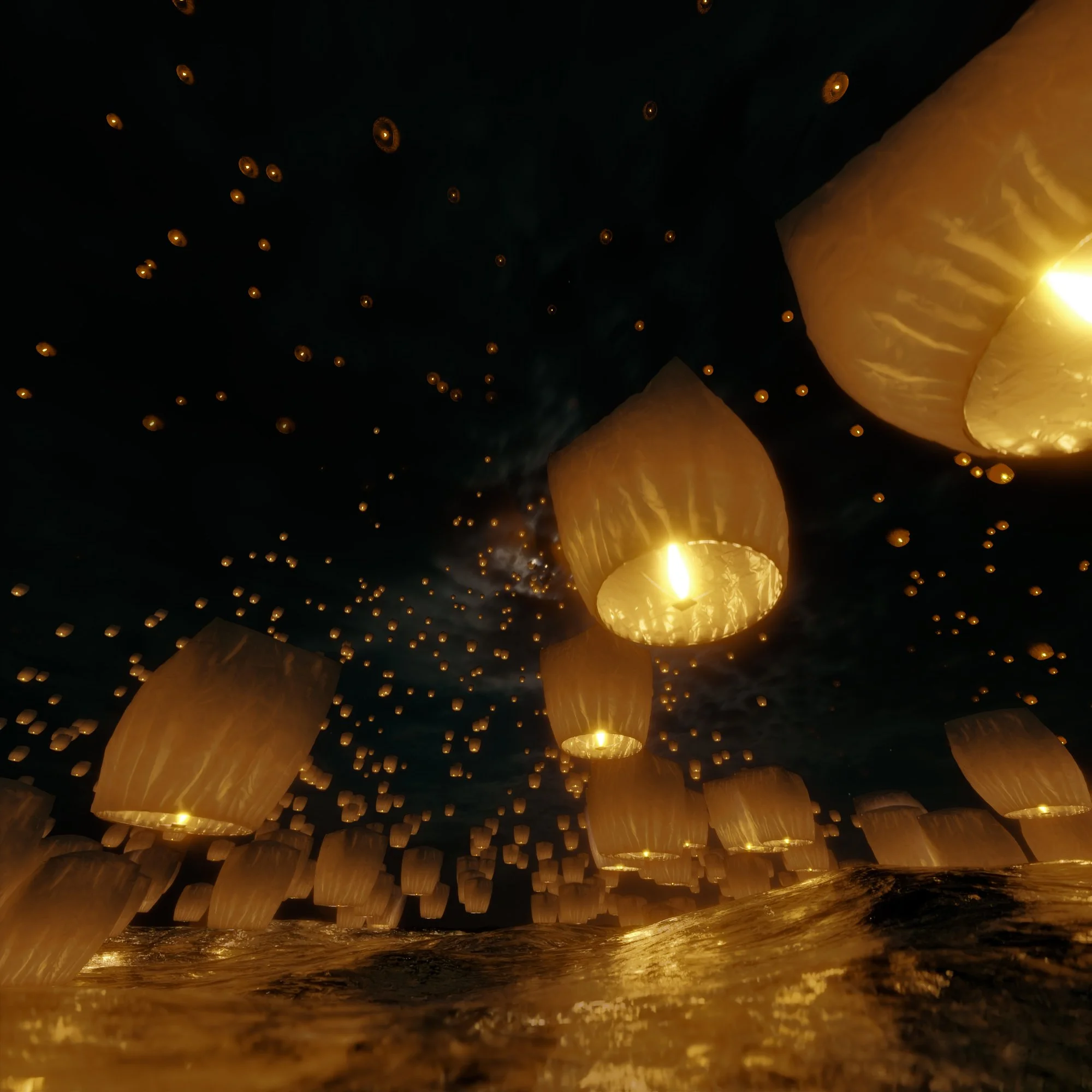
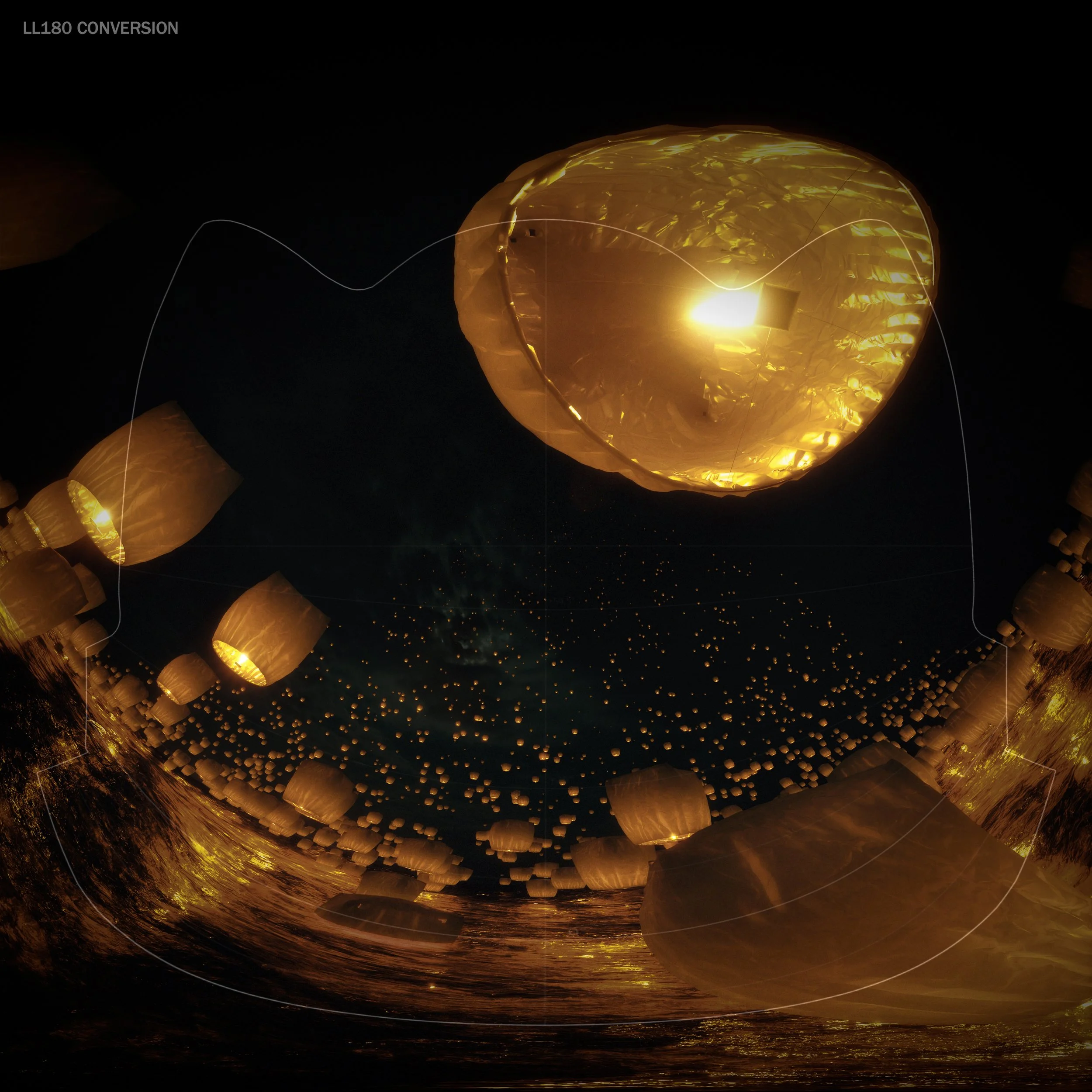
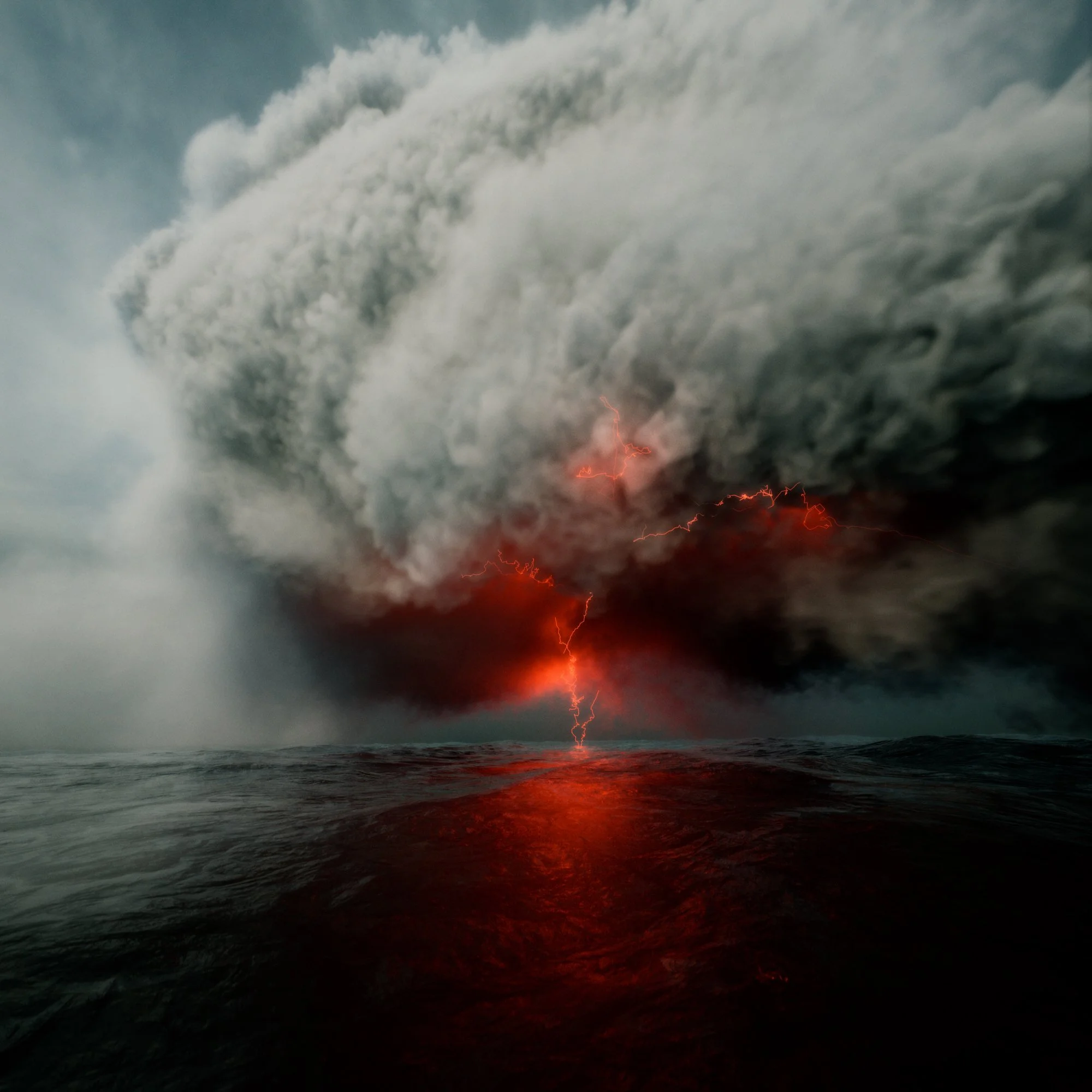
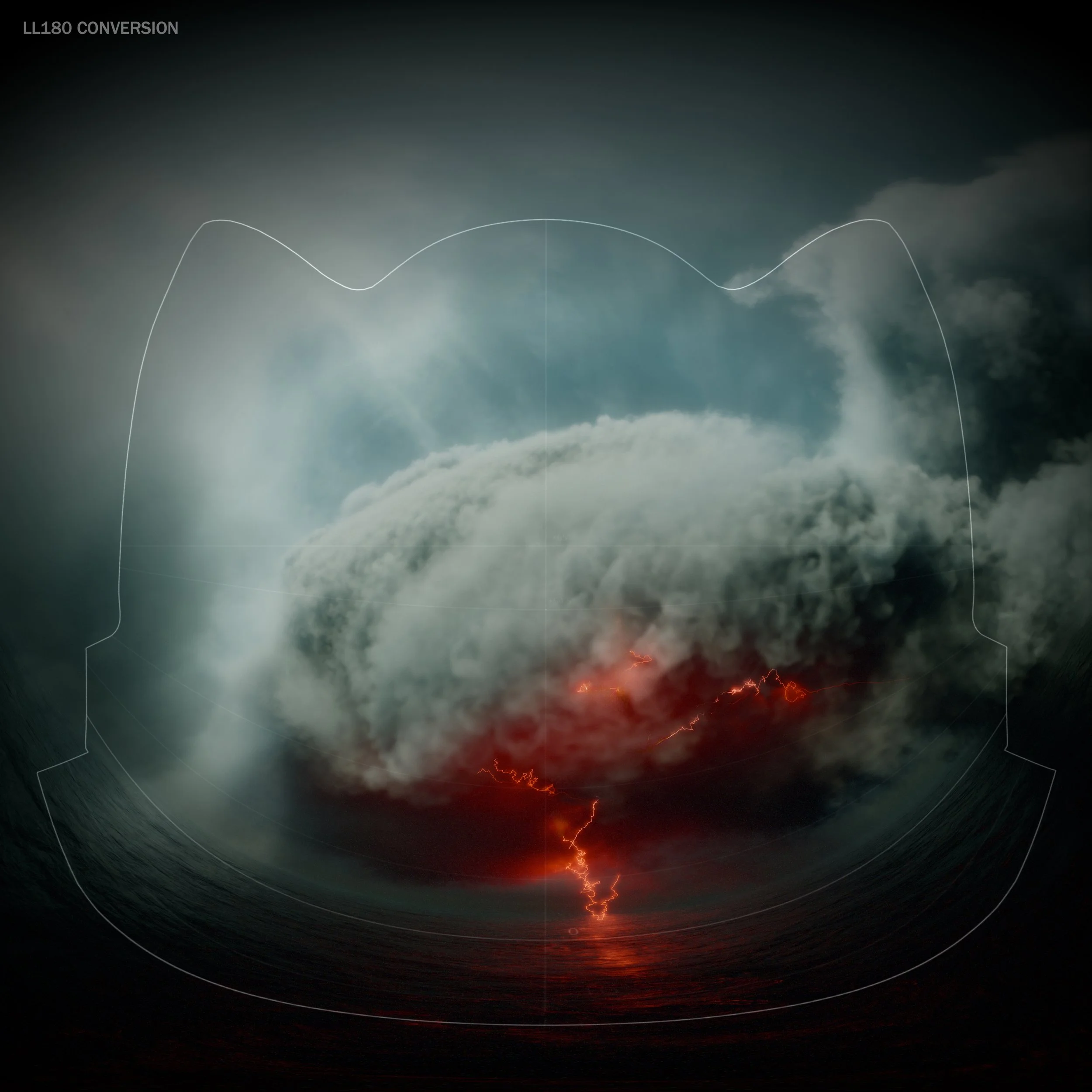
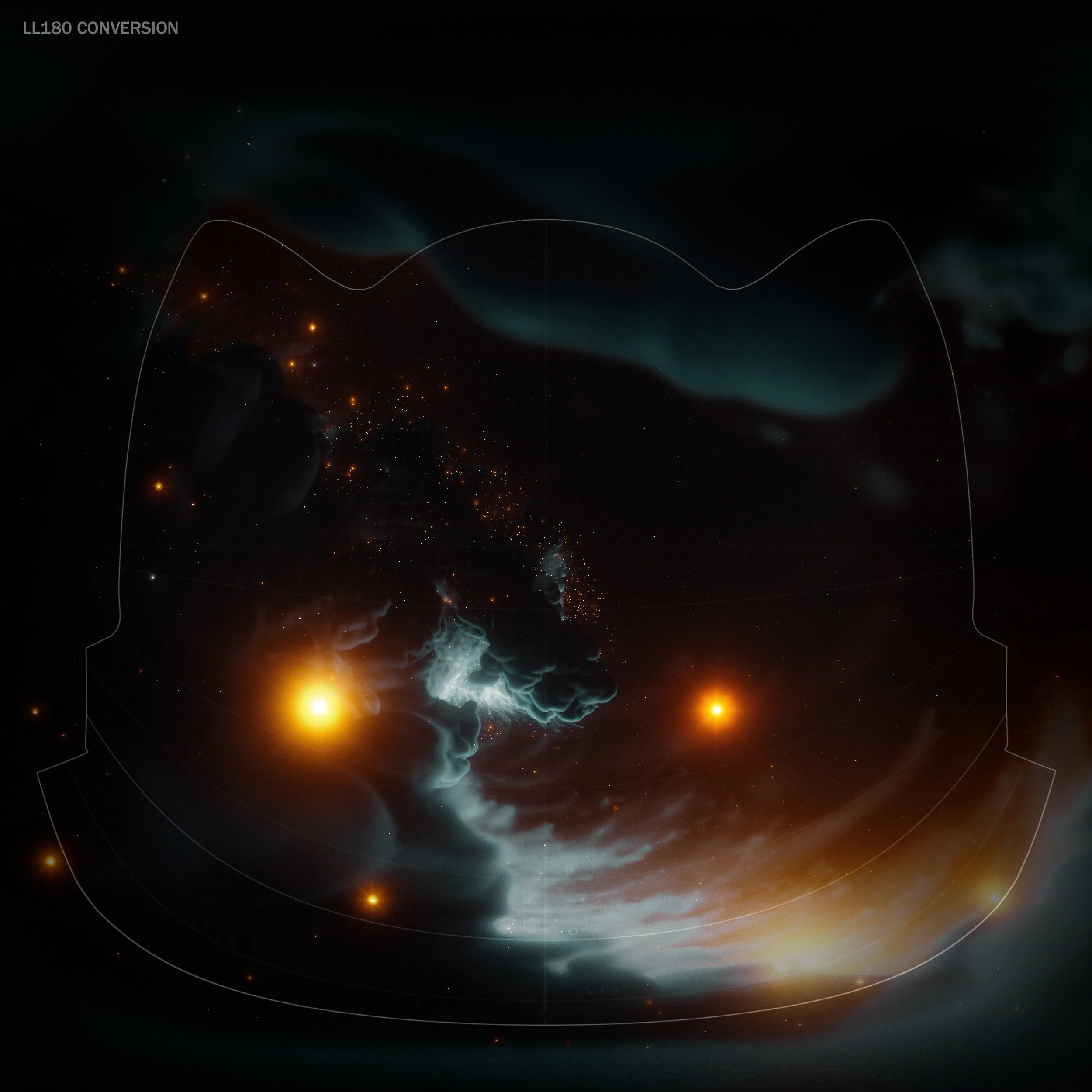
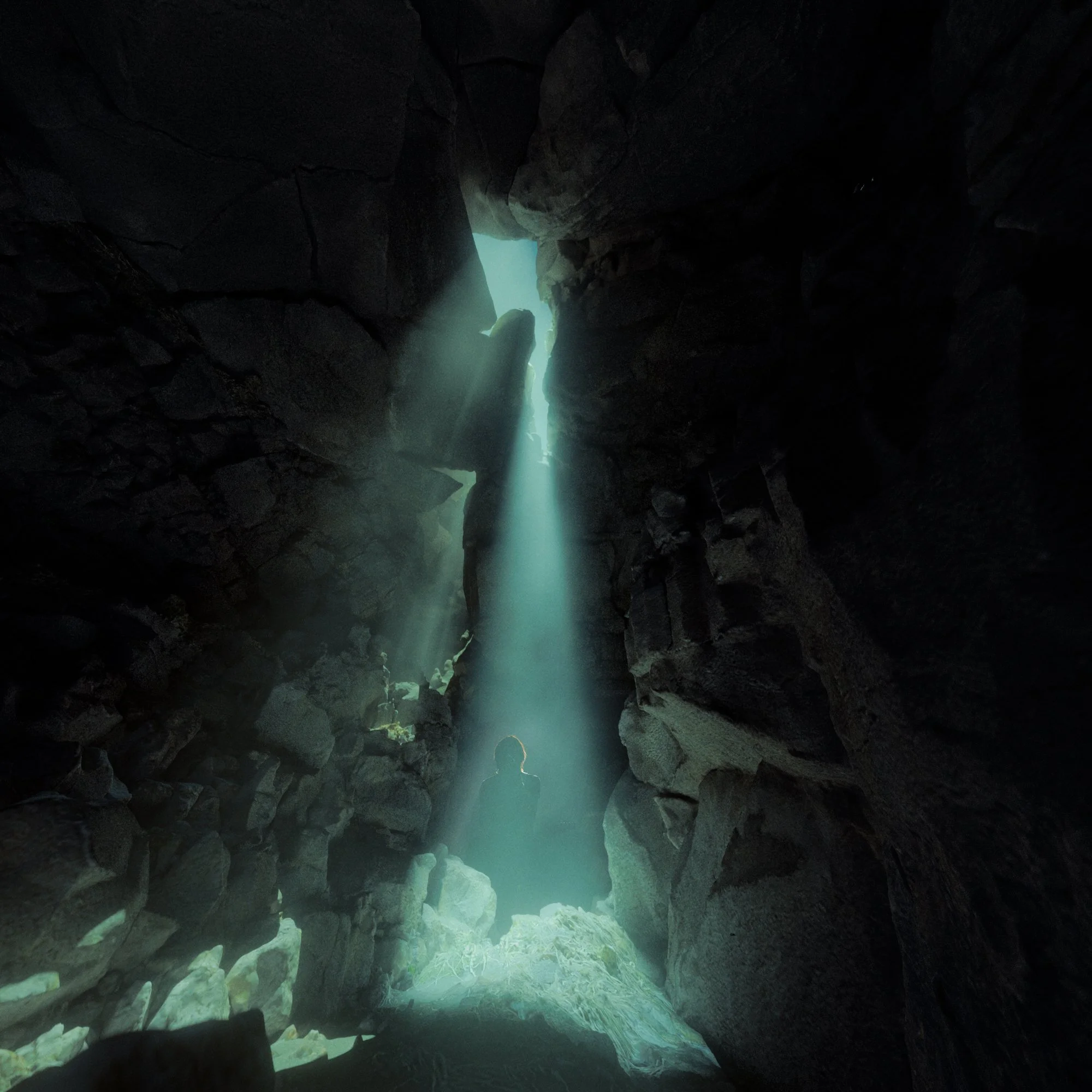
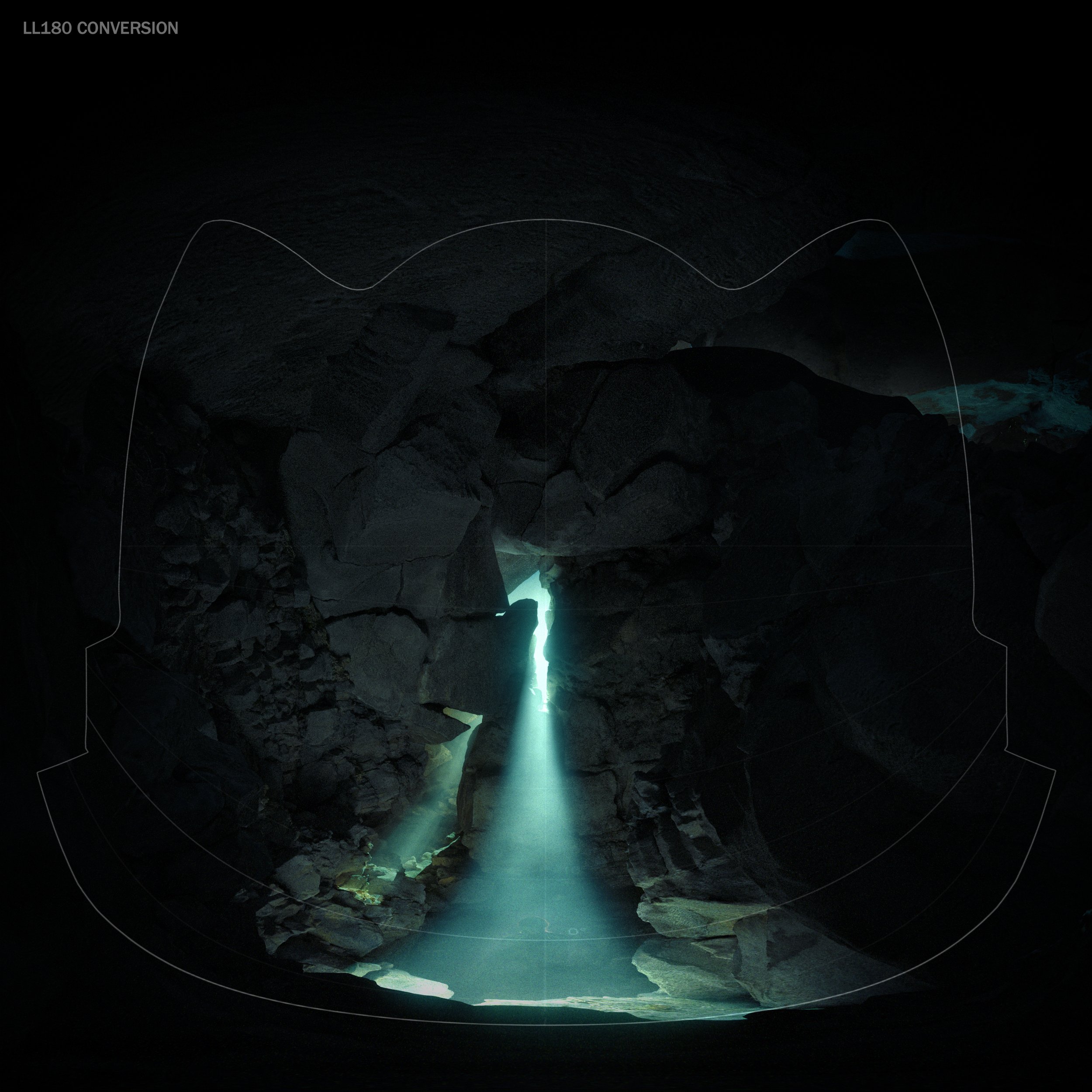
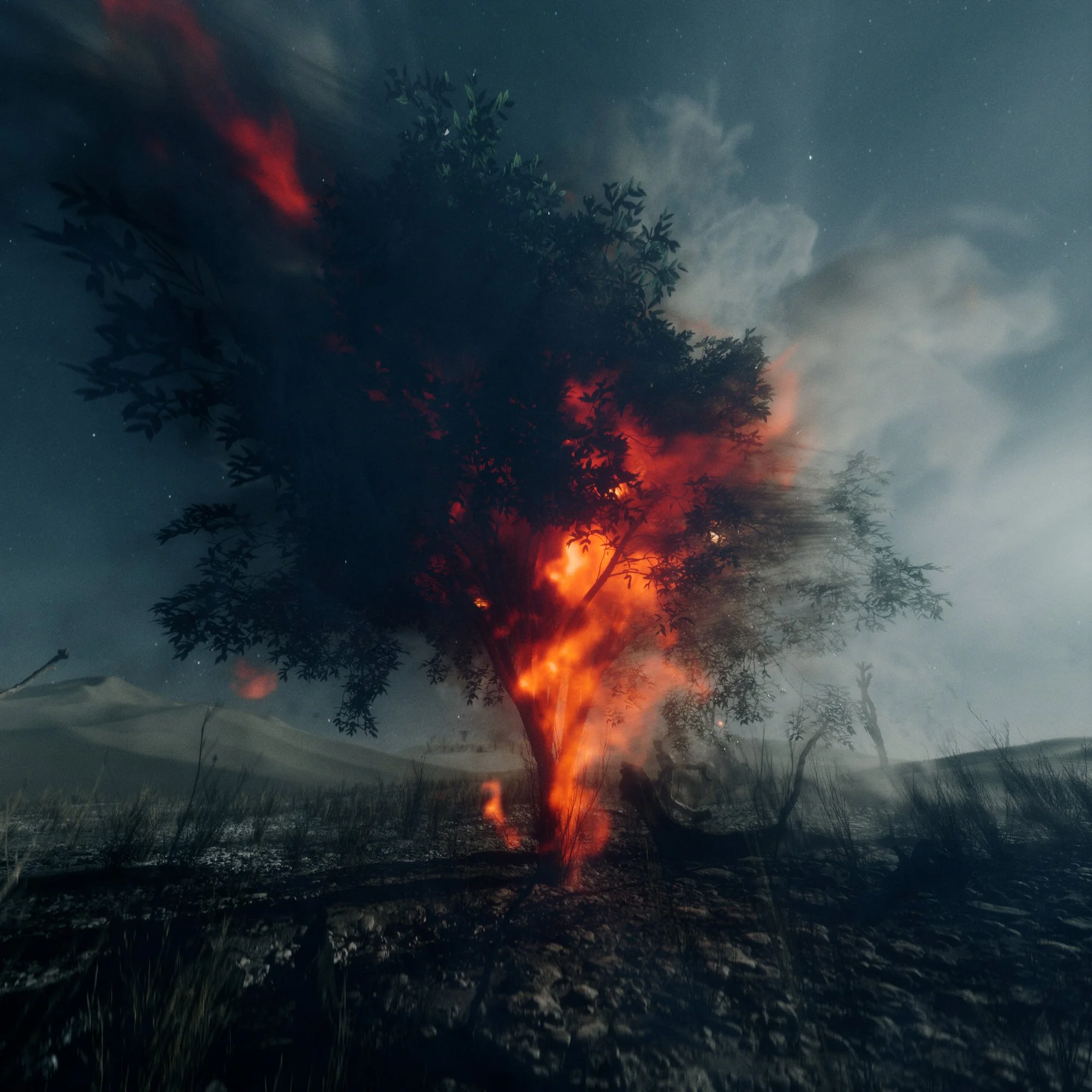
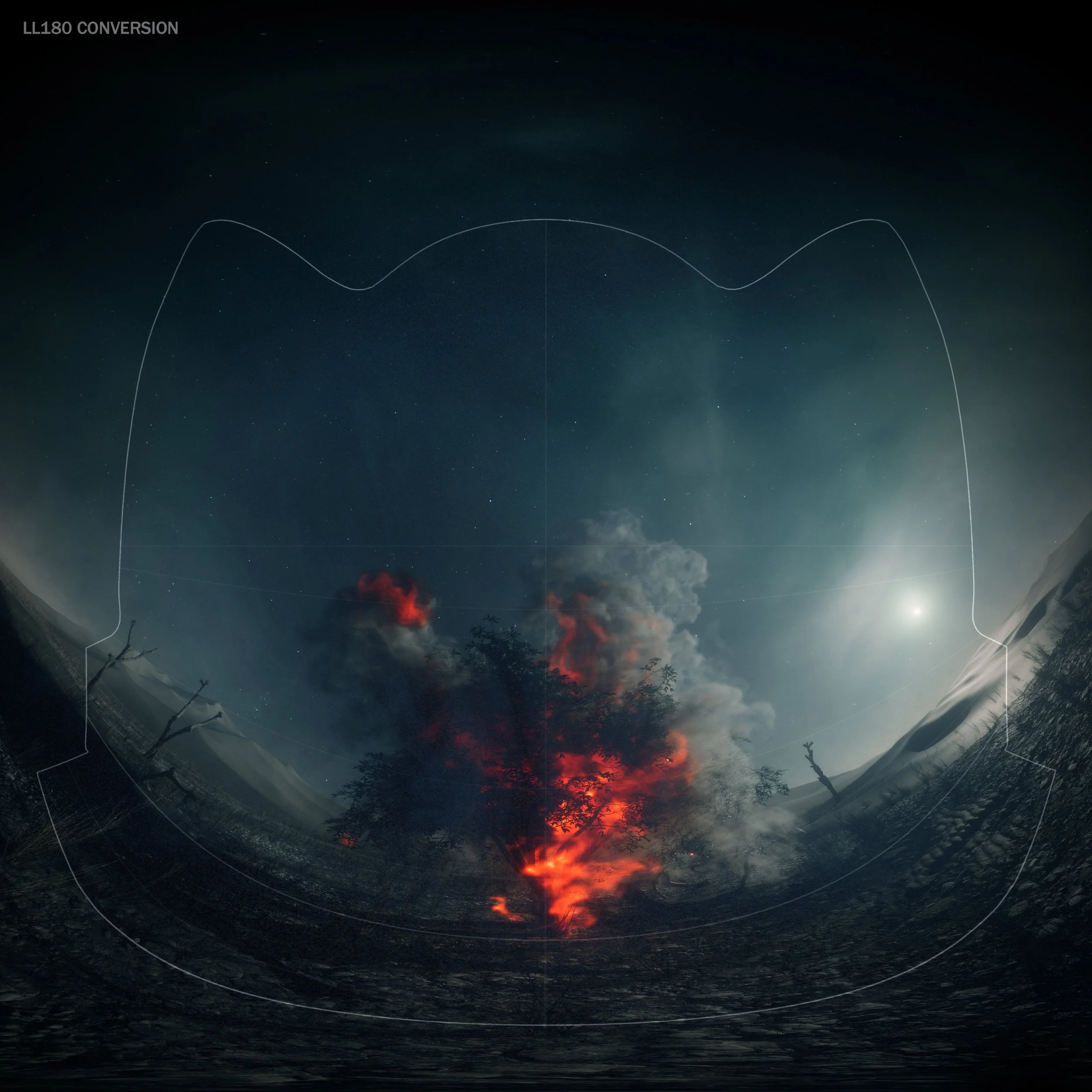
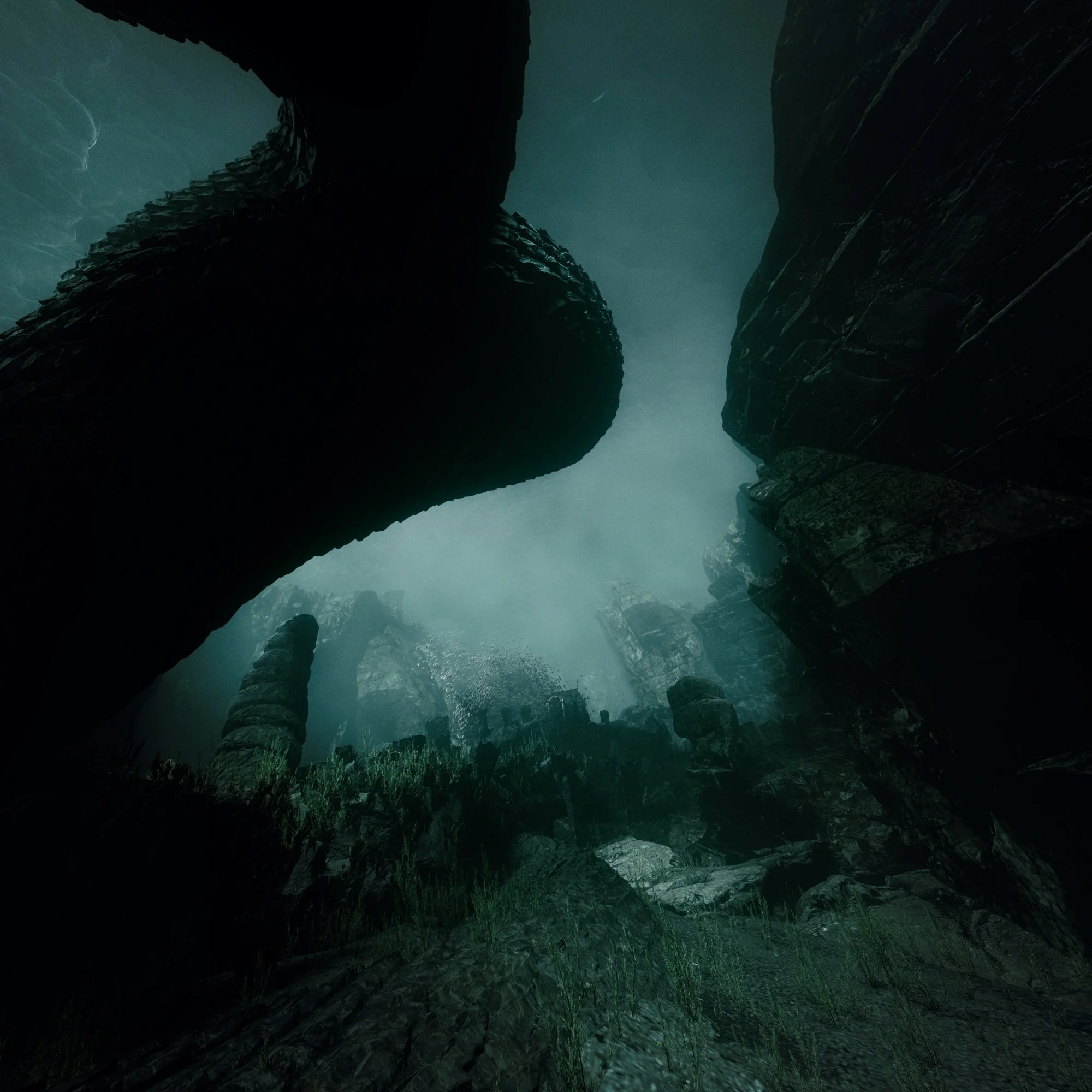
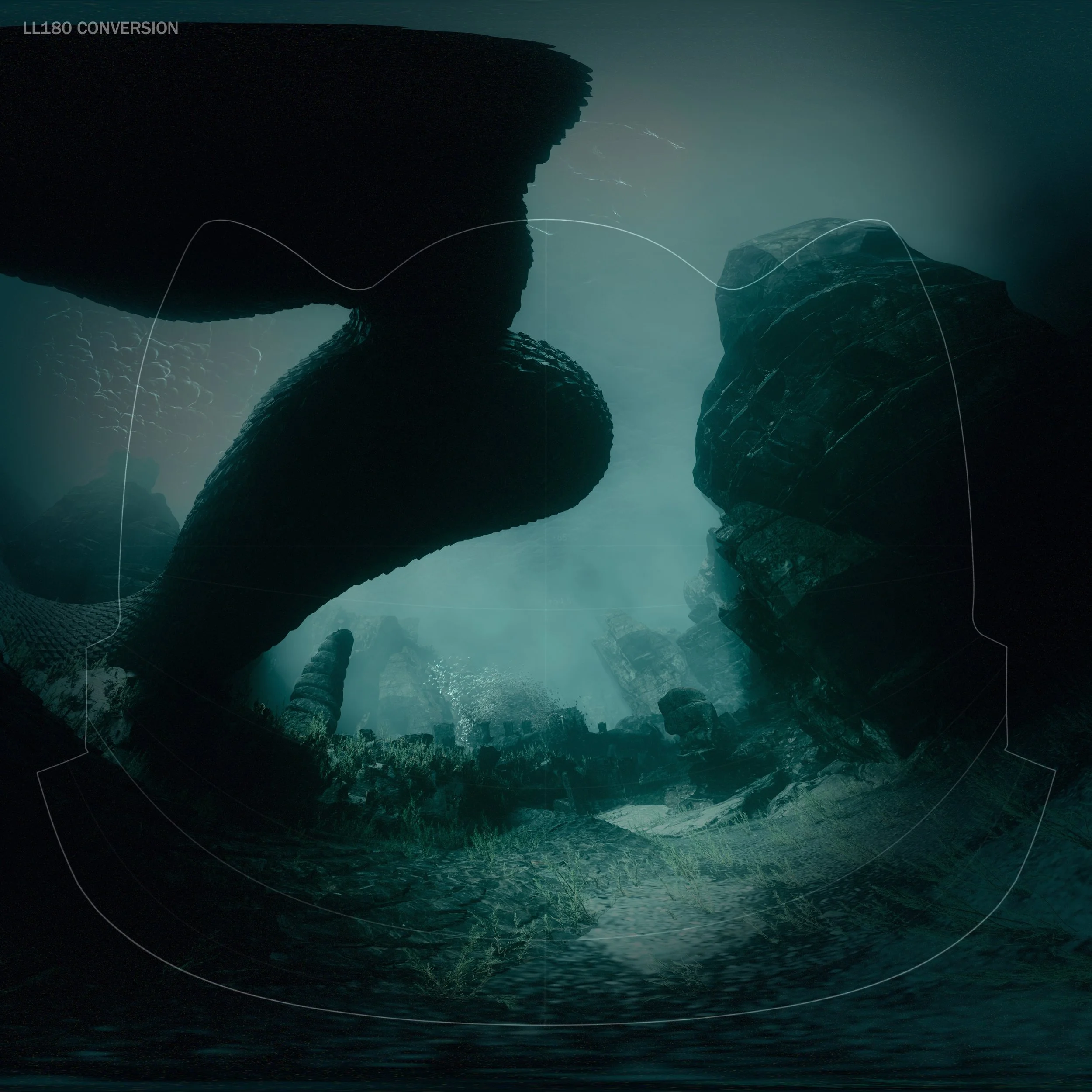
The Sphere's canvas required rethinking frame composition from the ground up. Rather than designing flat frames that would later require tremendous extension work, I built complete wraparound worlds from the start using extremely wide-angle lenses to capture the surrounding environment. Downstream animators could open my scene files and begin camera work immediately; the foundational world-building was nearly complete.
My frames were built entirely in-camera using Redshift's IPR, like a cinematographer getting shots render-ready within the viewport rather than relying on heavy post-compositing. This "work in-camera" philosophy meant the transition to the Sphere's proprietary LL180 camera required minimal rework.
These weren't aspirational mood boards; they were resolved blueprints with locked lighting values, asset placement, and spatial depth. By establishing high-fidelity design frames early, we pre-rendered the creative direction, allowing the animation team to execute without the costly friction of creative discovery on an 18K canvas. In a production at this scale, indecision is a budget killer. My frames served as a North Star, preventing expensive pivots during the render-heavy animation phase

THEORY OF MOVEMENT
LIVING POSTERS YOU PUSH THROUGH
We had to be smart when designing a 2-hour film. We weren't ILM or Pixar.
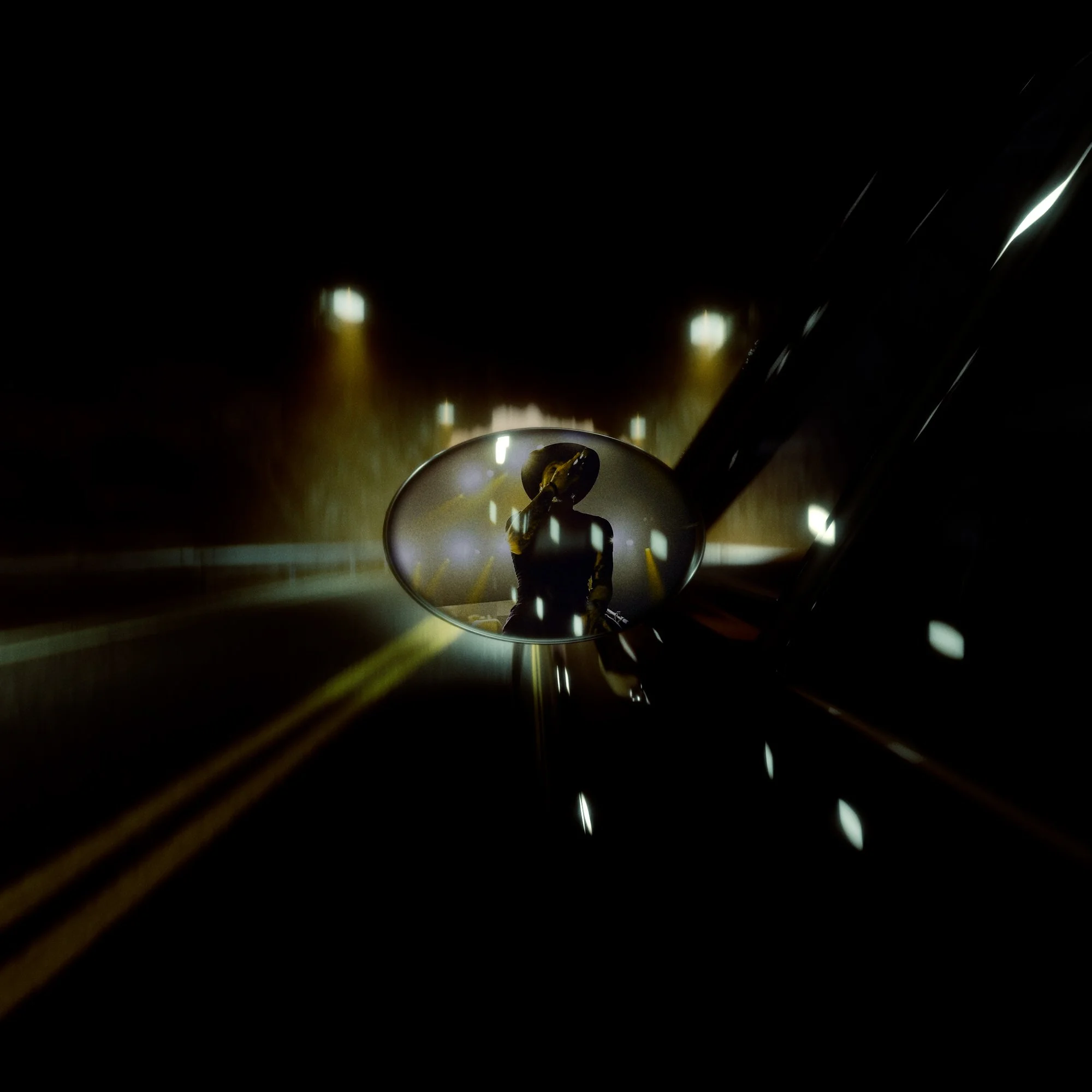
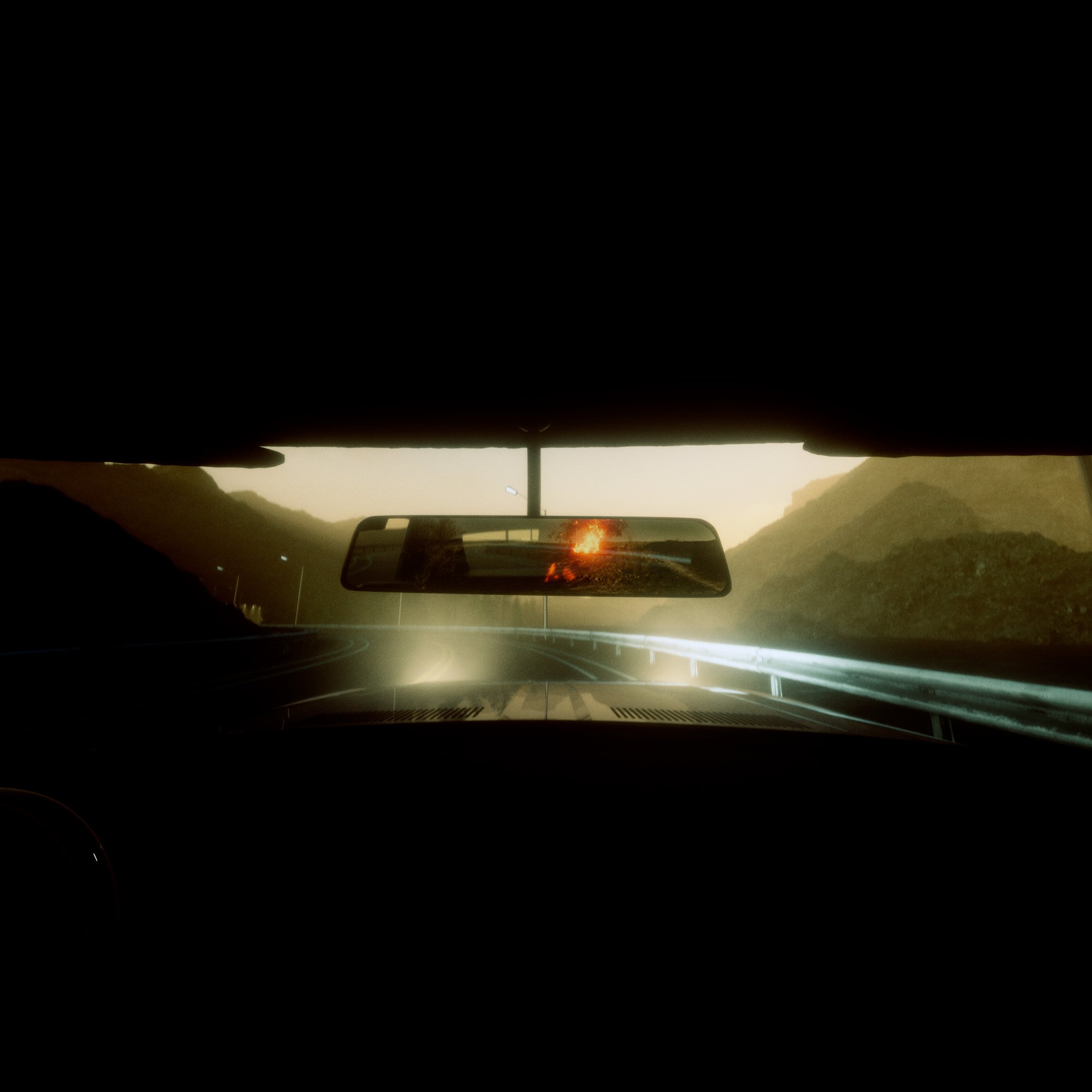
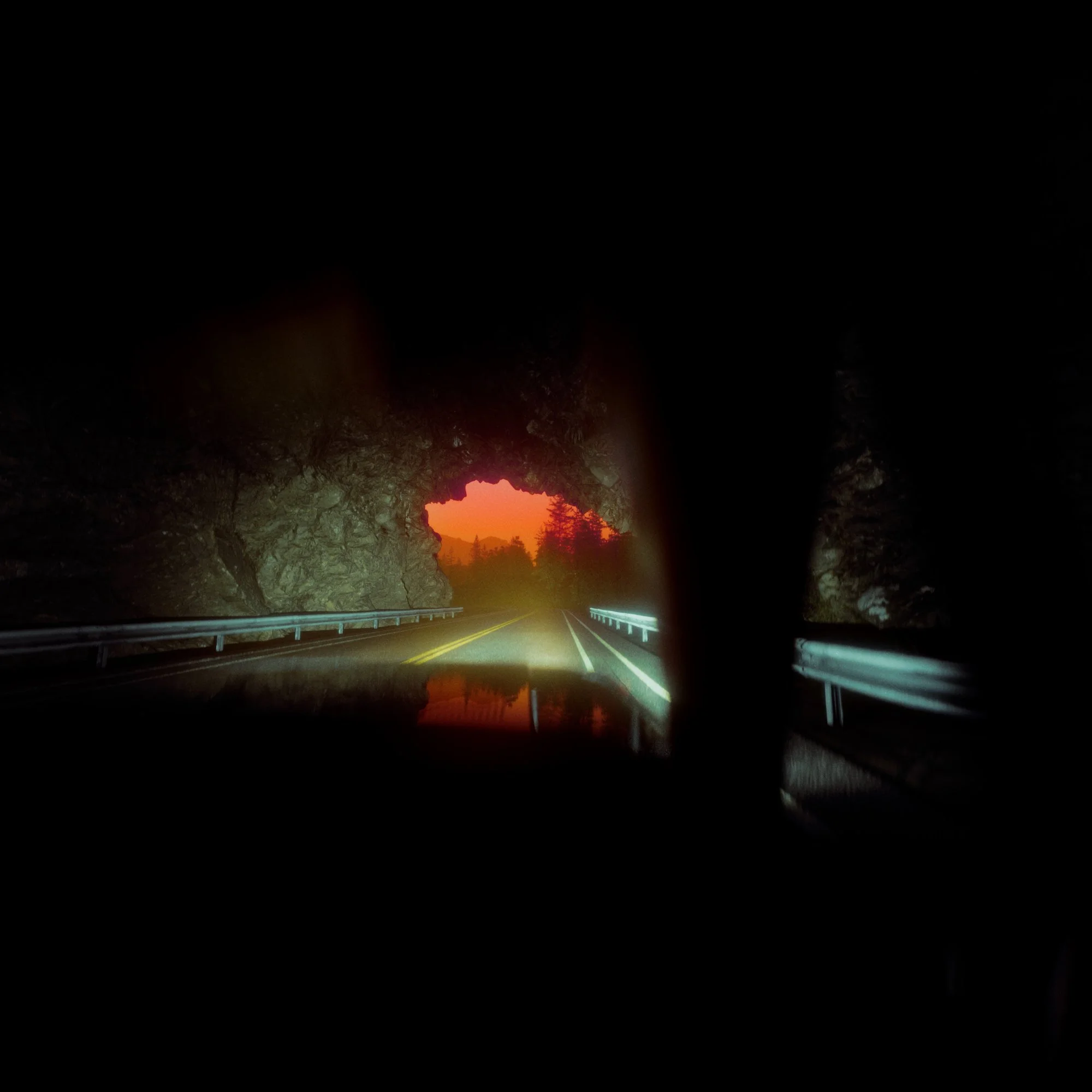
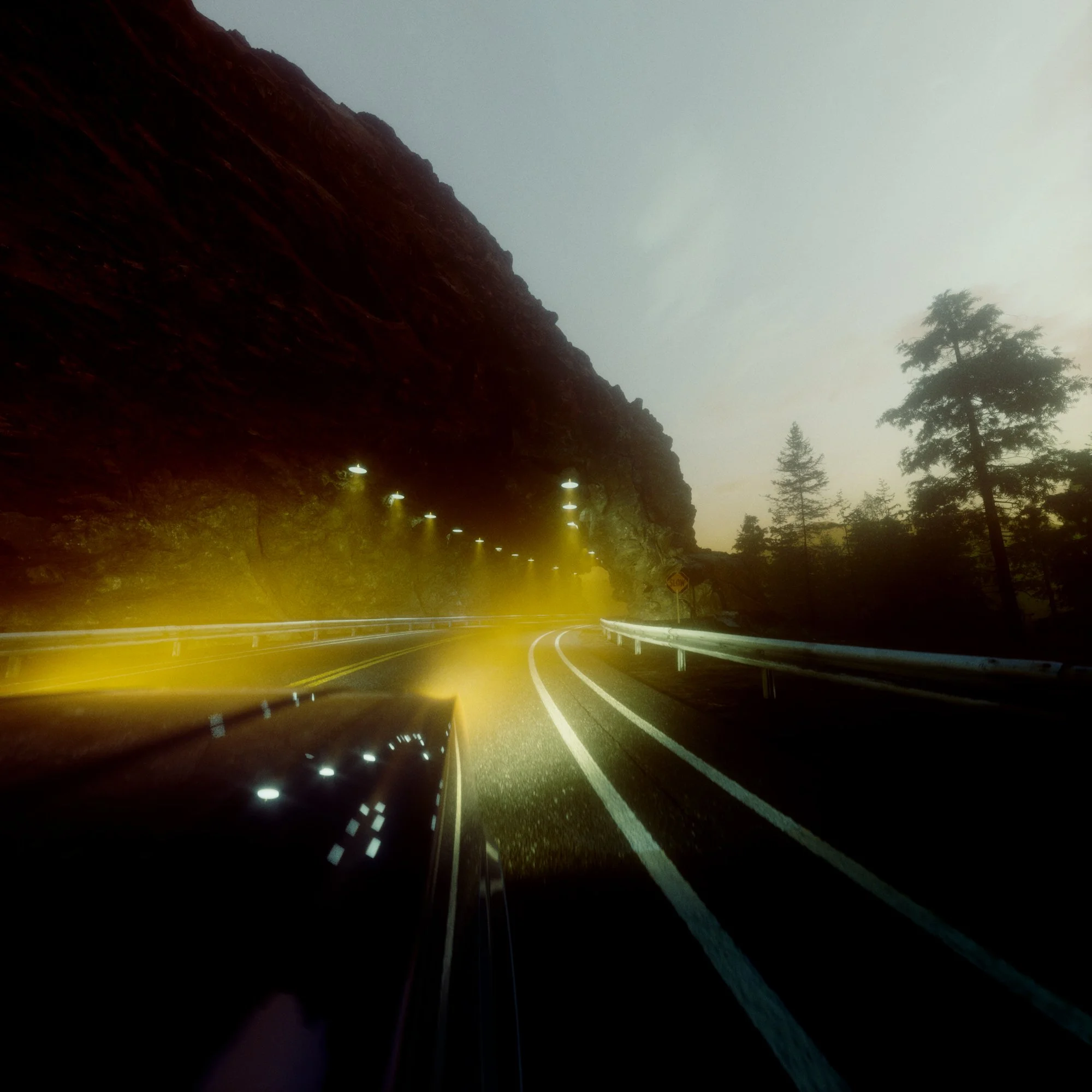
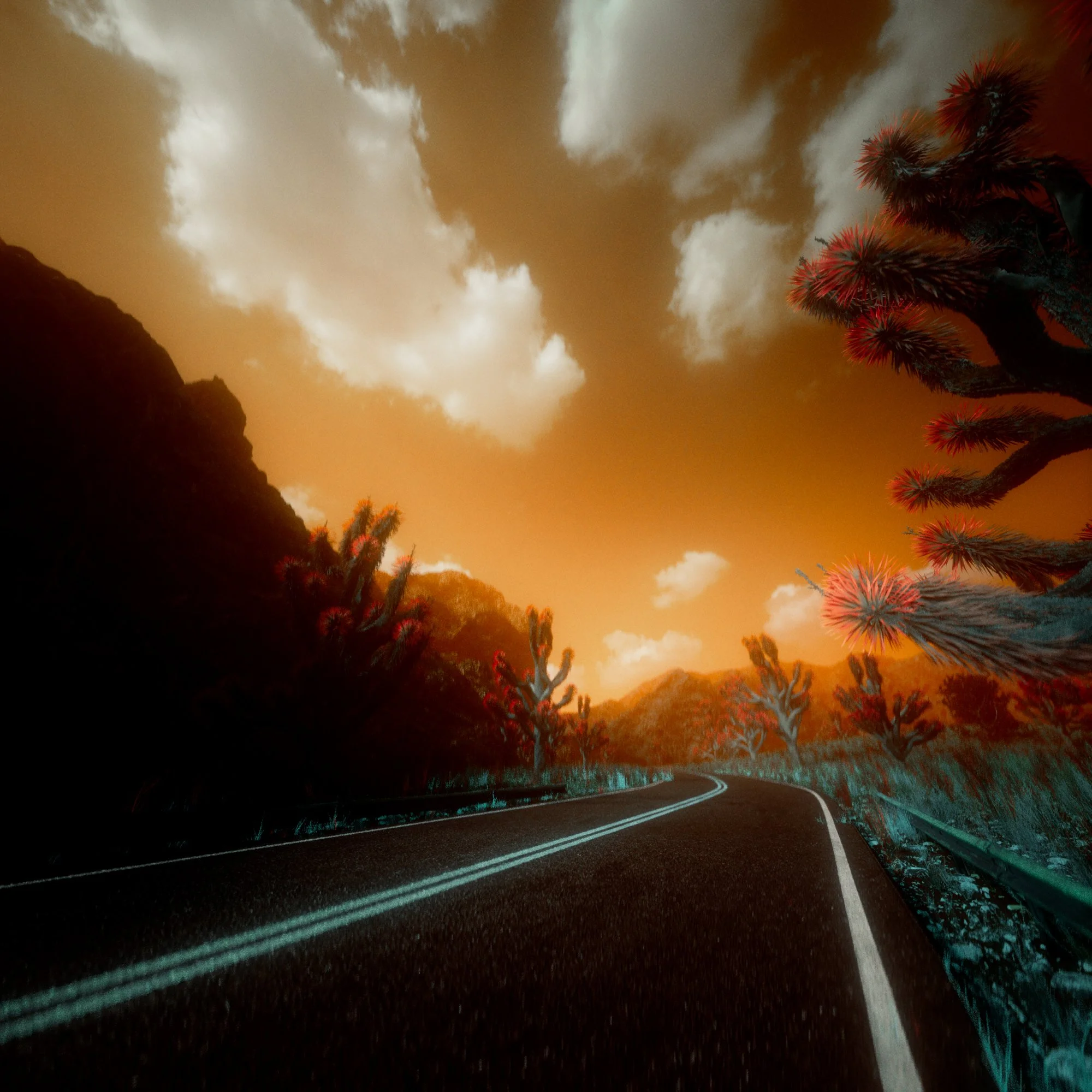
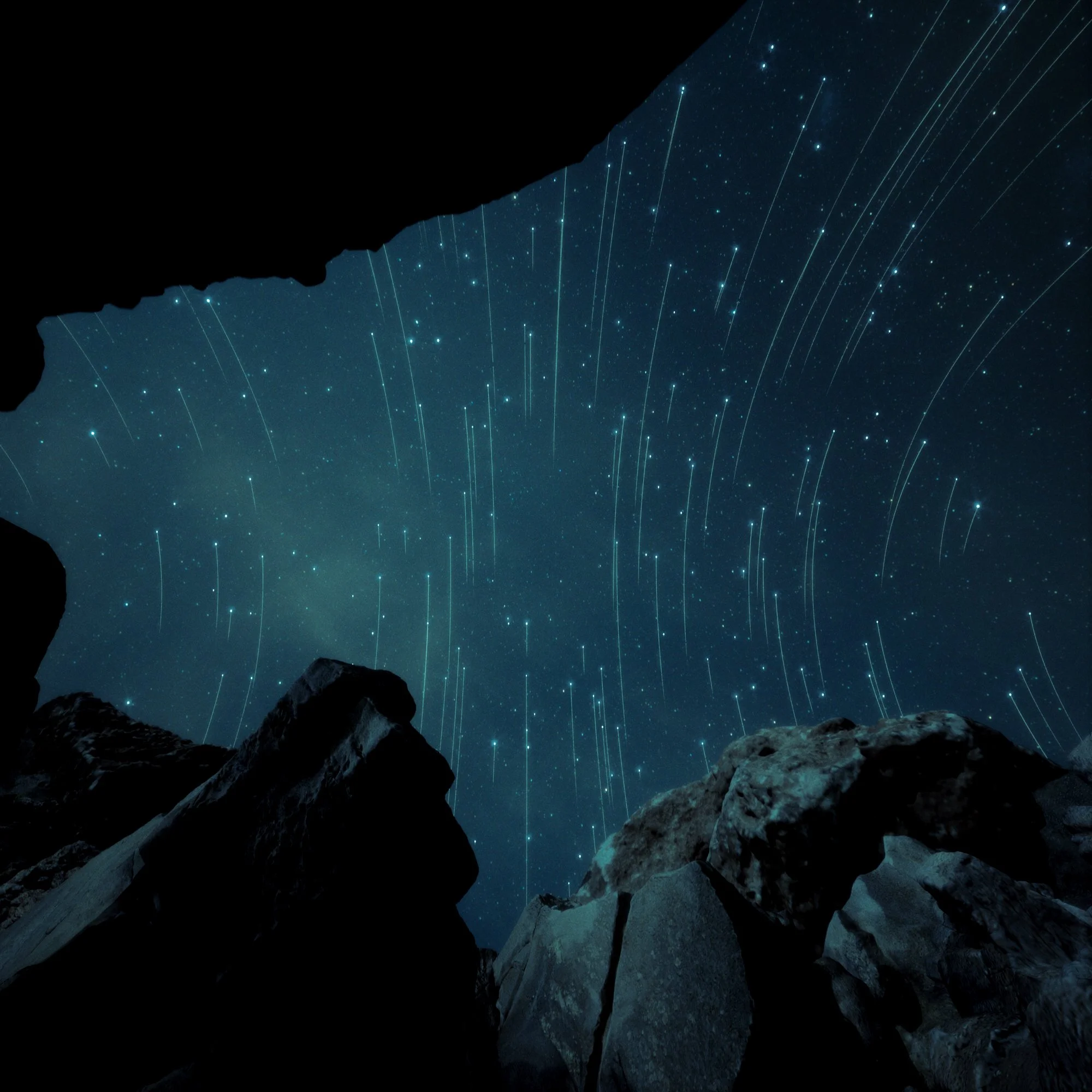
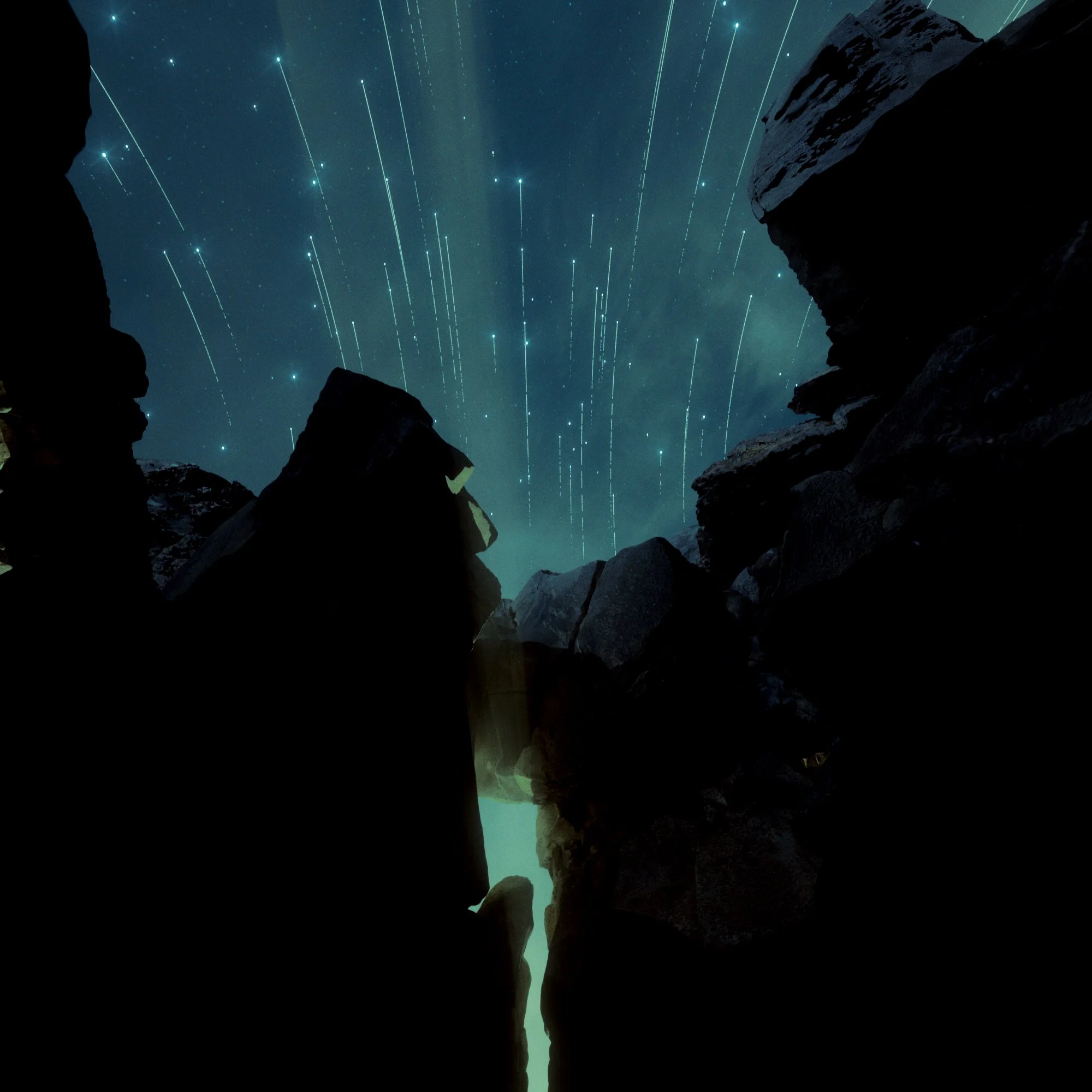
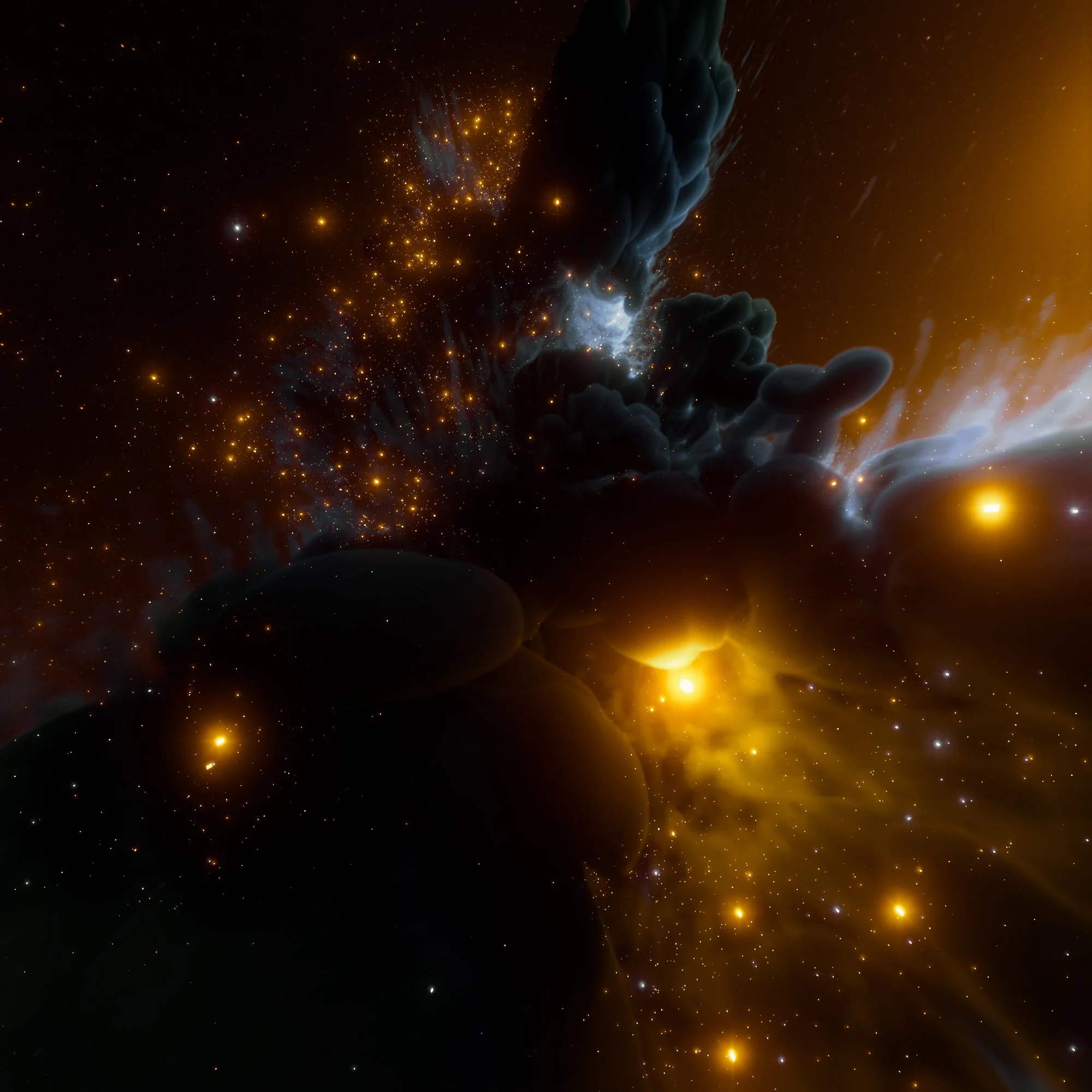
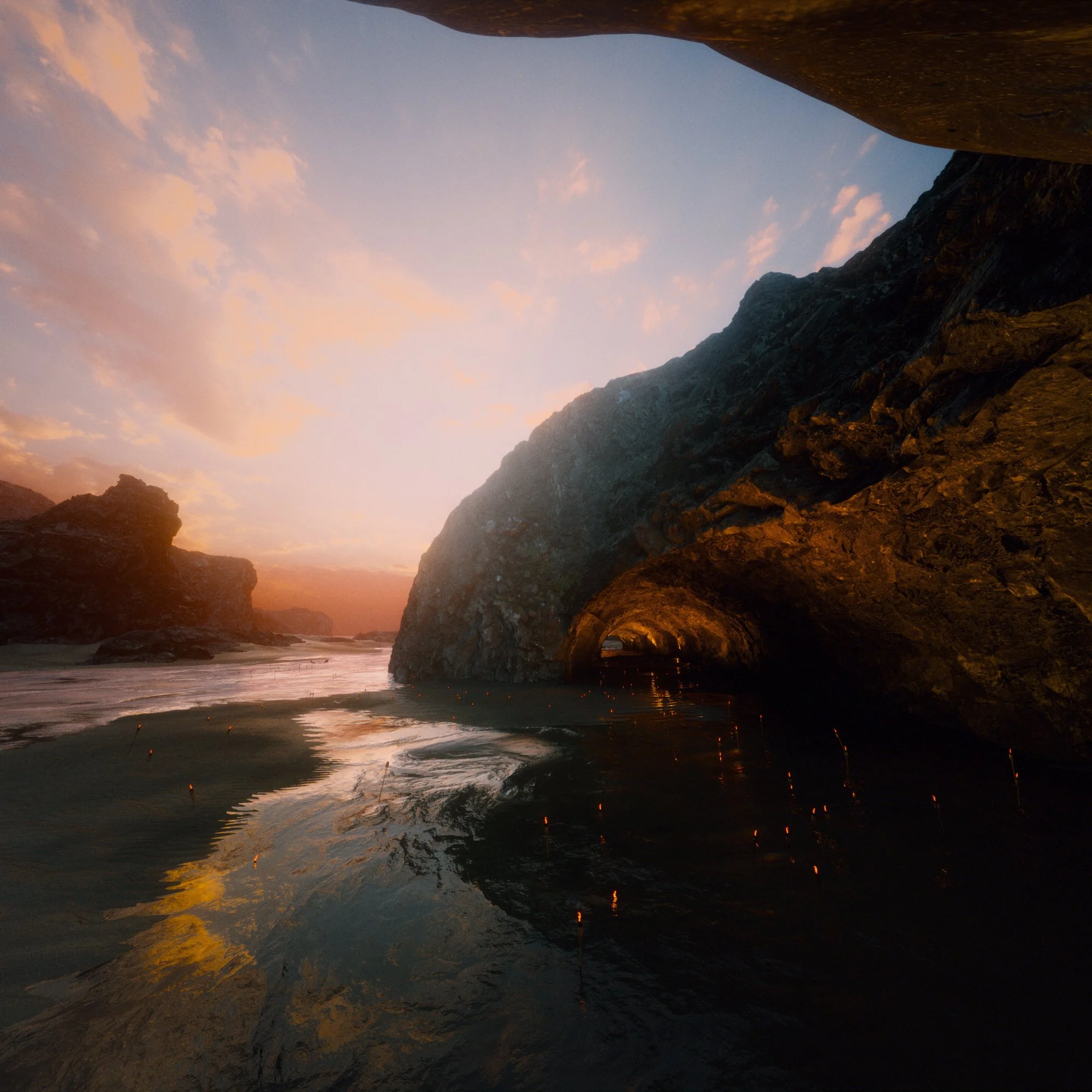
MY SOLUTION: treat each design frame as a slow-moving poster separated by hard cuts and fewer seamless transitions. A camera sitting on the hood of a car, watching landscapes drift past. Static camera, static landscapes, plenty of movement. Each frame is a contemplative destination, letting the audience settle into fully realized worlds.
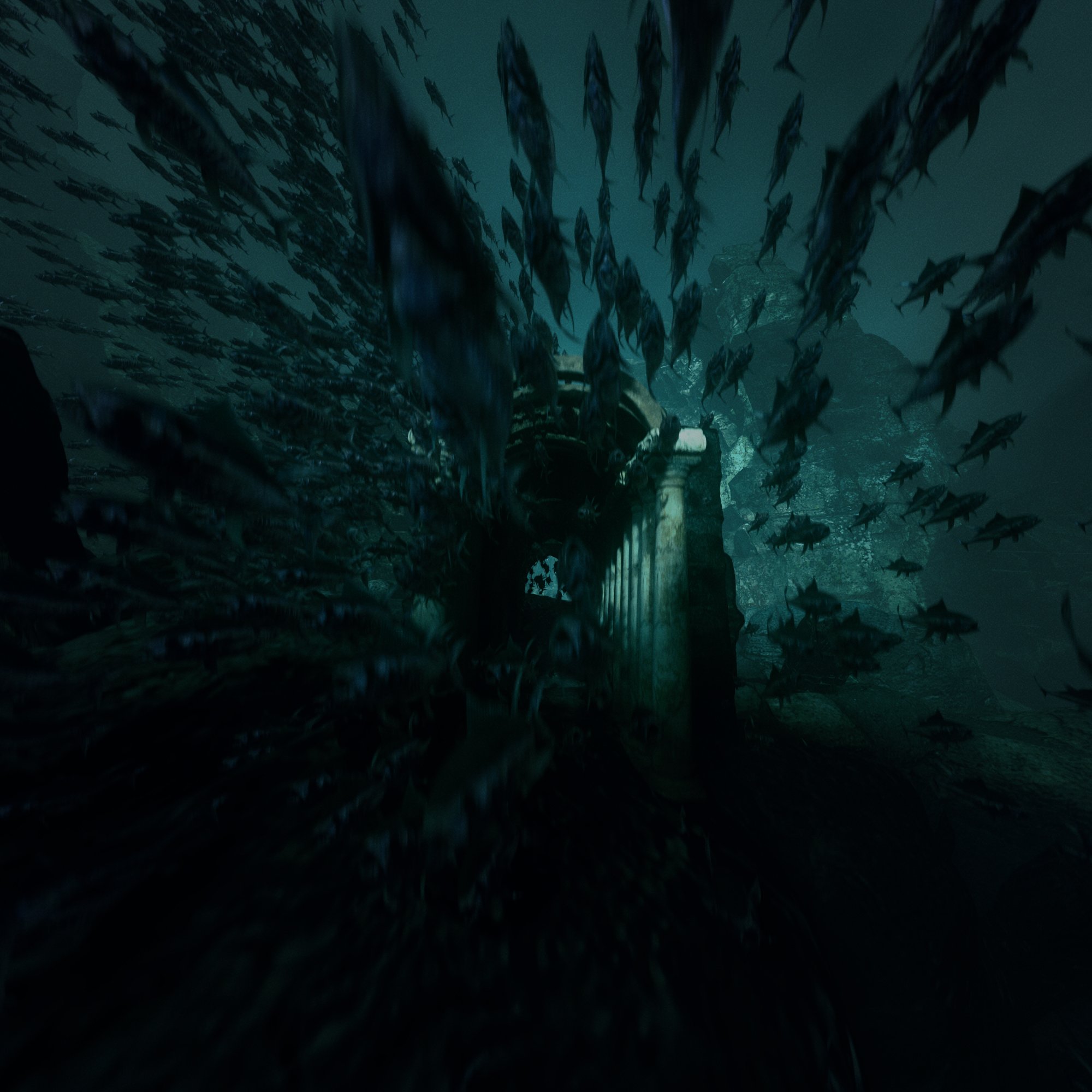
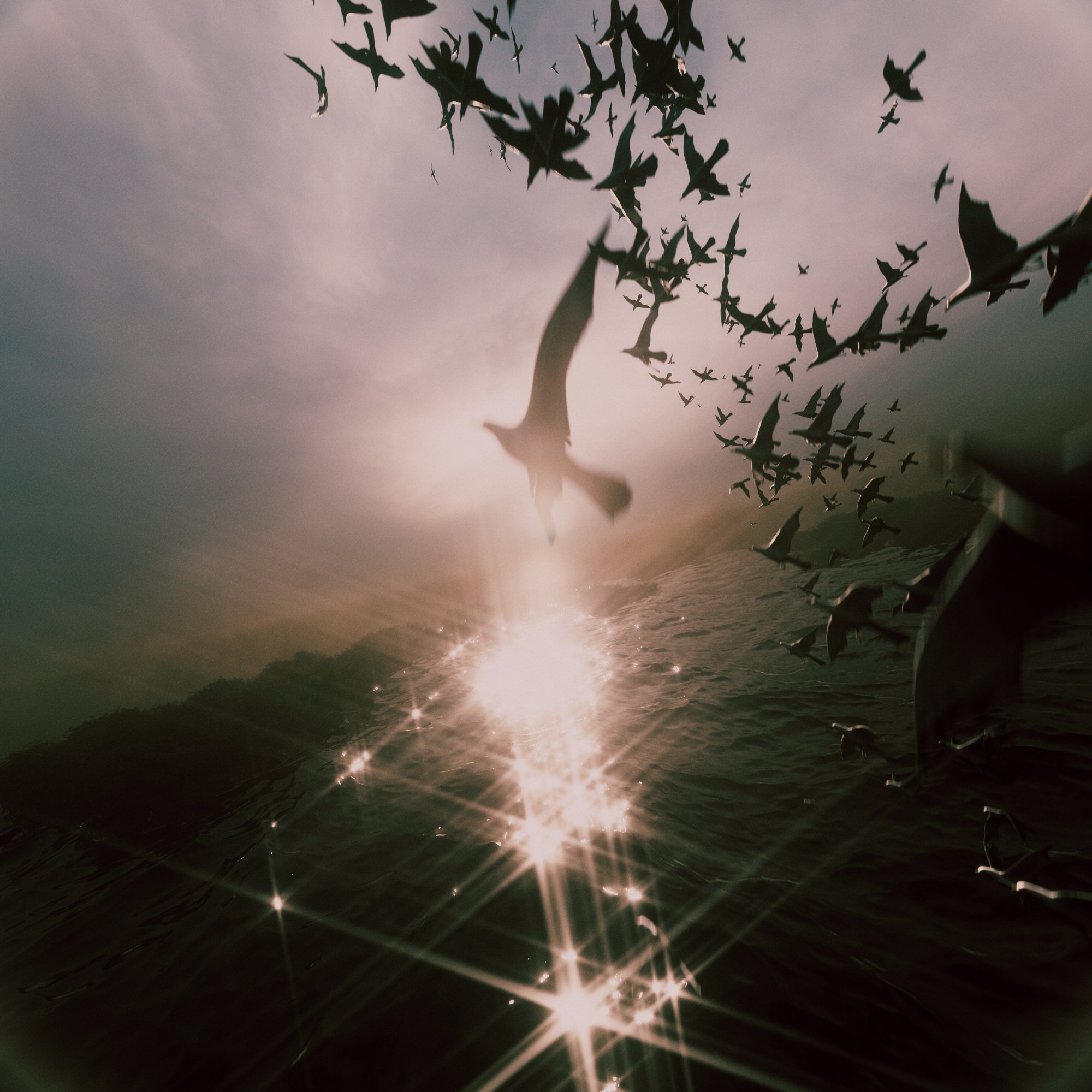
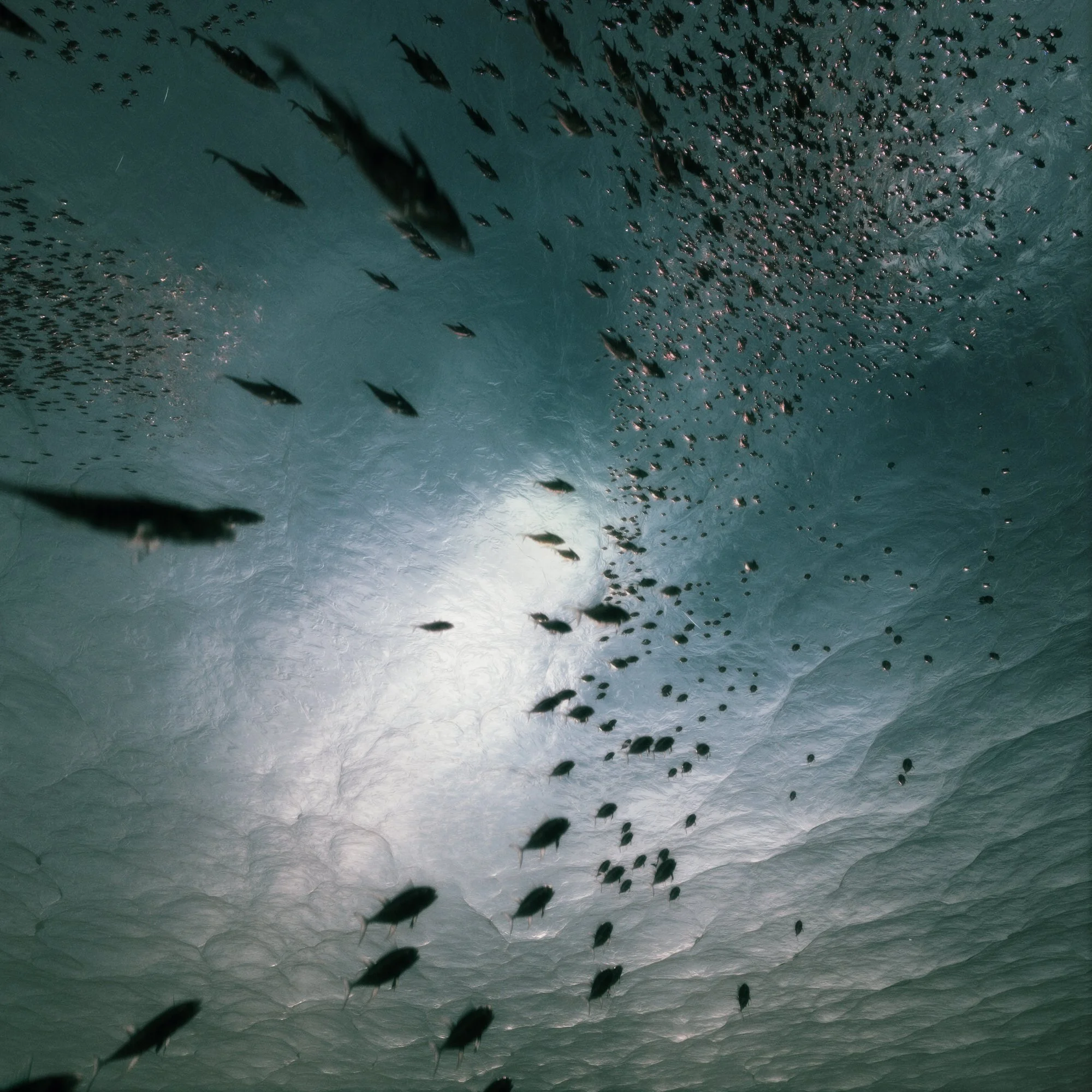
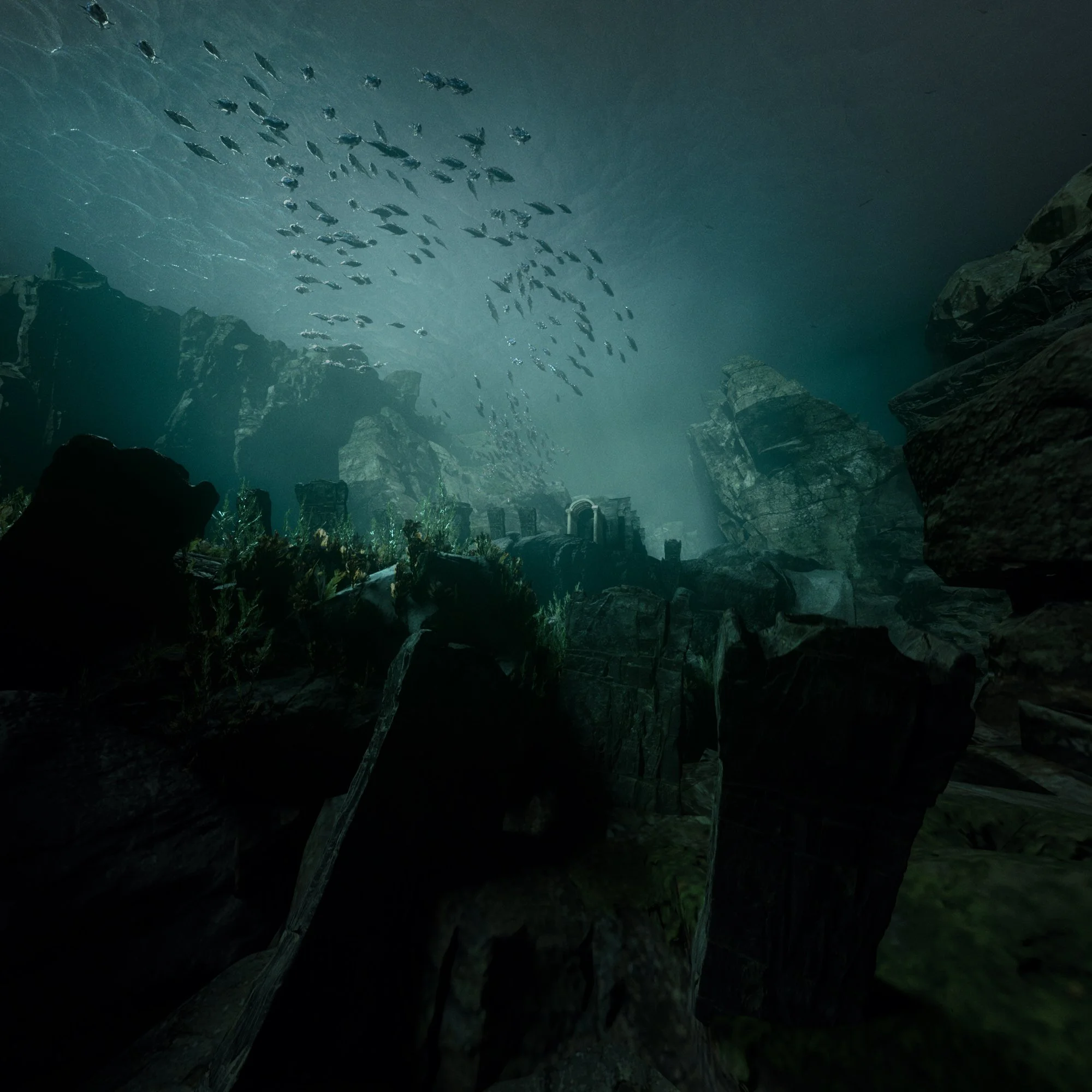
This approach solved multiple problems while streamlining my vision. Motion sickness was a concern for attendees surrounded by a fast-moving dome. Slow movement prevented nausea while forcing the discovery of surrounding details. But constraint became poetry when flocks of birds cut across these long takes. Schools of fish drift through underwater ruins. Stars drift by in a nebula fly-through. Dandelion fur whisps in our peripheral vision. These subtle pulses transform the meditative spell, allowing emotion, symbolism, and mythical weight to settle without distraction.
Design frames became destinations, not just concepts.

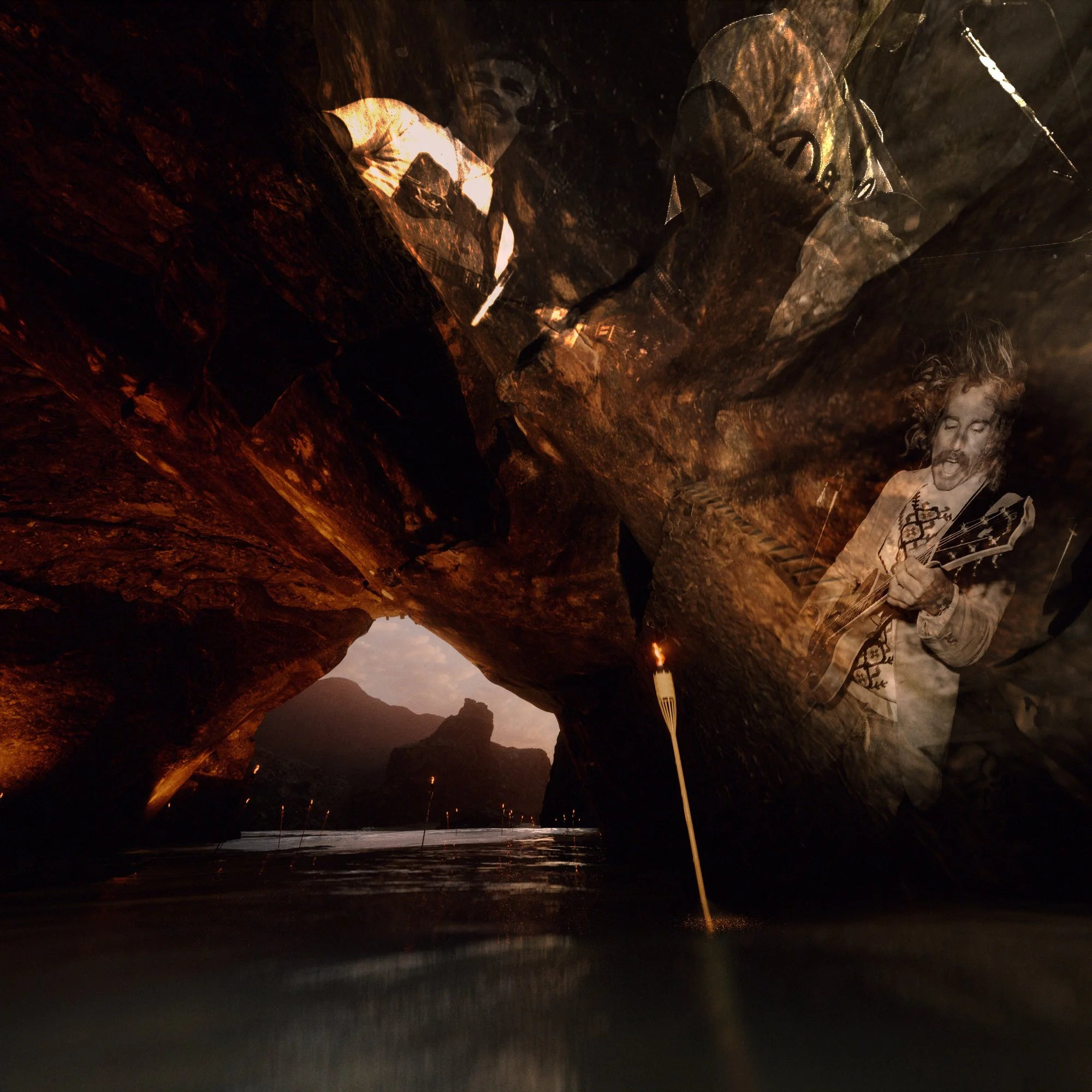
LIVE PERFORMANCE WITHIN FANTASY
THE BAND BECOME CHARACTERS IN THEIR OWN STORY
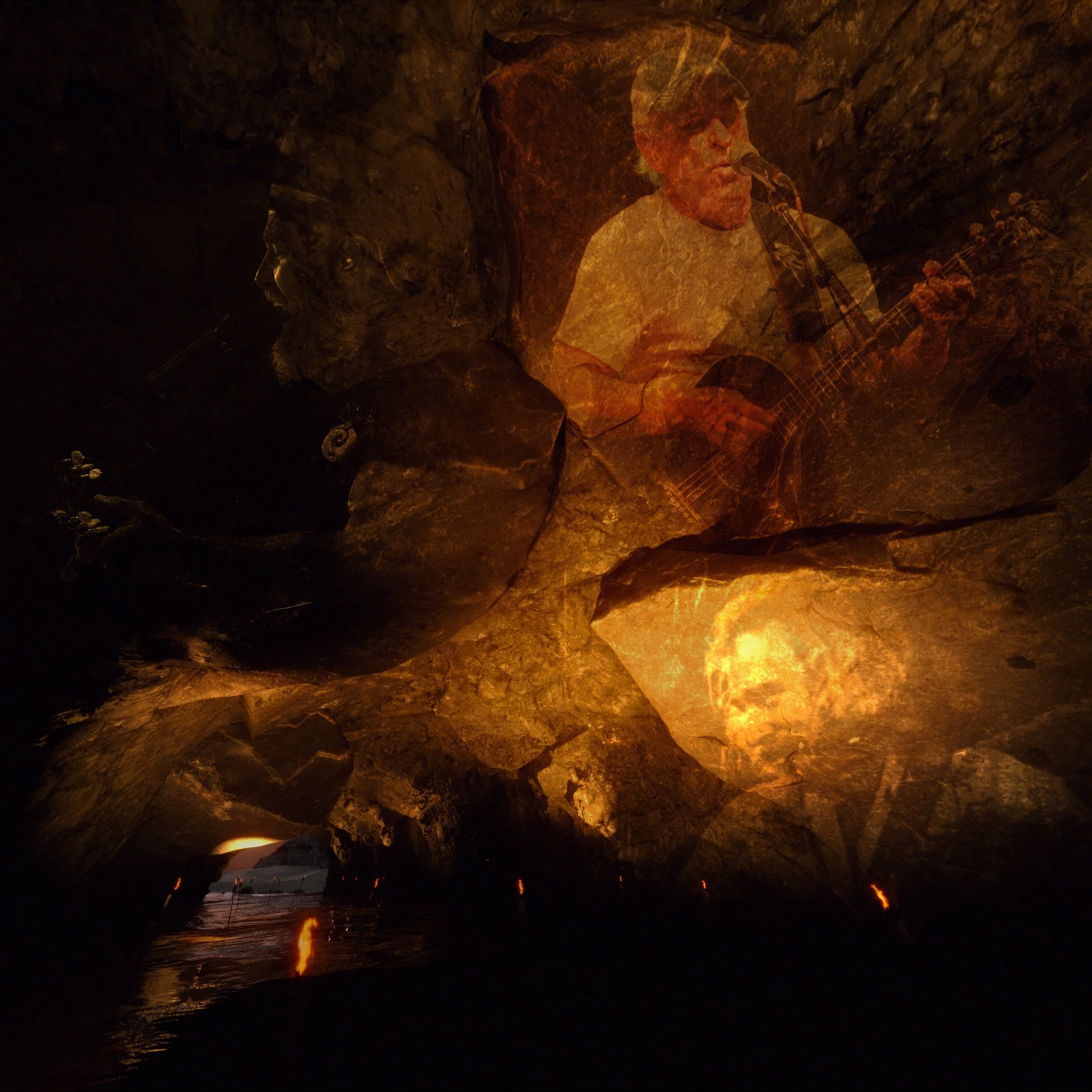
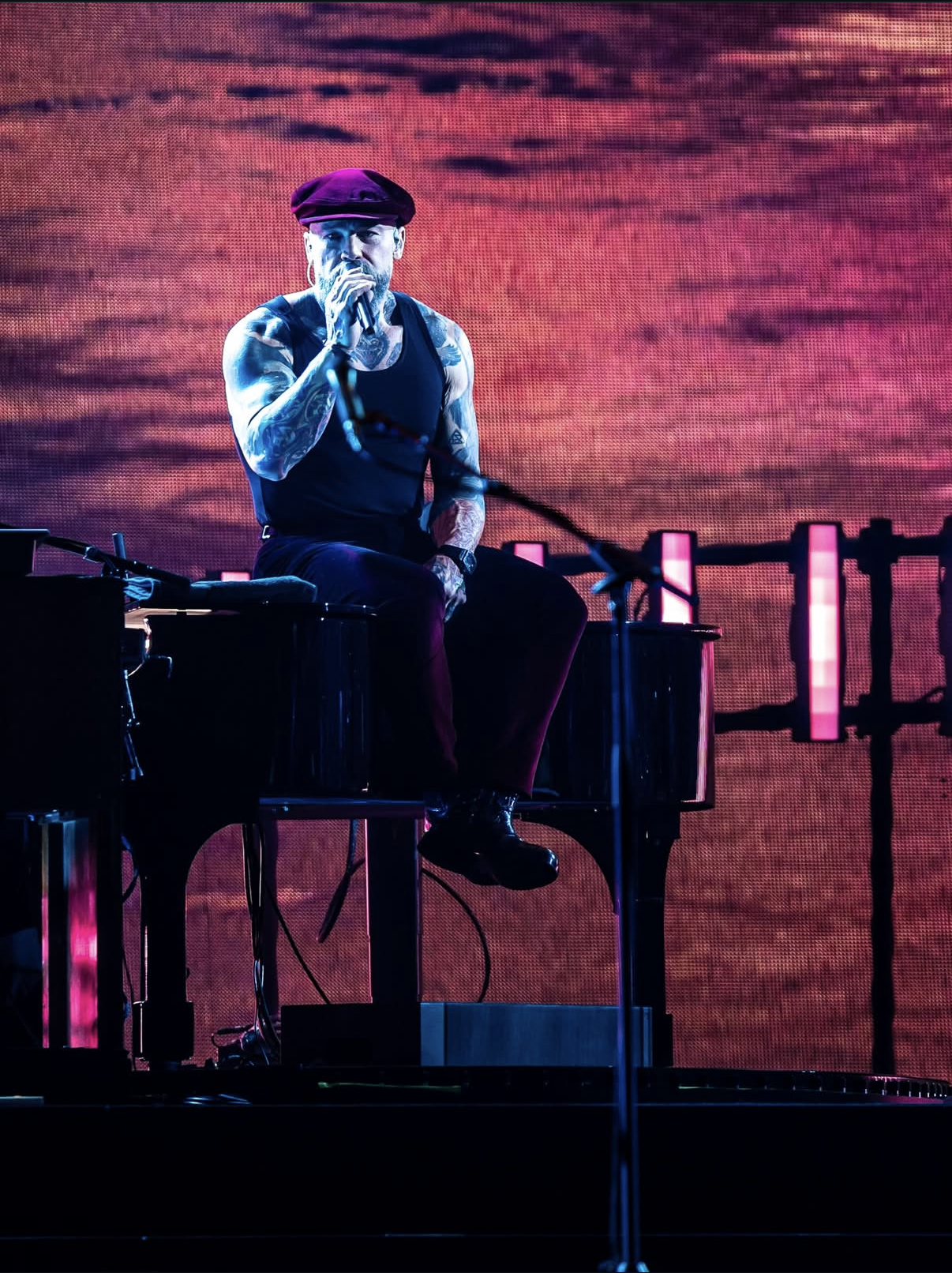
Integrating live band performance into the cinematic narrative without disrupting immersion required restraint and strategic simplicity. I designed mattes and plates that could frame performances seamlessly within fantastical environments, desaturated performance overlays layered onto textural landscape beds. The band exists within the worlds we built. Crimson skies behind guitar solos. Storm clouds framing drum fills. Crystalline cities reflecting during intimate moments. By treating live feed as another visual element rather than a dominant focus, we maintained visual continuity while honoring the concert's fundamental purpose: showcasing the band. A hybrid experience where Zac and his musicians perform against the very demons and landscapes their songs describe, becoming characters in their own mythology.